Tennessee Rules for Riding a Bridge
Riding your ATV or UTV across a bridge in Tennessee can feel like a maze of rules, leaving many riders scratching their heads and worried about breaking the law. It's a common frustration: one minute you're on a legal trail, the next you're faced with a paved road and a bridge, unsure if you're allowed to continue. This comprehensive guide is here to untangle the complexities of Tennessee's laws, helping you understand exactly when and how you can legally traverse a bridge on your off-highway vehicle.
The Broader Context of Road Use for OHVs in Tennessee
Before we even talk about bridges specifically, it's absolutely crucial to understand the overarching rules for operating an ATV or UTV on any public road in Tennessee. A bridge isn't a standalone entity; it's an integral part of the road it carries, whether that's a county road, a state highway, or a designated route within a specific district. Misunderstanding the general road rules can quickly lead to an illegal bridge crossing, even if you thought you were in the clear.
For a long time, Tennessee had a patchwork of local ordinances, making it incredibly confusing to know where you could and couldn't ride. This often left riders guessing, leading to unnecessary fines or simply missing out on connecting trails because they couldn't legally cross a short stretch of road or a bridge. Thankfully, recent legislation, particularly what's often referred to as [What House Bill 810 Changed in 2025], has brought a more unified, albeit still nuanced, approach to OHV road use in certain areas of the state.
Understanding Tennessee's Adventure Tourism Districts and Road Rules
The biggest game-changer for many riders has been the establishment of [Tennessee's Adventure Tourism Districts]. These are specific counties – ten of them, in fact, including popular riding destinations like Scott, Anderson, and Campbell – where special rules apply to allow ATVs and UTVs on certain public roads. Outside of these designated districts, the rules are generally far stricter, often prohibiting road use entirely except for direct crossings or agricultural purposes.
If you're riding in one of these adventure tourism districts, it's not a free-for-all. The law still requires counties within these districts to specifically designate roads where OHV use is permitted. This means that even if you're in the heart of Scott County, you can't just jump on any road you please. Each county is responsible for publishing lists of restricted roads, usually outlining what's open and what's not. The good news is that if a road is designated for OHV use, the bridges on that road are generally fair game, assuming you follow all other requirements. However, you'll need to know which roads are open.
The Importance of Designated Roads for Bridge Crossings
The key takeaway here is "designated roads." This isn't just a suggestion; it's the law. If you're on a road that hasn't been specifically opened to OHVs by the local county government, then riding across any bridge on that road is just as illegal as riding on the road itself. This is where many riders get into trouble, assuming that because a trail leads to a bridge, the bridge must be part of the trail system. Often, it's not.
It's vital to remember that these designated roads usually come with specific conditions. For example, they might only be open during daylight hours, or have speed limits of 45 mph or less. Therefore, crossing a bridge on one of these designated roads means you must adhere to those restrictions. Think of a scenario: you're enjoying a fantastic ride near Brimstone and come to a bridge. If that bridge is part of a county road that has been explicitly designated for OHV use, and you're within the allowed hours and speed limits, you're likely good to go. But if you venture onto a state highway bridge, even for a short distance, without it being specifically designated, you could quickly find yourself in violation. Knowing your route and checking local designations before you ride is your best defense against unexpected trouble.
Navigating Bridges Legally on Your ATV or UTV
Once you've confirmed that the road leading to and encompassing the bridge is indeed designated for OHV use, there are still specific considerations to keep in mind for the bridge crossing itself. These aren't just about legality; they're about safety for you, your passengers, and other vehicles you might encounter. Tennessee laws are designed to integrate OHVs into road traffic as safely as possible, and bridges, being narrower and sometimes presenting unique hazards, require extra diligence.
Many bridges, especially older ones or those in more rural areas, weren't built with the width or traffic patterns of modern OHVs in mind. Even on a designated road, you're sharing that space with other vehicles. It's not uncommon for bridges to have reduced speed limits, no shoulders, or blind spots, all of which require heightened awareness when you're on an ATV or UTV. Equipping your machine properly, perhaps with robust safety gear and accessories from a reputable vendor like SuperATV, can make a significant difference in visibility and capability.
Crossing Different Types of Bridges
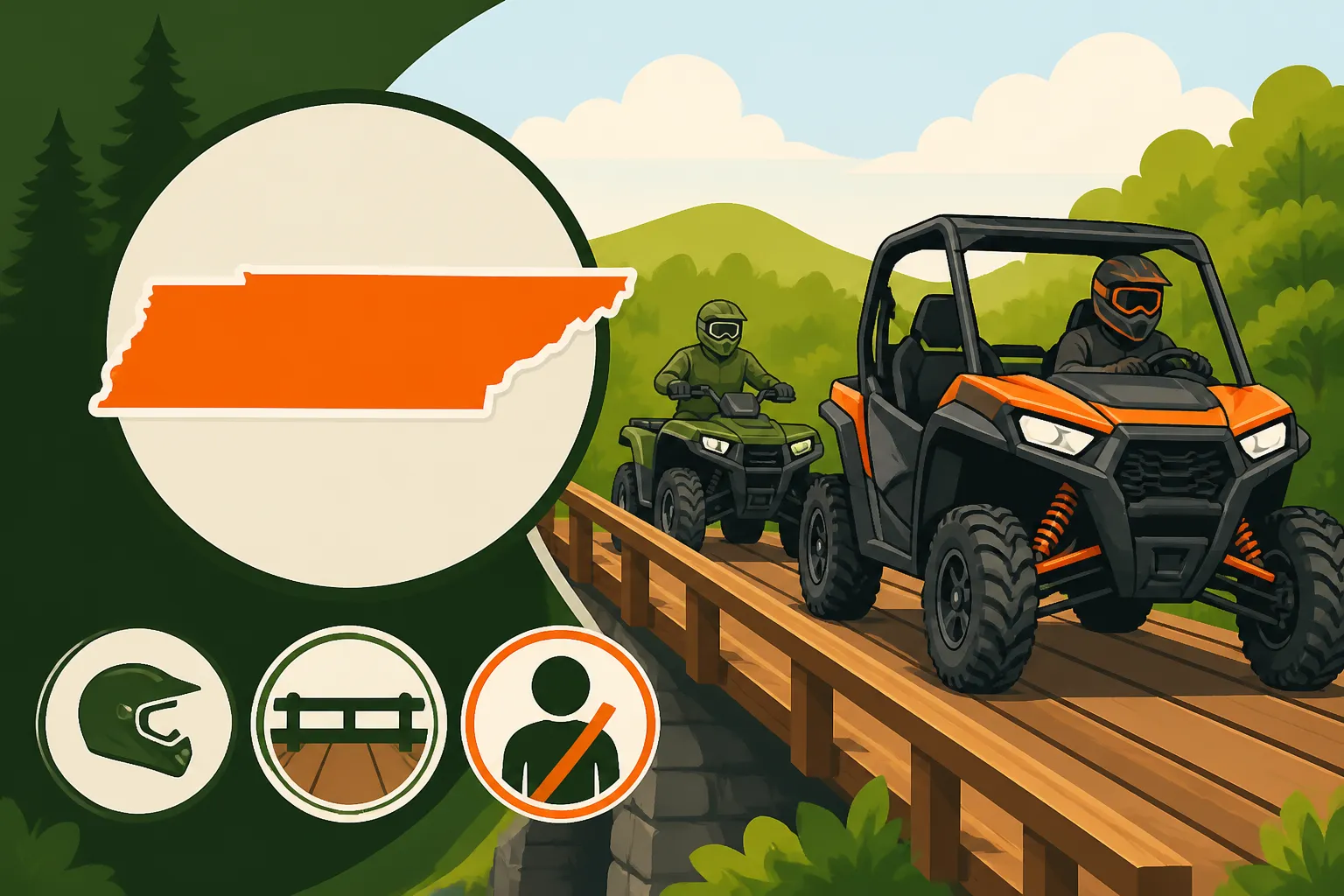
Tennessee has a variety of bridges, from small culverts that barely span a creek to longer, multi-lane structures over rivers or ravines. The fundamental rule is that if the road is legal for your OHV, the bridge it carries is typically included. However, the type of bridge often dictates the safety precautions you should take. For instance, crossing a short, one-lane [A Bridge on a Designated Tennessee Road] on an unpaved county route is a different experience from crossing a two-lane bridge over a larger waterway.
When you're dealing with a county-designated road, you might encounter bridges that are a mix of pavement and gravel, or even old wooden structures. Always approach with caution, reducing your speed and being prepared for varying surfaces. On a designated state highway, bridges will be paved and generally wider, but the speed of other traffic will be much higher. Remember that Tennessee law allows you to [Crossing a Two-Lane at a Right Angle] if a state highway intervenes between two designated OHV roads, but this is a very specific maneuver, not a general allowance for riding down a state highway or across a major state-route bridge. Always be absolutely certain of the designation and the rules for that specific road and bridge.
Speed Limits and Safe Practices on Bridges
Even if you're on a designated road that might have a posted speed limit of 45 mph, it's often wise to reduce your speed further when crossing a bridge. Many bridges have unique characteristics – steel grates, expansion joints, or even slick spots from moisture – that can affect traction and stability, especially on an ATV or UTV. Adhering to the [Tennessee UTV Speed Limit on Roads] means understanding that the maximum speed is not always the safest speed, particularly in confined areas like bridges.
Safe practices also include ensuring you have proper lighting and visibility. If you're riding during daylight hours, your headlights should be on, and if your UTV is equipped, a bright LED light bar (you might find excellent options from SuperATV) can significantly increase your presence on the road. Always maintain a safe following distance, and be extra vigilant for oncoming traffic or pedestrians. Bridges are often pedestrian pathways too, and their limited width means you need to be acutely aware of everyone sharing the space. Remember, if you're on the road during any time other than [Daylight Hours Only Under Tennessee Law], your machine absolutely must have adequate headlights and taillights visible from a distance, just like any other vehicle.
Here’s a quick overview of what to consider when approaching a bridge on your OHV:
| Consideration | Rule/Best Practice | Legal Ramification |
|---|---|---|
| Road Designation | Bridge must be on a county-designated OHV road (primarily in Adventure Tourism Districts). | Riding on an undesignated road/bridge is illegal and subject to fines. |
| Speed Limit | Adhere to the posted speed limit, often 45 mph or less. Consider slowing further for safety. | Speeding is illegal and can result in citations. |
| Daylight Hours | Most OHV road use is restricted to daylight hours. | Riding after sunset/before sunrise is illegal if not properly equipped and designated. |
| Required Equipment | Headlights, taillights, brake lights, mirrors, horn, insurance. (See table below) | Operating without required equipment can lead to a roadside ticket. |
| Driver's License | Operator must hold a valid driver's license (minimum age 16). | Unlicensed operation is illegal and can result in severe penalties. |
| Insurance | Minimum liability insurance required for road use. | Operating without insurance is a serious offense in Tennessee. |
| Passenger Rules | Follow specific rules for passengers, especially youth, on designated roads. | Violation of passenger rules can lead to fines and safety risks. |
Equipment Checks Before Bridge Crossings
Beyond the legalities of the road itself, your ATV or UTV must be properly equipped for road use, especially when traversing a bridge where you're fully integrated with other traffic. [Tennessee Equipment Rules for Road Use] are quite specific and are designed to ensure your machine is visible and controllable. A Tennessee deputy making a [Why a Tennessee Deputy Checks Roadside] stop will be looking for these items.
Essential equipment includes:
- Headlights and Taillights: These must be functional and visible from appropriate distances, especially critical on bridges where visibility might be reduced. Many riders upgrade their lighting systems, often opting for more powerful LED setups available from companies like SuperATV, to ensure maximum visibility to other drivers.
- Brake Lights: These need to illuminate when the brakes are applied, signaling your intentions to traffic behind you.
- Mirrors: At least one rearview mirror is typically required, allowing you to see traffic approaching from behind, crucial for safely navigating a bridge.
- Horn: A functioning horn is essential for signaling warnings to other drivers or pedestrians.
- Driver's License: As the operator, you must possess a valid [Tennessee Driver's License Rules for UTVs].
- Insurance: You need to carry proof of [Tennessee UTV Insurance Requirement], just like any other vehicle on the road.
Before you even pull onto a designated road that includes a bridge, do a quick check of these items. A burned-out bulb or a non-functioning horn could easily turn a legal ride into a ticket, or worse, a dangerous situation. Being proactive about your machine's readiness is a non-negotiable part of responsible OHV road use.
Local Nuances and How to Stay Informed
Tennessee's approach to OHV road use, while becoming more unified, still leaves a significant amount of discretion to individual counties, even within the designated Adventure Tourism Districts. This means that while the statewide framework provides the foundation, the specifics of which roads – and thus which bridges – are open to OHVs can vary greatly from one county to the next. What's perfectly legal in Unicoi County might be prohibited just across the county line in a non-designated area.
The biggest frustration for riders is this variable landscape. You can't assume that because you rode on county roads and bridges in one adventure tourism district, the same rules apply in another. This makes staying informed about hyper-local regulations absolutely paramount. It's not just about avoiding fines; it's about ensuring you're safe and respectful of the communities you're riding through.
County-Specific Designations and Bridge Access
The critical step for any rider planning to use roads or bridges is to consult the specific county's regulations. The counties within the Adventure Tourism Districts are required to publish lists of designated roads. These lists are usually available on the county clerk's or county mayor's website, or sometimes at the local sheriff's office. For instance, in an area like Scott County, which is well-known for its OHV trails, there will be very clear guidelines on [Unincorporated Scott County's Open Roads] and which ones are closed.
These lists will directly inform you about bridge access. If a road is on the "open" list, then the bridges it contains are generally open to OHVs, assuming all other conditions (time of day, speed, equipment) are met. Conversely, if a road is on the "restricted" or "closed" list, then any bridge on that road is also off-limits. It's this level of detail that makes the difference between a smooth ride and an unwelcome interaction with law enforcement. Always check the most current information, as these lists can be updated periodically.
How to Verify Bridge Legality
Verifying the legality of riding across a specific bridge boils down to a few steps:
- Identify the County: Know exactly which county you'll be riding in.
- Check for Adventure Tourism District Status: Is that county one of the ten designated [Scott, Anderson and Campbell Counties] in the state? If not, public road use for OHVs is likely extremely limited to direct crossings or agricultural exemptions.
- Locate Designated Road Lists: If it is an Adventure Tourism District county, find their official list of roads designated for OHV use. This might require a call to the county clerk's office or checking their online resources. Look specifically for any maps or text indicating allowed routes.
- Map Your Route: Compare your intended route, including any bridges, against these official maps or lists. Does the bridge sit on a designated road?
- Review Conditions: Pay attention to any conditions attached to the designated roads – speed limits (e.g., [Riding a Road Posted 45 mph or Under]), hours of operation (e.g., daylight only), and specific vehicle types allowed.
An excellent example of local designation and how it impacts bridge access is the rule for [Crossing a Multi-Lane Where TDOT Designates]. This is a very specific type of crossing, usually at intersections, and it's not a general permission to ride long distances on state routes. It underscores the point that exceptions are narrow, and general rules are strict. Always err on the side of caution. If you can't definitively confirm that a bridge is on a designated OHV route, it's best to find an alternative.
Ultimately, navigating Tennessee's bridge rules for ATVs and UTVs requires diligence, preparation, and a commitment to staying informed. By understanding the broader context of road legality, familiarizing yourself with local designations, and ensuring your machine is properly equipped, you can enjoy the stunning scenery and connected trails that Tennessee offers without the worry of legal complications.
Disclaimer
This article is for general informational purposes only and does not constitute professional advice. Laws, prices and regulations vary by location and change over time. Consult a qualified professional for guidance on your specific situation.