Tennessee Helmet Law for ATV Riders
Riding an ATV or UTV in Tennessee offers an incredible sense of freedom, whether you're exploring the vast trails of Windrock or just tending to chores on the back forty. But that freedom comes with a big responsibility, especially when it comes to safety. One of the most common areas of confusion for riders, particularly those new to the state or new to the sport, is understanding Tennessee's helmet laws. It's not as simple as a blanket "yes" or "no" answer, and misunderstanding the rules can lead to fines, citations, or, far worse, serious injury. This guide will meticulously break down Tennessee's helmet requirements for ATV and UTV riders, helping you navigate the complexities of age restrictions, road use, trail park policies, and important exceptions, ensuring you stay legal and, more importantly, safe on your rides.
The Foundations of Tennessee's Helmet Laws for OHVs
Tennessee's approach to OHV helmet laws is layered, taking into account the age of the rider and the specific environment in which the machine is being operated. It's a system designed to protect, but it requires careful attention to detail from riders and their families.
Age-Based Requirements for Helmets
When it comes to the youngest riders, Tennessee law is unequivocally clear and applies across almost all riding scenarios. If you are under the age of 18, you are required to wear a helmet when operating or riding as a passenger on an off-highway vehicle. This isn't just a suggestion; it's a mandatory legal requirement. This rule reflects a broader concern for the safety of minors, acknowledging that younger riders may have less experience, slower reaction times, and are more vulnerable to severe injuries in the event of an accident.
This age requirement extends whether you're navigating a rocky section of a designated trail system or simply riding through a field on private property. The law doesn't differentiate between the perceived danger of different terrains for riders under 18. Parents and guardians need to be acutely aware of this, not only to avoid potential legal trouble but to ensure the well-being of their children. Always choose a helmet that is DOT (Department of Transportation) approved and fits snugly without being uncomfortable, ensuring maximum protection for growing heads.
The intent behind this rule is to mitigate the severe consequences of head injuries, which can be life-altering. While some might view it as an infringement on personal choice, the data consistently shows that helmets significantly reduce the risk of critical head trauma. So, for any rider under 18, a helmet isn't just gear; it's a non-negotiable part of getting on an ATV or UTV in Tennessee.
Helmet Requirements on Public Roads
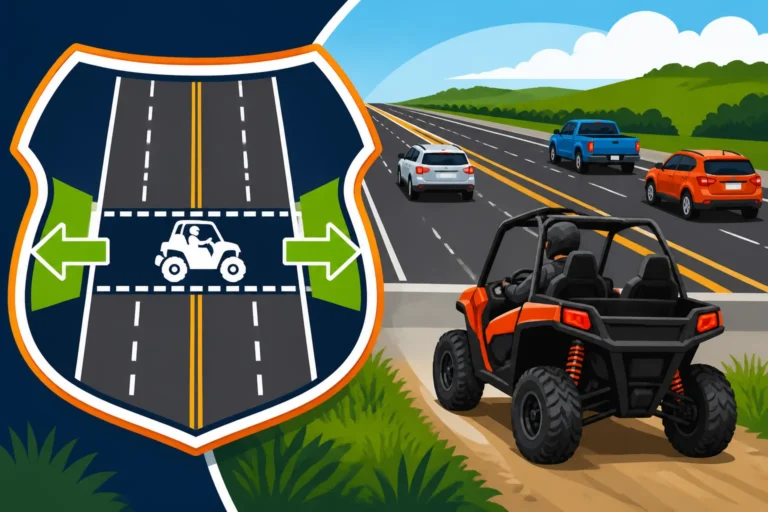
The landscape of helmet law shifts slightly when OHVs are operated on public roads in Tennessee, which, in itself, is a topic with specific regulations. Generally, if an OHV is being operated on a public road where permitted, all riders, regardless of age, may be subject to helmet requirements. This mirrors the state's motorcycle helmet law, where the higher speeds and interaction with other motor vehicle traffic on paved surfaces necessitate increased protection. [Tennessee Rules for Riding a County Road] outlines the conditions under which OHVs can even be on these roads, and helmet use is a critical component of those regulations.
For example, in areas designated as Adventure Tourism Districts or in counties that have opted to open certain roads for OHV use, riders might find themselves subject to these more stringent helmet requirements. It's not just about the state-wide under-18 rule anymore; it's about the inherent risks associated with road travel. These public road rules are often enforced by local law enforcement, and a failure to comply could result in a citation and fines.
Riders considering using their OHV on any public road, even those designated for such use, must verify the specific local ordinances and state regulations. This includes understanding the specific speed limits, like [Tennessee's 45 mph Road Rule], and equipment requirements, among which helmet use is paramount. Always assume that if you're on a public thoroughfare, a helmet is your safest and most legally compliant choice, irrespective of your age.
Helmet Use on Designated Off-Road Trails
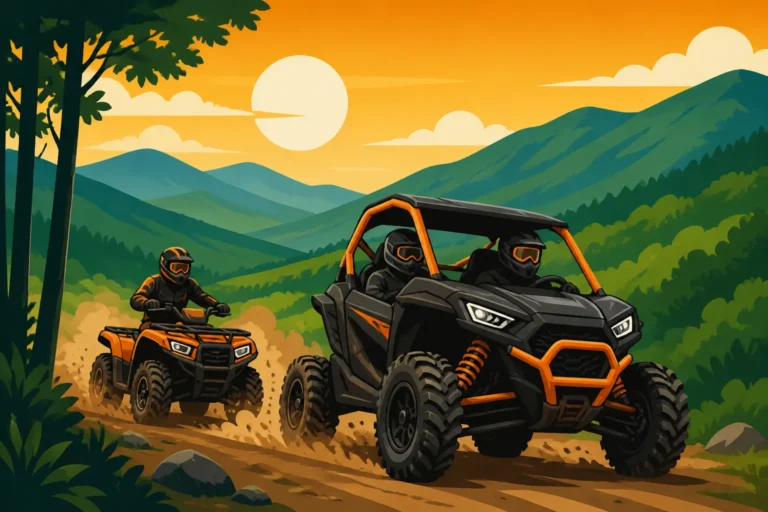
While state law primarily focuses on age and public road operation, the vast majority of organized off-road trail systems and parks in Tennessee have their own strict helmet policies that often exceed state minimums. Places like Windrock Park, Brimstone Recreation, and Ride Royal Blue are private properties that permit public access under their own terms and conditions, and mandatory helmet use for all riders is a common and strongly enforced rule.
These parks recognize the inherent dangers of off-road riding – steep climbs, sudden descents, rocky terrain, and unexpected obstacles – and prioritize rider safety above all else. It's not uncommon to see park staff enforcing helmet rules at staging areas, trailheads, and even patrolling trails. A rider or passenger, regardless of being over 18, who is caught without a helmet on these private trail systems will likely be asked to put one on, or in some cases, may be removed from the trails or issued a warning.
These park-specific rules apply to everyone: operators, passengers, adults, and children. The permit you purchase to ride at these locations usually comes with an agreement to abide by all their safety regulations, including helmet use. So, even if state law doesn't explicitly mandate a helmet for an adult on a private trail, the park's rules almost certainly will. It's crucial to check the specific regulations of any trail system you plan to visit, as they are often more restrictive than state law. This is where [Tennessee Helmet Law Off-Road] gets its real-world application through private park policies.
Navigating Exceptions and Specific Riding Scenarios
Just like with most laws, there are specific circumstances and exemptions that apply to Tennessee's OHV helmet requirements. Understanding these nuances is key to staying compliant and safe in various riding environments.
Agricultural and Farm Use Exemptions
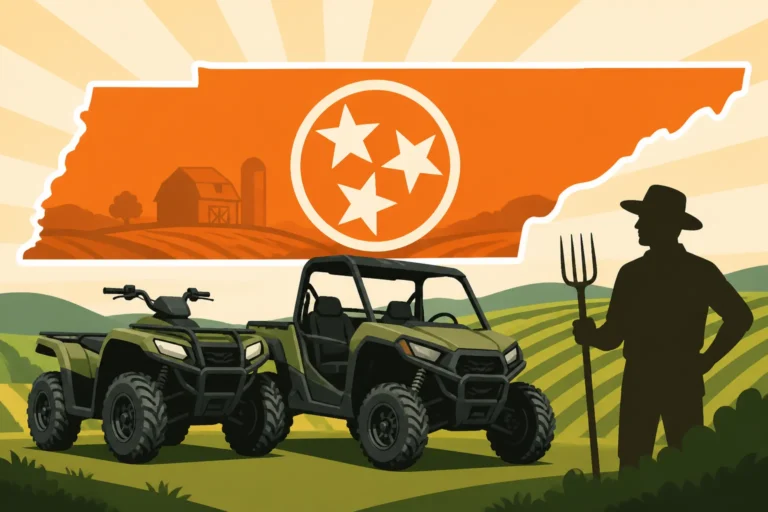
Tennessee law recognizes that off-highway vehicles are often essential tools for agricultural purposes. Because of this, there are specific [Tennessee's Agricultural Exception] rules that can apply to helmet use. If an ATV or UTV is being operated strictly for bona fide farm use – meaning directly related to farming, agricultural production, or forestry operations – then some of the public road use and helmet requirements might be relaxed.
However, this exemption is very specific and not a blanket waiver for all rural riding. It typically applies when the machine is being used on private farmland, or when crossing a public road at a ninety-degree angle to get from one section of a farm to another. It does not mean you can go joyriding down a public road without a helmet, even if you happen to live on a farm. The intent of the operation is critical here. If you're using your ATV to check fences, move livestock, or transport tools for farm work, the helmet requirements might differ from recreational use.
It's imperative to understand that if you're engaging in any recreational riding, even on agricultural land, the general helmet laws (especially for those under 18) still apply. The agricultural exemption is narrowly tailored to the functional use of the machine as a farm implement. Always be prepared to explain your use case to law enforcement if you are stopped under this exemption.
Private Property vs. Public Land
The distinction between riding on private property and public land is significant when it comes to helmet laws in Tennessee. As mentioned, the state's mandatory helmet rule for riders under 18 applies universally, regardless of whether they are on private land or public trails. For adults, however, the situation can be more nuanced on private property.
On your own private land, or on land where you have explicit permission from the landowner, the state generally doesn't mandate helmet use for adults, unless that private land has become a de facto public riding area, like a commercial trail park. However, many landowners, for liability reasons or simply out of a concern for safety, will require all riders to wear helmets. This is a common practice at organized private riding clubs or lease agreements for coal tracts. It's always best practice, and often a requirement of the property owner, to wear a helmet, regardless of the letter of the law for adults on private land. Ignoring this can not only lead to injury but also jeopardize your future access to that land. [Tennessee Rules for Riding Private Land] emphasizes the importance of understanding and respecting landowner rules.
Conversely, riding on public lands, such as Wildlife Management Areas (WMAs) or state forests where OHVs are permitted, typically means adhering to stricter rules, including those related to helmets. While the state-level helmet law for adults specifically on off-road public land isn't as broad as on public roads, the underlying principle of safety often encourages voluntary helmet use. Always check the specific regulations for any WMA or state-managed trail system before you go, as they can have their own rules that supplement or exceed state law.
Helmets for Passengers
A common question that arises is whether passengers on an ATV or UTV are held to the same helmet standards as the operator. The answer is generally yes, especially when it comes to minors. [Tennessee Helmet Law for Passengers] explicitly states that any passenger under the age of 18 must also wear a helmet. This is consistent with the state's overarching protective stance for young riders.
When an OHV is being operated on a public road where helmet use is mandatory for the operator (due to local ordinance or specific road use conditions), then all passengers, regardless of age, would also typically be required to wear a helmet. The idea is that the risks associated with road travel apply equally to everyone in the vehicle. This is particularly true for UTVs, which might carry multiple passengers, and often operate on designated county roads.
Even in scenarios where state law doesn't explicitly mandate a helmet for an adult passenger on an off-road trail, safety dictates that they should wear one. Accidents can happen to anyone in the vehicle, and a passenger is just as vulnerable to head injury as the driver. Many UTVs, for instance, are designed for multiple occupants, and it's a wise policy for everyone aboard to be properly geared up, including helmets, especially if you're navigating challenging terrain with aftermarket suspension components or other accessories that might be subject to greater forces during maneuvers, such as those you might source from a company like SuperATV.
Beyond the Law: Why Helmets Are Non-Negotiable
While understanding the legal requirements is crucial for compliance, the true value of a helmet extends far beyond avoiding fines. It's about protecting your most vital asset and ensuring you can continue enjoying the sport you love.
The Unseen Dangers of Off-Road Riding
Off-road riding, while exhilarating, carries inherent risks that are not always immediately apparent. Even at relatively low speeds, a sudden loss of control, an unexpected obstacle, or a rollover can turn a fun day into a life-altering event. Riders can hit trees, rocks, or other terrain features. Passengers can be ejected. Even being struck by a thrown rock or debris from another machine can cause severe injury.
Your brain is incredibly fragile, and a helmet is the single most effective piece of safety equipment you can wear to protect it. It's designed to absorb and distribute impact forces, preventing skull fractures and minimizing the chances of concussions or traumatic brain injuries. These aren't just minor bumps; severe head injuries can lead to long-term cognitive impairment, motor skill loss, personality changes, or even death. Just as riders meticulously plan their routes and consider performance upgrades, perhaps from a reputable provider like SuperATV, to tackle challenging terrain, investing in premium head protection should be at the top of their safety checklist.
Consider a seemingly innocuous trail ride where you hit a patch of loose gravel, or misjudge a turn. Without a helmet, a simple fall can lead to a direct impact with the ground. With a helmet, that impact is cushioned and dispersed, giving you a fighting chance to walk away from an accident with minor injuries instead of being transported to the nearest trauma center.
Choosing the Right Helmet
Selecting the correct helmet isn't just about grabbing one off the shelf; it's about finding one that fits perfectly, is comfortable for long rides, and offers the appropriate level of protection. Look for helmets that are DOT (Department of Transportation) approved, which means they meet federal safety standards. Many riders also opt for Snell or ECE certifications, which often indicate even higher levels of impact protection.
Helmets come in various styles, each with its own advantages:
- Full-face helmets: Offer the most comprehensive protection, covering the entire head and face, with a chin bar and a visor. Ideal for higher speeds and aggressive riding.
- Motocross/Off-road helmets: Feature an extended chin bar and an open eyeport, designed to be worn with goggles. They often have better ventilation and are lighter, making them popular for active off-road riding.
- Open-face helmets: Provide less protection, especially for the face and chin, but offer a wider field of vision. Not recommended for aggressive off-road riding.
When trying on a helmet, it should feel snug around your head without causing pressure points. It shouldn't shift or wobble when you shake your head. The chin strap should always be fastened securely. A helmet that doesn't fit correctly won't provide the protection it's designed for. Remember, your helmet is a one-time impact item; if it sustains a significant hit, even if there's no visible damage, it's best to replace it.
Consequences of Non-Compliance
Ignoring Tennessee's helmet laws can lead to immediate legal repercussions. For instance, being caught without a required helmet on a public road in Tennessee can result in a [Tennessee's $50 Fine]. While this might seem like a minor inconvenience, repeated offenses or more severe infractions could escalate. In some cases, operating an OHV on a restricted road without proper safety gear could even contribute to charges like [A Class C Misdemeanor in Tennessee], particularly if other laws are being broken or if an accident occurs.
Beyond the fines and potential legal entanglements, the most severe consequences are, of course, personal. Riding without a helmet dramatically increases your risk of severe head injury or fatality in an accident. No fine, no matter how steep, compares to the devastating impact of a traumatic brain injury on your life and the lives of your loved ones. The costs associated with medical treatment, rehabilitation, and long-term care for such injuries can be astronomical, far exceeding the price of even the most expensive helmet.
Ultimately, wearing a helmet isn't just about following the rules; it's about making a conscious decision to protect yourself and your passengers. It’s a simple, effective step that dramatically enhances safety, allowing you to focus on enjoying the beauty and challenge of Tennessee's off-road landscape.
Here's a quick summary of Tennessee's helmet requirements:
| Scenario | Rider Under 18? | Rider 18 and Over? | Specific Conditions |
|---|---|---|---|
| Private Land (Personal) | Yes | No (but highly recommended) | Landowner may still require helmets |
| Private Park/Trail System (e.g., Windrock) | Yes | Yes | Park rules almost always mandate for all riders |
| Public Road (Designated Use) | Yes | Yes | Applies where OHVs are legally permitted on public roads |
| Agricultural Use (Farm Work) | Yes | No (but highly recommended) | Applies only to bona fide farm operations, not recreational riding |
| Passenger | Yes | Depends | If operator needs one on road, passenger usually does too |
Disclaimer
This article is for general informational purposes only and does not constitute professional advice. Laws, prices and regulations vary by location and change over time. Consult a qualified professional for guidance on your specific situation.