Tennessee Helmet Law for Passengers
Riding an ATV or UTV with a passenger in Tennessee can be an absolute blast, a fantastic way to share the thrill of the trails or the open road. But the question of who needs to wear a helmet, especially if you're bringing along a friend or family member, often throws riders for a loop. This guide is here to untangle the nuances of Tennessee's helmet laws specifically concerning passengers, ensuring you can hit the trails or roads confidently and safely.
Unpacking Tennessee's Core Helmet Laws for OHV Passengers
Let's cut right to it: Tennessee has some very clear guidelines when it comes to helmet use on Off-Highway Vehicles (OHVs), and these often differ slightly depending on where you're riding and who your passenger is. The general sentiment is always safety first, but the law draws distinct lines, particularly for younger riders. Understanding these foundational rules is crucial before you even think about firing up your machine.
The Age-Based Helmet Mandate for OHVs
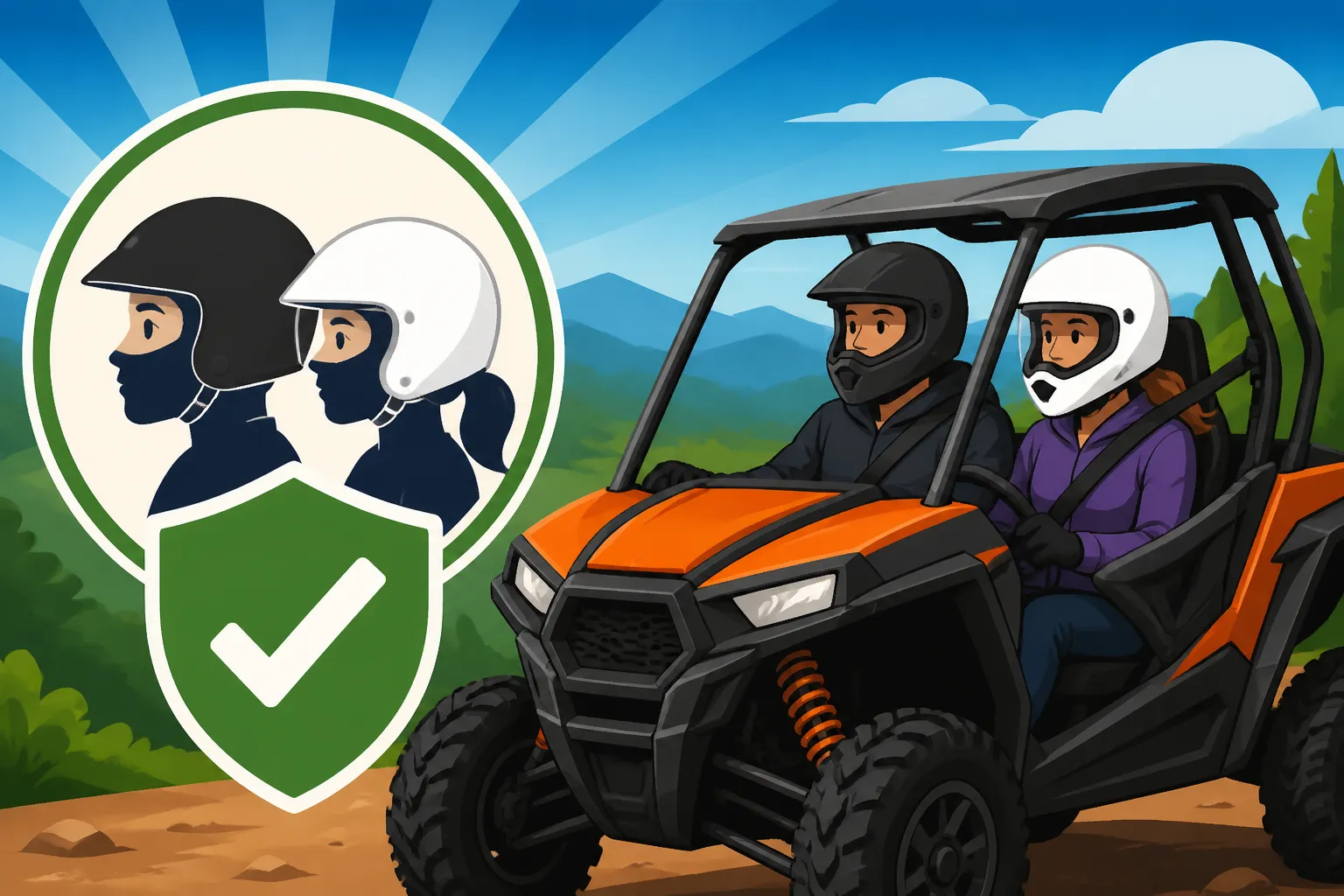
The most significant and widespread rule in Tennessee for OHV helmet use revolves around age. Simply put, if you have a passenger on your ATV or UTV who is under the age of 18, they are legally required to wear a protective helmet. This isn't just a suggestion; it's the law, whether you're tearing up a private trail, navigating a designated WMA route, or taking advantage of one of the few places where you can legally ride on a public road. This means that if your teenager, younger sibling, or child is riding with you, they absolutely need to be helmeted up.
This rule applies universally across almost all riding scenarios. It's designed to protect the most vulnerable riders, recognizing that young passengers might have less experience, less developed reflexes, and are more susceptible to serious injury in the event of an accident. Think about taking your niece or nephew out for their first ride at Windrock Park; the excitement is palpable, but their safety, mandated by a helmet, has to be your top priority. Even if your machine is equipped with a full cage and harnesses, the state's directive is clear for those under 18. This ties directly into the broader [Tennessee Helmet Law for ATV Riders] and [Tennessee Helmet Law for Passengers], emphasizing protection for youth.
Helmet Requirements on Private Land versus Public Access Areas
Now, things get a little more intricate when you consider the type of land you're riding on. When you're on private property, say your own farm or a friend's expansive acreage, Tennessee's specific helmet laws for OHVs generally don't apply directly. However, this is where common sense and personal responsibility truly come into play. While the state might not mandate a helmet for an adult passenger on your private land, allowing someone to ride without one is a significant risk. Many private parks, like Brimstone Recreation, which operate on privately owned land but offer public access, will have their own permit rules that often mirror or exceed state safety regulations, including helmet requirements for all riders, regardless of age, or at least for those under 18.
Conversely, when you venture onto public lands, such as Wildlife Management Areas (WMAs) like the North Cumberland WMA, or designated public roads, the state laws come into full effect. On WMAs, the under-18 helmet rule is rigorously enforced. And when it comes to public roads, as we'll delve into next, the rules can become even stricter, often aligning with motorcycle helmet laws that impact all occupants. It's a critical distinction, as a fun day out can quickly turn into a costly one with fines if you're not compliant. Make sure you're always aware of the specific rules of the particular riding area, not just the general state law, by checking their websites or permit offices before you unload your machine.
Riding on Public Roads: Elevated Standards for Passenger Helmets
Tennessee has made some strides in recent years to allow OHVs on certain public roads, especially within designated Adventure Tourism Districts. While this opens up new possibilities for exploration, it also introduces more stringent safety requirements, particularly for helmets. When your OHV rolls onto a public road, even a designated county road, the expectations for safety gear often elevate significantly, sometimes impacting adult passengers in ways private land rules do not.
General Road Use Helmet Rules and Age Minimums
When an OHV is operated on a public road in Tennessee, even if it's a designated county or municipal street, the state's motorcycle helmet laws generally apply to all riders and passengers. This means that regardless of age, if you are riding an OHV that is operating on a public road, and it's not an enclosed cab vehicle (like a traditional car), all occupants, including passengers, are required to wear a helmet. This is a critical distinction from private land rules where adult passengers might not be legally mandated to wear one. The risk profile of road riding, with higher speeds and interaction with other vehicles, necessitates this enhanced protection.
Furthermore, there's a minimum age requirement for operators of OHVs on public roads in Tennessee: riders must be at least 16 years old and hold a valid driver's license. While this primarily applies to the driver, it indirectly reinforces the seriousness of road riding. If your passenger is under 16, they still fall under the general under-18 helmet rule, but if they are 16 or 17 and riding as a passenger on a public road, they'd be covered by both the under-18 rule and the general public road rule for all occupants. This overlapping regulation leaves no doubt that young passengers need helmets on public roads. Understanding these stipulations is key to avoiding issues, particularly in areas like Scott County or Campbell County where road access for UTVs has expanded. You can find more details on [Tennessee Minimum Age to Ride a Road] and [Tennessee UTV Road Requirements].
How Road-Legal Modifications Affect Passenger Helmet Laws
While some OHVs can be modified to meet certain road-legal criteria in Tennessee, such as having headlights, taillights, brake lights, turn signals, mirrors, and seatbelts, these modifications generally do not exempt passengers from helmet laws on public roads. The intent of these modifications is to make the vehicle visible and controllable in traffic, not to transform it into a closed-cab automobile. Your UTV, even with all the bells and whistles—a full windshield, a roof, and doors—is still considered an open-air vehicle in the eyes of the law when it comes to helmet requirements on public roads.
Consider a scenario where you've added a full glass windshield, wipers, and even a heater to your side-by-side, maybe from a reputable outfitter like SuperATV. While these additions certainly enhance comfort and protection from the elements, they don't change the fundamental nature of the vehicle in the context of Tennessee's helmet laws for public road use. The open sides of most UTVs, even with half doors, mean that occupants are still exposed to potential impacts. Therefore, if you're planning on using designated roads for connection between trails or accessing local businesses, remember that your adult passengers still need to buckle up their helmets. For a comprehensive look at what your machine needs to be road-ready, check out [Tennessee Equipment Rules for Road Use].
Here's a quick reference table to help visualize passenger helmet requirements:
| Riding Location | Passenger Age | Helmet Required for Passenger? | Notes |
|---|---|---|---|
| Private Land | Under 18 | Yes | Most private parks/resorts also require for under 18. |
| Private Land | 18 and Over | No (by state law) | Highly Recommended. Private park rules may apply. |
| WMA (e.g., North Cumberland) | Under 18 | Yes | Enforced by TWRA officials. |
| WMA (e.g., North Cumberland) | 18 and Over | No (by state law) | Highly Recommended. Park rules may require for all. |
| Public Road (Designated) | Under 18 | Yes | Mandated by both age rule and public road rule. |
| Public Road (Designated) | 18 and Over | Yes | Aligns with motorcycle helmet laws for all occupants of open-air vehicles on roads. |
Specific Exemptions and Practical Considerations for Passenger Helmets
While the rules mostly lean towards helmet use, especially for younger passengers and on public roads, there are a few very narrow exceptions. It's also important to think beyond the legal minimums and consider practical measures to ensure your passenger's safety and comfort, irrespective of what the law strictly dictates.
The Agricultural Exemption and Its Limitations
One significant exemption in Tennessee law pertains to OHVs used for agricultural purposes. If an ATV or UTV is being operated exclusively for farming, ranching, or other agricultural work, both the operator and any passengers are generally exempt from the helmet requirement. This means if you're riding across your fields with a helper to check fences or herd livestock, neither of you is legally obligated to wear a helmet. This is a practical acknowledgment of the nature of farm work, where frequent mounting and dismounting might make continuous helmet use impractical, and speeds are typically much lower than recreational riding.
However, this exemption comes with a crucial caveat: it only applies when the machine is being used strictly for agricultural purposes. The moment you leave your farm to ride for recreation, even if it's just to a nearby general store down a county road (unless that road is explicitly open and you meet all other road-use requirements), the agricultural exemption likely no longer applies, and the general helmet rules kick back in. So, don't assume that just because your machine can be used for farm work, it's always exempt. If you're heading to the trails after a morning of chores, you and your passengers need to put those helmets back on. This is a vital point to remember, as outlined in [Tennessee Rules for Agricultural Road Use].
Beyond the Law: Prioritizing Passenger Safety
Even if your adult passenger isn't legally required to wear a helmet on private land or a WMA trail, prioritizing their safety should always be paramount. A helmet is arguably the most critical piece of safety gear an OHV rider or passenger can have. Falls, rollovers, or impacts with low-hanging branches can happen unexpectedly, even at low speeds or on familiar terrain. Investing in a good quality, DOT-approved helmet for all your passengers, regardless of age or legal mandate, is a small price to pay for peace of mind and potentially life-saving protection.
Beyond helmets, consider other safety measures. Ensure your passenger is properly seated and using any available seatbelts or grab handles. Talk to them about riding etiquette and what to expect on the terrain. If your machine is equipped with features like sturdy doors or a windshield from a company like SuperATV, these can enhance protection from debris and elements, but they are never a substitute for a helmet's direct head protection. Always conduct a quick pre-ride inspection, especially when carrying a passenger, to ensure your machine is in good working order. A safe ride is a fun ride, and that often means exceeding the minimum legal requirements. Remember, it's not just about avoiding a [Tennessee Fines for Illegal UTV Road Use], but about ensuring everyone makes it home safely.
Essential Passenger Safety Gear and Best Practices
Equipping your passengers with the right gear and instilling safe riding habits is crucial for an enjoyable and secure experience on any OHV. While helmets are often the focus, a comprehensive approach to safety includes more than just head protection. Thinking through all the details means you're prepared for whatever the Tennessee landscape throws your way.
Choosing the Right Helmet and Additional Protective Gear
Selecting a high-quality, properly fitting helmet is non-negotiable for passengers, especially those under 18, and all passengers on public roads. A DOT-approved (Department of Transportation) helmet is essential, as it meets specific safety standards for impact absorption. For passengers, ensure the helmet fits snugly but comfortably, without obstructing their vision or restricting breathing. It shouldn't wiggle or slide around when they move their head. Often, full-face helmets are preferred for their comprehensive protection of the chin and face.
Beyond the helmet, encourage your passengers to wear other protective gear:
- Eye Protection: Goggles or a helmet with a face shield are critical to protect eyes from dust, debris, insects, and low-hanging branches. Even if your machine has a windshield, wind can whip around and cause irritation.
- Gloves: Offer protection against abrasions in a fall and improve grip on grab handles.
- Long Sleeves and Pants: Durable long sleeves and pants (denim or specialized riding gear) help protect skin from scrapes, cuts, and sun exposure.
- Over-the-Ankle Boots: Sturdy boots protect feet and ankles from impacts and offer better grip on footrests.
Remember, a simple shirt and shorts might be comfortable on a hot day, but they offer almost no protection in the event of an unexpected tumble or scrape against trailside brush. Outfitting your machine with quality accessories, perhaps from SuperATV, can improve the overall ride experience for everyone onboard by adding secure seating, grab handles, or enhanced footwells, but these are complementary to personal protective equipment.
Communicating and Riding Responsibly with Passengers
Having a passenger means you, as the operator, bear an even greater responsibility for safety. Clear communication before and during the ride is paramount. Before you even set off, brief your passenger on these key points:
- How to Hold On: Demonstrate where to place their hands (e.g., grab handles, the operator's waist) and emphasize the importance of staying secure.
- When to Lean: Explain that they should try to lean with you slightly in turns, not against you, to help maintain the machine's balance.
- Foot Placement: Ensure their feet are securely placed on footrests and kept inside the vehicle at all times, away from tires and moving parts.
- Signals: Establish simple hand signals or verbal cues for common needs, like "slow down," "stop," or "bump ahead."
- Staying Seated: Emphasize the importance of remaining seated during operation, especially when moving.
As the operator, you must adjust your riding style when carrying a passenger. Reduce your speed, especially on unfamiliar or challenging terrain. Take turns wider and brake more gently to avoid sudden jerks. Remember that the added weight of a passenger will change the machine's center of gravity and handling characteristics, making it feel less agile and potentially increasing stopping distances. Avoid stunts, aggressive maneuvers, or pushing the limits of the machine. Your primary goal is to provide a safe, enjoyable, and memorable experience for your passenger. Whether you're riding through the stunning autumn colors near Royal Blue or simply taking a leisurely cruise on a farm lane, responsible riding with a passenger ensures everyone has a great time without incident.
Disclaimer
This article is for general informational purposes only and does not constitute professional advice. Laws, prices and regulations vary by location and change over time. Consult a qualified professional for guidance on your specific situation.