Crossing a Multi-Lane Where TDOT Designates
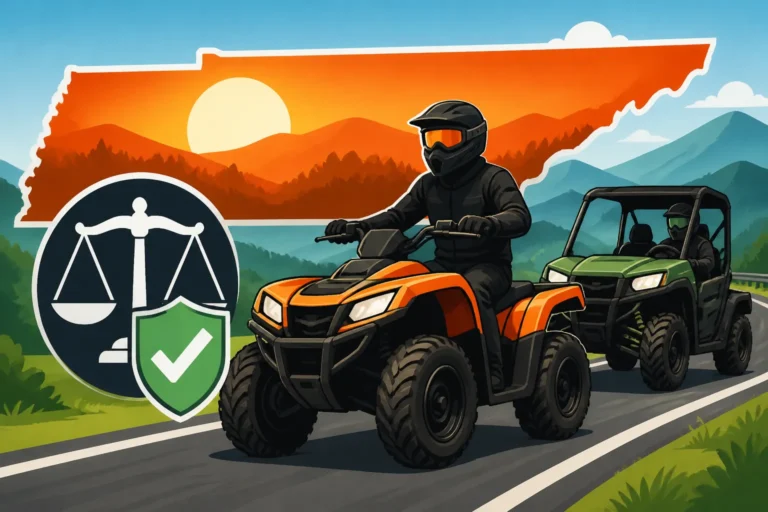
Trying to enjoy the incredible trails and scenic beauty of Tennessee on your ATV or UTV can sometimes feel like navigating a legal minefield, especially when it comes to crossing busy roads. There's a lot of confusion and understandable anxiety about doing things correctly, particularly with multi-lane highways where the stakes feel much higher than a quiet backroad. This comprehensive guide will demystify the rules for crossing multi-lane roads in Tennessee where the Department of Transportation (TDOT) has designated specific points, offering clarity and practical advice to help you ride legally and confidently.
Navigating Tennessee's OHV Road Access Landscape
For years, the rules around riding ATVs and UTVs on public roads in Tennessee were a patchwork of county-by-county regulations, leading to immense frustration and uncertainty for riders. You might be perfectly legal in one county, only to inadvertently break the law a few miles down the road in another. It was a messy situation that left many outdoor enthusiasts scratching their heads, wondering if they should even bother trying to connect trails or access services via public roads. Thankfully, recent legislative changes have aimed to bring more consistency to the entire state, creating a more uniform framework for off-highway vehicle (OHV) use.
This statewide approach, while still having its local nuances, provides a much clearer picture of what's allowed. It’s important to understand that even with these changes, the default rule generally remains that OHVs are not permitted for general road use. However, there are specific, carefully defined exceptions, and one of the most critical of these involves how you can legally cross certain roadways. This distinction between "riding on" a road and "crossing" a road is absolutely fundamental to understanding your rights and responsibilities as an OHV operator in Tennessee. We're not talking about cruising down the interstate; we're talking about getting from one side of a highway to the other, usually to reach another section of trail or a staging area.
The Shifting Sands of OHV Legislation in Tennessee
The journey to more unified OHV road access in Tennessee has been a long one, marked by passionate advocacy from rider groups and a gradual understanding by lawmakers of the economic and recreational importance of the sport. Historically, each county had the power to make its own rules, leading to a confusing array of local ordinances. For example, some counties, particularly those within the [Tennessee's Adventure Tourism Districts], were quicker to embrace limited road use, understanding its benefit to tourism and local businesses. However, for most of the state, any form of road interaction was a firm "no."
The significant legislative updates, often spearheaded by bills like [What House Bill 810 Changed in 2025], have brought about a much-needed statewide framework. This means that while local jurisdictions can still implement certain restrictions or designations, they must now operate within a broader state-mandated structure. This shift has been a huge relief for many riders, as it simplifies the research process and reduces the risk of unknowingly violating a local rule. It's an ongoing evolution, but the direction is clearly towards creating more predictable and accessible riding opportunities, while still prioritizing safety for all road users. Understanding these legislative changes is the first step in riding smarter and safer.
Differentiating Between Road Use and Road Crossings
It's critical to draw a clear line in the sand between "using" a road and "crossing" a road with your ATV or UTV in Tennessee. When we talk about "road use," we're generally referring to traveling along a road for an extended period, perhaps to get to a store, a friend's house, or a distant trailhead without trailering. While limited forms of road use are now permitted in specific areas and under very strict conditions, it's not a free-for-all. The conditions for general road use often involve speed limits, daylight-only restrictions, and specific equipment requirements, as detailed in articles like [Tennessee Road Use Rules for ATVs].
"Road crossings," on the other hand, are much more narrowly defined. This involves traversing a road from one side to the other, typically at a right angle, with the sole purpose of continuing your off-road journey or accessing property. The key here is minimal time on the pavement. You're not driving on the road; you're simply passing over it. This distinction is crucial because the regulations for crossing are often more permissible than those for extended road use, especially for multi-lane state highways. The intention is to allow trail connectivity and access where it makes sense, without turning OHVs into conventional street vehicles.
The Specifics of Multi-Lane Highway Crossings
Crossing a multi-lane highway on an ATV or UTV isn't something to take lightly. These are often high-speed, high-traffic thoroughfares where visibility, reaction time, and vehicle dynamics are paramount. Unlike a quiet, two-lane county road, a multi-lane state highway presents a significantly increased risk due to the volume and speed of conventional vehicular traffic. The thought of attempting such a maneuver can be daunting, and for good reason—safety must always be your absolute top priority. Tennessee law recognizes this inherent risk, which is why multi-lane crossings are subject to a different set of rules and requirements than simpler two-lane crossings.
The state's approach is not to prohibit multi-lane crossings entirely, but rather to ensure they occur under controlled circumstances that maximize safety for both OHV operators and other motorists. This is where the Tennessee Department of Transportation (TDOT) comes into play, as they are the authority responsible for identifying and designating the safest possible locations for these specific maneuvers. Without a TDOT designation, attempting to cross a multi-lane highway would be a clear violation and incredibly dangerous.
Why Multi-Lane Roads Pose Unique Challenges
Imagine trying to cross a four-lane highway with a center turn lane on your UTV. You have traffic coming from two directions, potentially at highway speeds, across multiple lanes. The challenges are immediately apparent:
- Speed Differential: OHVs, even larger UTVs, typically have a much lower acceleration rate and top speed than cars and trucks on a highway. This means you spend more time in the path of oncoming traffic.
- Visibility: While many UTVs are equipped with proper lighting, an OHV can still be less visible to fast-moving traffic, especially if it's not expecting an off-road vehicle. Aftermarket accessories from companies like SuperATV can help with visibility, offering brighter LED lights and turn signals, but they don't erase the inherent challenge.
- Driver Expectation: Highway drivers are generally not looking for an ATV or UTV to suddenly appear and cross multiple lanes of traffic. This unexpected element dramatically increases the risk of an accident.
- Lane Management: Successfully navigating multiple lanes of traffic, understanding traffic flow, and judging safe gaps requires a high degree of skill, focus, and good judgment. You're essentially performing a complex merge and cross maneuver, often under pressure.
These factors combine to make multi-lane crossings inherently more complex and hazardous than simply [Crossing a Two-Lane at Ninety Degrees in Tennessee], where traffic is typically slower and less dense. The presence of multiple lanes means more variables, more potential points of conflict, and a greater distance to travel across active traffic.
The Importance of TDOT Designation for Safety and Legality
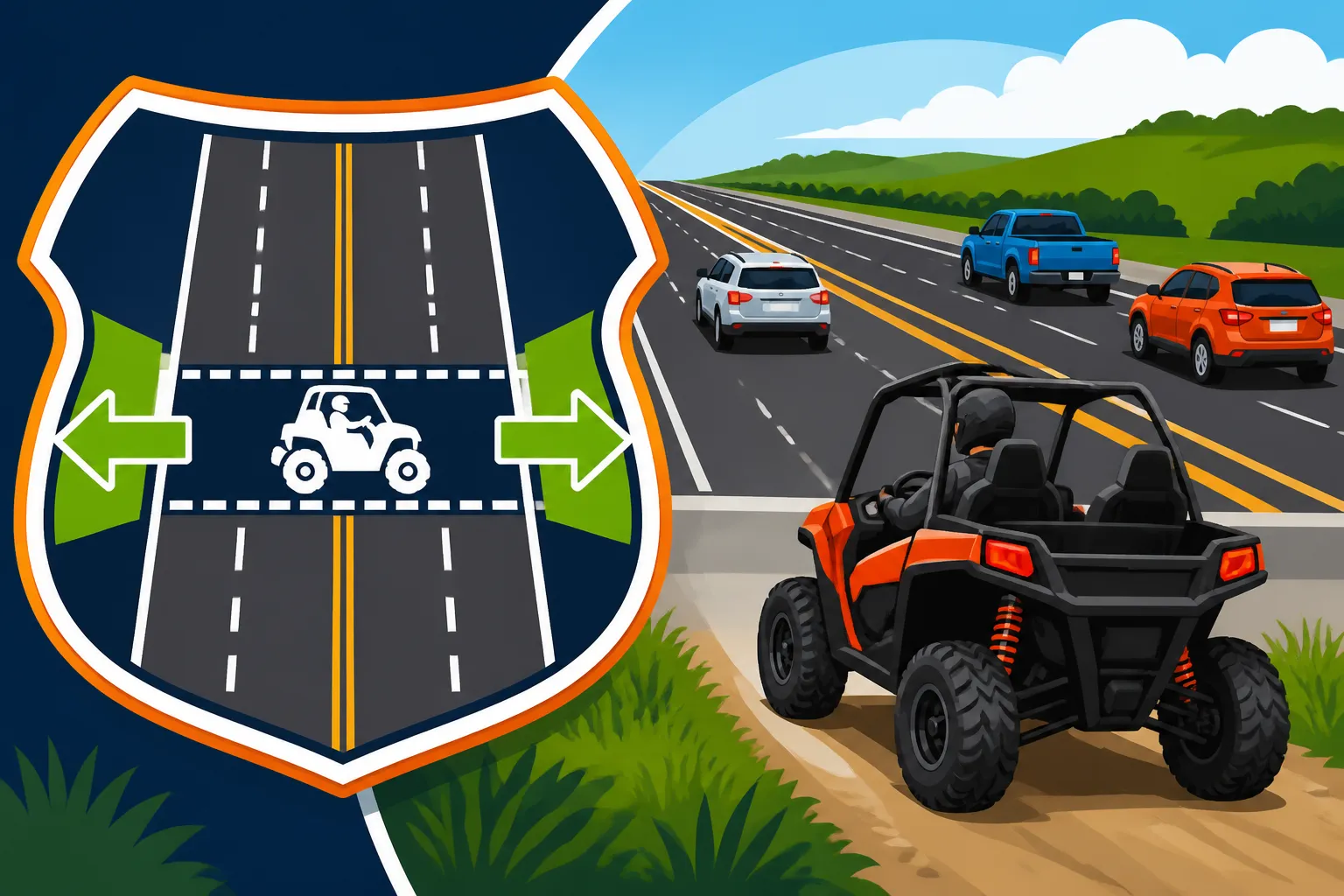
This is the absolute cornerstone of legal multi-lane crossings in Tennessee: TDOT designation. You cannot simply decide to cross a multi-lane highway wherever you see fit. The law specifically states that these crossings are only permitted at locations "designated by the Department of Transportation." This isn't just a bureaucratic hurdle; it's a critical safety measure designed to protect everyone on the road.
Why is TDOT's role so vital?
- Safety Assessment: TDOT engineers conduct thorough assessments of potential crossing points. They look at sight lines, traffic volume, speed limits, existing signage, proximity to intersections, and the availability of features like dedicated turn lanes or median breaks. Their expertise helps identify the safest possible spots.
- Infrastructure Considerations: Sometimes, a designated crossing point might involve specific road markings, signage, or even minor modifications to the roadside infrastructure to enhance safety for OHVs.
- Legal Mandate: From a legal standpoint, if a multi-lane crossing isn't TDOT-designated, it's illegal. Period. Attempting such a crossing can lead to significant [Tennessee Fines for Illegal UTV Road Use], potential vehicle impoundment, and even criminal charges, not to mention the severe safety risks involved.
- Public Awareness: While not always perfect, TDOT designations aim to inform both OHV riders and conventional motorists about these specific crossing areas, helping to manage expectations and increase awareness.
Therefore, before you even consider approaching a multi-lane road in Tennessee with the intent to cross, your first and most important step is to confirm that you are at an officially designated TDOT crossing point. Anything less is not only unlawful but extremely dangerous.
Deciphering TDOT's Role and Process
So, how exactly does the Tennessee Department of Transportation go about designating these crucial crossing points? It's not a random process, nor is it something that happens overnight. TDOT, as the primary authority for state-maintained roads, has a systematic approach to evaluating and approving these locations. Their decisions are based on engineering principles, safety data, and a deep understanding of traffic flow and road design. This designation process is fundamentally about balancing the desire for OHV accessibility with the paramount need for public safety on busy state routes.
It’s important to remember that TDOT's focus is on statewide safety and efficiency. While local communities and rider groups can petition for or suggest crossing points, the ultimate authority and responsibility for designation on state highways lie with TDOT. This centralized approach ensures a consistent standard across all state-maintained multi-lane roads, rather than a piecemeal system that could lead to confusion and danger.
How TDOT Designates Crossing Points
The process for TDOT designation typically involves several key stages:
- Identification of Need: This often begins with a request or observation. A local government, a trail organization, or even TDOT itself might identify a critical need for an OHV crossing at a specific multi-lane highway location to connect trail systems or facilitate access to public lands. For instance, if a popular trail system like those found in the [Tennessee's Adventure Tourism Districts] is bisected by a state highway, a crossing might be deemed essential for rider experience and economic benefit.
- Engineering Study and Safety Analysis: This is the most critical phase. TDOT engineers will conduct a thorough study of the proposed location. This involves:
- Traffic Volume & Speed Analysis: Assessing the number of vehicles and their typical speeds during various times of the day.
- Sight Distance Evaluation: Ensuring that both OHV operators and approaching motorists have adequate sight lines to see each other in time to react safely.
- Geometric Review: Analyzing the width of the road, the presence of median breaks, shoulders, and turn lanes.
- Accident Data Review: Checking historical accident data for the area to identify any existing hazards.
- Operational Feasibility: Determining if the crossing can be performed safely and efficiently by an OHV, minimizing disruption to general traffic flow.
- Public Input and Coordination (if applicable): While not always a formal public hearing process, TDOT may consult with local law enforcement, emergency services, and local governments to gather input and address concerns.
- Approval and Implementation: If the site meets all safety and engineering criteria, TDOT will officially designate the crossing point. This usually involves:
- Signage: Erecting clear signage to alert both OHV riders and motorists to the designated crossing area. This might include signs indicating "OHV CROSSING" or similar warnings.
- Markings: Potentially adding specific pavement markings if deemed necessary to guide OHV operators.
- Inclusion in Official Maps/Lists: Updating internal and sometimes public-facing documentation to reflect the new designation.
It’s a deliberate and data-driven process, ensuring that any approved crossing prioritizes the safety of all road users.
Where to Find TDOT Designated Crossing Information
This is often the trickiest part for riders: finding out where these designated crossing points actually are. Unfortunately, there isn't always one single, comprehensive, publicly accessible online map or database that lists every TDOT-approved OHV crossing for multi-lane roads. It requires a bit of detective work and relying on multiple sources.
Here's how you can typically find this information:
- Local County Clerks and Sheriff's Offices: These local offices are often the first point of contact for riders and may have information on local designations or be able to direct you to specific county-level resources. They deal with things like [Titling an OHV in Tennessee] and local enforcement, so they're usually well-informed about local road rules.
- TDOT District Offices: Tennessee is divided into four TDOT regions (East, Middle, West, and Chattanooga). Contacting the specific regional office responsible for the area you plan to ride in can be very helpful. They might not have a public list but can confirm if a specific location is designated.
- Adventure Tourism Districts Websites: In counties that are part of the [Tennessee's Adventure Tourism Districts], there's often more readily available information. These districts have a vested interest in promoting OHV tourism, so their local tourism boards or county government websites might publish maps or lists of approved road sections and crossing points. Look for websites related to popular riding areas like Windrock, Brimstone, or Royal Blue.
- OHV Trail Park Websites and Maps: Many of the major OHV parks and trail systems in Tennessee, like Windrock Park or Brimstone Recreation, will often provide information on how to legally access their trails, which might include details on nearby designated road crossings if they are part of a larger interconnected riding area. Their trail maps might indicate these points.
- Rider Forums and Local Clubs: While not official sources, local OHV clubs and online rider forums can be excellent places to ask questions and get anecdotal information about known crossing points. Always cross-reference this information with official sources, but it can help you pinpoint areas to investigate further.
- Direct Observation: When traveling in OHV-friendly areas, keep an eye out for specific signage that indicates an OHV crossing. TDOT-designated crossings will typically have clear visual cues.
Remember, if you can't definitively confirm a multi-lane crossing is TDOT-designated, assume it is not allowed. It's always better to err on the side of caution.
Practical Steps for a Legal and Safe Multi-Lane Crossing
Even once you've confirmed a TDOT-designated multi-lane crossing point, the responsibility for a safe and legal maneuver rests squarely on your shoulders as the OHV operator. This isn't a casual affair; it requires deliberate planning, proper vehicle preparation, and focused execution. Think of it like navigating a complex intersection – you need to be fully aware of your surroundings, understand the flow of traffic, and ensure your machine is up to the task. Rushing or being unprepared can have serious consequences.
It’s not just about avoiding a ticket; it's about avoiding an accident that could result in injury or worse. A safe crossing is a combination of foresight and in-the-moment decision-making.
Pre-Ride Planning and Route Assessment
Before you even leave your staging area, a successful multi-lane crossing begins with careful planning. This isn't something you want to improvise on the fly.
- Verify the Crossing Point: Reconfirm that the specific multi-lane highway crossing you intend to use is indeed TDOT-designated. Don't rely on old information or hearsay. Use the methods described above to double-check.
- Scout the Location (if possible): If you're unfamiliar with the area, it's highly advisable to scout the crossing point in a conventional vehicle first. Observe traffic patterns, speed limits, sight lines, and any specific signage. What does the intersection look like? Are there traffic lights? How wide is the median?
- Check Time of Day/Traffic Volume: Plan your crossing for times when traffic is lightest. Avoiding rush hour is crucial. Early mornings or late afternoons (within legal daylight hours, of course) might offer safer windows. Weekends might be busier with recreational traffic.
- Consult Maps and GPS: Use detailed maps or GPS applications to understand the road layout, including approaches and exits from the highway. Identify precisely where you need to enter the highway's shoulder to cross and where you will exit.
- Assess Weather Conditions: Rain, fog, or bright sun glare can significantly reduce visibility for both you and other motorists, increasing the risk. Avoid crossing in adverse weather if possible.
- Group Coordination: If riding with a group, establish a clear plan for the crossing. Who goes first? How will you communicate? Ensure everyone understands the procedure and maintains appropriate spacing.
This proactive approach minimizes surprises and allows you to execute the crossing with greater confidence and control.
Essential Equipment and Rider Preparedness
Having the right equipment on your OHV and being properly prepared as a rider are non-negotiable for any road interaction, especially a multi-lane crossing. Tennessee has specific requirements for OHVs that operate on public roads, even for just a crossing. Ignoring these requirements is not only illegal but dramatically increases your risk.
Here’s a checklist of essential equipment and rider preparedness:
- Lighting: Your OHV must be equipped with working headlights and taillights. Many riders upgrade with brighter LED lights, such as those offered by SuperATV, to enhance visibility. Consider auxiliary lights if riding near dawn or dusk (though multi-lane crossings are typically restricted to daylight).
- Brakes: Ensure your brakes are in excellent working order. You need reliable stopping power, especially if you encounter unexpected traffic.
- Mirrors: Side mirrors are crucial for monitoring traffic approaching from behind, allowing you to gauge gaps in traffic.
- Horn: A working horn is essential for alerting other drivers if necessary.
- Turn Signals: While not always explicitly required for all road use, having functional turn signals is a huge safety advantage when interacting with traffic, helping you communicate your intentions.
- Helmet: While specific [Tennessee Helmet Law for ATV Riders] might vary for off-road use, it is generally prudent and often legally required for any road interaction, especially if under a certain age or in specific contexts. Always wear a DOT-approved helmet.
- Eye Protection: Goggles or a helmet visor are critical to protect your eyes from debris, wind, and glare.
- Driver's License & Insurance: The operator must possess a valid driver's license. Your OHV must also be covered by liability insurance, as outlined in [Tennessee UTV Insurance Requirement]. Carry proof of both.
- Registration/Title Documentation: Although Tennessee does not register OHVs for general road use, you should carry proof of ownership (like your [Titling an OHV in Tennessee] paperwork or a bill of sale) to establish that the machine is yours, especially if you get stopped.
- High-Visibility Gear: Wearing bright, fluorescent colors (like blaze orange or yellow) can significantly increase your visibility to other motorists, especially on fast-moving roads.
Being fully equipped and personally ready means you’re not just hoping for the best; you’re taking concrete steps to ensure the safest possible outcome.
Penalties, Precautions, and Responsible Riding
Riding an OHV on or across any public road in Tennessee carries significant responsibility. When it comes to multi-lane highways, where traffic is fast and unforgiving, the stakes are even higher. Understanding the potential penalties for non-compliance and consistently practicing responsible riding habits are not just suggestions – they are imperatives for your safety and the longevity of OHV access in the state. Each time an OHV rider acts recklessly or illegally on a public road, it reflects poorly on the entire riding community and can lead to stricter regulations in the future.
This section aims to underscore the gravity of illegal actions and provide a framework for consistently safe and legal operation, even during brief crossings.
Understanding the Consequences of Illegal Crossings
The repercussions of attempting an illegal multi-lane highway crossing in Tennessee can be severe and multi-faceted. It’s not just a minor infraction; it can have lasting impacts.
- Fines and Penalties: Operating an OHV illegally on a public road can result in a significant citation. [Tennessee Fines for Illegal UTV Road Use] can quickly add up, and often include court costs on top of the base fine. This can be a costly mistake, easily running into hundreds of dollars.
- Vehicle Impoundment: Law enforcement has the authority to impound your ATV or UTV if you are operating it illegally. This means extra impound fees, storage costs, and the hassle of recovering your machine, which can easily cost more than the fine itself.
- Criminal Charges: Depending on the specifics of the situation (e.g., reckless driving, endangering others), an illegal crossing could escalate beyond a simple traffic citation into a misdemeanor or even felony charge.
- Loss of License/Driving Privileges: Violations involving operating a motor vehicle (which an OHV becomes when used on a road) can impact your [Tennessee Driver's License Rules for UTVs] and lead to points on your license, increased insurance premiums, or even suspension of driving privileges.
- Insurance Complications: If you are involved in an accident during an illegal crossing, your insurance policy may refuse to cover damages, leaving you personally liable for repairs, medical bills, and property damage to other vehicles. This could be financially devastating.
- Safety Risks: Beyond the legal and financial penalties, the most dire consequence is the risk of serious injury or death. Multi-lane highways are not designed for OHVs, and the speed and volume of traffic make collisions incredibly dangerous.
It’s clear that the potential downsides of an illegal crossing far outweigh any perceived convenience. Adherence to TDOT designations is not optional; it's a legal and safety necessity.
Best Practices for Mitigating Risks
Even at a TDOT-designated crossing point, the inherent risks of traversing a multi-lane highway remain. Therefore, adopting a set of best practices is crucial for ensuring the safest possible outcome.
- Stop, Look, Listen, and Wait: This fundamental rule is more important than ever. Come to a complete stop at the edge of the pavement, look both ways multiple times, and listen for approaching traffic. Do not proceed until you have a clear, ample gap in all lanes of traffic. Remember, you might need to cross multiple lanes and a median.
- Cross at a Right Angle: Always cross the road as perpendicularly as possible. This minimizes your time spent exposed in traffic lanes and reduces the distance other drivers need to judge your movement. This aligns with rules for [Crossing a Two-Lane at Ninety Degrees in Tennessee].
- Cross Only During Daylight Hours: Unless explicitly designated and equipped for night crossings (which is exceedingly rare for OHVs on multi-lane highways), always perform crossings between sunrise and sunset.
- Signal Your Intentions Clearly: If your OHV has turn signals, use them. If not, use clear hand signals (if safe to do so) to indicate your intention to cross. Make eye contact with any approaching drivers if possible, though don't assume they see you.
- Accelerate Decisively, but Safely: Once you have a clear gap, accelerate smoothly and decisively across the road. Do not "lollygag" or hesitate. However, do not accelerate so aggressively that you lose control.
- Maintain Awareness: Even while crossing, continue to monitor traffic from all directions. Be prepared to stop or adjust if an unexpected vehicle appears.
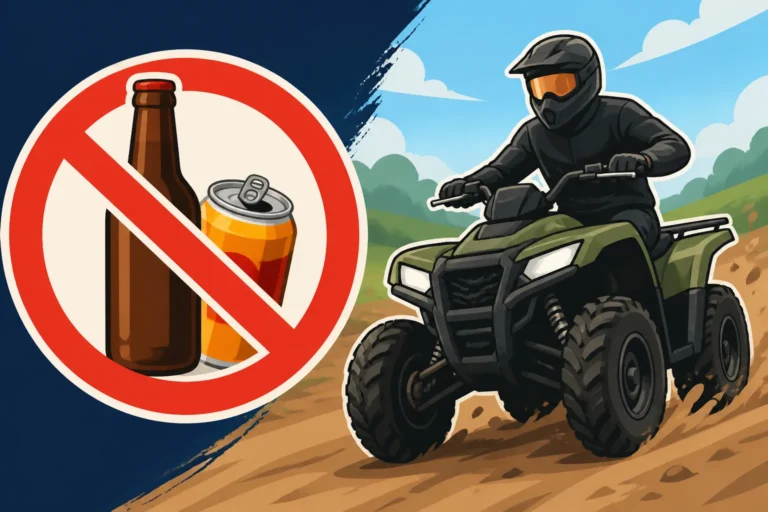
- Ride Sober and Focused: Never operate an OHV on or across a public road under the influence of alcohol or drugs. Stay entirely focused on the task at hand; distractions can be fatal.
- Educate Yourself and Others: Stay informed about current Tennessee OHV laws and encourage other riders to do the same. Responsible riding helps preserve access for everyone.
By meticulously following these precautions, you not only protect yourself but also demonstrate the responsible stewardship that helps maintain and potentially expand OHV access in Tennessee.
Comparison: Two-Lane vs. Multi-Lane OHV Road Crossings in Tennessee
Understanding the differences between crossing a two-lane road and a multi-lane road is crucial for Tennessee OHV riders. Here's a quick comparison:
| Feature | Two-Lane Road Crossing | Multi-Lane Road Crossing |
|---|---|---|
| Legal Basis | Generally permitted at right angles; local rules vary | Requires TDOT designation at specific locations |
| Primary Authority | Often county or local jurisdiction; state guidance | Tennessee Department of Transportation (TDOT) |
| Traffic Speed | Typically lower, often county road limits | Higher, often state highway speeds |
| Traffic Volume | Generally lighter | Heavier, greater density |
| Complexity of Maneuver | Simpler, one lane in each direction to monitor | Complex, multiple lanes and potentially median to navigate |
| Visibility Needs | High | Extremely High |
| Required Equipment | Basic lights, brakes, horn (check local rules) | Basic lights, brakes, horn, mirrors (state law requirements) |
| Risk Level | Moderate (still requires caution) | High (even with designation) |
| Consequences of Error | Serious | Potentially Catastrophic |
| Pre-Planning Needed | Recommended | Absolutely Essential |
| Best Practice | Stop, look, listen, cross at right angle | Stop, look, listen (multiple directions), wait for ample gap, decisive cross at right angle |
Disclaimer
This article is for general informational purposes only and does not constitute professional advice. Laws, prices and regulations vary by location and change over time. Consult a qualified professional for guidance on your specific situation.