Tennessee Lighting Requirements for UTVs
It's incredibly frustrating when you're just trying to enjoy your UTV, maybe take it from your campsite to a nearby trailhead, or run a quick errand on a county road, only to be bogged down by confusing rules. Navigating the specific requirements for making your side-by-side street legal in Tennessee can feel like a maze, especially when it comes to lighting. This guide is here to untangle those complexities, walking you through exactly what your UTV needs in terms of lights to be compliant and safe on Tennessee roads.
The Foundation: Headlights and Taillights for Road Use
When you start thinking about taking your UTV on a Tennessee road, the very first things that come to mind for lighting are usually headlights and taillights. These aren't just suggestions; they are fundamental requirements for any vehicle operating on public roadways, and your UTV is no exception. It’s not enough to simply have lights; they must meet specific standards for visibility and functionality.
Headlight Requirements: Seeing and Being Seen
For your UTV to be considered road-ready in Tennessee, it must be equipped with working headlights. These aren't just any old lights; they need to project a white light that is visible from a considerable distance. Think about driving down a dark country road or even just crossing a state highway during daylight hours—you need to be able to see where you're going, and oncoming traffic needs to clearly see you. This means having at least two headlamps, one on each side, that illuminate the road ahead.
You'll typically need to have both high and low beam capabilities, much like a standard passenger car. High beams are for those truly dark stretches where you need maximum illumination, but you must be able to switch to low beams when approaching other vehicles to avoid blinding them. Imagine a late evening ride near Oliver Springs after a day at Windrock, transitioning from a dark trail onto a designated county road. Your headlights will be critical for safety. Many factory UTV lights are sufficient for this, but if you're upgrading or modifying, make sure your replacements meet or exceed these standards. Aftermarket solutions from companies like SuperATV often offer excellent headlight options that are brighter and more durable, perfect for both trail and occasional road use.
Taillight Requirements: Announcing Your Presence
Just as important as seeing where you're going is ensuring that those behind you can see you. This is where taillights come in. Tennessee law requires your UTV to have at least two working taillights, one mounted on each side of the rear of the machine. These lights must emit a red light, clearly visible from at least 500 feet to the rear. This isn't just about night driving; even in cloudy conditions or at dusk, well-functioning taillights are crucial for preventing rear-end collisions.
Consider a scenario where you're slowly navigating a back road near Huntsville, perhaps going from the Brimstone Recreation area to a local diner. Your taillights provide that essential visual cue to drivers approaching from behind. If one of your taillights goes out, it's not just a minor inconvenience; it's a safety hazard and a violation. Always do a quick check before heading out, especially if you plan to hit any paved roads. The consistency and brightness of your taillights are non-negotiable for road legality and the safety of everyone sharing the road.
Expanding Your Visibility: Turn Signals, Brake Lights, and Reflectors
While headlights and taillights form the bedrock of UTV lighting for road use, Tennessee's requirements don't stop there. To truly operate safely and legally on designated roads, your machine needs to communicate your intentions to other drivers, and that means turn signals and effective brake lights. Beyond active lights, passive reflectors play a crucial role in ensuring your UTV remains visible even when your lights might be off or obscured.
Turn Signals: Clearly Indicating Your Intentions
This is one area where many factory UTVs fall short of street-legal requirements, and it often catches riders off guard. For your UTV to be permitted on [Tennessee Roads for UTVs], it must be equipped with working turn signals. This means you need both front and rear turn signals, on both the left and right sides of your machine. These signals must emit an amber light and flash clearly to indicate turns or lane changes. They need to be visible from a certain distance, ensuring other drivers have ample time to react to your maneuvers.
If your UTV didn't come with turn signals from the factory, you're not alone. Many riders find themselves installing aftermarket kits to meet this requirement. These kits typically include new lights, a switch, and a flasher relay. You can find comprehensive kits from various manufacturers, including trusted names like SuperATV, which makes the process of adding functional turn signals much more straightforward. Getting a quality kit and installing it correctly is paramount. Imagine trying to make a left turn off a busy state route near LaFollette without a signal—it's incredibly dangerous and a surefire way to get a ticket for [Tennessee Fines for Illegal UTV Road Use].
Brake Lights: Signaling Your Stops
Brake lights are another non-negotiable safety feature. Your UTV must have at least two red brake lights mounted on the rear, one on each side. These lights must illuminate automatically and immediately when you apply the brakes, clearly indicating to following vehicles that you are slowing down or stopping. They should be bright enough to be seen from at least 500 feet in daylight. Many UTVs come with integrated brake lights that double as taillights, but it’s essential to confirm they function correctly and are distinct enough when activated.
A common issue riders encounter is when a brake light burns out or gets damaged on the trail. It's easy to overlook until you're pulled over. Always ensure both brake lights are working before you venture onto any public road. This is not just a legal formality; it's a critical safety measure, especially if you're riding in traffic or on a road with variable speed limits. A properly functioning brake light system ensures that the driver behind you has the necessary warning to prevent a collision.
Reflectors: Passive Visibility, Always Active
While active lights depend on your electrical system, reflectors provide passive, always-on visibility. Tennessee law generally requires vehicles to have certain reflectors to enhance safety, especially during low-light conditions or if a light source fails. Your UTV should have red reflectors visible from the rear, often integrated into the taillight assemblies or mounted separately. Some regulations also call for amber reflectors on the sides, especially towards the front, to make the vehicle visible from the side.
Think of it this way: if your engine stalls at night on the shoulder of a county road, or if your electrical system decides to quit, those reflectors could be the only thing preventing a tragic accident. They catch the light from other vehicles, making your UTV outline perceptible. Many UTVs come with some reflectors, but adding additional highly visible reflective tape or dedicated reflectors can only enhance your safety, particularly if you find yourself riding on [Roads Posted Forty-Five or Less in Tennessee] where you'll be sharing the asphalt with faster-moving vehicles.
Night Riding and Additional Visibility Concerns
While meeting the basic lighting requirements gets you legally on the road during daylight hours, riding a UTV after dark, even on designated roads, presents its own set of challenges and warrants additional consideration for visibility. Beyond what's mandated, smart riders often invest in supplementary lighting and other accessories to maximize their presence and safety when the sun goes down.
Auxiliary Lighting and Off-Road Lights: Know When to Use Them
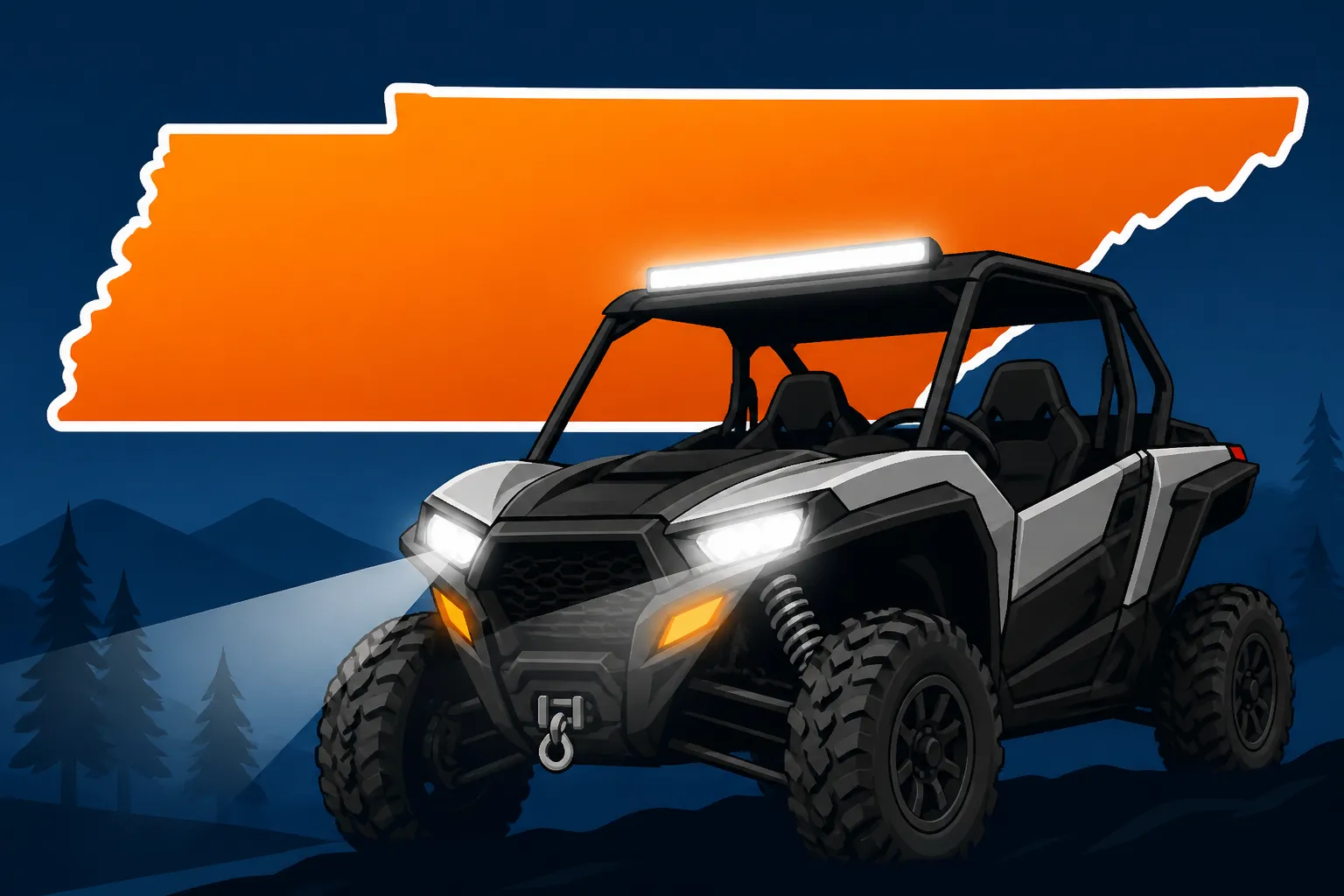
Many UTV owners equip their machines with powerful LED light bars or auxiliary spot/flood lights for serious off-road adventures. These are fantastic for illuminating dark trails at Windrock or Brimstone, turning night into day. However, it's absolutely crucial to understand that these types of lights are generally not street legal for use on public roads. Their intense brightness and wide beam patterns can blind oncoming drivers, creating a significant hazard.
If you have auxiliary lighting on your UTV, ensure it's either covered or turned off when you're on a public road. Some riders wire these lights with a separate switch that is easily accessible and clearly marked to avoid accidental activation. The rule of thumb is: if it's too bright for an oncoming driver to comfortably look at, it shouldn't be on when you're sharing the road. Save those powerful light bars for the trails, especially when exploring areas like the North Cumberland WMA where [Tennessee Rules for Night Riding on a Trail] might apply.
License Plate Illumination: A Small but Critical Detail
Another often-overlooked lighting requirement for road-legal UTVs is a license plate light. If your UTV is titled and registered for road use (even if it's just the TDR sticker that indicates a title), then any license plate or identifying sticker must be illuminated. This light typically shines white and ensures that your plate number is legible from a certain distance at night.
This detail is small, but it's one that law enforcement officers will certainly notice during a traffic stop. A non-illuminated license plate is an easy reason for an officer to pull you over, which could then lead to further inspection of your UTV's road legality. If your machine doesn't have a dedicated license plate light, you'll need to install one. Many aftermarket lighting kits for street-legal conversions include this component.
Enhancing Side and Rear Visibility
While front and rear lighting are mandated, enhancing your UTV's visibility from the sides and rear can significantly improve safety, especially at night or in adverse weather. Consider adding additional amber side marker lights, especially if your UTV is wide. Also, a bright, flashing amber strobe light (if permitted in your area for slow-moving vehicles) on the rear can be a fantastic way to make your presence known, particularly when you're crossing a state highway or navigating a busy intersection.
Reflective tape, strategically placed on the sides and rear of your UTV, can also make a huge difference. It's inexpensive, easy to apply, and offers an extra layer of visibility. Remember, the goal is not just to meet the minimum legal standards but to be as visible as possible to other road users, ensuring you can enjoy your UTV adventures safely and responsibly.
Here's a quick comparison of essential and optional lighting components for road-legal UTVs in Tennessee:
| Component | Legal Requirement (Tennessee Roads) | Recommended for Enhanced Safety | Typical Light Color |
|---|---|---|---|
| Headlights | Yes (High/Low Beam) | Yes | White |
| Taillights | Yes (Continuous Red) | Yes | Red |
| Brake Lights | Yes (Red, activates with pedal) | Yes | Red |
| Turn Signals | Yes (Front & Rear, Amber) | Yes | Amber |
| Rear Reflectors | Yes (Red) | Yes | Red |
| License Plate Light | Yes (if plate required) | Yes | White |
| Side Marker Lights | Generally Yes (esp. if wide) | Yes | Amber |
| Auxiliary Off-Road Lights | No (must be off on roads) | No (for road use) | White (often) |
| Rear Strobe/Beacon | No | Yes (for slow-moving) | Amber |
Why These Rules Matter: Safety and Avoiding Fines
Understanding and adhering to Tennessee's UTV lighting requirements isn't just about jumping through hoops to satisfy legal technicalities. These rules exist for incredibly important reasons: to ensure the safety of everyone on the road, including you and your passengers, and to prevent you from running into costly and inconvenient legal trouble. Ignoring these requirements can have serious repercussions, far beyond just a minor inconvenience.
Enhancing Safety for All Road Users
First and foremost, proper lighting dramatically enhances safety. When you're operating a UTV on a public road, you're sharing that space with passenger cars, trucks, and even motorcycles, all of which often travel at higher speeds and have different visibility expectations. Your UTV, by its nature, is often smaller, lower to the ground, and can be less conspicuous than a full-sized vehicle. Adequate lighting helps bridge that gap.
Imagine riding home from a long day on the trails, the sun has just dipped below the horizon, and visibility is starting to drop. Without bright headlights, you might miss a pothole or an animal darting into the road. Without clear taillights and brake lights, the driver behind you might not realize you're slowing down until it's too late. And without turn signals, changing lanes or making a turn becomes a dangerous guessing game for everyone else. These lighting components are your primary communication tools with other drivers. Investing in quality, compliant lighting is an investment in your own safety and the safety of your community.
Avoiding Costly Fines and Legal Headaches
The legal consequences of improper lighting can quickly put a damper on your UTV adventures. Operating a UTV on a public road without the required lighting is a violation of Tennessee law. This can result in a citation, which typically comes with a fine. While the exact amount can vary, it’s money that could have been spent on trail permits for Windrock or Brimstone, or new gear.
Beyond the initial fine, a traffic stop for a lighting violation can also lead to further scrutiny of your UTV's road legality. If an officer finds other non-compliant aspects, such as a lack of insurance or an improper [Tennessee Driver's License Rules for UTVs] for road use, the situation can escalate quickly. You might face additional fines, your UTV could be impounded, and you could even face more severe charges, depending on the specifics of the situation. It's a hassle you definitely want to avoid. Checking your lights before every road excursion, and making sure your UTV is equipped with all the necessary components, is a simple proactive step that can save you a lot of time, money, and stress.
This article is for general informational purposes only and does not constitute professional advice. Laws, prices and regulations vary by location and change over time. Consult a qualified professional for guidance on your specific situation.