Between Brimstone Road and Norma Road
There's nothing quite like the freedom of exploring Tennessee's rugged beauty on an ATV or UTV, but if you've ever tried to figure out where you can actually ride on public roads, especially in the unique "Adventure Tourism Districts" like Scott County, you know it can feel like deciphering ancient scrolls. The frustration is real when you see others out and about, seemingly cruising effortlessly, while you're left wondering if you're just one wrong turn away from a hefty fine. This guide is here to clear up the confusion, specifically tackling the nuances of riding your machine on the county roads between Brimstone Road and Norma Road in Scott County, ensuring you can enjoy your ride with confidence and stay on the right side of the law.
The Scott County Advantage: Why This Area Is Different
You've likely heard whispers or seen signs about certain areas in Tennessee being more "friendly" to off-highway vehicles (OHVs) on public roads. Scott County is one of those places, and it's not by accident. This isn't just a suggestion; it's backed by specific legislation that recognizes the unique role OHV recreation plays in the local economy and culture. It's a game-changer for riders, but it also comes with its own set of rules that are crucial to understand.
The Adventure Tourism District Designation
Tennessee's legislature created a special classification for certain counties, calling them "Adventure Tourism Districts." This designation isn't just a fancy title; it's a legal framework designed to promote outdoor recreation, including ATV and UTV riding, by allowing local governments more flexibility in regulating road use. Scott County is indeed one of these [Scott, Anderson and Campbell Counties], meaning that it has been given the authority to open certain roads to OHVs that would typically be off-limits in other parts of the state. This is why what might get you a ticket in one county is perfectly legal in Scott County, provided you're following their specific ordinances. It's all about local control recognizing the local vibe.
This distinction is incredibly important for riders because it shifts the default stance from "no OHVs on roads" to a more nuanced "yes, on some roads, under certain conditions." For visitors and residents alike, understanding [Why an Adventure Tourism District Matters] is the first step in unlocking the full potential of riding in this region. Without this designation, the kind of open-road access that makes riding between Brimstone Road and Norma Road so appealing simply wouldn't exist. It's a direct acknowledgment of the economic and cultural impact of off-road tourism.
Special Road Use Privileges in Unincorporated Areas
Within these Adventure Tourism Districts, local county commissions have the power to designate specific county roads as open to OHV use. This is where the magic happens for riders. Crucially, these privileges often apply to unincorporated areas, meaning those stretches of road that aren't within the defined limits of a city or town. This is why you'll often hear about [Unincorporated Scott County's Open Roads]. The idea is to connect trail systems, allow riders to access amenities like gas stations or restaurants, and generally facilitate a more integrated riding experience that isn't confined solely to private parks.
However, "open" doesn't mean "anything goes." These roads are still public roads, shared with other vehicles, and specific rules apply. The intent is to allow thoughtful integration, not chaos. This means that while you might be able to ride your UTV down a particular gravel lane to get to a trail connector, you're expected to do so safely, responsibly, and in compliance with all the stipulated equipment and rider requirements. It’s a privilege, not a free-for-all, and local officials are usually keen to ensure it remains a positive aspect of the community.
Understanding "Between Brimstone Road and Norma Road"
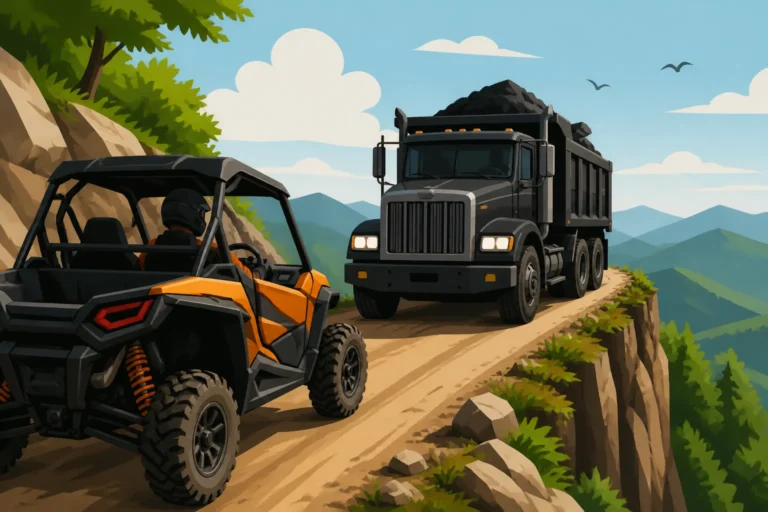
When the local ordinances talk about riding "between Brimstone Road and Norma Road," they're not just throwing out two random road names. These are significant arteries within Scott County that delineate a specific, well-known area for OHV recreation. This particular corridor is celebrated by riders for its access to various trails and points of interest, making it a crucial zone for anyone planning an extended ride in the region.
Defining the Permitted Zone
The phrase "Between Brimstone Road and Norma Road" refers to a specific geographic area within Scott County where many of the designated county roads are open for OHV use. Think of these two roads as the northern and southern boundaries, or sometimes western and eastern, of a large, permeable riding zone. This allows riders coming from the Brimstone Recreation area to connect to other parts of the county or vice versa, often through a network of county-maintained roads that crisscross the landscape. This interconnectedness is a huge draw for riders, allowing for longer, more varied routes without the need to trailer up and move.
It's important to remember that while the area between these roads has many designated OHV-friendly county roads, it doesn't mean every road in that entire expanse is open. Riders still need to be diligent and look for local signage or consult official county maps (which are often updated by the county clerk's office or even local riding parks) to confirm which specific roads are designated. Ignorance of the specific road's status is not an excuse, and a misstep could still lead to a citation. The beauty of this area is its connectivity, but that connectivity relies on understanding the specific routes approved for use. [Between Brimstone Road and Norma Road] is more than just a place; it's a network.
Navigating Designated County Roads
Once you're in the "Between Brimstone Road and Norma Road" zone, you'll find numerous county roads that have been explicitly opened for OHV use. These are typically the gravel or less-traveled paved roads that connect hollows, lead to trailheads, or provide access to homes and businesses that cater to the riding community. The county has specific rules about these roads, and they are usually posted 45 mph or less. [Riding a Road Posted 45 mph or Under] is a key component of the state law that allows OHVs on these specific routes.
When riding these roads, it's paramount to remember you're sharing them with cars, trucks, and potentially even tractors. Treat these roads with the same respect and caution you would any other public thoroughfare. This means obeying all traffic laws, using appropriate signals, and maintaining a safe speed. While the scenery might be distracting, your focus needs to remain on the road and other users. Keep an eye out for residents, slow-moving farm equipment, and children playing near driveways. It’s a communal space, and responsible riding helps ensure these privileges continue for everyone.
Key Regulations for Road Riding in Scott County
Riding your OHV on designated county roads in Scott County is a privilege, and with that comes a set of responsibilities and specific regulations. These rules aren't designed to hinder your fun, but rather to ensure the safety of all road users and to preserve the positive relationship between the riding community and local residents. Disregarding these regulations can lead to fines, citations, and even the revocation of these hard-won riding privileges.
Machine Requirements and Equipment
For your ATV or UTV to be legal on designated county roads in Scott County, it needs to meet certain equipment standards. This isn't just about what looks cool; it's about making your machine visible, controllable, and safe for shared use. Firstly, your machine must be titled in Tennessee. While Tennessee does not register OHVs in the same way it does cars, it does require a title. You’ll need to have a [A Sticker That Proves a Tennessee Title Exists] prominently displayed, which essentially acts as your proof of ownership and compliance.
Beyond titling, essential safety equipment is a must. Your machine needs working headlights, taillights, brake lights, and turn signals. A horn is also required. Having a rearview mirror (or mirrors, depending on the machine) is crucial for situational awareness. Don't forget that your exhaust system needs to be in good working order and meet sound limits – excessively loud machines can be a real nuisance to residents. Many riders also add aftermarket accessories for safety and convenience, and companies like SuperATV offer a wide range of DOT-compliant lights, mirrors, and even full windshields that can make your machine safer and more comfortable for road use. Make sure any modifications you make still adhere to local regulations regarding width and weight, especially if you have a larger UTV, as [Tennessee Rules for a Machine Over 80 Inches] can sometimes come into play.
Rider Requirements: Age, License, Helmets, and Insurance
Just as your machine has to meet certain standards, so do you as the operator. One of the most common questions is about driver's licenses. For an OHV to be operated on public roads in Tennessee, the driver must possess a valid driver's license. This means a regular Class D passenger vehicle license, not just a learner's permit. [Tennessee Driver's License Rules for UTVs] are quite clear on this point.
Helmets are another critical component. While off-road helmet rules can vary, when you're operating an OHV on a public road in Tennessee, the [Tennessee Helmet Law for ATV Riders] is quite specific: all operators and passengers under 18 years of age are required to wear a helmet. While adults 18 and over might not be legally mandated to wear a helmet on the road, it is always a wise safety practice, especially given the open nature of many OHVs. Finally, liability insurance is an absolute must. Just like with a car, if you're on a public road, you need to carry proof of insurance. [Tennessee UTV Insurance Requirement] protects you and others in case of an accident. Always carry your proof of insurance with you, as a deputy roadside will likely ask for it.
Time of Day and Speed Limits
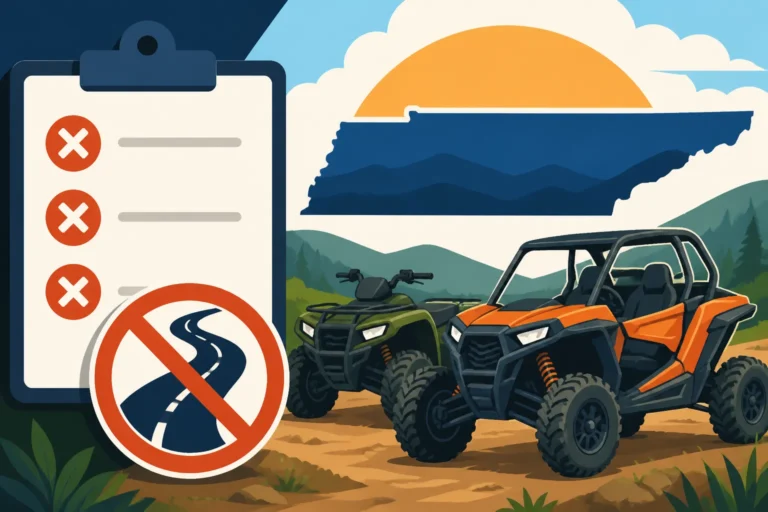
These Adventure Tourism Districts also impose restrictions on when you can ride on public roads. The general rule across these districts is that OHVs are permitted on designated county roads only between sunrise and sunset. [Riding Only Between Sunrise and Sunset] is a critical rule to remember. You cannot be out cruising the county roads after dark, even if your machine has all the proper lighting. This rule is in place for safety, as OHVs can be harder to see at night, and to minimize noise disturbances to residents.
Speed limits are equally important. While it might be tempting to open up your machine on a long, straight stretch of gravel, you must adhere to the posted speed limits. In designated OHV areas, these roads are typically posted at 45 mph or less, and sometimes much lower, especially in residential areas or near trailheads. You are expected to ride safely and defensively, anticipating other vehicles, pedestrians, or even wildlife. Exceeding the speed limit isn't just illegal; it's dangerous and undermines the trust that allows OHVs on these roads in the first place.
Practicalities for Your Scott County Ride
Planning a ride in Scott County, particularly in the "Between Brimstone Road and Norma Road" corridor, involves more than just knowing the rules. It means understanding the local landscape, how to legally connect the dots, and what to do before you even unload your machine. Getting these practicalities sorted will make your trip much smoother and more enjoyable.
Crossing State Highways and Restricted Roads
While Scott County allows OHVs on many county roads, state highways are generally a different story. The state statute that created Adventure Tourism Districts specifically outlines how OHVs can interact with state routes. Typically, you cannot ride along a state highway. However, the law often permits crossing a state highway at a right angle (ninety degrees) if done safely and when traffic allows. This is often stipulated in the legislation as [Crossing a Two-Lane at Ninety Degrees in Tennessee]. For multi-lane highways or more complex intersections, the Tennessee Department of Transportation (TDOT) may designate specific crossing points. Always look for signage or consult local maps for these specific crossing rules.
It's a common frustration that you might have a perfectly legal county road on either side of a state route, but that state route itself becomes a barrier. This is why understanding these crossing rules is so vital. Attempting to ride along a state highway or crossing at an unmarked, non-designated point can lead to a citation and endanger yourself and others. Always plan your route with these state highway restrictions in mind, ensuring your planned ride primarily uses designated county roads and approved crossings.
Staying on the Right Side of the Law: Permits and Courtesy
Beyond the equipment and rider requirements, there are other important considerations for riding in Scott County. If you plan to access the private trail systems like [Brimstone Recreation at Huntsville, Tennessee] or the nearby Windrock Park, you will absolutely need a separate land use permit for each park. These are private lands with their own rules and fees, and county road use does not equate to trail access. Make sure you purchase your permits in advance or upon arrival at the park's gate.
Courtesy is also key. The ability to ride OHVs on county roads is a privilege hard-won by local advocates. This means riding respectfully, minimizing dust, keeping noise levels reasonable, and yielding to other traffic. Wave to locals, don't litter, and show appreciation for the access you've been granted. A little common sense and kindness go a long way in ensuring these road use privileges continue. When deputies or wildlife officers perform a roadside check, they'll be looking for your permit if you're accessing a WMA, and proof of insurance and a valid driver's license for road use. Be polite and prepared to show your documents.
Trailering In and Staging Your Adventure
For most riders, accessing the "Between Brimstone Road and Norma Road" area means trailering your machine in. You'll want to find a suitable staging area. Many local businesses, campgrounds, and even some of the larger riding parks offer designated parking for trucks and trailers. For example, Brimstone Recreation has extensive parking facilities where you can unload and then access the trail system directly, or ride out onto designated county roads from their staging area.
When choosing a staging spot, consider accessibility, security, and whether it's legal to park your truck and trailer there for an extended period. Some riders choose to camp at local resorts that offer direct trail or road access, allowing them to unload once and ride for days. Make sure your trailer is properly registered and secured, and that your machine is safely loaded for the journey. [Tennessee Rules for Riding a Trailered Machine] might seem obvious, but proper tie-downs and weight distribution are crucial for safe transport. Aftermarket ramps and cargo solutions, such as those from SuperATV, can make loading and unloading your machines much easier and safer.
Maximizing Your Adventure in This Unique Corridor
The "Between Brimstone Road and Norma Road" area isn't just about getting from one place to another; it's about the adventure itself. With the unique road access, you have an incredible opportunity to create diverse rides that blend scenic county roads with challenging trail systems. Making the most of this means thoughtful planning, machine preparation, and an understanding of the local environment.
Connecting to Trail Systems from Road Use
One of the biggest advantages of Scott County's designated road system is the ability to connect various trail networks. Imagine starting your day at a staging area, riding a few miles down a scenic gravel road, and then peeling off onto a dedicated trail system. This seamless transition is what makes the experience here so appealing. For example, you might use designated county roads to bridge gaps between different sections of the Brimstone Recreation trail system or to reach a distant trailhead that would otherwise require re-trailering.
This capability opens up possibilities for epic, multi-day rides that explore a wider range of terrain. Instead of being confined to a single park, you can design routes that incorporate segments of various trails, pass through small communities, and truly immerse yourself in the landscape. Always have a good map (both physical and digital) that clearly delineates both the designated county roads and the private trail systems you plan to access. Understanding where these roads intersect with trails is key to a smooth and legal adventure.
Prepping Your Machine for Mixed Terrain
Since you'll likely be encountering both smooth (or somewhat smooth) county roads and rugged trails, your machine needs to be prepared for mixed terrain. Tires are a crucial consideration. While aggressive mud tires are great for deep slop, they can wear quickly and feel squirrely on paved roads. A good all-terrain tire with a decent tread pattern and durable sidewalls will offer a better compromise for varied conditions. Checking your tire pressure is also important; slightly lower pressure for trails for better grip, and higher pressure for roads for better handling and wear.
Beyond tires, consider suspension settings. If your machine has adjustable shocks, you might want to find a setting that provides a comfortable ride on county roads but can still handle the bumps and ruts of the trails. Regularly check your brakes, fluids, and lights, as these will be critical for both safety on the road and performance on the trail. A simple toolkit, spare tire repair kit, and perhaps a small air compressor can save you a lot of hassle. SuperATV offers robust winches and recovery gear that can be invaluable, whether you're stuck deep on a trail or just helping another rider out on a remote county road.
Respecting the Local Community and Environment
Remember, the ability to ride OHVs on public roads in Scott County is a privilege extended by the local community. It's vital to show respect for the residents, their property, and the environment. This means keeping noise levels down, especially near homes, and adhering to posted speed limits. It also means staying on designated roads and trails; riding off-trail onto private property without permission is trespassing and illegal.
Always carry out what you carry in, and perhaps even pick up any litter you find. The natural beauty of this area is a huge draw, and it's up to all of us to help preserve it. Local businesses thrive on OHV tourism, so consider supporting them by grabbing a meal, filling up your tank, or staying at a local lodge. By being responsible, courteous, and environmentally conscious, you contribute to a positive reputation for the OHV community and help ensure that these unique riding opportunities in Scott County continue for years to come.
| Aspect | Designated County Roads (Scott County) | Private Trail Systems (e.g., Brimstone) |
|---|---|---|
| Legal Basis | State Law (Adventure Tourism District) & Local Ordinance | Private Land Owner Rules, Park Permit Terms |
| Primary Use | Travel, Access, Connecting Trailheads | Recreational Riding, Off-Road Exploration |
| Permit Required | No county permit for road use (but must be titled) | Yes, specific land use permit for each park |
| Driver's License | Required (valid Class D) | Not strictly required (often age/supervision) |
| Helmet Under 18 | Required | Required (often 18 and under, varies by park) |
| Insurance | Required (liability) | Not typically required by park for off-road use |
| Time of Day | Sunrise to Sunset Only | Often 24/7 (e.g., Windrock), check park rules |
| Speed Limits | Posted limits (45 mph or less) | Posted park limits, often lower |
| Equipment Req. | Headlights, taillights, brake lights, turn signals, horn, mirrors | Headlights, taillights (check park rules) |
| Crossing Highways | Permitted at designated points (e.g., 90-degree) | Not applicable (within park boundaries) |
| Contextual Brands | SuperATV (equipment for compliance) | SuperATV (trail gear, protection) |
Disclaimer
This article is for general informational purposes only and does not constitute professional advice. Laws, prices and regulations vary by location and change over time. Consult a qualified professional for guidance on your specific situation.