Tennessee Fines for Illegal UTV Road Use
It's incredibly frustrating when you just want to take your UTV out for a spin, maybe to grab some supplies from a nearby store or to connect two trailheads, only to worry about running afoul of the law. Many riders get caught off guard, assuming their off-road vehicle can handle a quick trip on a paved road without consequence. This guide is here to unravel the complexities of Tennessee's laws regarding UTV road use, specifically focusing on the fines and penalties you could face if you're caught riding illegally, and how to avoid them.
The Allure and the Law: Why UTVs on Tennessee Roads is a Minefield
Let's be honest, the idea of hopping on your UTV and cruising down a scenic Tennessee road is incredibly appealing. These machines are versatile, fun, and for many, they're not just recreational vehicles but also practical tools for farm work or navigating rural properties. It feels natural to want to take the shortest route between points, especially if it means avoiding loading up a trailer. However, Tennessee law, like a stubborn mule, has its own mind when it comes to off-highway vehicles (OHVs) and public roads.
The challenge lies in a patchwork of rules that can feel contradictory. On one hand, you hear about places where UTVs are allowed on roads, creating this sense that it should be okay everywhere. On the other hand, a simple mistake can lead to a roadside stop and a citation that leaves you scratching your head, wondering what went wrong. It's a classic case of what you think should be common sense versus what the letter of the law actually dictates, and that discrepancy is where riders often get into trouble.
The Nuance of Tennessee Law on UTV Road Use
While it might seem like a blanket ban, Tennessee's approach to UTVs on public roads is more nuanced than a simple "yes" or "no." The state essentially starts with a "no" for general road use, but then carves out specific exceptions. This is why you'll often hear that [Street Legal UTVs in Tennessee: The Short Answer] is that it depends entirely on where you are and what type of road you're on.
The main point of confusion often revolves around the fact that UTVs are primarily designed for off-road use. They lack many of the standard safety features required for street-legal vehicles, like certain types of lights, turn signals, specific windshields, or even a proper license plate setup. Tennessee recognizes this and, rather than forcing every UTV owner to convert their machine into a car, it designates certain areas and conditions under which limited road use is permissible. This means that a UTV perfectly legal on a dedicated trail in Windrock might land you in hot water if you try to take it down a state highway just outside the park boundary. It's a critical distinction that many riders, especially those new to the state or unfamiliar with the specific ordinances, often miss.
Common Misconceptions About Road Usage
One of the biggest pitfalls for UTV riders in Tennessee is the prevalence of common misconceptions. You might hear from a buddy that "everyone does it" in a particular county, or see a local driving their side-by-side to the gas station, and assume it's perfectly fine. But what looks legal might be an exception you don't qualify for, or simply someone risking a fine.
For instance, many believe that if a road isn't a major highway, it's fair game. This is largely untrue. Most county roads, even unpaved ones, fall under state regulations unless a specific local ordinance has been enacted to allow OHVs, and those ordinances are quite specific. Another common misconception is that if your UTV has headlights and taillights, it's ready for the road. While essential, these are often just the tip of the iceberg for what's legally required. Riders often overlook the need for turn signals, rearview mirrors, a horn, DOT-approved tires, or a proper windshield. Aftermarket companies like SuperATV offer kits to help with these conversions, but simply installing them doesn't automatically grant you road access statewide; you still need to be on an approved road. It's crucial to understand that even if your machine looks street legal, the local laws dictate its actual legality.
The Cost of Convenience: Specific Fines for Illegal UTV Road Use
When a Tennessee Highway Patrol officer or a county deputy spots you cruising down a restricted road in your UTV, that momentary convenience can quickly turn into a significant financial and legal headache. It's not just a slap on the wrist; the penalties are designed to deter illegal road use and ensure public safety. These fines and charges can quickly add up, turning a fun ride into a costly lesson.
It's important to understand that the system isn't out to get you, but rather to ensure that vehicles on public roads meet certain safety and registration standards. UTVs, by their nature, don't always meet these, which is why the rules are so strict. When a deputy initiates a stop, they're not just looking at the act of riding on the road, but often a whole host of potential related violations that can stack up.
The $50 Fine: The Starting Point
The most immediate financial consequence you're likely to face for illegal UTV road use in Tennessee is [Tennessee's $50 Fine]. This is often the base penalty for the unauthorized operation of an off-highway vehicle on a public road or highway where it's not permitted. While $50 might not sound like a huge sum, it's rarely the only charge you'll receive. Think of it as the price of admission to a much larger problem.
This fine serves as the primary deterrent, but deputies are trained to look beyond just the presence of the UTV on the road. They'll be checking for other compliance issues that can quickly add to your financial burden. For example, if your UTV lacks proper lighting, a working horn, or mirrors, you could face additional equipment violation fines. If you don't have proof of insurance, that's another fine. No valid driver's license? Even more trouble. So, while the initial fine is fifty dollars, the total bill from the courthouse can easily climb much higher when all the related citations are tallied.
Beyond the Fine: A Class C Misdemeanor
Here's where things get serious: illegal UTV road use in Tennessee isn't just a minor traffic infraction. Operating an OHV on a highway in violation of the law is classified as [A Class C Misdemeanor in Tennessee]. This is not merely a ticket; it's a criminal offense, and it carries much heavier implications than just a monetary penalty.
A Class C Misdemeanor in Tennessee means you could face up to 30 days in jail, a fine of up to $50 (separate from the traffic citation fine, meaning it's potentially another $50 on top of the first), and, most importantly, a criminal record. This isn't something that just disappears from your history. A criminal record can impact various aspects of your life, from employment opportunities and housing applications to professional licenses and even eligibility for certain educational programs. Imagine explaining to a potential employer why you have a misdemeanor for operating your UTV illegally. It paints a picture that's hard to shake, all for a quick ride on a restricted road. The "convenience" suddenly looks a lot less appealing when weighed against the long-term consequences of a criminal charge.
Additional Charges and Costs That Can Stack Up
Beyond the direct fine and misdemeanor charge, several other costs and penalties can pile up, making the incident even more painful. It's like a snowball effect, where one initial violation leads to a cascade of others.
- Towing and Impoundment Fees: If your UTV is deemed illegally operated, a deputy has the authority to have it towed and impounded. These fees can be exorbitant, often costing hundreds of dollars just for the tow, plus daily storage fees at the impound lot. Reclaiming your machine can become a major hassle and expense, far outweighing the initial $50 fine.
- Court Costs and Legal Fees: If you choose to fight the citation or if your case goes to court, you'll incur court costs, which can include administrative fees, processing fees, and even fees for any public defender you might need. If you hire a private attorney, those fees can easily run into thousands of dollars, making the initial fine seem trivial.
- Insurance Premiums: A criminal conviction or even multiple traffic violations can significantly impact your insurance rates, both for your UTV and potentially for your other vehicles. Your insurer might view you as a higher risk, leading to steeper premiums for years to come.
- Reckless Driving/Endangerment: Depending on how you were operating the UTV, a deputy might also issue citations for reckless driving or even endangering others, especially if there were pedestrians or other vehicles nearby. These are more serious charges that carry their own significant penalties and can lead to license suspension.
- License Suspension: If you're cited for multiple violations, particularly those involving a driver's license, you could face a suspension of your driver's license, regardless of whether it's for your car or your UTV. [Tennessee Driver's License Rules for UTVs] are quite clear on this. For younger riders, [Tennessee Minimum Age to Ride a Road] rules are strict, and violations can impact future driving privileges.
- Helmet Violations: If you're on a public road where UTVs are permitted (like within an Adventure Tourism District) but fail to wear a helmet, that's another potential fine, especially for younger riders. [Tennessee Helmet Law for ATV Riders] still applies to these situations.
This table illustrates how quickly penalties can accumulate:
| Violation Type | Initial Fine (Approx.) | Legal Classification | Additional Consequences |
|---|---|---|---|
| Illegal UTV Road Use | $50 | Class C Misdemeanor | Potential jail time, criminal record, court costs, increased insurance |
| No Valid Driver's License | Varies | Misdemeanor | License suspension, additional fines |
| No Proof of Insurance | Varies | Misdemeanor | Fines, potential impoundment, points on driving record |
| Equipment Violations (no horn, turn signal, etc.) | Varies | Traffic Infraction | Fines, potential "fix-it" tickets |
| Reckless Driving | Varies | Misdemeanor/Felony (aggravated) | Heavier fines, license suspension, jail time, criminal record |
| Helmet Violation | Varies | Traffic Infraction | Fines (especially for minors) |
| Towing/Impoundment | N/A | N/A | Hundreds in towing/storage fees |
The Enforcement Reality: How Illegal Road Use Incidents Unfold
Understanding the legal penalties is one thing, but knowing how these situations typically play out can help you navigate them or, better yet, avoid them entirely. It's often not a dramatic chase scene, but a routine stop that escalates quickly due to layered regulations.
Many riders, especially those new to UTVs or visiting from out of state, simply aren't aware of the specific road use laws in Tennessee. They might see others riding on the shoulders of roads or crossing highways and think it's tacitly approved. But law enforcement officers are increasingly aware of UTV road use and are often on the lookout, particularly in areas near popular trail systems or rural communities.
The Roadside Stop: What Happens When a Deputy Pulls You Over
It usually starts with flashing blue lights. When [A Deputy at a Tennessee Roadside Stop] signals you to pull over while you're on your UTV, the first thing to remember is to comply safely and immediately. Pull to the right shoulder, turn off your engine, and keep your hands visible.
The deputy will approach and typically ask for your driver's license, registration (if applicable), and proof of insurance. Since UTVs are not generally registered for road use in Tennessee (they typically only have an OHV title sticker), this immediately flags a potential issue. The deputy will then inquire about your knowledge of the laws regarding UTV operation on public roads. If you're riding in an area not designated for OHV use, the conversation will quickly shift to explaining the violation. They'll then likely issue one or more citations, explaining the fines and the Class C Misdemeanor charge. This is also when they might assess your UTV for equipment violations (no mirrors, proper lights, etc.) or check if you meet [Tennessee Equipment Rules for Road Use]. It's a precise process, and any further non-compliance or disrespectful behavior can quickly worsen the situation.
Appealing a Citation: Your Day in Court
If you receive a citation for illegal UTV road use, you do have the right to appeal it in court. This process is known as challenging the ticket. However, successfully [Appealing a Tennessee UTV Citation] can be an uphill battle, especially if you were clearly violating the law.
To have a chance, you would need to prove that you were operating your UTV legally under a specific exception, such as riding on a designated road within an [Tennessee's Adventure Tourism Districts] or a county that has specifically opened its roads to UTVs. You'd need to present evidence, like a map of designated roads, proof that your UTV met all equipment requirements for that specific designation, and a valid driver's license. Simply claiming ignorance of the law is not a defense and will not lead to a dismissal. For example, if you were riding on an unapproved county road, even if your UTV was outfitted with a full street-legal kit from SuperATV, the core issue of being on a non-designated road would remain. The best-case scenario for most appeals is often a plea bargain, where you might get a lesser charge or a reduction in fines, but the Class C Misdemeanor often sticks unless there was a procedural error by the officer or clear evidence of legal operation.
Impact on Insurance and Driving Record
The repercussions of an illegal UTV road use citation extend far beyond the immediate fines and court costs. One significant area of impact is your insurance. A Class C Misdemeanor, even for a relatively minor offense, can signal to insurance companies that you are a higher-risk driver. This can lead to increased premiums for your automobile insurance, and if you have separate insurance for your UTV, that policy could also see a hike, or even be canceled.
Furthermore, these violations can appear on your driving record. While UTVs aren't typically registered with traditional license plates, the associated citations can still be linked to your driver's license. Points on your driving record can lead to further penalties, including potential driver's license suspension if you accumulate too many. This means that a fun afternoon ride could potentially affect your ability to drive your car to work or school, creating long-term headaches that far outweigh the temporary thrill of an unauthorized road trip.
Staying on the Right Side of the Law: Navigating Tennessee Roads Legally with a UTV
The good news is that you don't have to give up the dream of connecting trails or making quick runs on your UTV. The key is understanding and adhering to Tennessee's specific legal framework. By knowing where you can ride, what your machine needs, and what you, as the operator, must have, you can enjoy your UTV without the fear of fines or criminal charges. It all comes down to planning and being well-informed.
Tennessee's laws are becoming more accommodating in specific areas, recognizing the economic and recreational benefits that OHV use brings. However, this flexibility comes with strict conditions that must be met. It's not about making every road accessible to every UTV, but about creating safe and legal corridors for riders in designated zones.
Designated Roads and Adventure Tourism Districts
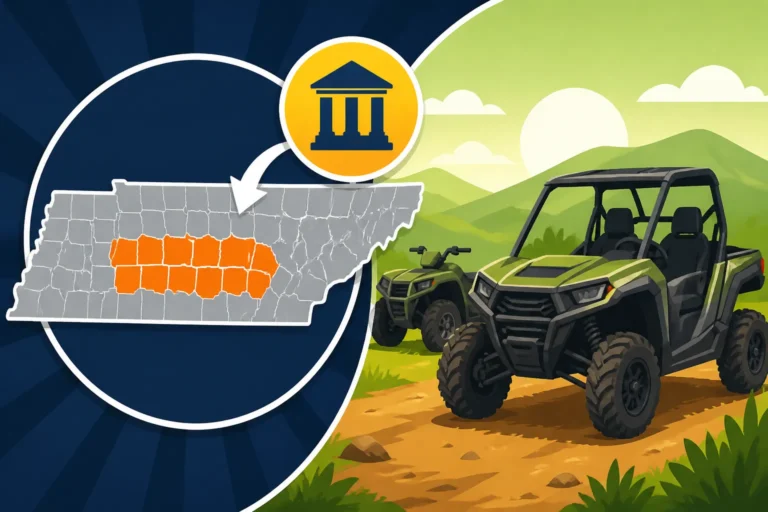
The biggest game-changer for UTV enthusiasts in Tennessee has been the introduction of "Adventure Tourism Districts" and the ability for certain counties and municipalities to designate roads for OHV use. These are the areas where you can, in fact, ride your UTV on public roads legally. [Tennessee's Adventure Tourism Districts] are specifically outlined in state law, encompassing counties like Scott, Anderson, Campbell, and others that are hubs for off-road recreation. Within these districts, and in other [Tennessee Counties That Allow UTVs on Roads], local governments can pass ordinances to open specific county roads or city streets to UTV traffic.
It's absolutely critical to consult the local ordinances and maps published by these counties. A road that's open in Scott County might be closed in Morgan County, even if they're neighbors. These designated roads often have speed limits (e.g., [Roads Posted Forty-Five or Less in Tennessee]), time restrictions ([Riding Only Between Sunrise and Sunset]), and specific requirements for crossing state highways. You can't just assume any road in an Adventure Tourism District is fair game. Always check the current, officially published lists and maps before you head out, and only ride on roads explicitly marked as open for OHVs.
Equipment Requirements for Road Use
Even on designated roads, your UTV isn't automatically street legal. Tennessee law mandates specific equipment for any OHV operating on a public road, regardless of whether it's in an Adventure Tourism District or an agricultural exemption. [Tennessee Equipment Rules for Road Use] are quite detailed and are designed to ensure the safety of both the UTV operator and other motorists.
These requirements typically include:
- Headlights and Taillights: Must be on and visible.
- Brake Lights: Functioning properly.
- Turn Signals: Both front and rear. Many riders add aftermarket kits from companies like SuperATV to meet this requirement.
- Horn: An audible warning device.
- Mirrors: At least one rearview mirror, often two (side mirrors) are preferred for better visibility.
- Windshield: A DOT-approved windshield might be required, depending on the specific local ordinance.
- Seatbelts: For all occupants.
- Tires: DOT-approved tires, not just off-road knobbies, for sustained road use.
- Muffler/Exhaust: Must meet sound level requirements.
- License Plate/Display: While UTVs don't get traditional car license plates, some designated areas might require a specific county permit sticker or display of your state OHV title sticker.
Ensure your UTV is equipped with all these features, and that they are in good working order, before venturing onto any public road, even a designated one.
Operator Requirements: Age, License, and Other Rules
Beyond the machine itself, the person operating the UTV on a public road must also meet specific criteria. Tennessee has clear [Tennessee Driver's License Rules for UTVs] and [Tennessee Minimum Age to Ride a Road] when it comes to operating an OHV on a public thoroughfare.
Generally, anyone operating a UTV on a designated public road must:
- Possess a Valid Driver's License: A standard Tennessee driver's license is required. A learner's permit is usually not sufficient for solo operation.
- Be at least 16 years old: This is the statewide minimum age for operating an OHV on a public road, even in designated areas.
- Carry Proof of Insurance: Liability insurance is typically required for any vehicle operating on public roads.
- Wear a Helmet: While there are nuances, [Tennessee Helmet Law for ATV Riders] generally mandates helmets for operators and passengers on public roads, especially for those under 18, and it's always the safest practice.
- Obey All Traffic Laws: This includes speed limits, stop signs, yielding, and all other rules of the road. You're treated like any other vehicle once you're on a public road.
Always carry your driver's license, proof of insurance, and any necessary permits when riding on public roads. A deputy performing [A Deputy at a Tennessee Roadside Stop] will expect to see these.
Agricultural Exemption: A Specific Carve-Out
There's a significant exception to Tennessee's general ban on UTVs on roads, and that's for agricultural purposes. [Tennessee's Agricultural Exception] allows for the operation of OHVs on public roads for agricultural purposes. This means if you're actively using your UTV for farm work, such as transporting feed, checking fences, or moving equipment between fields, you might be legally allowed to use public roads for short distances.
However, this isn't a free pass. The operation must be directly related to agricultural purposes, and it's typically limited to daylight hours and for crossing purposes or short distances. You can't just run to the grocery store for personal items and claim it's for the farm. The UTV should ideally be clearly identifiable as a farm vehicle (e.g., carrying farm implements or materials) and operated in a safe, responsible manner. It's a narrow exemption designed to support farmers, not to allow general recreational use on public roads. If you're utilizing this exemption, ensure you understand its precise limitations to avoid misunderstanding with law enforcement.
Disclaimer
This article is for general informational purposes only and does not constitute professional advice. Laws, prices and regulations vary by location and change over time. Consult a qualified professional for guidance on your specific situation.