Riding Past a Tennessee Town Line
There’s nothing quite like the feeling of hitting the trails, exploring the stunning Tennessee backcountry on your ATV or UTV. But let's be honest, that feeling can quickly turn to confusion, or even anxiety, when you see a "Welcome to [Town Name]" sign looming ahead. Many riders wonder if they can simply keep going, connecting trails or grabbing a bite to eat without breaking the law. This guide is here to clear up that often-muddy water, explaining Tennessee's rules for riding your off-highway vehicle (OHV) on or near public roads and what happens when you cross into town limits.
The Tricky Territory of OHVs and Paved Roads in Tennessee
One of the biggest frustrations for ATV and UTV owners in Tennessee is the inherent conflict between the thrill of off-road riding and the need to connect to trails or access services. You're out there, enjoying the wilderness, and suddenly you need to cross a road, or perhaps the trail itself leads you onto a paved surface for a short stretch. It can feel like a legal minefield, and for good reason—the rules aren't always straightforward, and they've certainly seen some changes.
The "Off-Highway" Definition and Its Implications
At its core, an ATV or UTV is defined as an "off-highway vehicle" by the state of Tennessee. This classification is crucial because it generally means these machines are not designed or permitted for routine use on public streets and highways. Think about it: they often lack standard road-legal equipment like turn signals, brake lights, mirrors, and proper headlights, at least in the same way a car or motorcycle does. This fundamental distinction is why simply hopping on a main road and cruising through town is typically a big no-go. The intent of these machines is for unpaved terrain, trails, and private property, which makes any journey onto asphalt a special case, not the default. This is a common source of misunderstanding, and it's where a lot of riders accidentally run afoul of the law, even with the best intentions.
Why Town Lines Create a Whole New Set of Rules
While Tennessee has state-level laws regarding OHV use, the real complexity often arises at the local level. When you're out in the county, especially in rural areas, the rules might seem a bit more relaxed, or at least less enforced. You might traverse county roads or even designated state routes in specific areas, as we'll discuss. But the moment you cross that invisible line into an incorporated city or town, you enter a new jurisdiction with its own set of ordinances. A town has the authority to designate certain streets as open or closed to OHVs, regardless of what the county or state might permit just a few miles down the road. This can be incredibly frustrating for riders who just want to link up sections of a long ride or run a quick errand. What was perfectly legal one minute can become a ticketable offense the next, simply because you rode past a sign. This patchwork of regulations often forces riders to constantly check local government websites or call sheriff's offices, which is hardly convenient when you're out on the trails.
Understanding Tennessee's Evolving Road Laws for OHVs
For years, the issue of OHVs on public roads in Tennessee was a hot topic, leading to a lot of confusion and a genuine need for clarification. Many riders yearned for clearer guidelines that would allow them to safely and legally connect their favorite riding areas. Thankfully, the state legislature has listened, and significant changes have come to pass, primarily aimed at providing more consistency and opportunities for responsible road use in certain contexts.
What House Bill 810 Changed for Riders
The landscape for ATV and UTV road use in Tennessee saw a significant shift with the passage of [What House Bill 810 Changed in 2025]. This pivotal legislation created a statewide framework, replacing much of the old, fragmented system where every county and municipality seemed to have its own unique set of rules. Essentially, HB 810 introduced a new standard: OHVs can now be operated on state and county roads that have a posted speed limit of 45 mph or less, and only during daylight hours. This was a game-changer, opening up many roads that were previously off-limits. However, it's not a free-for-all. Interstate highways, for example, remain strictly prohibited. There are also specific equipment requirements that must be met for any road use, such as headlights, tail lights, brake lights, a horn, a rearview mirror, and a windshield. Many aftermarket companies, like SuperATV, offer accessories that can help riders meet these requirements, ensuring their machines are up to snuff for legal road use. Even with these new allowances, riders must still hold a valid driver's license and carry proof of insurance. Understanding these new baseline rules is the first step in navigating the roads.
Adventure Tourism Districts and Local Opt-In Areas
Beyond the general statewide rules introduced by HB 810, Tennessee has also created "Adventure Tourism Districts" in specific counties. These districts are a crucial part of the state's effort to promote outdoor recreation and, importantly, allow for more localized flexibility regarding OHV road use. Counties within these districts—such as Scott, Anderson, Campbell, and others—have additional powers to designate roads as open to OHVs, sometimes with different conditions or even allowing night riding on specific, approved routes. This is where [Tennessee's Adventure Tourism Districts] really come into play. These districts enable local governments to pass ordinances that further expand OHV access, often to link major trail systems or allow riders to access amenities like gas stations, restaurants, or lodging. However, the designation of roads within these districts is still a local decision. A county might open a certain road, but the town it passes through still has the right to maintain its own restrictions. This means that while a county might be generally OHV-friendly, riding past a town line can still mean encountering a different set of rules. Always check the specific ordinances for the city or town you plan to enter, even if you’re in a known adventure tourism district.
Differentiating Road Types: State, County, and Municipal
The type of road you're on plays a massive role in whether your OHV is permitted. It's not just about speed limits or town lines; it's about who owns and maintains the road.
-
State Highways (under 45 mph): With the new legislation, many state routes that have a posted speed limit of 45 mph or less are now permissible for OHV use during daylight hours, provided your machine meets the equipment requirements. This is a significant improvement for connecting riding areas. However, this doesn't apply to all state routes, and certainly not interstates. You might be able to ride a section of a state road connecting two parts of the [North Cumberland WMA], but then hit a roadblock (pun intended) when that same state road passes through a city.
-
County Roads (under 45 mph): Similar to state highways, county roads with a 45 mph or lower speed limit are generally open under the statewide rules, again, during daylight hours and with the proper equipment. These are often the backbone of connecting trails in rural areas. Many riders use county roads to access trailheads or ride between different sections of large parks like Windrock. Understanding [Tennessee Rules for Riding a County Road] is essential for making these connections.
-
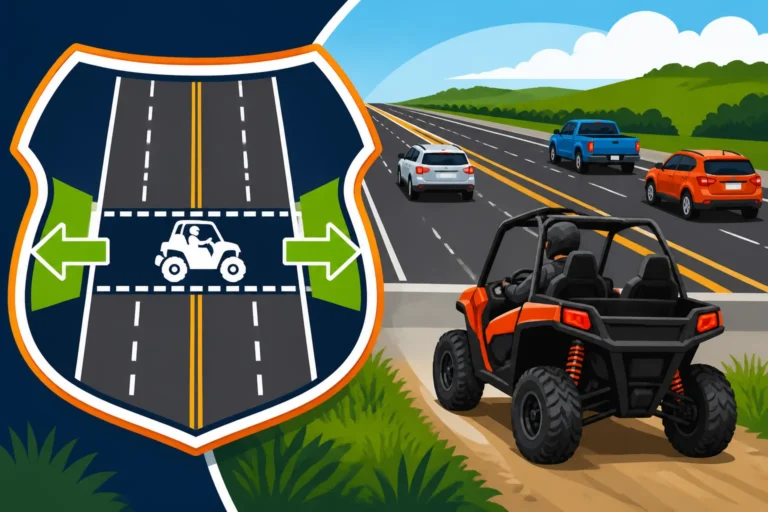
Municipal Streets (Town/City): This is where it gets particularly nuanced. While the state law provides a general framework, it explicitly states that municipalities retain the authority to regulate OHV use within their corporate limits. This means a town can decide to open all its streets, only some of its streets, or none of its streets to OHVs. For example, some towns in adventure tourism districts, like LaFollette, have specifically designated roads that UTVs can use to access businesses. Other towns might only allow crossing a main road at a designated intersection, or not at all. This is the primary challenge when [Riding Past a Tennessee Town Line]—you must be aware of that specific town's rules, which often supersede the broader county or state guidelines.
Navigating Local Ordinances and Designated Routes
The reality of Tennessee's OHV road laws is that they are a blend of statewide regulations and crucial local autonomy. This means that even with the new state legislation, riders still have a significant responsibility to understand and comply with the specific rules of the counties, cities, and towns they plan to traverse. Simply assuming "if it's allowed on the county road, it's allowed in town" is a recipe for a fine and a bad day.
How to Find Local Rules and Restrictions
Before you ever load up your rig, or certainly before you approach a town line, doing your homework is paramount. The first place to look for information on specific town or county ordinances is their official government website. Many counties and cities, especially those in or near adventure tourism districts, will have a section dedicated to OHV regulations. Look for municipal codes, city ordinances, or even specific maps indicating designated OHV routes. If you can't find it online, don't hesitate to call the local sheriff's office or city hall. They are the best sources for current and accurate information. For example, if you're riding near Oliver Springs and planning to enter the town, you would want to check Oliver Springs' specific ordinances, as they might differ from the surrounding Anderson County rules. Resources like [Finding the Restricted Road List Your County Published] can be a great starting point, but always verify for the specific town you're entering. It's a proactive step that can save you a lot of hassle.
When a Town Opens Its Streets to OHVs
Some forward-thinking towns, recognizing the economic benefits that OHV tourism can bring, have taken the initiative to open certain streets, or even all non-state-highway streets, to OHVs. This usually happens in areas heavily frequented by riders accessing large trail systems. For these towns, it’s often about creating a rider-friendly environment, allowing access to gas, food, and lodging. For example, some parts of Huntsville in Scott County have designated streets where OHVs are permitted during certain hours. In these cases, the town will have clear signage indicating approved routes and any specific restrictions, such as speed limits or daylight-only operation. These open streets are a boon for riders, allowing for more seamless transitions between trails and necessary services. However, even on these designated streets, all statewide equipment and licensing requirements, along with any additional local rules (like specific helmet laws or passenger restrictions), still apply. Your machine needs to be properly equipped—think about adding turn signals, mirrors, or a horn if it doesn't already have them, which SuperATV can help with.
What to Carry Roadside if You're on Pavement
Whenever you venture onto any public road, even if it's a designated OHV route or a permitted crossing, you need to be prepared for a roadside stop. Law enforcement officers, whether state troopers or local deputies, are responsible for ensuring compliance with all vehicle laws. This means having your ducks in a row.
First and foremost, you must carry a valid driver's license. Tennessee law requires any operator of an OHV on a public road to be at least 16 years old and possess a valid driver's license. There's no exception for learners permits or restricted licenses here. You can find more about this in [Tennessee Driver's License Rules for UTVs].
Secondly, you need proof of insurance. Just like any other motor vehicle on the road, your OHV must be insured for liability. Keep your insurance card or policy information readily accessible.
Third, ensure your machine meets all equipment requirements. This includes functioning headlights, tail lights, brake lights, turn signals (if legally required for the road type), a horn, a rearview mirror, and a windshield. Check that your tires are in good condition and that your machine is not excessively noisy (Tennessee has sound limits for WMAs, and while not strictly a road rule, excessive noise can draw attention). Carrying your trail permit for any private parks you're accessing is also a good idea, though it's not a road-use requirement.
Here's a quick checklist for legal road use:
| Requirement | Description |
|---|---|
| Driver's License | Must be valid, no learner's permits. Operator must be at least 16 years old. |
| Insurance | Proof of liability insurance. |
| Headlights | Fully functional, on during daylight road use. |
| Taillights | Fully functional. |
| Brake Lights | Fully functional. |
| Turn Signals | Required by HB 810 for road use. |
| Horn | Audible from 200 feet. |
| Rearview Mirror | Must provide a clear view to the rear. |
| Windshield | Required. |
| Daylight Hours | Road use generally restricted to between sunrise and sunset, unless specifically designated otherwise locally. |
| Speed Limit | Road must have a posted speed limit of 45 mph or less. |
| No Interstates | Prohibited on all interstate highways. |
| Local Compliance | Adhere to specific city/county ordinances if crossing a town line. |
Practical Tips for Riding Responsibly Near Town Lines
Navigating the blend of exhilarating off-road adventure and the practicalities of getting around on paved surfaces requires a thoughtful approach. As a responsible rider, you want to enjoy the trails without inadvertently breaking laws or creating issues for yourself or the wider OHV community. A little planning and common sense can go a long way in ensuring your ride is smooth, enjoyable, and compliant.
Planning Your Route to Avoid Legal Pitfalls
The absolute best way to handle town lines and mixed-surface riding is to plan your route meticulously before you even leave your driveway. Don't just rely on GPS for general directions; actively seek out information regarding OHV-legal roads and any specific town ordinances. If your ride involves traversing a public road, confirm it falls under the 45 mph or less speed limit and that it's not an interstate. Use online maps, local government websites, and even calls to local authorities to plot a route that minimizes paved road travel, especially through towns that haven't designated OHV-friendly streets.
Consider staging your vehicle at a designated trailhead or parking area that provides direct access to the trails, rather than attempting to ride through a town to get there. If you need to access services in town, such as fuel or food, research designated routes or parking areas that are explicitly permitted for OHVs. Sometimes, it's simply easier (and safer) to trailer your machine for the short paved sections that pass through populated areas, especially if you're unsure of the local rules. Thinking ahead about [Tennessee Rules for Riding to a Trailhead] can save you from a stressful encounter.
Essential Equipment Checks for Road Use
Before your tires even touch pavement, you need to ensure your OHV is equipped not just for the trail, but for the road too. The statewide rules, and often local ordinances, mandate specific equipment that might not be standard on every off-road machine. These aren't suggestions; they're legal requirements.
- Lighting: You need fully functional headlights, tail lights, and brake lights. Many machines come with these, but make sure they're operational. For state-approved road use, turn signals are also a must. If your machine doesn't have them, aftermarket kits are widely available, and companies like SuperATV specialize in these types of upgrades.
- Signaling & Visibility: A horn is required, and it needs to be audible. You also need at least one rearview mirror. A windshield is another key component for road legality under the new laws.
- Tires: While knobby off-road tires are great for mud and rocks, ensure they're safe for paved roads and not excessively worn.
- Registration/Title Sticker: While Tennessee doesn't register ATVs/UTVs for general road use, if you have a state-issued OHV title (and the accompanying [What the TDR Sticker on Your Title Means] which acts as proof of title), it’s good practice to have this visible as required. Even though it's not traditional "registration," it proves ownership.
Remember, a quick pre-ride check for all these items is not just about avoiding a ticket; it's about your safety and the safety of others on the road.
Being a Good Neighbor and Ambassador for OHV Riding
Ultimately, the future of OHV access on public roads, especially in and around towns, largely depends on how riders conduct themselves. When you're operating your ATV or UTV on a paved surface, you are an ambassador for the entire sport.
- Respect Speed Limits: Always adhere to posted speed limits, even if your machine can go faster. On roads with a 45 mph limit, maintain that speed or less.
- Be Mindful of Noise: While your exhaust might sound great on the trail, excessive noise can be a major nuisance in residential areas. If you've modified your exhaust, ensure it's not overly loud, as noise complaints can quickly lead to stricter local ordinances.
- Yield to Other Traffic: Treat your OHV like any other vehicle on the road. Yield to cars, trucks, and pedestrians. Use appropriate hand signals (even with turn signals) and be predictable in your movements.
- Minimize Dust and Debris: If transitioning from a muddy trail to a paved road, try to knock off excessive mud or debris to avoid tracking it onto clean streets.
- Stay on Designated Routes: If a town has specific designated OHV routes, stick to them. Don't venture off onto residential streets or areas where OHVs are explicitly prohibited. Riding a [Tennessee Town Street] comes with specific responsibilities.
By demonstrating responsible behavior, you not only ensure a pleasant experience for yourself but also help build goodwill within communities, which can be vital for maintaining and even expanding OHV access in the future. Nobody wants to see [Tennessee Fines for Illegal UTV Road Use] handed out, and good behavior is the best preventative measure.
Disclaimer
This article is for general informational purposes only and does not constitute professional advice. Laws, prices and regulations vary by location and change over time. Consult a qualified professional for guidance on your specific situation.