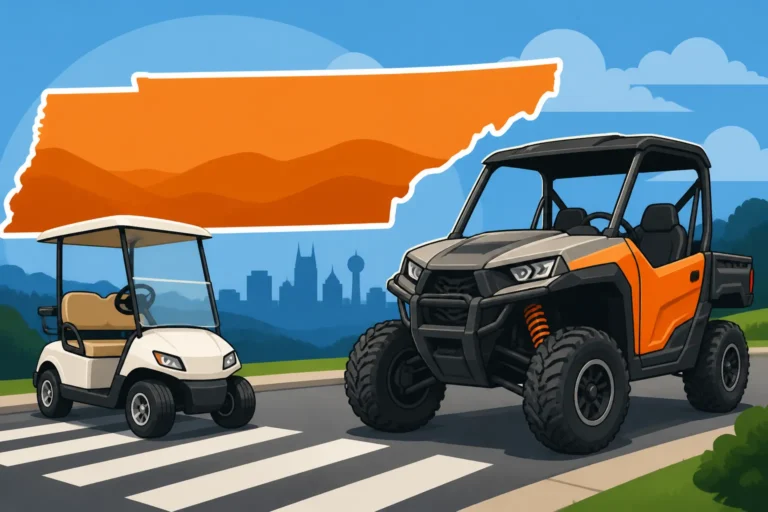
Tennessee Rules for Riding to a Trailhead
One of the biggest headaches for off-road enthusiasts in Tennessee is the constant struggle of getting your beloved ATV or UTV from your driveway to the nearest trailhead without having to load it onto a trailer. Many of us dream of just hopping on our machine and riding directly to the fun, but Tennessee's road rules for off-highway vehicles can feel like a confusing labyrinth. This guide is here to untangle those rules, clarify what's allowed and what's not, and help you understand how to legally ride your machine to a trailhead in the Volunteer State.
The Basics of Tennessee Road Use for OHVs – Why It's Tricky
Let's be real, the idea of "street legal" ATVs and UTVs in Tennessee has been a hot topic for years, often clouded by local variations and old misconceptions. It's frustrating to hear conflicting information, especially when all you want to do is enjoy your machine. The truth is, until recently, statewide road access for OHVs was severely restricted, leading to a patchwork of county-by-county regulations. Thankfully, things have gotten a bit clearer with recent legislation, but it's still not as simple as just putting a license plate on your side-by-side and heading out.
Understanding Tennessee's General Road Restrictions
Historically, Tennessee, like many states, viewed ATVs and UTVs primarily as off-road machines. This meant a blanket prohibition on their use on public roads. You couldn't just cruise down Main Street on your quad without facing a potential ticket. This general restriction caused immense frustration for riders who lived just a few miles from an incredible trail system, forcing them to haul their machines for short distances.
The landscape started changing, however, with [What Tennessee's 2025 UTV Law Changed]. This significant piece of legislation aimed to standardize some aspects of OHV road use, providing a framework for what was once a very grey area. Now, while the general rule is still "no OHVs on roads," there are specific, clearly defined exceptions. The distinction between a "county road" and a "state highway" is absolutely critical here. State highways, often identified by route numbers like SR-63 or US-27, are generally off-limits to OHVs, with only very specific, limited exceptions for crossing. County roads, on the other hand, are where most of the action, or potential action, happens, but only if they've been specifically designated. This means you can't assume every county road is fair game; you have to do your homework.
The Adventure Tourism District Exception and Local Control
So, what's the big game-changer for Tennessee riders wanting to connect trails? It's all about the "Adventure Tourism Districts" and how local governments can grant access. The new law carved out a special status for these districts, acknowledging the economic impact of off-road tourism in certain areas. Initially, specific counties were identified due to their existing trail systems and popularity with riders. These include well-known riding hubs like Scott, Anderson, and Campbell Counties, alongside Morgan, Jackson, Johnson, Perry, Unicoi, Fentress, and Hickman Counties. If you're riding in one of these areas, there's a higher likelihood that local roads have been designated for OHV use.
But it's not just limited to these ten. Other counties across Tennessee now have the ability to opt into this system. This is done through a resolution passed by their legislative body (like a county commission). For unpaved county roads, this decision requires a supermajority – specifically, a "two-thirds vote" of the county legislative body. This local control aspect means that while the state sets the framework, the actual opening of roads for OHV travel rests with your local county government. It’s a huge step forward from previous ambiguity, but it also means that what's legal in one county might still be illegal just across the county line. Always check with the specific county's sheriff's department or clerk's office for the most current information. This system aims to provide [One Statewide Standard Replacing County-by-County Rules], but local designations are still key.
Specific Requirements for Riding to a Trailhead on Permitted Roads
Even if you're on a county road that has been legally designated for OHV use to connect to a trailhead, you can't just roll out of your garage as you normally would for the trails. Public roads, even designated ones, come with a different set of safety and equipment standards. These requirements are in place to ensure your safety, the safety of other motorists, and to make your machine visible and controllable in a mixed-traffic environment. Ignoring these can quickly turn a legal trip into a costly citation, even on a designated route.
Essential Equipment for Road-Legal OHVs in Tennessee
To make your OHV "road-legal" for these specific designated stretches, it needs to meet certain equipment standards that might be different from how you outfit it for the backcountry. Think of it like taking a dirt bike and adding street-legal components; the same concept applies here.
First and foremost, you'll need proper lighting. This means functional headlights (typically low and high beam), a tail light, and most critically, working brake lights that activate when you apply the brakes. Turn signals are also a must for communicating your intentions to other drivers. Imagine pulling out onto a road without a way to signal a turn; it's a recipe for disaster. Additionally, you'll need at least one rearview mirror, typically on the left side, to see traffic behind you. Many riders opt for a full set, with mirrors on both sides of the machine and perhaps even a wide-angle rearview mirror to get the best visibility. A functional horn is also required for signaling other vehicles or pedestrians.
Finally, safety restraints are crucial. If your UTV has seats with seatbelts, they must be in working order and worn by all occupants. While often an aftermarket addition for trail machines, a functioning spark arrestor on your exhaust is also generally required for any engine operating on public lands or in areas with fire risk, and it's good practice to have one regardless. For riders looking to equip their machines, companies like SuperATV offer a range of street-legal kits and accessories that bundle many of these necessary components, making the conversion process much simpler than sourcing individual parts. Having all this equipment isn't just about following the law; it's about making your ride safer for everyone on the road.
Rider and Passenger Requirements on Tennessee Roads
It's not just the machine that needs to be ready; the operator and any passengers also have specific requirements when riding on designated roads. The primary rule here is that the operator must be at least 16 years old and possess a valid driver's license. This isn't like off-road trails where younger riders might be permitted with supervision. When you're on a public road, you're interacting with cars and trucks, and the state wants to ensure you have the experience and legal authorization to do so. This is crucial for understanding [Tennessee Driver's License Rules for UTVs].
Tennessee also has clear helmet rules, which can sometimes be a point of confusion for riders. When operating an OHV on a public road, all operators and passengers under the age of 18 are required to wear a helmet. While adults 18 and over are generally not required to wear a helmet on public roads if they are in an enclosed vehicle, for open-air OHVs, it's always the safest bet to wear one. It's a small piece of gear that can make a monumental difference in an accident. For a full breakdown, check out [Tennessee Helmet Rules for Operator and Passengers]. Beyond that, your machine must be covered by liability insurance, just like any other vehicle operating on public roads. You'll need to carry proof of this insurance with you, as a deputy might ask for it during a roadside stop. This covers you in case of an accident involving other vehicles or property, ensuring you're financially protected and compliant with state law.
Here's a quick look at key requirements for road use:
| Requirement | Machine | Rider/Passenger | Notes |
|---|---|---|---|
| Valid Driver's License | N/A | Yes | Operator must be 16+ with a valid license |
| Helmets | N/A | Yes | Required for all under 18; recommended for all on OHVs on public roads. |
| Liability Insurance | Yes | N/A | Proof must be carried. |
| Headlights | Yes | N/A | Functional low/high beam. |
| Tail/Brake Lights | Yes | N/A | Must be visible and functional. |
| Turn Signals | Yes | N/A | Required for signaling turns. |
| Rearview Mirror | Yes | N/A | At least one on the left side. |
| Horn | Yes | N/A | Functional. |
| Seatbelts | Yes | N/A | Must be worn if equipped. |
| Spark Arrestor | Yes | N/A | Generally required for all OHVs, especially on public lands. |
| Designated Roads | Yes | N/A | Only on roads specifically opened by local ordinance; check local lists. |
| Speed Limit | Yes | N/A | Roads posted 45 mph or under. |
| Daylight Hours | Yes | N/A | Riding generally restricted to sunrise to sunset. |
| Interstates | No | N/A | OHVs are strictly prohibited on interstates. |
| TDR Sticker | Yes | N/A | While not a "registration" in the traditional sense, having a [A Sticker That Proves a Tennessee Title Exists] is essential for proving ownership. |
Navigating Designated Roads to Your Favorite Trails
You've got your machine equipped, you're legal to ride, and you've found a county that allows OHV road use. Now comes the critical part: actually navigating those roads safely and legally. This isn't just about knowing if you can ride, but how and where you can ride. There are specific limitations and behaviors expected of OHV operators on public roads, and understanding these can prevent fines and ensure a smooth journey to the trail.
Identifying Open Roads and Restricted Areas
This is perhaps the trickiest part of the entire process. Just because you're in an Adventure Tourism District county doesn't mean every road is open. Counties are required to publish lists of designated roads where OHV use is permitted. These [Restricted Road Lists Published in October 2025] are usually available on county websites, sheriff's department pages, or sometimes even at county clerk offices. It's your responsibility as a rider to know which specific roads are open and which are not. Never assume. A good rule of thumb is if you don't see it on a published list, it's likely still off-limits.
When you are on a designated road, there are further restrictions. OHVs are generally only permitted on roads with a posted speed limit of 45 mph or under. This means major thoroughfares or state routes with higher speed limits are almost always out of bounds, even for crossing. Also, your road use is typically restricted to daylight hours only – from sunrise to sunset. Night riding on public roads with an OHV is usually prohibited. And a big, fat no for interstates; OHVs are strictly barred from Tennessee's interstate highway system.
Specific areas might have even more particular rules. For example, SR 63, a state route often used to access riding areas, has incredibly limited openings, sometimes only for two weekends a year, and only where specifically designated. This highlights the importance of checking hyper-local information for your specific riding destination. So, while you might be excited to ride [Between Brimstone Road and Norma Road] in Scott County, make sure those specific segments are on the approved list for OHV use.
Crossing Roads and Intersections Legally
Even if you're primarily using county roads to get to a trailhead, you'll inevitably encounter intersections, and sometimes, you might need to cross a state highway that isn't otherwise open to OHVs. Tennessee law addresses this, but with strict conditions. For two-lane roads, OHVs are generally permitted to cross at a ninety-degree angle, provided it's safe to do so and you yield to all other traffic. This is a quick "straight across" maneuver, not turning onto and traveling down the road. For more details, consult [Crossing a Two-Lane at Ninety Degrees in Tennessee].
Crossing multi-lane highways or more complex intersections is even more restricted. Such crossings are typically only allowed where specifically designated by the Tennessee Department of Transportation (TDOT). These designations are rare and often in areas with heavy recreational traffic. Again, never assume you can cross a multi-lane highway; always verify if a specific intersection has a TDOT designation for OHV crossing. When making any crossing, safety is paramount. Always come to a complete stop, look both ways multiple times, signal clearly, and only proceed when there's ample clear space and you're not impeding traffic. Riding defensively is crucial when sharing the road with larger, faster vehicles.
Practical Considerations and What to Expect
Even with the new laws and designated roads, riding your ATV or UTV to a trailhead in Tennessee isn't without its challenges and considerations. It requires careful planning and a thorough understanding of the local landscape, both legal and physical. It's not just about avoiding fines; it's about staying safe and being a responsible member of the riding community.
Enforcement and Penalties
Let's talk about what happens if you're stopped. Law enforcement, whether it's a county sheriff's deputy or a Tennessee Highway Patrol officer, will be looking for specific things when they pull over an OHV on a public road. They'll check your driver's license, proof of insurance, and ensure your machine has the required equipment like lights, mirrors, and a horn. They'll also verify that you're on a legally designated road and observing speed limits. For an insight into what a deputy checks, read [What a Tennessee Deputy Checks Roadside].
The penalties for non-compliance can sting. For a first offense of illegal road use, you're looking at a $50 fine. While that might not seem like a huge amount, repeat offenses can escalate. Riding an OHV illegally on a public road can be classified as a Class C Misdemeanor, which carries more serious implications than just a fine, including potential court costs and a mark on your record. These aren't minor infractions, and law enforcement in areas with heavy OHV traffic are often well-versed in these laws. So, it really pays to know the rules and stick to them.
Planning Your Ride to the Trailhead
The best advice for riding your OHV to a trailhead is to plan, plan, plan! First, before you even think about firing up your engine, check the local ordinances for the specific county and even municipality you'll be riding through. As we discussed, SuperATV offers great products to make your machine compliant, but it's up to you to ensure the roads are compliant with your presence. Websites for county clerks, sheriff's departments, or tourism boards in Adventure Tourism Districts are good starting points. If you're unsure, a quick call to the county sheriff's non-emergency line can clarify things.
Next, have all your documentation readily accessible. This includes your valid driver's license, proof of insurance, and ideally, your OHV title or at least a copy. While Tennessee doesn't "register" OHVs in the traditional sense, having a title demonstrates ownership and can be helpful during a stop. Finally, understand the trade-offs. Riding directly to a trailhead offers immense convenience, saving you the hassle of trailering. However, it also means sharing the road with other vehicles, often at higher speeds than you'd encounter on a trail. This inherently increases the risk. Weigh the convenience against the need for extra vigilance and ensure both you and your machine are fully prepared for the road conditions. For riders looking to reach popular spots like Windrock or Brimstone, carefully planning your route to use only designated roads is paramount. Always remember, the goal is to get to the trails safely and legally, so you can enjoy your ride without any unwelcome surprises.
Disclaimer
This article is for general informational purposes only and does not constitute professional advice. Laws, prices and regulations vary by location and change over time. Consult a qualified professional for guidance on your specific situation.