Why a Road Posted 50 mph Is Off Limits
There's nothing quite like the thrill of taking your ATV or UTV out for a spin, whether it's hitting the dusty trails or cruising down a back road. But let's be honest, figuring out exactly where you can legally ride in Tennessee can feel like navigating a minefield. One of the biggest head-scratchers for many riders is why a road posted 50 mph is strictly off-limits, even if it feels safe enough. This guide is here to untangle that confusion, explaining the core rules, the logic behind them, and how you can ensure your ride stays on the right side of the law – and safe!
The Heart of the Matter: Why 50 mph is the Absolute Limit for OHVs on Tennessee Roads
For many of us who love the open air and the rumble of an off-highway vehicle (OHV), the idea of zipping down a quiet country road can be incredibly appealing. You see a stretch of asphalt, the sun is shining, and your machine is purring, but then you spot that speed limit sign: 50 mph. And just like that, the dream of a smooth cruise ends. In Tennessee, that 50 mph sign isn't just a suggestion; it's a hard boundary that dictates whether your UTV or ATV can legally be on that pavement at all. It's a source of real frustration for many riders who feel these machines are capable, but the law draws a clear line.
The Legislative Mandate: 45 mph or Less
The bedrock of Tennessee's UTV road use law is explicit: OHVs, including most ATVs and side-by-sides, are generally restricted to roads with a posted speed limit of [Tennessee's 45 mph Road Rule] or less. This isn't a guideline; it's the law. This means that if you're on a road where the sign clearly says "50 MPH," or anything higher, your OHV simply shouldn't be there. It doesn't matter how capable your machine feels, or how much you've invested in upgrading its performance with aftermarket parts from a company like SuperATV – the legal limit is firm.
This particular rule can be incredibly confusing because common sense might suggest that a modern UTV, with its powerful engine and robust suspension, could easily handle 50 mph. And technically, many of them can reach and exceed that speed. However, the law isn't based on a machine's top speed, but rather on its classification and the perceived safety risks of mixing these vehicles with faster-moving traffic. The legislature made a deliberate choice to set this specific limit, prioritizing safety on public roads where cars and trucks often travel at or above the posted limit.
Understanding the Safety Cutoff at 50 mph
So, why 50 mph exactly? Why not 55, or 60, or even just a general "slow down" rule? The specific threshold of 45 mph (meaning 50 mph and above are out) is rooted in safety considerations. At speeds higher than 45 mph, the dynamics of a collision change drastically. The reaction time for drivers of traditional vehicles encountering a slower-moving OHV decreases, and the force of impact in an accident increases exponentially.
OHVs, by design, are fundamentally different from passenger cars and trucks. While they are built tough for off-road adventures, their stability, braking systems, and occupant protection are engineered for different terrains and speeds. Driving them at higher sustained speeds on public roads introduces unique risks: they often have a higher center of gravity, narrower track width compared to their height, and less sophisticated crash protection features than a car. Therefore, the 45 mph limit acts as a buffer, aiming to keep OHVs on roads where traffic speeds are lower, and the chances of severe high-speed incidents are reduced.
Even if you're riding a highly modified UTV with upgraded tires, suspension, and safety cages – perhaps even custom parts from SuperATV designed for extreme off-road performance – the vehicle still doesn't meet the same safety standards or handling characteristics as a traditional road vehicle at higher speeds. The law focuses on the type of vehicle and its inherent design limitations for sustained highway use, not just its potential top speed. This distinction is crucial for understanding why that 50 mph sign is such a definitive "stop" for OHV riders.
Delving Deeper: The Legislative Intent Behind Tennessee's Speed Restrictions
It’s easy to feel like these laws are just arbitrary rules designed to make our lives harder, but there's typically a well-intentioned (if sometimes frustrating) rationale behind them. When Tennessee lawmakers enacted the current UTV road use statutes, they weren't just throwing darts at a board; they were responding to a complex set of concerns related to public safety, traffic flow, and the unique characteristics of off-highway vehicles.
Balancing Recreation with Public Safety
The primary driver behind the 45 mph speed limit for OHVs on Tennessee roads is public safety. Legislators had to weigh the growing popularity of ATVs and UTVs for both recreation and utility against the need to protect all road users. Imagine a scenario where a UTV, even one equipped with the best off-road tires and lift kits from SuperATV for tackling gnarly trails, is traveling at 45 mph, and a car approaches from behind at 65 mph on a 55 mph posted road. The speed differential is massive, creating a significant hazard for both the OHV operator and the car's occupants.
By limiting OHVs to roads with lower speed limits, the state aims to minimize these dangerous speed differentials. It reduces the risk of rear-end collisions, allows more time for drivers to react to an OHV, and generally keeps OHVs in environments where the overall flow of traffic is slower and more predictable. This legislative choice reflects a proactive approach to prevent accidents before they happen, even if it means restricting where and how OHVs can be operated on paved surfaces.
Differentiating OHVs from Traditional Road Vehicles
Another core intent of the law is to maintain a clear distinction between off-highway vehicles and vehicles explicitly designed and manufactured for highway use. While many UTVs look increasingly like small cars, they are still fundamentally different in their certification, safety features, and performance characteristics. They are not subjected to the same rigorous federal motor vehicle safety standards (FMVSS) that apply to cars and trucks.
These differences include things like crumple zones, advanced airbag systems, and specific handling tests at highway speeds. Without these features, OHVs are considered less safe for high-speed road environments. The 45 mph ceiling acts as a practical way to manage this distinction on Tennessee's road network, directing OHVs to roads where their unique design limitations are less likely to become critical safety issues. It's not about whether your specific UTV can go 50 mph; it's about whether the class of vehicle is deemed appropriate for roads where speeds exceed 45 mph.
The Limited Scope of Adventure Tourism Districts
You might have heard about [Tennessee's Adventure Tourism Districts] and how they've opened up more roads for OHV use in certain counties. While these districts are fantastic for expanding riding opportunities, it’s important to understand that they don't generally override the statewide 45 mph speed limit rule. Their primary function is to allow counties and municipalities within those districts to designate specific roads (often unpaved or with lower speed limits) for OHV use, subject to local approval.
So, even if you're riding in a designated adventure tourism district like those found in Scott, Anderson, or Campbell counties, you're still bound by the 45 mph speed limit. A road posted 50 mph in one of these districts is just as off-limits as it would be anywhere else in the state. The districts provide a framework for local control over which lower-speed roads can be used, but they don't grant permission to exceed the fundamental statewide speed restriction for OHVs. Always check the specific rules for the county or city you're riding in, but assume the 45 mph rule is always in effect.
Real-World Repercussions: What Happens When You Ride on a 50 mph+ Road
Ignoring that 50 mph sign and riding your OHV on a forbidden road isn't just a minor infraction; it can lead to some significant consequences, both legal and financial. It's easy to think "What's the harm?" on a seemingly empty stretch of road, but the law doesn't make exceptions for perceived emptiness. The moment you cross that legal threshold, you open yourself up to a world of potential trouble.
Legal Penalties: Fines and Misdemeanors
The most immediate consequence of operating an OHV on a road with a posted speed limit of 50 mph or higher is a citation from law enforcement. This isn't just a slap on the wrist. In Tennessee, violating these road use laws can result in a [Tennessee's $50 Fine] and potentially even lead to charges as [A Class C Misdemeanor in Tennessee]. While a Class C misdemeanor might sound minor, it's still a criminal offense that can appear on your record, impacting future job prospects, loan applications, or even professional licenses.
Beyond the initial fine, you could also face additional penalties if other violations are discovered during the stop. For example, if you don't have the required insurance, or if your machine isn't equipped with the [Tennessee Equipment Rules for Road Use] necessary for legal road use (like mirrors, headlights, brake lights, or a horn), you could receive further citations. These can quickly stack up, turning a simple ride into a very expensive day out, not to mention the time and hassle of dealing with court appearances.
Insurance Headaches and Liability Nightmares
If you're involved in an accident while illegally operating your OHV on a road posted 50 mph or higher, you're facing a whole new level of trouble. Your insurance policy, which might cover your OHV for off-road use or even limited legal road use, could very well deny coverage if the accident occurred while you were breaking the law. This means you could be personally liable for all damages, including medical expenses for anyone injured, repairs to other vehicles, and property damage.
Imagine getting into a fender bender with a car while illegally on a 50 mph road. Not only would you be cited for the illegal road use, but if your insurance refuses to pay, you could be on the hook for tens of thousands of dollars in damages. This financial burden can be devastating. It underscores the importance of understanding and adhering to the rules, not just to avoid tickets, but to protect yourself from potentially ruinous financial liability. It's a risk simply not worth taking.
Increased Safety Risks for Everyone
Let's not forget the most critical repercussion: the increased risk of severe injury or even fatality. As discussed earlier, OHVs are not designed for sustained higher-speed road travel. At 50 mph or more, the consequences of a loss of control, a sudden stop, or a collision with another vehicle are significantly magnified. The open-air nature of most OHVs means occupants have less protection than in an enclosed automobile.
Furthermore, riding a slower-moving OHV on a faster road creates a dangerous situation for all drivers. Other motorists might not expect an OHV, especially one that may be harder to see or judge its speed. This can lead to panicked braking, swerving, and a higher likelihood of multi-vehicle accidents. It's not just your safety at stake; it's the safety of every other person on that road. No matter how confident you are in your riding skills or your machine's capabilities – even if it's decked out with the best performance parts from SuperATV – the inherent risks on higher-speed roads remain undeniable.
Mastering Your Route: Safely and Legally Navigating Tennessee's Roadways
Given the strict rules regarding speed limits on Tennessee roads, careful planning of your route isn't just a good idea; it's absolutely essential. You want to enjoy your ride without constantly looking over your shoulder or worrying about breaking the law. The key is to be proactive and informed before you even pull out of the driveway.
Strategic Planning: Maps, Local Ordinances, and Asking the Experts
Before embarking on any road ride, especially in an unfamiliar area, grab your maps – both digital and physical. Utilize apps that allow you to see speed limits, but always be aware that signage on the ground is the definitive source. Focus on mapping out routes that stick exclusively to roads [Riding a Road Posted 45 mph or Under]. This might mean longer, more circuitous routes, but it's the only way to stay legal.
A truly savvy rider will go a step further and check with local county clerk offices or sheriff's departments for specific road designations. Some counties or cities might have more restrictive rules, or they might have lists of designated roads where OHV use is permitted. For example, you can look for [Restricted Road Lists Published in October 2025]. Don't rely solely on what you see online or what a friend told you. A quick phone call or visit can save you a lot of grief. Remember, the goal is to prevent any issues before they arise, allowing you to focus on the joy of the ride.
Equipment and Your Responsibilities
For legal road use, your OHV must be equipped with certain items to make it street-legal, even on those 45 mph or under roads. This includes headlights, taillights, brake lights, a horn, rearview mirrors, and often turn signals. While many companies like SuperATV offer fantastic accessories for off-road performance, like beefed-up suspension or protection, these upgrades don't automatically make your machine street legal for higher speeds. The focus for road use needs to be on visibility and signaling.
Always perform a pre-ride check to ensure all your lights are working, your tires are properly inflated, and your brakes are responsive. It's also crucial to carry proof of insurance and your driver's license. Remember that [Tennessee Driver's License Rules for UTVs] apply, and there's a [Tennessee Minimum Age to Ride a Road]. Being prepared not only keeps you compliant but also ensures a safer riding experience for you and others on the road.
The Art of the Cross: Rules for Intersecting Higher-Speed Roads
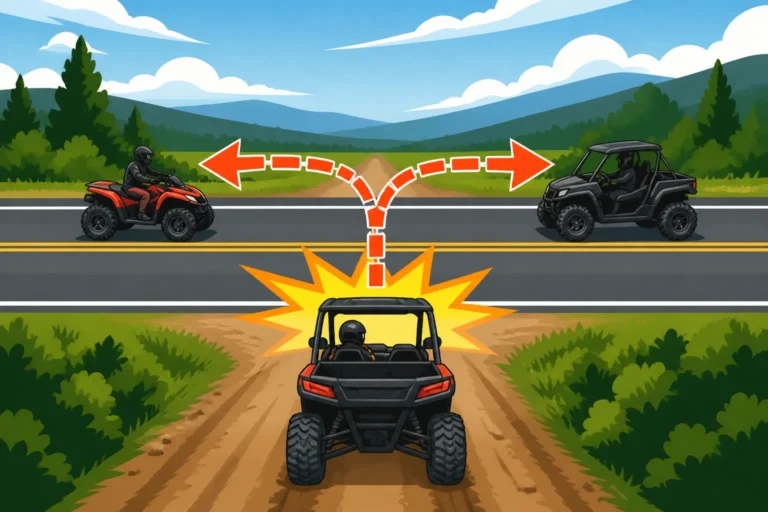
While you cannot ride on a road posted 50 mph or higher, Tennessee law does allow for controlled crossings of such roads in specific circumstances. This is where many riders get confused, thinking a crossing means they can ride on it for a short distance. That's not the case. The rule is that you may [Tennessee Rules for Crossing a Highway] at a right angle, and only after coming to a complete stop and yielding to all oncoming traffic.
It's critical to treat these crossings with the utmost seriousness. They are not an invitation to briefly ride down the highway. Identify your crossing point, ensure a clear line of sight in both directions, and execute the crossing swiftly and directly. Never attempt to cross if traffic is heavy or if you can't see far enough to ensure absolute safety. These are moments where vigilance is paramount, as the speed of other vehicles will be significantly higher than your machine's.
Beyond Speed: Other Critical Road Use Rules for Tennessee OHV Riders
While the 50 mph speed limit rule is a huge piece of the puzzle for legal UTV road use in Tennessee, it's far from the only consideration. There's a whole host of other regulations that riders need to be aware of to ensure they're riding safely and lawfully on any public road. These rules often go hand-in-hand with the speed restrictions, all aimed at enhancing safety for everyone.
Daylight Hours, Operator Age, and Licensing
One fundamental rule is that OHVs are generally restricted to daylight hours only when operating on public roads. [Tennessee Rules for Riding After Dark] are very specific, and typically, you won't be able to ride your ATV or UTV on a public road between sunset and sunrise. This rule is again about visibility; while your machine might have lights, they are often not as powerful or as widely visible as those on a passenger car, especially in low-light conditions.
Furthermore, there are strict rules regarding who can operate an OHV on a public road. Operators must hold a valid driver's license, and there's a [Tennessee Minimum Age to Ride a Road]. This isn't like off-road trails where younger riders might be permitted with supervision. On public roads, you need to be a licensed driver, just like operating any other motor vehicle, ensuring a baseline level of experience and understanding of traffic laws.
Helmet and Insurance Mandates
Tennessee also has specific requirements for helmets and insurance that apply to OHV road use. While the general [Tennessee Helmet Law for ATV Riders] often applies to those under a certain age even off-road, it's also critical to understand that helmets might be required for all operators and passengers on public roads, especially if you're younger. Always wear a helmet, regardless of whether it's legally mandated; it's just plain smart.
As for insurance, it's not optional. You absolutely need to carry valid liability insurance on your OHV if you plan to operate it on any public road in Tennessee. Just like with cars, this insurance is there to cover potential damages or injuries you might cause to others. Getting caught without it can lead to fines and other legal issues, making an already complex situation even worse if you happen to be stopped or involved in an incident.
The Patchwork of Local Authority and [Tennessee UTV Road Requirements]
It's vital to remember that while the state sets the overarching framework, local counties and municipalities have significant authority in designating which roads (under the 45 mph limit) can actually be used by OHVs. This means that what's legal in one county might be illegal just a few miles down the road in the next. There is not one statewide "open road" policy that applies everywhere, creating a bit of a patchwork.
This is why your route planning must include checking local ordinances. A county might decide to open many unpaved roads, or even certain paved county roads for OHV use, typically requiring [How a Tennessee Town Opens Its Roads] through a two-thirds vote of their legislative body. But they can also choose to restrict OHV use entirely, even on roads under the 45 mph limit. Always verify the rules for your specific riding area to avoid any unwanted encounters with local law enforcement.
Table: Tennessee OHV Road Use – Speed Limit & Consequences
To help visualize the difference, here's a quick breakdown of what you need to know about road speed limits for OHVs in Tennessee.
| Road Posted Speed Limit | Legal for OHV Road Use? | Primary Rule / Condition | Potential Consequences of Violation |
|---|---|---|---|
| 45 mph or Less | Yes, if designated locally | Must be explicitly allowed by county/city ordinance; follow all other OHV road rules. | Generally legal, if all rules are followed. |
| 50 mph or More | No | Explicitly forbidden by statewide law for OHV operation. | Fines ($50+), Class C Misdemeanor, denied insurance coverage, impoundment, severe safety risks. |
| Crossing a Higher Speed Road | Yes, with strict conditions | Must be a direct, 90-degree crossing after a complete stop and yielding to traffic. | Failure to yield or improper crossing can lead to citations, accidents, and liability. |
This article is for general informational purposes only and does not constitute professional advice. Laws, prices and regulations vary by location and change over time. Consult a qualified professional for guidance on your specific situation.