Street Legal UTVs in Tennessee: The Short Answer
Oh, the dream of taking your UTV straight from the trail to grab a bite in town, or even just connecting two trail systems without trailering! For years, that dream felt like a legal minefield in Tennessee, leaving countless riders scratching their heads and wondering if their beloved side-by-side could ever legally touch pavement. This guide is here to untangle the confusion, shed light on the recent changes, and walk you through exactly what it takes to make your UTV street legal on many of Tennessee's public roads.
The Long and Winding Road to Street Legal UTVs in Tennessee
For the longest time, the idea of a "street legal" UTV in Tennessee was about as clear as a muddy creek after a rainstorm. Riders were stuck navigating a confusing patchwork of county-by-county rules, often finding themselves in a legal gray area that made enjoying their machines on public roads incredibly frustrating, if not outright illegal. You might have heard tales of riders getting ticketed just for crossing a road, or seeing one county allow something another strictly prohibited. It was enough to make anyone want to throw their hands up.
Why "Street Legal" Wasn't Always a Clear Path for UTVs
Back in the day, Tennessee law generally categorized UTVs and ATVs as Off-Highway Vehicles (OHVs). These machines were designed for dirt, rocks, and mud – not asphalt. The legal framework treated them much like dirt bikes or snowmobiles in other states; fantastic for their intended purpose, but strictly off-limits for public road use. This fundamental distinction between an OHV and a legally registered, road-going vehicle created a huge barrier. Your UTV might have had headlights and taillights, but that didn't automatically qualify it to share the road with cars and trucks. Without specific state-level definitions and regulations, counties were left to interpret things on their own, leading to the inconsistent rules that plagued riders for years. It felt like a constant guessing game, and nobody likes that when their hard-earned money and freedom to ride are on the line.
The Game-Changing 2025 UTV Law (House Bill 810)
Thankfully, the landscape has shifted, offering a much clearer, albeit still nuanced, path forward. The passage of [What House Bill 810 Changed in 2025] marked a significant turning point, bringing a more unified approach to UTV road use. This legislation didn't just tweak a few lines; it fundamentally reshaped how Tennessee views UTVs on public thoroughfares. Before this law, the ability to ride on a county road was almost entirely at the discretion of individual county commissions, requiring them to "opt-in" by passing their own resolutions. This meant that a road perfectly legal for your UTV in Scott County might be strictly off-limits just a few miles down the highway in Anderson County. House Bill 810 aimed to standardize some aspects, providing a statewide framework while still allowing local jurisdictions a say in certain details. It was a massive step towards cutting through the red tape and giving riders a more predictable experience, even if the implementation still requires careful attention to local signs and ordinances.
Understanding Tennessee's Vehicle Classifications for Road Use
One of the biggest hurdles in understanding UTV street legality is Tennessee's system of vehicle classifications. It's not as simple as "if it has wheels, it can drive." The state delineates different types of vehicles, and your UTV needs to fit into a category that allows road use, or be equipped to meet the requirements of such a category.
Not All Off-Road Machines Are Created Equal
Tennessee generally defines [Tennessee's Four Vehicle Categories] to distinguish everything from your family sedan to that heavy-duty farm tractor. For a long time, UTVs were lumped firmly into the "off-highway vehicle" (OHV) categories, specifically [Tennessee's Class I OHV Definition] (which covers most ATVs and smaller UTVs) or [Tennessee's Class II OHV Definition] (for larger, heavier machines like many side-by-sides and sand rails). These classifications, by their very nature, primarily restricted these machines to designated trails and private property. The problem was, these OHV definitions didn't account for riders who wanted to equip their machines for limited road use. They lacked the necessary equipment requirements, speed restrictions, and legal permissions to be safely integrated into the flow of traffic, even on low-speed roads. This is why just having a title for your OHV, like through [Titling an OHV in Tennessee], didn't automatically grant you road access. The state needed categories that specifically addressed vehicles operating at lower speeds on public roads.
The New Nuances: Low Speed and Medium Speed Vehicles
The key to understanding modern UTV road legality often lies in how your machine aligns with, or can be modified to meet, the requirements of [Tennessee's Low Speed Vehicle Category] or [Tennessee's Medium Speed Vehicle Category]. These categories are crucial because they define vehicles that, while not traditional cars, are permitted on certain public roads due to their design and equipment.
A Low Speed Vehicle (LSV) is generally defined by its speed capability – typically designed to go no more than 25 miles per hour. They must meet specific federal safety standards, including things like headlamps, stop lamps, turn signals, reflective devices, mirrors, a parking brake, and a vehicle identification number (VIN). Think of it like a souped-up golf cart, but with more robust safety features.
A Medium Speed Vehicle (MSV) expands on this, typically able to reach speeds up to 35 miles per hour. These also have stringent equipment requirements, often mirroring those of an LSV but with the added consideration for slightly higher road speeds. If your UTV, after modifications, can meet these speed and equipment criteria, you're on the right track for limited road access. It's vital to remember that these aren't just suggestions; they are legal mandates to ensure the safety of both the UTV operator and other motorists. The burden is on the owner to ensure their UTV is properly equipped to fit one of these categories if they intend to use it on public roads.
The Equipment You'll Need: Outfitting Your UTV for Tennessee Roads
So, you're ready to make your UTV street legal? Fantastic! But before you hit the pavement, your machine needs a serious upgrade from its standard trail configuration. Most factory UTVs simply don't come equipped with the full suite of safety features required for road use, even on lower-speed county roads. This is where the real work, and often the investment, comes in.
Essential Safety Gear for Street Use
To legally operate on designated public roads in Tennessee, your UTV must be outfitted with specific safety equipment, much like any other vehicle. This isn't optional; these are non-negotiable requirements designed to keep you and everyone else safe. Here’s a rundown of the must-haves:
- Headlights and Taillights: You'll need proper headlights that function on both low and high beam, just like a car. They need to illuminate the road ahead sufficiently. At the rear, you need bright red taillights that are clearly visible from a distance, along with brake lights that activate when you press the pedal.
- Turn Signals: No hand signals here! Your UTV must have functional turn signals at both the front and rear, clearly indicating your intentions to other drivers. Many UTVs don't come stock with these, so you'll likely need an aftermarket kit. Companies like SuperATV offer comprehensive turn signal kits specifically designed for various UTV models, making this upgrade straightforward.
- Rearview Mirrors: You need to see what's behind you. This typically means at least two rearview mirrors – one on the driver's side and one on the passenger's side – or a single, wide rearview mirror centrally located that provides sufficient rear visibility.
- Windshield: A proper windshield is critical for protection from debris and elements. It must be made of safety glass and be free of obstructions that could impair your vision. In many cases, it will also need a functional windshield wiper.
- Horn: A working horn, audible from at least 200 feet, is essential for signaling warnings to pedestrians and other drivers.
- Seat Belts: All occupants in the UTV must have access to, and wear, properly functioning seat belts. These are for occupant restraint in case of an accident.
Many UTVs off the showroom floor simply do not have these components, or they have rudimentary versions not designed for road-legal compliance. Investing in a high-quality aftermarket street legal kit that bundles many of these items is often the most practical solution. For example, SuperATV offers entire kits that can transform your off-road machine into one ready for the pavement, complete with turn signals, horn, and mirrors.
Beyond the Basics: Other Important Considerations
While the above are the core safety components, there are other crucial elements to consider when outfitting your UTV for Tennessee road use:
- Speedometer and Odometer: While not always explicitly listed for every type of low-speed vehicle, having a functional speedometer and odometer is vital for you to monitor your speed and track mileage, especially on roads with posted speed limits.
- DOT-Approved Tires: Your knobby off-road tires, while excellent for mud, might not be suitable or legal for prolonged asphalt use. You'll need tires that are Department of Transportation (DOT) approved, meaning they are designed and tested for road conditions and speeds. These tires will have a "DOT" stamp on the sidewall.
- Fenders or Mudguards: To prevent throwing rocks and debris onto other vehicles or pedestrians, your UTV will need fenders or mudguards that effectively cover the tires.
- Quiet Exhaust: Excessive noise can lead to citations. Ensure your UTV's exhaust system meets any local or state noise regulations. Many aftermarket exhaust systems designed for performance can be quite loud, so this is an area to pay attention to.
It's clear that making your UTV road-ready involves more than just a quick bolt-on. It's a comprehensive upgrade to ensure safety and compliance. When considering these upgrades, reputable manufacturers like SuperATV provide a wide range of accessories and kits, from full windshields to mirrors and DOT-approved tires, that can help you meet these stringent requirements.
Here's a quick comparison of typical stock UTV features versus what you'll generally need for Tennessee road legality:
| Feature | Typical Stock UTV (Off-Road) | General Tennessee Road Legal Requirement |
|---|---|---|
| Headlights | Basic, often low beam only | Low/High Beam, DOT compliant |
| Taillights | Basic, often combined with brake | Separate Taillights and Brake Lights |
| Turn Signals | None | Front and Rear, clearly visible |
| Rearview Mirrors | Often none or one small | Driver's side, Passenger's side (or wide center) |
| Windshield | Half or none | Full Safety Glass, often with wiper |
| Horn | None | Audible from 200 feet |
| Seat Belts | Standard, often 3-point | All occupants, properly functioning |
| Tires | Off-road specific | DOT Approved |
| Fenders/Mudguards | Minimal | Sufficient to prevent spray/debris |
| Speedometer | Optional or basic | Essential for monitoring speed |
| Exhaust | Can be loud | Must meet noise regulations |
Where You Can (and Can't) Ride: Road Access Rules
Even with all the right equipment, you can't just take your street-legal UTV on any road in Tennessee. The state has specific rules about where these machines can operate, balancing recreational opportunities with public safety and infrastructure. Understanding these restrictions is paramount to avoiding fines and ensuring a safe, legal ride.
The Adventure Tourism Districts and Beyond
One of the most significant provisions for UTV road use in Tennessee revolves around the concept of "Adventure Tourism Districts." These are specific geographic areas where the state explicitly allows UTVs (meeting the new street-legal equipment standards) on certain public roads. The law specifically names [The Ten Counties Named in Tennessee Law] that are designated as Adventure Tourism Districts. These counties include Scott, Anderson, Campbell, Morgan, Jackson, Johnson, Perry, Unicoi, Fentress, and Hickman. Within these districts, UTVs are generally permitted on roads posted 45 mph or less, and only during daylight hours, from sunrise to sunset. This provision was a huge win for riders in these areas, allowing them to connect trails, access businesses, and enjoy the scenic beauty without the need for a trailer.
However, the law also opened the door for other counties and municipalities outside these designated districts to allow UTV road use. This is where local control still plays a significant role. A county commission can vote to allow UTVs on its county roads, typically following the same rules (e.g., roads 45 mph or less, daylight hours). Similarly, a city or town council can pass an ordinance to allow UTVs on its municipal streets, again often with similar speed and time restrictions. This means that while there's a statewide framework, you still need to be aware of the specific local ordinances. For example, [How a Tennessee Town Opens Its Roads] often involves a formal vote by the local governing body and potentially the publication of designated road lists. This push for [One Statewide Standard Replacing County-by-County Rules] is definitely progress, but until every locale adopts the same approach, local knowledge remains key.
Prohibited Roads and Crossing Rules
While the new laws certainly expand UTV access, there are still clear limitations on where you can and cannot ride. These restrictions are in place for safety reasons, especially concerning high-speed traffic and critical infrastructure.
Firstly, UTVs are explicitly barred from interstates and controlled-access highways. There's no exception here; [Why Tennessee Bars Interstates] is simply a matter of safety given the speed differentials and design of these major roadways. Attempting to ride your UTV on an interstate is not only illegal but extremely dangerous.
Secondly, even in areas where UTVs are permitted, there's a strict speed limit threshold for the roads themselves. You cannot operate your street-legal UTV on any road with a posted speed limit exceeding 45 mph. This means [Why a Road Posted 50 mph Is Off Limits] is simple: those roads are designed for faster traffic, and your UTV, even if modified, is not intended to keep up or safely integrate. Always pay attention to speed limit signs!
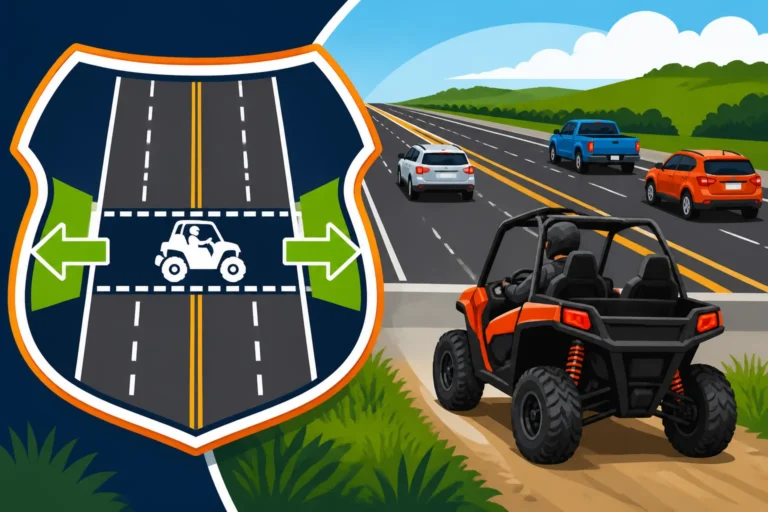
When it comes to crossing higher-speed roads, the rules are very specific. If you need to cross a state highway or a multi-lane road where UTVs aren't generally allowed, there are tight regulations. You might be permitted to cross a two-lane highway at a ninety-degree angle, making the crossing as direct and quick as possible, but only where it's safe and clearly visible. For multi-lane highways, crossings are only allowed at designated intersections where [Tennessee Rules for Crossing a Highway] or [Crossing a Two-Lane at Ninety Degrees in Tennessee] specify. Always proceed with extreme caution, yielding to all traffic. Remember, even with these expanded rules, the responsibility is on you, the rider, to know and follow all applicable laws and posted restrictions. When in doubt, it's always safer to err on the side of caution and avoid a particular road.
Licensing, Insurance, and Legal Requirements
Beyond outfitting your UTV with the correct gear, there are crucial legal responsibilities that fall on the operator. Just like driving a car, operating a street-legal UTV on Tennessee roads comes with specific licensing, insurance, and administrative requirements. Ignoring these can lead to fines, citations, or even legal trouble.
Driver Qualifications and Age Limits
Operating any vehicle on a public road in Tennessee requires a certain level of competency and legal authorization. For a street-legal UTV, the rules are clear:
- Driver's License: Anyone operating a street-legal UTV on a public road must possess a valid driver's license. This isn't a special UTV license; it's your standard Class D or equivalent driver's license. This ensures that operators have passed the necessary tests to demonstrate their knowledge of road rules and driving skills. [Tennessee Driver's License Rules for UTVs] are the same as for any other motor vehicle.
- Minimum Age: The minimum age to operate a street-legal UTV on a public road in Tennessee is 16 years old. This aligns with the minimum age for obtaining a driver's license. [Tennessee Minimum Age to Ride a Road] is set to ensure a certain level of maturity and driving experience before operating a vehicle on shared roadways.
- Helmet Rules: This is often a point of confusion. While Tennessee has specific helmet laws for OHVs, when your UTV is operating as a street-legal vehicle on a public road, it generally falls under different regulations. Typically, if the UTV is operating as a "medium speed vehicle" or "low speed vehicle" and equipped with safety features like seat belts, helmets are not strictly mandated for adults over 18, unless they are under 18. However, [Tennessee Helmet Rules for Operator and Passengers] still apply to anyone under the age of 18, regardless of the vehicle type. It's also critical to remember that while not always legally required for adults on roads, wearing a helmet is always a wise safety precaution, especially given the open-air nature of UTVs. There are also specific exemptions for agricultural work, where a helmet might not be required if the UTV is being used exclusively for farming duties.
Insurance, Registration, and Titling
Just like your car, your street-legal UTV needs to be properly covered and documented. This protects you, your passengers, and other road users in the event of an accident.
- Insurance: Tennessee law mandates liability insurance for any vehicle operating on public roads. This means your street-legal UTV must be covered by a policy that meets the state's minimum liability requirements. [Tennessee UTV Insurance Requirement] is non-negotiable. You should carry proof of insurance with you whenever you're operating the UTV on public roads. It's always a good idea to discuss your UTV's specific use (on-road vs. off-road) with your insurance provider to ensure you have adequate coverage for all scenarios.
- Titling and the TDR Sticker: This is where UTVs deviate a bit from traditional car registration. While UTVs do not receive a traditional license plate like a car, they are subject to titling requirements. You will need to obtain a Tennessee title for your UTV through your local county clerk's office. This title proves ownership and is a fundamental step. Once titled, the Tennessee Department of Revenue (TDR) issues a special sticker, often referred to as the "TDR sticker." This sticker indicates that your OHV (UTV in this case) has been properly titled in the state and that any applicable sales tax has been paid. The sticker is affixed to the machine and essentially serves as its "registration" for state purposes, though it's distinct from traditional vehicle registration. Crucially, [Does a Tennessee UTV Need a Plate for Roads?] The short answer is no; it relies on the TDR sticker and proper equipment. While the TDR sticker signifies that the UTV is properly titled and taxed, it doesn't automatically grant road access. Road access is contingent upon meeting the equipment requirements (making it an LSV/MSV equivalent) and riding only on designated roads. Think of the TDR sticker as proof of ownership and tax payment, while the equipment upgrades and local ordinances grant you the road-riding privilege.
Navigating the Process: Making Your UTV Street Legal in Tennessee
So, you're ready to take the plunge and transform your trail warrior into a street-savvy machine? The process might seem daunting at first glance, but breaking it down into manageable steps can make it much smoother. It's all about diligent preparation, proper installation, and double-checking compliance.
Step-by-Step for Equipping Your Machine
The actual physical transformation of your UTV is where a significant portion of your effort and investment will go. Here’s a typical pathway:
- Assess Your Current UTV: Start by making a detailed list of all the Tennessee street-legal requirements we discussed earlier (headlights, turn signals, mirrors, windshield, horn, DOT tires, etc.). Then, go over your UTV with a fine-tooth comb. What does it already have? What's missing? Be brutally honest. Many UTVs have basic lights, but are they bright enough? Are your tires actually DOT-approved? Do you have all the required mirrors?
- Research and Purchase Aftermarket Kits: Once you know what you need, it's time to shop. There are many reputable companies that specialize in UTV aftermarket parts for street conversion. Companies like SuperATV are well-known for offering comprehensive solutions. You can find complete street-legal kits that often include turn signals, horns, mirrors, and even windshields. Don't cheap out here; quality and reliability are paramount for safety on public roads. Look for components that are durable and designed to withstand the rigors of UTV use. For example, a SuperATV glass windshield might offer better clarity and durability than a cheaper plastic alternative for road use.
- Installation – DIY vs. Professional:
- DIY: If you're handy with tools and comfortable with wiring, installing many of these components yourself is certainly an option. Most kits come with instructions, and there are countless online tutorials. Take your time, read all instructions carefully, and ensure all electrical connections are secure and weatherproof. Improper installation can lead to malfunctions or even safety hazards.
- Professional Installation: If you're not confident in your mechanical or electrical skills, or simply prefer to have it done right the first time, take your UTV to a qualified mechanic or an off-road specialty shop. They have the expertise and tools to ensure everything is installed correctly and safely. While this adds to the cost, it provides peace of mind that your UTV is legally and safely equipped for road use.
- Emphasize Quality and Compliance: Every component you add should be of good quality and, where applicable, meet DOT standards. This isn't just about avoiding a ticket; it's about your safety and the safety of others. A flimsy turn signal might break on a bumpy road, leaving you unable to signal your intentions. A non-safety glass windshield could shatter dangerously in an impact. When you're looking for parts, whether it's a new set of mirrors or a full lighting kit, ensure they are designed for the task and ideally, from a reputable source like SuperATV, known for their robust UTV accessories.
Final Checks and Local Compliance
Once your UTV is physically equipped, your job isn't quite done. The legal and administrative aspects still require attention.
- Review All Regulations (Again!): Before your first street ride, go back over all the state laws and, crucially, any local ordinances specific to the counties or towns you plan to ride in. Even with House Bill 810, local jurisdictions still have a say in specifics like designating roads or hours of operation. You want to be absolutely sure your UTV meets every single requirement.
- Perform a Thorough Pre-Ride Inspection: Treat your street-legal UTV like any other road vehicle. Check all lights (headlights, taillights, brake lights, turn signals), the horn, mirrors, tire pressure, and ensure your seat belts are functioning. Make sure your windshield is clean and clear. This routine check should become standard practice before every road outing.
- Contact Local Authorities for Clarification: If you have any lingering doubts or specific questions about a particular road or area, don't hesitate to reach out to your local county clerk's office, sheriff's department, or city police department. They are the ultimate arbiters of local rules and can provide the most current and accurate information. It's always better to ask beforehand than to get pulled over later.
- Stay Informed: Laws and regulations can change. Keep an eye on local news, state legislative updates, and reputable off-road forums or groups for any new developments concerning UTV road use in Tennessee. Being proactive about staying informed is your best defense against inadvertently breaking a new rule.
Remember, the goal isn't just to look street legal; it's to be street legal, fully compliant, and safe for everyone on the road.
Disclaimer
This article is for general informational purposes only and does not constitute professional advice. Laws, prices and regulations vary by location and change over time. Consult a qualified professional for guidance on your specific situation.