Tennessee Rules for Night Riding on a Trail
There's nothing quite like the thrill of hitting the trails in your ATV or UTV, especially when the sun dips below the horizon and the forest takes on a whole new, mysterious character. The air cools, the sounds change, and your headlights cut a path through the unknown. But before you gear up for that epic nocturnal adventure, you need to know that night riding in Tennessee isn't just about flipping on your lights and going. There are specific rules, regulations, and crucial safety considerations that can make the difference between an unforgettable experience and a regrettable one. This guide will walk you through everything you need to understand about legitimate and safe night riding on Tennessee's diverse trails.
The Allure and The Reality of Night Riding in Tennessee
For many off-road enthusiasts, night riding is the ultimate experience. It offers a unique perspective, cooler temperatures during the summer months, and a sense of solitude that daylight rides often lack. You feel a heightened awareness, relying more on the beam of your lights and the sounds around you. The trails you know by heart during the day transform into a new challenge at night, revealing hidden obstacles and subtle changes in terrain. It's a truly exhilarating experience that many riders crave.
Why the Dark Calls to Riders (and the Dangers It Hides)
The call of the night trail is strong. Imagine the crisp air, the stars overhead, and the focused beam of your headlights illuminating a path through the trees. It's a sensory experience that amplifies every bump, every turn, and every whisper of the wind. However, with this heightened experience comes increased risk. Visibility is drastically reduced, making it harder to spot fallen trees, deep ruts, or sudden drop-offs. Depth perception becomes a challenge, and even familiar trails can feel entirely different. Wildlife, often more active at night, poses an additional hazard. Getting lost or having a mechanical issue in the dark can quickly turn an adventure into a precarious situation. That's why understanding the rules and preparing thoroughly isn't just a suggestion; it's a necessity.
The Regulatory Landscape: Why Night Rules Exist
Tennessee's diverse landscape means a mix of public and private lands, each with its own set of rules governing off-road vehicle use, especially after dark. These regulations aren't designed to spoil your fun; they're put in place for safety, environmental protection, and to prevent disturbances to wildlife and local communities. Public lands, like Wildlife Management Areas (WMAs), often have strict curfews to protect wildlife and manage human impact. Private parks, while generally more flexible, still have their own operating hours and specific policies for night riding, often requiring special permits or gear. Ignoring these rules can lead to fines, citations, or even the closure of trails, impacting all riders. It's a collective responsibility to understand and respect the guidelines.
Navigating Public Lands After Dark: What You Need to Know
When it comes to Tennessee's public lands, such as WMAs or state forests, the general rule of thumb for night riding is: don't expect it to be an option. Most public trail systems have strict operating hours that align with daylight hours, and attempting to ride after sunset can lead to serious trouble. These regulations are often in place for reasons ranging from wildlife management and hunting seasons to ensuring rider safety when there's limited oversight.
Tennessee Wildlife Management Areas (WMAs) and Night Curfews
Tennessee's Wildlife Management Areas, managed by the Tennessee Wildlife Resources Agency (TWRA), are primarily dedicated to wildlife conservation and hunting activities. As such, OHV access is often restricted, and specific times are enforced. For the North Cumberland WMA, for example, a major riding destination, there are strict rules about operating hours. While some parts of the WMA might technically be open 24/7 for certain activities, OHV use is typically limited to specific hours, often from "sunrise to sunset." This is crucial for protecting nocturnal wildlife and preventing conflicts, especially during various hunting seasons. Always check the specific WMA's regulations or the TWRA's website for the most current information, as rules can change. Riding after hours in a WMA can result in significant fines and potentially even confiscation of your machine. You can learn more about these rules by checking out [Tennessee Rules for Riding a WMA].
State Forests and Other Public Trail Systems: Checking Local Ordinances
Beyond WMAs, Tennessee has various state forests and other publicly accessible lands. However, most of these areas do not cater to OHV recreation, and those that do usually have the same "daylight hours only" restrictions. Unlike private parks that are purpose-built for off-roading, public lands often lack the extensive lighting or emergency services infrastructure to support safe night riding. It's not uncommon for gates to be locked at dusk, and signage will explicitly state operating hours. Before even considering a ride, you need to meticulously research the specific land you plan to visit. Local county ordinances might also come into play, especially for trails that cross or border county roads. Always consult the managing agency's official website or contact them directly. Assume night riding is not permitted unless explicitly stated otherwise by the governing body, and even then, confirm any special requirements. You can also look up [Tennessee Trail Seasons and Closures] for the areas you plan to visit.
Lighting and Equipment Mandates for Public Trails
Even if a rare public trail does allow some form of night riding (perhaps in a designated camping area or short access roads), you can bet there will be strict equipment mandates. These aren't just about being able to see; they're about being seen. Adequate headlights and taillights are the absolute minimum. Often, specific lumen requirements or the need for reflective markers might be in place. If you're on a public trail, you'll want to review [Tennessee Lighting Requirements for UTVs] to ensure your machine is up to snuff. Beyond the machine itself, personal safety gear like bright, reflective clothing and a headlamp for off-machine activities are always wise. Breaking these equipment rules, even if allowed to be out after dark, can lead to citations, as law enforcement has little tolerance for safety hazards in low-light conditions.
Private Parks: Your Best Bet for Legitimate Night Riding
If you're truly seeking an exhilarating night riding experience in Tennessee, your best and safest bet will almost always be one of the state's fantastic private off-road parks. These destinations are designed specifically for recreational OHV use and often have specific policies and even designated areas for night riding, recognizing it as a popular activity among enthusiasts.
Windrock Park: Open Around the Clock and Ready for Night Trails
Windrock Park, nestled near Oliver Springs, Tennessee, is a legendary destination for a reason. With over 73,000 acres and hundreds of miles of trails, it stands out as one of the few places where you can legitimately ride around the clock. Yes, you read that right: [Windrock Open Around the Clock]! This means that after the sun sets, the trails are still yours to explore, provided you have the right permits and gear. The park embraces night riding, offering a unique opportunity to experience its vast terrain under the stars. However, even with 24/7 access, safety is paramount. You'll still need to ensure your machine is properly lit, you're carrying the right safety equipment, and you're aware of your surroundings, as the trails can become more challenging in the dark. It's a truly incredible experience to ride some of those iconic [73,000 Tennessee Acres at Windrock] by the light of your SuperATV light bar.
Brimstone Recreation and Royal Blue Resort: Checking Their Night Policies
While Windrock is famous for its 24/7 access, other excellent private parks like [Brimstone Recreation at Huntsville, Tennessee] and [Ride Royal Blue Resort in Tennessee] also offer incredible riding, but their night riding policies might differ. Brimstone Recreation, known for its extensive trails in Scott County, often hosts special events that include night riding opportunities, and regular access might extend into the evening, but it's not typically a full 24/7 operation for general access. Similarly, Royal Blue Resort, part of the larger North Cumberland WMA system but operating with its own permits and rules, may have specific hours or designated areas for night use. It's absolutely crucial to check each park's specific website or call their office directly before you plan a night ride. Their rules can change, especially with seasons or special events. Don't just assume; always verify to avoid disappointment or, worse, a citation.
The Importance of Park-Specific Permits and Rules
Every private park has its own set of rules and permit requirements, and these are especially important when it comes to night riding. You'll need to purchase the appropriate land use permit for the park, which often covers a day or multiple days. For night riding, parks might have additional rules about the types of lights required, where you can park, and even specific trails that are closed after dark for maintenance or safety reasons. For example, some trails might be designated as "daylight only" due to extreme difficulty or proximity to sensitive areas. Always sign waivers, understand their emergency procedures, and carry your permit on your person. These permits help fund trail maintenance, safety patrols, and other essential services that make these parks such fantastic places to ride. Failing to adhere to these park-specific rules can result in penalties, just like on public lands, and you could face [Tennessee Fines for Riding a Closed Trail].
Essential Preparation for a Safe Night Ride
Riding at night is an entirely different beast than riding during the day. The challenges are amplified, and the margin for error shrinks significantly. Therefore, meticulous preparation isn't just a good idea; it's non-negotiable. Don't just throw on your helmet and go; take the time to prepare yourself and your machine thoroughly.
Lighting Up Your Machine: Beyond the Stock Headlights
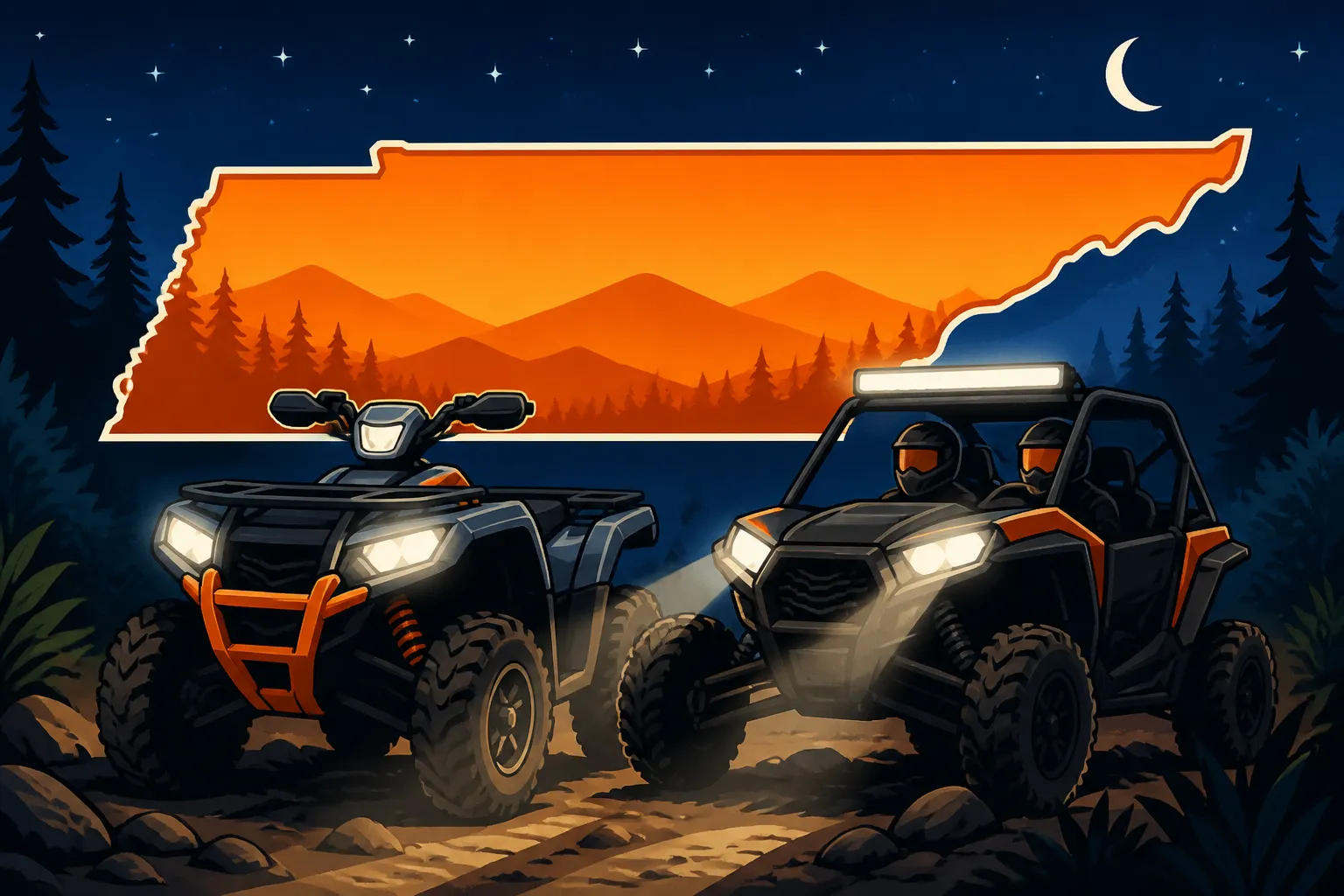
Your stock headlights, while adequate for daylight hours or crossing a gravel driveway, are almost certainly not enough for serious night trail riding. The trails in Tennessee are rugged, often with deep ruts, sharp turns, and unexpected obstacles. You need to see far ahead, to the sides, and even behind you to ride safely. This means investing in aftermarket lighting.
- LED Light Bars: These are your primary weapon against the dark. A good quality LED light bar, mounted to your roof or bumper, can flood the trail with light, turning night into a more manageable twilight. Look for a combination beam pattern that offers both spot (for distance) and flood (for width). SuperATV offers a wide range of light bars and pods that are perfect for cutting through the darkest Tennessee hollers.
- Pod Lights: Small but mighty, pod lights are excellent for filling in dark spots that your main light bar might miss. Mount them on your A-pillars, bumper, or even under your fenders for rock lights. They're fantastic for illuminating tight corners, spotting trail edges, and giving you better peripheral vision.
- Taillights and Brake Lights: While you're focused on seeing, don't forget about being seen! Bright taillights are critical, especially if you're riding in a group. In dusty conditions, a high-mounted dust light (a bright LED strip or pod that shines rearward) can make a huge difference in preventing rear-end collisions.
- Whip Lights: For added visibility, especially on open terrain or popular trails where other riders are present, illuminated whip lights can make your machine much easier to spot from a distance.
Remember, having enough light isn't about blinding others; it's about providing safe and comprehensive illumination for your ride.
Personal Safety Gear for Low-Visibility Conditions
Your machine might be lit up like a Christmas tree, but you also need to ensure your personal gear is optimized for night riding.
- Clear or Yellow Goggles: If you wear tinted goggles during the day, swap them out for clear or yellow lenses at night. Tinted lenses will drastically reduce what little ambient light there is, making it harder to see. Yellow lenses can actually enhance contrast in low-light conditions.
- Helmet: Of course, a helmet is non-negotiable for any ride, day or night. Make sure it's in good condition and fits properly. While [Tennessee Helmet Law Off-Road] doesn't always mandate a helmet for adults on private land, it's always the smart choice.
- Headlamp: Always carry a reliable headlamp. If you have to dismount for any reason—checking a map, fixing a flat, or even just taking a break—a hands-free light source is invaluable.
- Reflective Clothing: Even if you have the best lights, adding some reflective elements to your jacket, vest, or helmet can significantly increase your visibility to other riders if you're ever separated from your machine or need to walk the trail.
- Warm Layers: Even on warm days, nights in Tennessee can get chilly, especially at higher elevations or in open areas. Dress in layers that you can easily add or remove.
Planning Your Route and Riding Smart After Sunset
Night riding isn't the time to explore new, unknown trails. Stick to routes you're intimately familiar with during the day. Even then, expect the unexpected.
- Study Your Map: Before you head out, carefully review your [Tennessee Trail Maps Worth Carrying]. Pay attention to elevation changes, potential water crossings, and any difficult sections. Consider using a GPS device that's easy to read in the dark; it's far better than fumbling with a paper map and a headlamp.
- Ride Slower: Reduce your speed significantly. Obstacles appear much faster in your limited field of vision, and reaction time is crucial.
- Ride with a Buddy: Never ride alone at night. A riding partner or group provides an extra set of eyes, mutual support in case of a breakdown, and a quicker response in an emergency.
- Tell Someone Your Plans: Inform a trusted friend or family member of your planned route and estimated return time. This way, if you don't check in, they know where to start looking.
- Carry a Well-Stocked Emergency Kit: Beyond your usual toolkit, include items like extra batteries for your headlamp, a powerful flashlight, a fully charged cell phone (though service can be spotty in many trail areas), a first-aid kit, fire starter, and possibly a satellite communicator for areas without cell service.
- Stay Hydrated and Fueled: Pack plenty of water and snacks. Night riding can be mentally taxing, and staying energized is important.
- Know Your Limits: If you start feeling fatigued or disoriented, it's time to pull over and take a break or head back to camp. Pushing yourself too hard in the dark is a recipe for disaster.
By taking these preparations seriously, you can transform the potential dangers of night riding into a truly spectacular and safe adventure on Tennessee's incredible trails.
| Category | Essential for Night Riding | Why It Matters |
|---|---|---|
| Machine Lighting | LED Light Bars | Stock headlights often aren't enough for true trail visibility. |
| Pod Lights | Great for side visibility, spotting obstacles in turns. | |
| Taillights/Brake Lights | Crucial for being seen by riders behind you, especially in dusty conditions. | |
| Personal Gear | Clear/Yellow Goggles | Tinted goggles are useless at night; clear or yellow enhance contrast. |
| Headlamp | Handy for map reading, wrenching, or looking under the hood without holding a flashlight. | |
| Reflective Clothing | Increases your visibility if you have to dismount or are separated from your machine. | |
| Navigation & Safety | GPS Device | Easier to read than paper maps in the dark, helps you stay on track. |
| Two-Way Radio/Comms | Essential for group communication if cell service is spotty. | |
| First Aid Kit | Injuries are harder to spot and treat in the dark; be extra prepared. | |
| Spare Fuel | Getting stranded in the dark is far worse than in daylight. |
Disclaimer
This article is for general informational purposes only and does not constitute professional advice. Laws, prices and regulations vary by location and change over time. Consult a qualified professional for guidance on your specific situation.