Tennessee DUI Rules for ATV Riders
It's a common misconception, especially among folks who spend their weekends exploring the vast trails and rugged terrain of the Volunteer State, that operating an ATV or UTV is somehow outside the reach of typical road laws. Many riders assume that because their machine isn't a "car," the rules for driving under the influence don't apply, particularly if they're not on a paved road. This couldn't be further from the truth, and this guide is here to lay out exactly why Tennessee's DUI rules absolutely apply to ATV and UTV riders, and what the very real, often severe, consequences can be.
The Harsh Reality: Tennessee's DUI Laws Apply to ATVs and UTVs
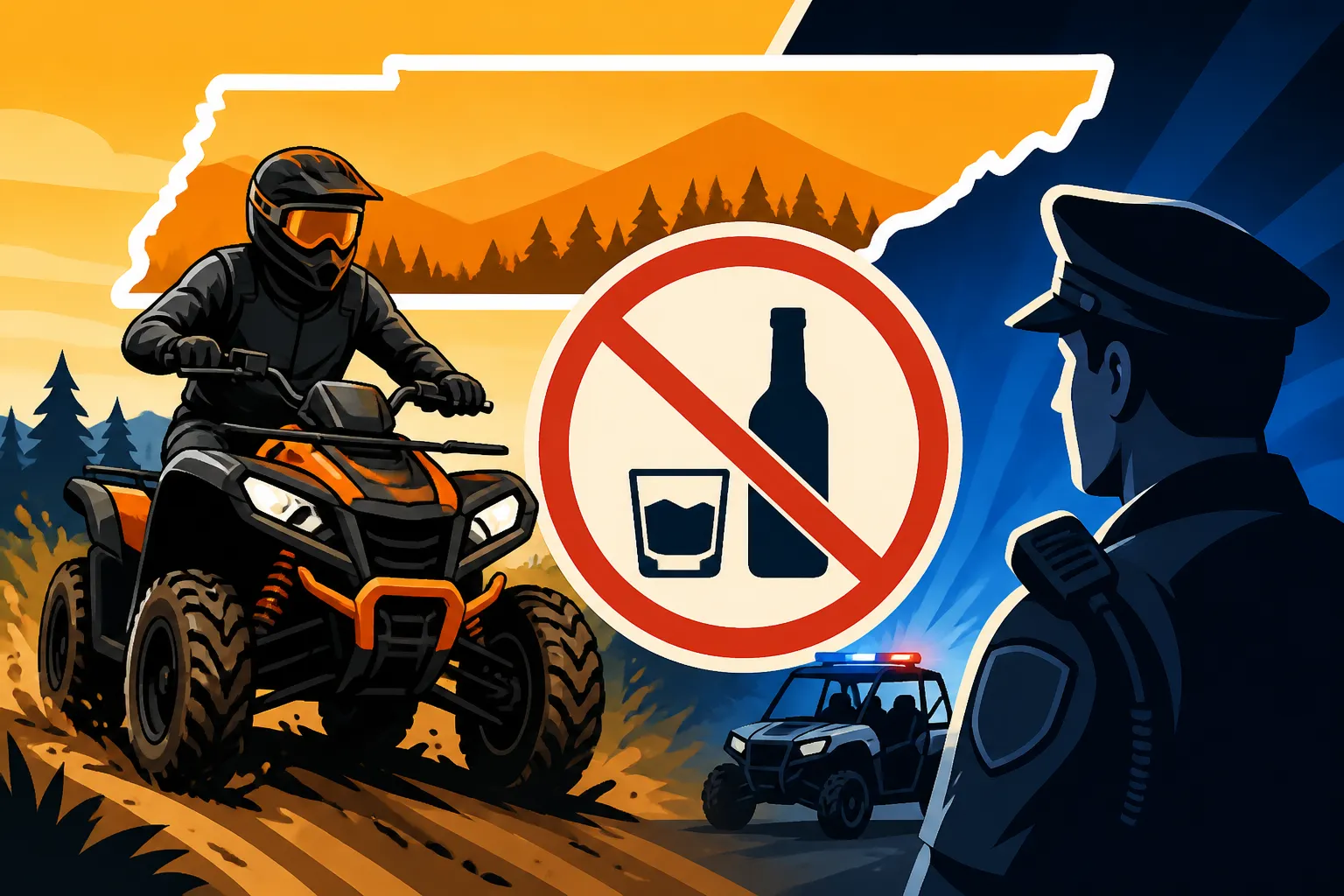
Let's be blunt: if you can operate it, you can get a DUI on it in Tennessee. This isn't just about cars, trucks, or motorcycles. It extends to anything with an engine that you control, whether it's an ATV, a side-by-side (UTV), a dirt bike, or even a riding lawnmower in some very specific, unfortunate circumstances. The law isn't concerned with what you're driving, but if you're driving, and how responsibly you're doing it. For those of us who love hitting the trails around Windrock or Brimstone, this is crucial information, because a relaxed weekend can turn into a legal nightmare faster than you can say "mud bog."
The biggest frustration for many riders is this feeling of being targeted, or that the rules are unfair because they're "just having fun" off-road. But the law sees impairment as impairment, regardless of the vehicle or location. An impaired operator of any machine, whether it's a quad with knobby tires from SuperATV or a stock side-by-side, poses a significant danger to themselves, their passengers, and anyone else around them, including other riders, hikers, or even wildlife. It's not about spoiling fun; it's about public safety. The same judgment that keeps you safe on a steep climb or a tricky creek crossing is severely compromised by alcohol or drugs.
What "Operating" Really Means for an OHV
When we talk about "operating" an off-highway vehicle (OHV), the legal definition is quite broad in Tennessee. It doesn't just mean actively driving down a trail or road. If you're in physical control of the vehicle, even if it's parked with the engine running, or you're simply sitting in the driver's seat with the keys in the ignition, you could potentially be considered "operating" it. This can be a shock to riders who think they're being responsible by pulling over and stopping. Imagine you're at a staging area, or pulled off to the side of a [Tennessee Trail Conditions Before You Ride] somewhere in the North Cumberland WMA, enjoying a cold one after a long ride. If you're in the driver's seat with the keys, you could be in trouble.
The intent of the law is to prevent impaired individuals from being able to immediately put a vehicle in motion and become a hazard. This means that if you've been drinking or using substances, the safest place to be is completely away from the vehicle's controls. Don't sit in the driver's seat, don't have the keys in the ignition, and certainly don't have the engine running. Even if your machine is outfitted for serious trail adventures, perhaps with heavy-duty protection from SuperATV, it won't protect you from the long arm of the law if you're deemed to be operating it while impaired.
Why the Misconception Persists
It’s easy to understand why this misconception about off-road vehicles and DUI laws persists. For years, many parts of Tennessee had a more Wild West approach to off-roading. There were fewer regulations, and the idea of being ticketed for a DUI on a forest trail felt far-fetched. Plus, the sheer remoteness of many popular riding spots in places like Scott or Campbell counties can give a false sense of security. It feels like you're "away from it all," and therefore, away from the rules. But law enforcement, including local sheriffs, state troopers, and wildlife officers, do patrol these areas. They know these trails just as well as, if not better than, many riders.
Another factor is the differing rules for vehicle registration. Because Tennessee doesn't register off-road machines in the same way it does street-legal vehicles – opting instead for a titling process and a [Tennessee's TDR Sticker Explained] – some riders incorrectly assume this lack of traditional registration means a lack of traditional road laws. This is simply not the case. The ability to legally operate an OHV on a public trail or designated road comes with the responsibility to do so safely and soberly, just as it would with any other vehicle. [Does Tennessee Register ATVs?] clarifies this distinction further, but it does not change the DUI applicability.
Understanding the Legal Limits and Consequences
Tennessee takes DUI very seriously, and these laws don't differentiate between someone driving a pickup truck on I-40 and someone riding a quad through a creek bed in Morgan County. The legal thresholds for impairment are the same, and the consequences can be equally, if not more, devastating, especially if you also incur fines for riding on [Tennessee Fines for Illegal UTV Road Use]. It's not just about losing your driving privileges for your car; it impacts your entire life.
It's vital to remember that a DUI isn't just about alcohol. Impairment can also come from drugs, including prescription medications or over-the-counter drugs that affect your ability to operate machinery. Always read warning labels and understand how any substance might affect your judgment and reaction time before you get behind the handlebars. There's a reason trail riding requires a clear head – one wrong move can lead to serious injury, or worse.
The Standard .08 BAC Rule
In Tennessee, the legal limit for Blood Alcohol Content (BAC) for drivers 21 and older is .08 percent. This is the same for cars, trucks, motorcycles, and yes, your ATV or UTV. For commercial drivers, it's even lower at .04 percent, and for drivers under 21, Tennessee has a "zero tolerance" policy, meaning a BAC of .02 percent or higher can result in a DUI. It's a common misconception that because you're off-road, the rules are relaxed. They are not. If an officer has probable cause to believe you are impaired, they can administer field sobriety tests and, if necessary, take you in for chemical testing.
Reaching a .08 BAC can happen much faster than people realize, especially in the heat of a summer day on the trails, or after a strenuous ride that dehydrates you. Factors like your weight, gender, metabolism, and how much food you've eaten all play a role. A couple of beers after a hard ride might feel harmless, but they could easily put you over the legal limit, turning a fun day into a costly mistake. If you're not sure, don't risk it. There are plenty of options from SuperATV to make your machine comfortable for the ride, but none of them mitigate the effects of alcohol on your judgment.
Beyond Alcohol: Drugs and Impairment
While alcohol-related DUIs get a lot of attention, it's incredibly important to remember that operating an OHV under the influence of drugs, including prescription medication and illegal substances, is also a serious offense in Tennessee. This is often referred to as a "DUI-D" (driving under the influence of drugs). Many prescription drugs, especially those used for pain, anxiety, or sleep, can impair your ability to react quickly, judge distances, or maintain focus – all critical skills for safely navigating challenging terrain. Even some over-the-counter cold medicines can cause drowsiness.
If you are stopped and an officer suspects drug impairment, they may use a Drug Recognition Expert (DRE) to evaluate you. These officers are trained to identify signs of drug impairment through a series of tests and observations. Just like with alcohol, you can face significant penalties, including fines, jail time, and loss of your driver's license, even if you weren't consuming alcohol. It's a stark reminder that personal responsibility goes beyond just avoiding illicit substances; it means understanding how any substance might affect your ability to operate your machine safely.
Penalties That Don't Discriminate
The penalties for an OHV DUI in Tennessee are generally the same as those for a DUI in a standard automobile. These are severe and escalate with repeat offenses. For a first offense, you're looking at mandatory jail time, significant fines, court costs, and the suspension of your driver's license for a minimum of one year. You'll also likely be required to attend an alcohol and drug treatment program and install an ignition interlock device on any vehicle you own, including potentially your personal automobile. The financial burden alone can be staggering, let alone the impact on your freedom and reputation.
Subsequent offenses lead to even harsher penalties, with longer jail sentences, higher fines, and extended license suspensions. There's no special carve-out for "off-road DUIs" that makes them less serious. The state treats them as seriously as any other impaired driving offense because the potential for harm is just as real. This could mean your ability to get to work, run errands, or even pick up parts for your machine from a dealer becomes severely hampered. For details on related offenses, see [Tennessee Fines for an Untitled OHV].
Here's a general overview of typical DUI consequences in Tennessee:
| Offense | Jail Time (Minimum) | Fines (General Range) | License Suspension (Minimum) | Other Requirements |
|---|---|---|---|---|
| First Offense | 48 hours | Significant | 1 year | DUI School, Drug & Alcohol Treatment, Ignition Interlock Device (IID) for 6 months to 1 year, Community Service, Victim Impact Panel. |
| Second Offense | 45 days | Substantially Higher | 2 years | Mandatory IID, Longer Treatment Program, More Community Service. |
| Third Offense | 120 days | Even Higher | 6 years | Felony Charge, Mandatory IID, Extended Treatment, Loss of voting rights (potentially). |
| Fourth Offense | 1 year, 1 day | Very High | 8 years | Mandatory Felony, Permanent License Revocation (potentially), Extensive IID use. |
Note: These are general outlines. Specific penalties are determined by the court and can vary based on individual circumstances, aggravating factors, and current laws. Always consult legal counsel for specific advice.
Practical Advice for Responsible Riding in Tennessee
Knowing the legal landscape is one thing; putting it into practice is another. The goal isn't just to avoid a DUI, but to ensure that every ride is as safe and enjoyable as possible. This means thinking ahead, understanding how to interact with law enforcement, and always prioritizing safety, whether you're tackling [Tennessee Trails With Rock Crawling] or cruising through a scenic [Tennessee Rules for Riding a Gravel Road].
For many of us, off-roading is a social activity, a chance to bond with friends and family. There's nothing wrong with that, but it's where the lines can get blurry. Having a cooler packed with beverages for after the ride is one thing; consuming those beverages while on the trail or before you've parked your machine for the day is another entirely. This is where planning and clear communication within your riding group become absolutely essential.
Planning Ahead: Designated Drivers and Safe Staging
The best defense against an OHV DUI is a good offense: don't drink and ride. Period. If you plan to consume alcohol, designate a sober driver for your OHV, just as you would for your car. This person should commit to not drinking any alcohol or consuming any impairing substances. This might seem like a buzzkill for some, but it's the smartest way to enjoy your time without risking your life, your machine, or your legal standing. Consider having a designated "basecamp" or staging area where all machines are parked and shut off before any alcohol is consumed.
Another crucial aspect of planning is knowing your route and what kind of roads or trails you'll be on. If you're planning to ride any designated [Tennessee Rules for Riding a County Road] or state-approved [Tennessee Road Use Rules for ATVs], the scrutiny will be even higher. Even crossing a highway in a specific, lawful manner, as outlined in [Crossing a Two-Lane at Ninety Degrees in Tennessee], requires full mental faculties. If you're on private land with permission, the risk of encountering law enforcement might be lower, but the risk of injury or property damage due to impairment remains just as high. Always remember, even machines with advanced suspension from SuperATV can't correct for impaired judgment.
Knowing Your Rights and What to Expect Roadside
If you are stopped by law enforcement while operating an OHV, remain calm and cooperative. You have rights, just as you would in any traffic stop. You have the right to remain silent, and you have the right to an attorney. However, refusal to submit to a breathalyzer or blood test in Tennessee can lead to immediate license suspension and other penalties under the state's implied consent law. It’s a tricky situation, and one best avoided by not operating under the influence in the first place.
Be prepared to show your identification, any required permits for the area you're riding, and proof of title if requested. For information on what kind of identification is required, refer to [Tennessee Driver's License Rules for UTVs]. Remember that officers are primarily concerned with safety and the law. Being belligerent or uncooperative will only make a bad situation worse. If you are asked to perform field sobriety tests, you can refuse, but this might lead to arrest, and then a mandatory chemical test. It's a complex legal area, so it's always best to be sober to navigate it clearly.
Equipment and Preparedness Beyond the Law
Beyond the legal implications of DUI, remember that safe OHV operation requires a clear mind to properly utilize your equipment and react to changing trail conditions. Your machine, whether it's a quad, side-by-side, or dirt bike, needs to be in good working order. Proper tires, functioning brakes, and adequate lighting (especially if you're out near sunset, as covered in [Tennessee Rules for Riding After Dark]) are essential. Many riders invest in high-quality gear from companies like SuperATV to enhance performance and safety, but even the best equipment is useless if the operator is impaired.
Always wear appropriate safety gear, including a helmet, goggles, gloves, long sleeves, and sturdy boots. [Tennessee Helmet Law for ATV Riders] outlines these requirements in detail. Having a first-aid kit, communication device, and basic tools on hand are also critical, especially if you're exploring remote areas. These preparations are all part of being a responsible rider, and they become exponentially more important when you're dealing with the challenges of off-road terrain. A DUI not only jeopardizes your driving privileges but can also impact your insurance rates, making it more expensive to insure your vehicle (see [Tennessee UTV Insurance Requirement]). Stay sober, stay safe, and enjoy the incredible trails Tennessee has to offer!
Disclaimer
This article is for general informational purposes only and does not constitute professional advice. Laws, prices and regulations vary by location and change over time. Consult a qualified professional for guidance on your specific situation.