Riding Home After a Tennessee Sunset
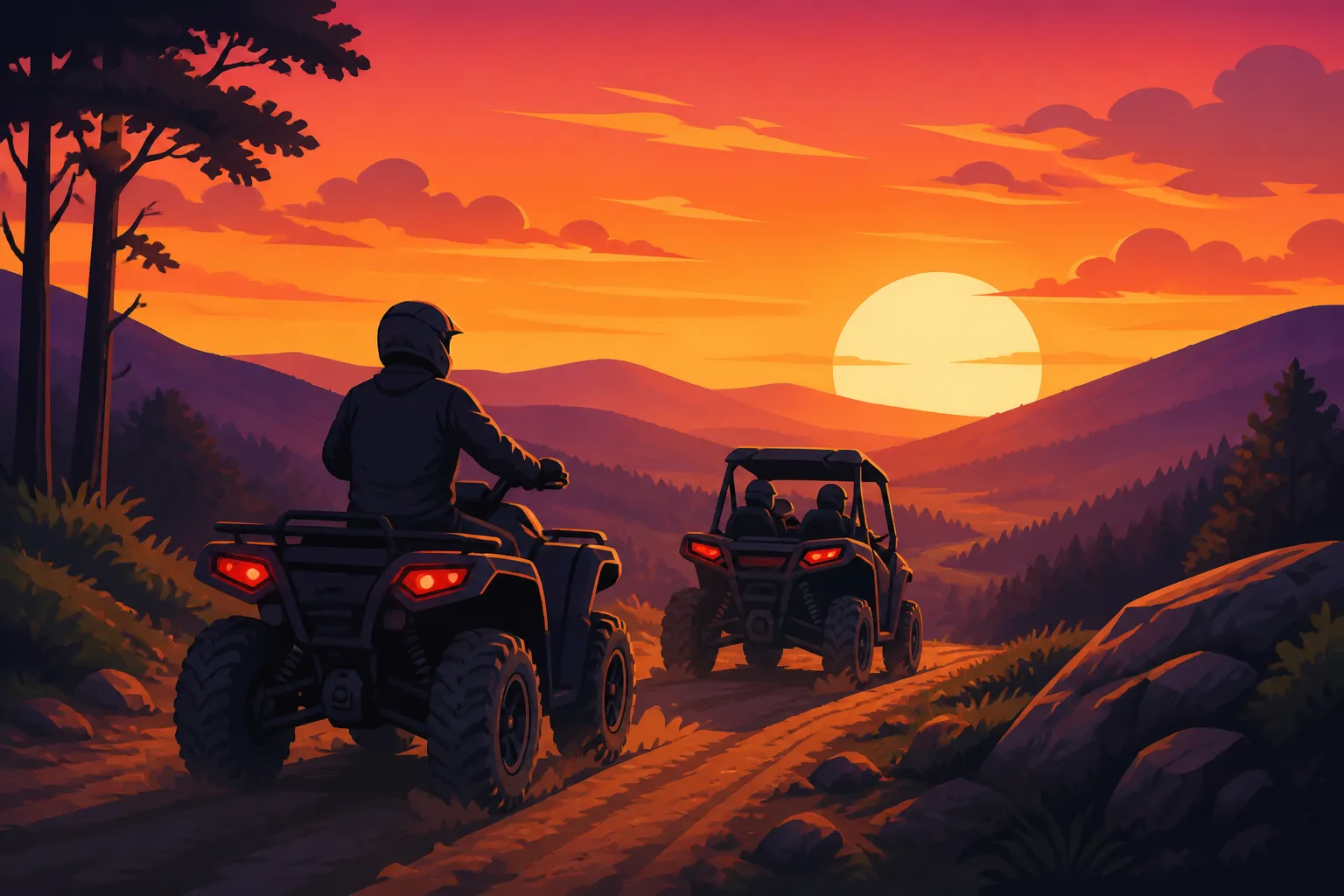
Picture this: the sun dipping below the rolling hills of Tennessee, painting the sky in fiery oranges, soft purples, and deep blues. It's a breathtaking scene, and one that often finds many of us still out on the trails or enjoying a leisurely cruise on our ATVs and UTVs. While the beauty of a Tennessee sunset is undeniable, the moment the last rays fade, a whole new set of rules and safety considerations kick in, especially if you find yourself on a public road. This guide is here to walk you through the often-confusing landscape of riding your off-road machine after dark in the Volunteer State, helping you understand the legal requirements, essential gear, and crucial safety practices to ensure your ride home is both magical and compliant.
The Legal Quandary of Dusk and Darkness on Tennessee Roads
It's a common scenario: you’re out on the trails, maybe at Windrock or Brimstone, and you decide to take a scenic route back to camp, or maybe you're just cutting through a designated county road to get to the next section of trail. The sun starts to set, and suddenly, that golden hour bliss gives way to twilight, then full darkness. This transition isn't just about visibility; it's about legality. Tennessee has very specific regulations about operating off-highway vehicles (OHVs) on public roads, and those rules get significantly stricter—or outright prohibitive—once daylight gives way to night. It’s easy to get caught off guard, and the consequences can range from a hefty fine to a much more serious incident if you’re not prepared or compliant.
Why Sunset Changes Everything for Your Ride
For OHV riders in Tennessee, the magic of sunset often means the end of legal road access. Most of the statutes allowing ATVs and UTVs on designated public roads, particularly county roads and within Adventure Tourism Districts, are explicitly tied to daylight hours. This isn't just a suggestion; it's often a hard and fast rule. Think about it: a small ATV or UTV, even with proper lighting, is significantly less visible than a full-sized car or truck, especially at night. Other drivers might not expect to encounter an OHV, and reduced visibility amplifies the risk for everyone on the road. The lawmakers aren't trying to spoil your fun; they're trying to prevent accidents and ensure public safety. This is why you'll frequently encounter rules dictating "sunrise to sunset" operation, a phrase that takes on critical importance when planning your rides. Heading out after the sun has gone down, even if it feels like just a little bit, can put you squarely on the wrong side of the law and expose you to unnecessary danger. You really need to understand the [Tennessee Rules for Riding After Dark] if you plan to be out when the stars appear.
Consider a situation where you're on a long loop through Scott County, enjoying the autumn leaves. You misjudged the time, or perhaps you hit an unexpected trail closure that forced a detour, extending your ride. As the last sliver of sun dips below the horizon, you're still miles from your truck, navigating a winding backroad. What was a peaceful ride just minutes ago now becomes a precarious situation, not just because of the fading light, but because legally, you might not even be supposed to be there. This is why it’s so important to not only know the rules but also to plan your rides with a generous buffer for daylight.
Essential Lighting for Nighttime Road Use
If, by some local exception or specific circumstance, you are permitted to operate your OHV on a public road after dark, your machine absolutely must be equipped with the correct lighting. This isn't just about having a headlight; it's about having the right headlights, taillights, brake lights, and often, turn signals, all functioning perfectly. Many stock OHVs, especially older models or those designed purely for off-trail use, might not meet these stringent road-legal requirements. Your stock headlight might be bright enough for a trail, but it might not project far enough or be positioned correctly to illuminate the road and make you visible to oncoming traffic effectively.
When you're out there, sharing the road with vehicles that weigh many times what your OHV does, being seen is paramount. This means bright, functional headlights that illuminate the road ahead, taillights that clearly mark your presence from the rear, and brake lights that immediately signal your deceleration to anyone following. Many riders also add aftermarket turn signals, even if not strictly mandated in every scenario, simply for the added safety of communicating their intentions. Companies like SuperATV offer a wide range of lighting solutions, from LED light bars that provide incredible trail visibility to DOT-approved headlights and taillight kits specifically designed to help make your machine more road-compliant. These aren't just fancy upgrades; they're essential safety components that could mean the difference between a safe trip and a collision. It's truly a matter of life and death, so paying attention to [Tennessee Lighting Requirements for UTVs] is not something to gloss over.
Beyond Lights: Other Equipment for Safe Night Riding
While proper lighting is the most obvious requirement for night riding, it’s far from the only piece of the puzzle. Visibility, both for you and for others, relies on a combination of active and passive measures, as well as maintaining clear sightlines. Think of it as creating a full sphere of awareness around your machine. You might have the brightest headlights in the world, but if another driver can’t see the side of your machine as you’re turning, or if your own vision is obscured, you’re still at a significant disadvantage after dark.
Reflectors, Markings, and Visibility Aids
Passive visibility aids are your silent guardians in the dark. These include reflectors, reflective tape, and high-visibility markings that don't rely on electricity to function. While your headlights and taillights illuminate when turned on, reflectors catch the light from other vehicles, making your OHV visible even if your own lights fail or from angles not directly lit by your primary lighting. Many aftermarket kits, including those from SuperATV, will offer reflective decals or elements as part of their accessories, but you can also add reflective tape to the sides, front, and rear of your machine, especially on protruding parts like fenders or cargo racks.
Beyond the machine itself, what you wear is equally important. High-visibility gear for riders – think reflective vests, jackets with reflective stripes, or even helmets with reflective elements – significantly increases your profile in low light conditions. Imagine you’re on the side of the road, perhaps dealing with a flat tire. If you’re wearing dark clothing, you virtually disappear into the night, making you incredibly vulnerable. A simple reflective vest could be a lifesaver in such a situation. This holistic approach to visibility ensures that whether your lights are on or off, and from any angle, you have the best chance of being seen by other motorists. Remember, in Tennessee, a deputy checking your machine roadside will look at everything, so ensure all your [Tennessee Equipment Rules for Road Use] are squared away.
The Importance of Mirrors and Windshields After Dark
Clear vision is always important while riding, but after dark, it becomes absolutely critical. Mirrors, often an optional accessory for trail-only machines, transform into essential safety devices when on public roads, particularly at night. They allow you to see approaching vehicles from behind, judge distances for lane changes (if applicable and legal), and generally maintain awareness of your surroundings without constantly turning your head. In the dark, judging speed and distance is harder, so clear, unobstructed views to the rear are paramount. Investing in a good set of side mirrors and a rearview mirror is a smart move for any rider planning to use their OHV on roads, even occasionally.
Similarly, a clean and clear windshield or protective eyewear is non-negotiable. At night, even a small smudge, scratch, or bug splatter on your windshield can create significant glare or distort your vision, especially when combined with oncoming headlights. This can lead to what’s known as "target fixation" or simply missing critical details on the road ahead. Before any night ride, take the time to thoroughly clean your windshield, and if your machine doesn't have one, ensure your goggles or safety glasses are pristine. You want every advantage possible to spot hazards, monitor traffic, and react safely.
Navigating Tennessee Roads After Dark: Rules and Realities
Even with your machine fully lit and adorned with reflectors, and your vision crystal clear, understanding the specific road usage rules for OHVs after dark in Tennessee is crucial. It’s not just about having the right gear; it’s about knowing where and when you’re actually allowed to use it. Many riders are surprised to learn that even on roads where OHVs are generally permitted during the day, night riding might still be prohibited. This distinction often trips up even seasoned riders who are accustomed to more liberal off-road park hours.
Designated Roads and Restricted Hours
The concept of "designated roads" for OHV use in Tennessee often comes with specific time restrictions. While a county or an Adventure Tourism District might open certain roads to OHVs, these permissions almost universally include stipulations about operating only during daylight hours. This "sunrise to sunset" rule is a recurring theme in Tennessee’s OHV legislation concerning public roads. For example, some counties might have specific ordinances or lists of roads that are open to OHVs, but a closer look at the fine print usually reveals the time constraint. If you’re relying on your local government’s approval to be on the road, you absolutely must verify if that approval extends to after-dark hours.
It's not uncommon for riders to assume that if a road is open, it's open 24/7. This is a dangerous assumption, both legally and for your safety. Law enforcement is well aware of these time restrictions and will be more vigilant for OHVs on roads after dark, knowing that compliance is less likely. Getting caught can result in more than just a warning; it could lead to a citation and a fine. Always check the specific ordinances for the county or district you're riding in. Ignorance of the law is never an excuse, and a little research beforehand can save you a lot of headache. Understanding [Riding Only Between Sunrise and Sunset] is a critical piece of the puzzle for night riders.
Speed Limits, Awareness, and Enforcement
Operating an OHV on a public road, especially after dark, demands a heightened level of awareness and a conservative approach to speed. Even on roads where the posted speed limit might seem manageable during the day, reduced visibility at night necessitates slowing down. Your stopping distance increases, your reaction time needs to be quicker, and the chances of encountering unexpected hazards like wildlife, potholes, or debris are much higher. A deer darting across the road at dusk or a fallen branch around a blind corner can appear almost out of nowhere, and at higher speeds, the consequences can be severe.
Law enforcement officers are also particularly attentive to OHV activity on roads after dark. They're looking for machines without proper lighting, riders without helmets (which is often still required on roads, regardless of time of day), and any signs of impaired operation. The penalties for non-compliance can be significant. Depending on the violation, you could face fines, impoundment of your vehicle, and even more serious charges if your actions lead to an accident. For example, [Tennessee Fines for Illegal UTV Road Use] can add up quickly. A deputy making a roadside stop will definitely be checking your [Tennessee Driver's License Rules for UTVs] and [Tennessee Helmet Law for ATV Riders], especially if it's dark out. This isn't just a matter of following arbitrary rules; it's about minimizing risk for yourself, your passengers, and everyone else sharing the road. When you're riding a [Roads Posted Forty-Five or Less in Tennessee], even that can feel too fast at night.
Preparing for the Unexpected: Night Riding Safety Tips
Even when everything is legal and your machine is perfectly equipped, night riding presents unique challenges that require extra preparation and vigilance. The environment itself changes: shadows become more profound, distances are harder to judge, and the familiar landmarks of daylight disappear. It's a different kind of riding experience, and it demands a different kind of preparation. Being proactive about safety, both before you leave and while you’re on the trail or road, is the best way to ensure a smooth, enjoyable, and safe journey home after a Tennessee sunset.
Pre-Ride Checks and Emergency Preparedness
Before you even think about hitting a road after dark, a thorough pre-ride check of your OHV is absolutely non-negotiable. This goes beyond the usual quick glance. You need to systematically test all your lights – headlights (high and low beam), taillights, brake lights, and turn signals – to ensure they are fully operational and bright. Check your tire pressure, inspect your tires for any damage that might become a problem in the dark, and confirm you have adequate fuel. Running out of gas on a dark, remote road is not a situation you ever want to find yourself in.
Beyond your machine, your personal emergency preparedness is paramount. Always carry a well-stocked first-aid kit, a powerful flashlight (headlamps are even better for hands-free operation), and a fully charged cell phone. Be aware that cell service can be spotty in many of Tennessee's riding areas, so consider carrying a satellite communication device for true off-grid emergencies. Basic tools for trailside repairs, like a tire repair kit and a small air pump, can also be invaluable. These simple precautions can turn a potential disaster into a minor inconvenience. This is part of the overall readiness that [What a Tennessee Deputy Checks Roadside] can involve, even if not all gear is mandated. It's just smart riding.
Rider Vigilance and Group Riding Strategies
Riding after dark, whether on trails or designated roads, demands your complete and unwavering focus. Avoid distractions at all costs. This isn't the time to be fiddling with your phone, adjusting music, or engaging in intense conversations. Your eyes need to be constantly scanning the path ahead, the shoulders of the road, and your mirrors for any potential hazards or approaching vehicles. Fatigue also sets in more quickly at night due to the increased mental effort required for navigation and hazard perception. If you start to feel tired, pull over in a safe, well-lit location and take a break.
If you’re riding in a group, implement specific night riding strategies. Staggered formations can help maintain visibility and allow for better spacing between machines. Ensure everyone in the group has functional lighting and high-visibility gear. Establish clear communication methods, whether it's through hand signals, radio systems, or pre-arranged stops. Keeping sightlines with the riders in front and behind you is critical, especially when [Crossing a Two-Lane at Ninety Degrees in Tennessee] or navigating winding roads. Nobody should be left behind in the dark. Moreover, for carrying all these extra safety items, many riders turn to accessories like storage bags, boxes, or cargo racks to keep their gear secure and easily accessible. SuperATV, for instance, offers various storage solutions that integrate seamlessly with many popular OHV models, ensuring you have a place for everything you need when that sun begins to dip.
Ultimately, riding after a Tennessee sunset can be an incredibly memorable experience, but only if you approach it with respect for the rules, a focus on safety, and a machine that's properly equipped. Be smart, be prepared, and enjoy those beautiful Tennessee nights responsibly. Whether you're making your way back from Windrock or just enjoying the cool evening air on a local route, knowing these rules and having the right gear ensures you’ll be ready for anything the night throws your way.
Here's a quick reference for essential night riding gear:
| Category | Item | Purpose | Legality/Safety Importance |
|---|---|---|---|
| Active Lighting | Headlights (High/Low) | Illuminate path, mark presence to oncoming traffic | Critical for legality & safety |
| Taillights | Mark presence from rear | Critical for legality & safety | |
| Brake Lights | Signal deceleration to following vehicles | Critical for legality & safety | |
| Turn Signals (Optional/Req) | Communicate turns to other drivers | Highly Recommended / Required in some areas | |
| Passive Visibility | Reflectors | Catch light from other vehicles from all angles | Critical for safety |
| Reflective Tape | Enhance visibility on all surfaces | Highly Recommended | |
| High-Visibility Clothing | Make rider visible in low light | Highly Recommended | |
| Vision & Awareness | Windshield / Goggles | Protect eyes, maintain clear vision (clean!) | Critical for safety |
| Mirrors (Side/Rearview) | Monitor rear traffic, enhance situational awareness | Highly Recommended / Required in some areas | |
| Emergency Gear | Flashlight / Headlamp | Illumination for repairs or walking | Critical for safety |
| First-Aid Kit | Treat minor injuries | Highly Recommended | |
| Charged Cell Phone | Communication for emergencies | Critical for safety (where service exists) | |
| Satellite Messenger (Optional) | Off-grid communication for emergencies | Highly Recommended for remote areas | |
| Basic Tool Kit | Trailside repairs (tire kit, pump) | Highly Recommended |
Disclaimer
This article is for general informational purposes only and does not constitute professional advice. Laws, prices and regulations vary by location and change over time. Consult a qualified professional for guidance on your specific situation.