Tennessee’s Agricultural Exception
It's incredibly frustrating when you rely on your ATV or UTV for daily farm operations, only to hit a wall of confusion when it comes to riding on public roads. You just need to get from one field to the next, or haul supplies to the barn, and the patchwork of laws can feel like an insurmountable hurdle. This comprehensive guide will untangle Tennessee's specific "agricultural exception," explaining exactly when and how your off-road machine can legally touch paved roads for farm-related tasks.
Understanding the Broad Landscape of Tennessee Road Rules for OHVs
Let's be real, Tennessee's laws around ATVs and UTVs on public roads have traditionally been a head-scratcher for many riders. You buy these machines for rugged trails and sprawling fields, not necessarily for navigating traffic. But for those of us who live and work in rural areas, the need to cross or briefly use a public road is a daily reality.
Why Off-Road Machines Are Generally Barred from Public Roads
The core issue is that ATVs and UTVs, by their very design, are off-highway vehicles. They're built for dirt, mud, rocks, and uneven terrain, not for the asphalt jungle alongside cars and trucks. They often lack the standard safety features mandated for on-road vehicles, like federally approved windshields, robust turn signals, or specific tire ratings for highway speeds. Because of these differences, the state of Tennessee, like many others, has historically imposed strict bans on operating these machines on public roads. It's not about punishing riders; it's about public safety and ensuring all vehicles on the road meet certain standards. This can be a huge headache when your property is bisected by a county road or your closest feed store is just down the highway. For a deeper dive into the general restrictions, check out [Are UTVs Street Legal in Tennessee?].
The Evolution of Tennessee's OHV Road Laws
While the general rule has been "no road use," Tennessee's legislature has recognized the practical needs of its citizens, especially in areas where these machines are essential for work, recreation, or simply getting around. Over time, we've seen various amendments and new laws introduced that create specific exceptions to the blanket ban. These changes often reflect a growing understanding of how people actually use their machines, particularly in rural counties. From allowing brief crossings to designating specific routes in "adventure tourism districts," the landscape is slowly but surely shifting. Staying updated is key, as these laws can change. You might find it helpful to look into [What House Bill 810 Changed in 2025] for more context on recent legislative updates.
Diving Deep into the Agricultural Exception
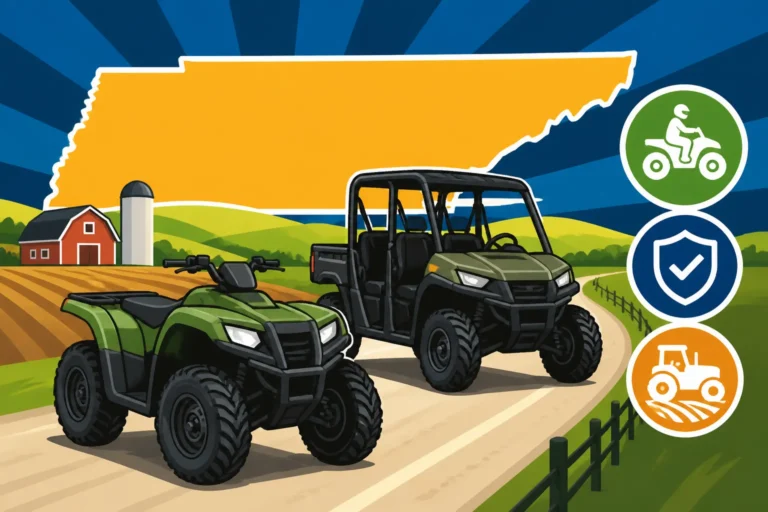
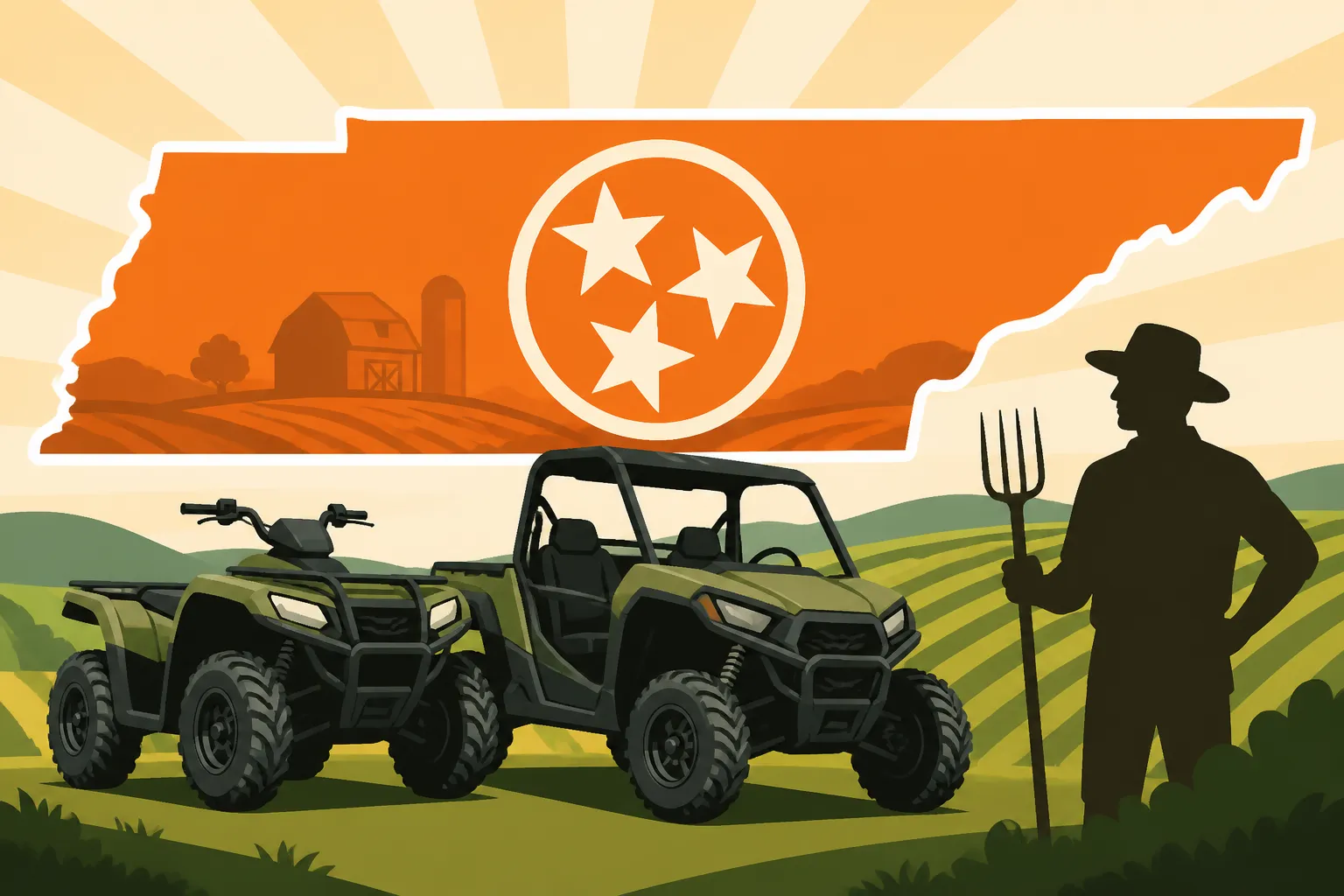
Now, let's get to the heart of the matter for many of you reading this: the agricultural exception. This isn't a free pass to drive your UTV to the grocery store, but it is a crucial provision for farmers and those directly involved in agricultural operations. It acknowledges that sometimes, the most efficient (and often the only) way to get work done on a farm involves a brief stint on a public road.
Defining "Agricultural Use" Under Tennessee Law
So, what exactly does "agricultural use" mean in the eyes of Tennessee law? It's fairly straightforward: the operation of an ATV or UTV for purposes directly related to farming, ranching, or other agricultural activities. This includes, but isn't limited to:
- Moving between fields: If your farm has parcels of land separated by a public road, the exception allows you to drive your machine directly between them.
- Hauling equipment or produce: Transporting tools, fencing materials, feed, harvested crops, or even livestock within the farm's operational area. Imagine moving bales of hay from a distant field to the barn, or taking a sprayer to a new pasture.
- Checking on livestock or crops: Quickly patrolling fences, inspecting irrigation systems, or checking on animals across different sections of your land.
- Going to a co-op or vet: While generally intended for on-farm use, short trips to adjacent agricultural suppliers or veterinary services might fall under this if directly necessary for the farm's operation and the journey is minimal. This is where "contiguous" land comes into play.
The critical takeaway here is that the purpose of the trip must be unequivocally agricultural. If you're simply taking a joyride down a county road, even if you own a farm, you're likely outside the bounds of this exception. This exception is a lifeline for many, as detailed further in [Tennessee's Agricultural Exception].
What Machines Qualify for the Agricultural Exception?
The good news is that the agricultural exception generally applies to a wide range of off-highway vehicles used for farming. This typically includes:
- ATVs (All-Terrain Vehicles): Your traditional four-wheeler that many farmers rely on for quick trips across fields or checking remote areas of their property.
- UTVs (Utility Terrain Vehicles) or Side-by-Sides: These are often the workhorses of modern farms, with their increased hauling capacity, passenger room, and ability to be outfitted with various implements.
There aren't usually specific class restrictions (like [Tennessee's Class I OHV Definition] or [Tennessee's Class II OHV Definition]) tied to the agricultural exception itself, as long as the machine is being used for its intended agricultural purpose. Farmers are known for heavily modifying their machines to meet the demands of their work. You'll find a massive array of aftermarket parts from outfits like SuperATV that can transform a standard UTV into a true agricultural workhorse, ready for anything your farm throws at it, from specialized cargo beds to plowing attachments. While general state laws might reference specifications like [2,500 Pounds and 80 Inches] for other vehicle categories, the primary consideration for the agricultural exception remains the use case.
The "Where" and "When" of the Exception
Understanding that you can use your OHV for farm work is one thing, but knowing where and when you can do it on a public road is equally important. This isn't a carte blanche for city streets or lengthy highway cruises.
Permitted Roadways for Agricultural OHVs
The agricultural exception is specifically designed for practical, short-distance travel directly related to farming operations. This means:
- County Roads and Local Roads: These are the most common types of public roadways where you'll see the agricultural exception applied. If your fields are separated by a gravel county road, or you need to move equipment a short distance along a paved rural route, this exception is usually in play.
- State Highways (Limited): You might be able to use state highways, but typically only for very short distances and when the highway is contiguous to agricultural land. This usually means the highway directly borders your farm property, and you're using it to connect two parts of your farm or access a necessary point. It's generally not for extended travel on major state routes.
- Contiguous Land Principle: This is key. The law intends for the machine to be used on or immediately adjacent to the agricultural property. Driving several miles through a residential area to get to another farm, even if you own both, might push the limits of what's considered "contiguous" or "directly related." You're meant to be traversing agricultural land, or roads that immediately serve that land.
What you're absolutely not going to be doing is taking your UTV down an interstate or major urban arterial. The spirit of the law is to facilitate farm operations, not to provide an alternative mode of general transportation.
Time and Distance Limitations
While the law doesn't always spell out exact mileage limits, the underlying principle is "short distances" and "reasonable necessity" for agricultural purposes.
- Daylight Hours Only (Generally): For most road use, Tennessee law often specifies [Daylight Hours Only Under Tennessee Law] for off-road vehicles. While farming operations can sometimes extend into the night, especially during planting or harvest seasons, exercising this exception on public roads after dark might draw extra scrutiny. If you are operating at night for legitimate agricultural reasons, ensure your machine has fully functional and visible lighting, far beyond the bare minimum.
- Direct and Necessary Travel: The distance you cover should be the shortest, most direct route possible for your agricultural task. If you have multiple routes to achieve the same agricultural purpose, you should choose the one that minimizes public road exposure. This isn't a scenic drive; it's a utilitarian trip.
- No General Commuting: This exception does not allow you to use your ATV or UTV to commute to a non-farm job, run personal errands unrelated to the farm, or travel long distances for recreational purposes, even if you happen to live on a farm. The intent is strictly for the farm's operational needs.
Equipment and Operator Requirements for Agricultural Use
Just because you're using your OHV for farm work doesn't mean you can ignore safety or basic vehicle requirements when you hit a public road. Tennessee still has expectations for any vehicle operating on its roadways, even under an exception.
Essential Safety Equipment
When your ATV or UTV leaves the field and rolls onto a public road, even for a short agricultural journey, it needs to be equipped with certain safety features to ensure visibility and control. While you might not need every piece of equipment required for a fully "street legal" conversion, these are generally expected:
- Headlights and Taillights: Absolutely essential for visibility, especially during dawn, dusk, or any low-light conditions. Ensure they are clean, functional, and aimed correctly.
- Brake Lights: Crucial for signaling to other drivers when you're slowing down or stopping.
- Turn Signals (Recommended, Often Required): While not always explicitly listed for agricultural machines in all contexts, having functional turn signals is a huge safety advantage on any public road, allowing you to clearly communicate your intentions to other drivers. If your machine doesn't have them, consider adding them.
- Mirrors: At least one rearview mirror, and ideally two side mirrors, are vital for seeing traffic approaching from behind or to the sides.
- Horn: A working horn is a basic safety device for alerting others to your presence or impending action.
- Tires: You might already have heavy-duty tires for farm work, but consider if they're truly road-safe and not just designed for maximum off-road grip. Companies like SuperATV offer a range of tires, lift kits, and other accessories that could enhance both your off-road capability and road-readiness, should you need to cross public roads.
- Good Brakes and Steering: Goes without saying, but always ensure your braking system is fully functional and your steering is responsive and tight.
For a comprehensive list of equipment considerations, you might want to review [Tennessee Equipment Rules for Road Use].
Driver Licensing and Age Restrictions
There's no special "farm license" for operating an OHV on a public road, even for agricultural purposes. If you're going to drive on a public road under the agricultural exception, you're expected to be a licensed driver:
- Valid Driver's License: The operator of the ATV or UTV must possess a valid driver's license. This means you can't have a suspended or revoked license, and you must meet the general age and competency requirements for driving.
- Age Minimums: While there are often different age rules for riding off-road on private land, when you transition to a public road, even for farm work, the general [Tennessee Minimum Age to Ride a Road] applies. Typically, this means drivers need to be at least 16 years old with a valid license.
This rule is about ensuring that anyone operating a vehicle on a public road has demonstrated a basic level of driving competence and understands traffic laws.
Helmet and Passenger Rules
Helmet and passenger rules can be a bit tricky, as they often have different stipulations for off-road versus on-road use, and for different age groups. When operating under the agricultural exception on a public road:
- Helmet Requirements: While [Tennessee Helmet Law Off-Road] might have certain exemptions or different rules for adults on private land, operating on a public road often reverts to stricter standards. Generally, Tennessee law requires helmets for operators and passengers under 18 years of age on public roads. It's always a good practice, and often legally mandated, for anyone under 18 to wear a helmet. For adults, while the agricultural exception itself might implicitly allow for certain operational needs, the safest approach, and often the expectation, is to wear a helmet, especially if you're venturing beyond the immediate field. It's important to understand [Tennessee Helmet Rules for Operator and Passengers] in detail.
- Passenger Limitations: Most ATVs are designed for a single rider. Carrying passengers on an ATV designed for one, especially on a public road, is generally illegal and highly dangerous. UTVs, with their multiple seats, are designed for passengers. However, ensure that all passengers are properly seated, buckled up, and meet any age or size requirements for the machine's passenger capacity. Overloading your machine, even with farm hands, can impair control and lead to accidents.
Distinguishing Agricultural Use from Other Exceptions
Tennessee's approach to OHVs on roads is nuanced, with several different exceptions and allowances. It's critical to understand how the agricultural exception stands apart from other provisions, so you don't inadvertently misuse it.
Agricultural vs. Adventure Tourism Districts
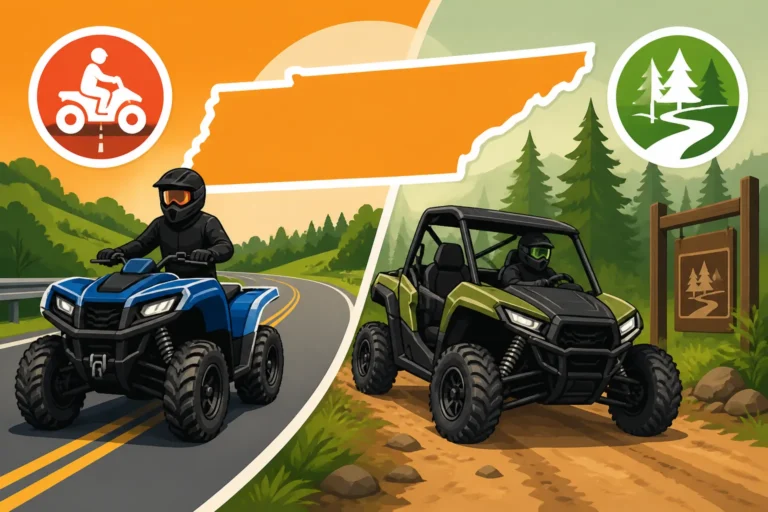
One common area of confusion is mistaking the agricultural exception for the allowances made in "Adventure Tourism Districts." While both allow OHVs on certain public roads, their fundamental purposes and geographical scopes are very different:
- Purpose:
- Agricultural Exception: Strictly for agricultural work and directly related tasks. It's about functionality and necessity for farming operations.
- Adventure Tourism Districts: Primarily for recreational riding and tourism. These districts aim to connect trails and allow riders to access businesses and lodging, boosting local economies.
- Scope:
- Agricultural Exception: Applicable statewide wherever legitimate agricultural operations require it, on or contiguous to farmland.
- Adventure Tourism Districts: Limited to specific counties designated by the state as adventure tourism hubs, such as [Scott, Anderson and Campbell Counties] or [Morgan, Jackson and Johnson Counties]. The allowances in these districts are geographically contained and often involve specific designated road lists.
- Machine Preparation: While agricultural machines need basic road safety gear, machines used in adventure tourism districts often need more extensive modifications to meet "street legal" type standards (e.g., full windshields, specific tire types, extensive lighting) to truly operate freely.
The critical distinction here is that the agricultural exception is about work, not play. For more on the tourism districts, check out [Why an Adventure Tourism District Matters].
Agricultural vs. General County Road Designations
Beyond adventure tourism districts, some individual counties have exercised their right to designate certain county roads for general OHV use. This is another area that can be conflated with the agricultural exception.
- Origin of Authority:
- Agricultural Exception: Comes from a specific state statute allowing agricultural use across the state.
- General County Road Designation: Arises from a county commission's vote (often a [How a Two-Thirds Council Vote Opens Unpaved Roads]) to open specific roads within their jurisdiction, often for broader recreational or commuter use by OHVs.
- Scope of Use:
- Agricultural Exception: Limited to agricultural purposes. Even on an open county road, if you're using your UTV for agricultural work, you're operating under the agricultural exception.
- General County Road Designation: Allows for broader recreational or personal transportation use on the designated roads, provided the machine meets all specific requirements (which can be quite extensive).
It's important to recognize that if you're using your UTV for farm work on a county road that also happens to be designated for general OHV use, you're still relying on the agricultural exception for the purpose of your travel. The county designation just means there's an additional layer of permissibility for other types of OHV use.
To help clarify these distinctions, here's a table comparing the key aspects:
| Feature | Agricultural Exception | General Permitted Road Use (e.g., Adventure Districts, Designated County Roads) |
|---|---|---|
| Primary Purpose | Farm work, related errands | Recreation, general transportation, accessing trails/businesses |
| Geographic Scope | Statewide, contiguous to agricultural land | Specific designated counties/roads only |
| Required Equipment | Lights, mirrors, brake lights, horn, (turn signals highly recommended) | Lights, mirrors, brake lights, horn, turn signals, often windshield, DOT tires |
| Driver's License | Required | Required |
| Helmet | Generally required on road (especially under 18) | Generally required on road (especially under 18), recommended for all |
| Road Types | County roads, state highways contiguous to farm land | Designated county roads, specific state routes in tourism districts |
| Time Limits | Daylight hours (with some specific work exceptions) | Daylight hours only (most common) |
| Insurance | Required if operating on road | Required |
| Title/Registration | Title required; no special "road registration" for ag use | Title required; no special "road registration" beyond that (unless specified) |
| Underlying Law | Specific state agricultural use exemption | State legislation for tourism districts or county ordinances |
Practical Advice and Avoiding Pitfalls
Understanding the legal framework is just the first step. To ensure you stay compliant and safe, some practical considerations and tips can help you navigate the agricultural exception effectively.
Documentation and Proof of Agricultural Use
Imagine this scenario: you're driving your UTV a short distance down a county road to check on a fence line that borders your neighbor's property, and a deputy pulls you over. They're not familiar with every nuance of agricultural law, and their immediate thought might be, "ATV on a public road? That's illegal!" Having your ducks in a row can save you a lot of hassle.
- Carry Your Driver's License: This is non-negotiable. You must have a valid driver's license to operate any vehicle on a public road, including your OHV under this exception.
- Proof of Insurance: Just like a car, if you're on a public road, you need to be insured. Carry your proof of insurance. We'll delve into this more in the next section, but make sure your policy covers road use for your specific machine.
- Proof of Agricultural Property: This could be a farm tax ID, a property deed, a lease agreement for farmland, or even a current farm bill or business card. Anything that clearly demonstrates you are engaged in legitimate agricultural activities and that the land you are traversing (or accessing) is agricultural.
- Be Prepared to Explain: Calmly explain that you are operating under Tennessee's agricultural exception, that you are engaged in farm work (and what that work is), and that you are using the shortest, most direct route between your properties or for a farm-related errand. Most law enforcement officers will understand once the situation is clearly explained and documented. For specific guidance on what to have on hand, review [Tennessee Rules for Agricultural Road Use].
Insurance Requirements for Road Use
Operating any vehicle on a public road carries a certain level of risk, and Tennessee law requires all drivers to carry liability insurance. This is especially critical when you're operating an OHV, which might not be automatically covered for road use under a standard off-road policy.
- Liability Insurance is Crucial: If you're involved in an accident on a public road, and you're deemed at fault, liability insurance protects you from the financial burden of damage to other vehicles or injuries to other people.
- Check Your Existing Policy: Don't assume your current ATV/UTV insurance policy or your farm insurance policy automatically covers you for road use, even under an agricultural exception. Many off-road policies specifically exclude public road operation. Contact your insurance provider and explicitly ask if your policy covers operation on public roads for agricultural purposes. You might need to add a rider or purchase a different type of policy.
- Minimum Coverage: Ensure your policy meets Tennessee's minimum liability coverage requirements. This is generally the same as for any other motor vehicle.
- Proof of Insurance: Always carry proof of your insurance with you when operating on public roads. This could be your insurance card or a digital copy on your phone. See [Tennessee UTV Insurance Requirement] for more details.
Modifications and Maintenance for Road Safety
While your machine's primary job is farm work, when it occasionally rolls onto public roads, it needs to be roadworthy. This isn't about making it a fancy street machine, but ensuring basic safety.
- Functional Lights and Brakes: We mentioned this in the equipment section, but it bears repeating. These are your primary safety features. Check them before every road trip.
- Tires: Mud tires are great for mud, but they can be squirrely and wear quickly on pavement. While you don't need dedicated street tires, ensure your tires have adequate tread, are properly inflated, and aren't excessively worn or damaged.
- Steering and Suspension: Ensure your steering is tight and responsive, and your suspension isn't excessively worn, which could compromise handling on paved surfaces.
- Visibility Enhancements: Consider adding high-visibility flags or reflective tape, especially if your machine is dark-colored. Beyond the basic lights, think about the visibility of your machine on a public road. A sturdy, clear windshield, perhaps from SuperATV, can protect you from debris while improving visibility, especially during early morning or late evening farm tasks when light conditions are tricky. Ensuring your lights, brakes, and steering are in top condition is paramount. If you're looking to add essential road-going components like turn signals, mirrors, or even a windshield for comfort and safety, companies like SuperATV provide a vast selection of aftermarket parts designed for durability and compliance.
What Happens If You Misuse the Exception?
The agricultural exception is a valuable tool, but it's not a loophole. Misusing it can lead to legal trouble, fines, and even vehicle impoundment.
- Fines: The most common consequence is a fine for operating an unregistered or illegal vehicle on a public road. These fines can add up quickly. Check out [Tennessee Fines for Illegal UTV Road Use].
- Vehicle Impoundment: In some cases, especially for repeat offenses or egregious misuse, law enforcement has the authority to impound your vehicle. This means extra fees for towing and storage, and a major headache to get your machine back.
- Legal Trouble: Depending on the severity and nature of the misuse (e.g., reckless driving, driving under the influence), you could face more serious charges, including misdemeanors.
- Insurance Issues: If you're involved in an accident while misusing the exception, your insurance company may deny your claim, leaving you personally responsible for all damages and injuries.
The key is to always operate with the genuine intent of agricultural work, follow all equipment and operator rules, and limit your public road exposure to what is absolutely necessary.
Disclaimer
This article is for general informational purposes only and does not constitute professional advice. Laws, prices and regulations vary by location and change over time. Consult a qualified professional for guidance on your specific situation.