Crossing a Two-Lane at Ninety Degrees in Tennessee
It’s a scenario many of us riders have faced: you’re out on the trails, enjoying the rugged beauty of Tennessee, when suddenly your path forward requires you to cross a paved two-lane road to get to the next section of off-road adventure or access a different part of private property. That moment can bring a lot of uncertainty. Is it legal? How exactly do you do it? This guide is here to clear up the confusion and provide clear, practical advice on legally and safely [Crossing a Two-Lane at Ninety Degrees in Tennessee].
The Nuance of OHV Road Access in Tennessee
Riding an ATV or UTV on public roads in Tennessee can feel like navigating a minefield of regulations, and for good reason—it’s complicated! Most folks understand that their off-highway vehicle isn't generally meant for street cruising like a car or motorcycle. But what about those moments when a brief interaction with pavement is unavoidable? It's these specific situations, like crossing a road, that often trip people up, leading to frustration and sometimes, an unintentional run-in with the law.
General Restrictions on Paved Roads
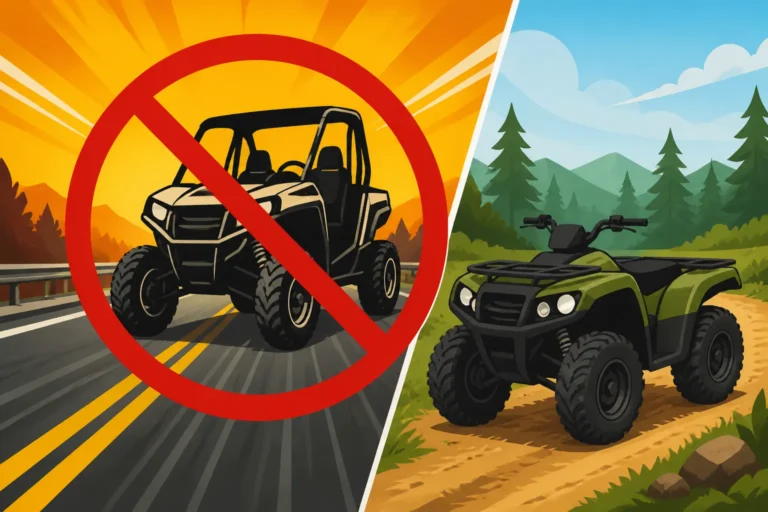
Let's start with the fundamental truth: for the most part, ATVs and UTVs are not considered street legal for sustained travel on Tennessee's public roads and highways. Unlike some other states that have embraced more widespread road use for these machines, Tennessee has traditionally kept a tighter rein on where OHVs can legally operate. The core intention of the law is to keep these vehicles in their natural habitat – the trails, farms, and private lands – not mingling with passenger cars on busy roadways. This often means that if you’re pulling out of your driveway and heading down the road to a neighbor's house, or trying to connect two trail systems by riding a mile of asphalt, you're likely operating outside the standard legal framework. These are powerful machines designed for rough terrain, and the state's concern is about the safety implications of mixing them with faster-moving traffic. You can learn more about the general rules in [Tennessee Road Use Rules for ATVs].
While there have been shifts and allowances in specific areas, the baseline rule remains important. It’s not simply a matter of adding a turn signal and a horn; the classification of these vehicles themselves generally restricts their broad use on paved public thoroughfares. This can be a real headache for riders who live in areas where trail systems are fragmented, or for those who simply need to get from one piece of property to another. It forces a careful examination of every potential road interaction, rather than assuming open access.
The Critical Distinction: Riding On vs. Crossing a Road
Here's where the nuance truly comes into play, and it’s a distinction that can save you a lot of grief. While continuous riding on a public road is largely prohibited for OHVs, Tennessee law makes a specific and vital allowance for crossing certain types of roads. This isn't just a loophole; it's a deliberate recognition of the practical realities of off-roading and land management. Imagine you’ve got fantastic trails on both sides of a state highway, or your property is bisected by a county road. Without this crossing allowance, accessing your own land or connecting recreational areas would be impossible without trailering, which isn't always feasible for short distances.
The law understands that an OHV momentarily traversing a road is different from one actively driving down it. When you're crossing, the intent is purely transitional: to get from one side to the other as directly and quickly as possible. This minimizes the time your off-road machine is exposed to road traffic and reduces its impact on the flow of vehicles. This distinction is absolutely critical for riders, as it defines a small but significant window of legal road interaction. It allows for continuity in your riding experience, connecting trails or private parcels that would otherwise be isolated. It’s important to internalize that this is about a brief transit, not an invitation to extend your ride on the pavement.
Deciphering the "Ninety-Degree Rule" for Two-Lane Roads
When the law talks about crossing, it’s not giving you a blank check to do it however you please. There’s a very specific method prescribed, and it's encapsulated in what's known as the "ninety-degree rule." This isn't just bureaucratic jargon; it's a safety measure designed to ensure that these crossings are as predictable and safe as possible for both OHV operators and other motorists.
What Exactly "Ninety Degrees" Means in Practice
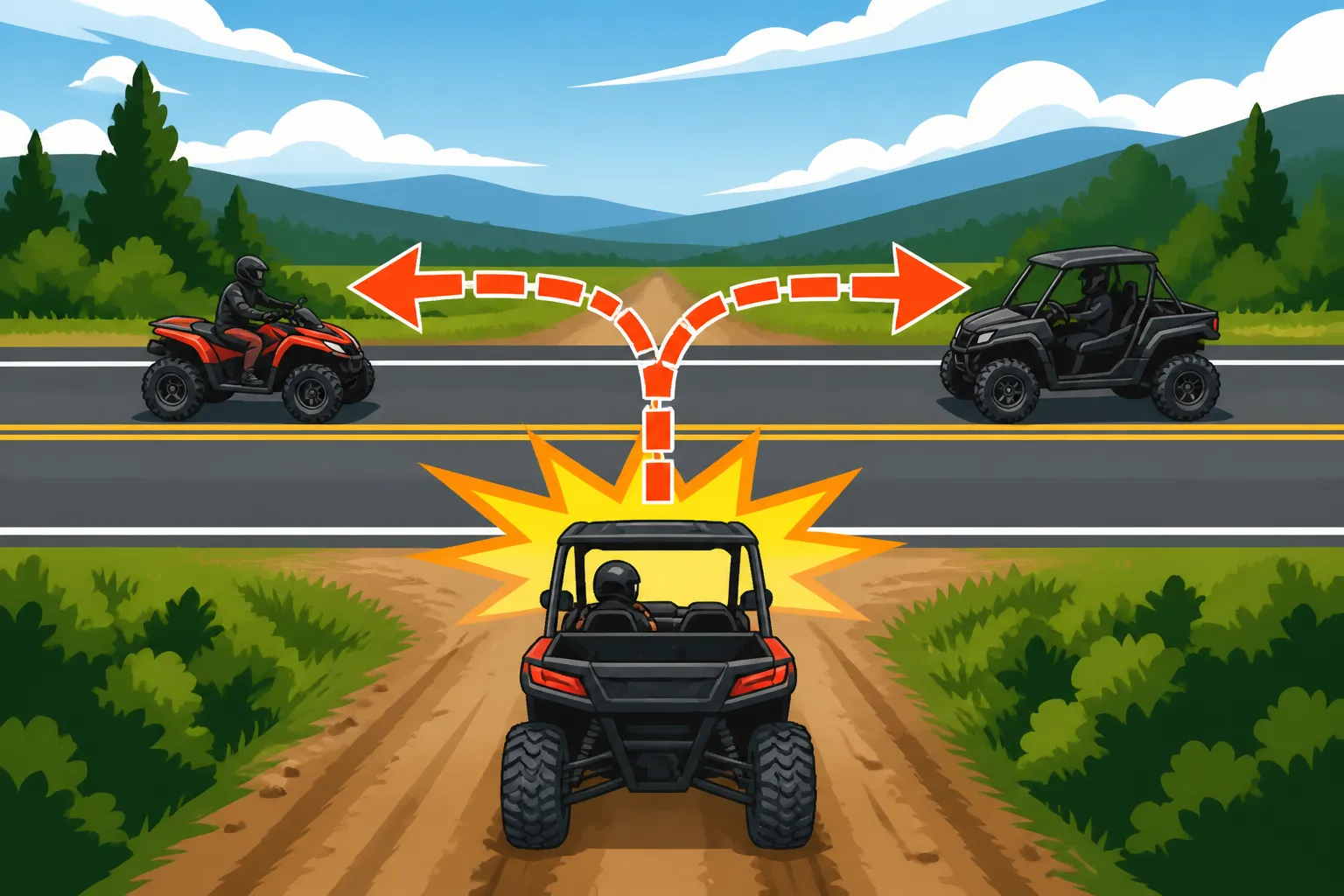
The "ninety-degree" rule means you must cross the road in a line as close to perpendicular to the flow of traffic as possible. Think of it like drawing a perfect "T" where your OHV forms the upright bar of the "T" and the road is the horizontal bar. You're driving straight across, directly from shoulder to shoulder, or from one trail entrance to the one directly opposite. This isn't about angling yourself with traffic for a short ride, or slowly drifting across the lanes; it's about a swift, straight-line maneuver. The intention behind this strict angle is multifaceted. It provides the best possible visibility for you to see oncoming traffic and for oncoming traffic to see you. It also minimizes the time your vehicle is in the traffic lane, reducing the potential for a collision due to differences in speed and maneuverability between your OHV and other vehicles.
So, what does this look like on the ground? If your trail pops out onto a road and there’s another trail entrance directly across, that’s your ideal ninety-degree crossing point. What’s not allowed is if you come out on the right side of the road, then drive down the shoulder for 50 feet to find the next trail entrance. That would constitute riding on the road, not simply crossing it, and would violate the spirit and letter of the law. This rule forces you to choose direct access points, and if none exist directly opposite each other, you might need to find an alternative route or trailer your machine. For a deeper dive into the specifics of this legal maneuver, check out [Crossing a Two-Lane at a Right Angle].
Why "Two-Lane" Matters: Simplicity Versus Complexity
The "two-lane" specification in the crossing rule is equally important and is tied directly to the safety considerations mentioned above. When the law permits ninety-degree crossings, it's referring specifically to roads that have one lane of traffic in each direction—a relatively straightforward scenario. These are the kinds of roads where you might find trailheads, or where private properties are directly opposite each other, often winding through rural or semi-rural parts of Tennessee. The limited number of lanes, and typically lower traffic speeds compared to major arteries, makes a quick, perpendicular crossing more manageable and less hazardous.
Contrast this with multi-lane highways, like those with four or more lanes, divided highways, or roads with dedicated turning lanes and higher speed limits. These are explicitly not covered by the ninety-degree crossing rule. Attempting to cross such a road in an OHV is incredibly dangerous and illegal. The sheer volume of traffic, higher speeds, and the complexity of multiple lanes make it practically impossible to execute a safe and legal perpendicular crossing. For these more complex roadways, Tennessee Department of Transportation (TDOT) designation or specific local ordinances would be required for any OHV interaction, often involving bridges or underpasses for true connectivity. Always remember that the crossing rule is for simple, two-lane roads only; if you encounter anything more complex, you'll need to find an alternative. You can learn more about rules for more complex crossings in [Crossing a Multi-Lane Where TDOT Designates].
Safety Protocols and Legal Requirements for Your Crossing
Executing a legal ninety-degree crossing isn't just about following the angle rule; it's also about ensuring your machine is properly equipped and you, as the rider, are prepared and compliant with other state laws. Skipping these essential steps can turn a brief, legal maneuver into a dangerous and illegal incident, putting yourself and others at risk.
Essential Vehicle Equipment for Road Interaction
Even for the briefest of road interactions, your OHV needs to be as visible and controllable as possible. This means ensuring your machine has certain functioning equipment. First and foremost, working headlights and taillights are non-negotiable. Even if you're crossing in broad daylight, fully operational lights make your presence clearer to oncoming traffic, especially if there's any haze, fog, or shadows. Brake lights are equally important, as they signal your intentions to any vehicles approaching from behind, even if you’re just staging to cross. While not always explicitly mandated for a quick crossing, many UTVs now come standard with or are easily upgradable with turn signals, which are a massive asset in communicating your intentions to other drivers. Mirrors are another crucial safety component, allowing you to quickly scan for traffic without fully turning your head away from the direction of travel.
Many riders, understanding these safety imperatives, choose to upgrade their machines with aftermarket accessories. Companies like SuperATV offer a wide range of lighting kits, mirrors, and even full street-legal kits that, while not making your OHV street-legal for continuous travel, can significantly enhance its safety features for necessary road crossings. Investing in brighter LED lights or wider-view mirrors from SuperATV can provide that extra edge of visibility and awareness, making your brief moments on the pavement much safer. Beyond lighting and mirrors, ensure your tires are in good condition, suitable for briefly touching asphalt without compromising traction, and that your brakes are sharp and responsive. For a comprehensive overview of equipment rules, consult [Tennessee Equipment Rules for Road Use].
Rider Preparedness: Helmets, Licenses, and Awareness
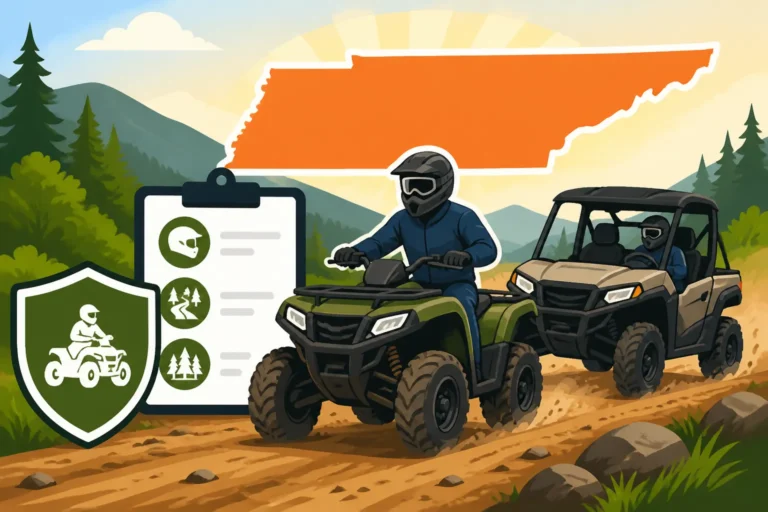
Just as your vehicle needs to be ready, so do you. Your personal preparedness is paramount for any road interaction. In Tennessee, if you're operating an ATV or UTV on a public road, even for a quick crossing, the state's helmet law applies. This means wearing an approved helmet is mandatory, both for the operator and any passengers. This isn't just about avoiding a ticket; it's about protecting yourself from potentially severe injury in the event of an accident, however unlikely you think it may be. The suddenness of road traffic and the vulnerability of an open-air OHV make helmet use an absolute must. For specific details on helmet requirements, refer to [Tennessee Helmet Law for ATV Riders].
Beyond safety gear, you, as the operator, must possess a valid driver's license. Operating any motorized vehicle on a public road in Tennessee, even briefly, requires you to be a licensed driver. This means no unlicensed teenagers or adults operating the OHV during a crossing. This is a critical legal requirement that often gets overlooked by riders who might be licensed to drive a car but think their OHV is exempt on the road. Check [Tennessee Driver's License Rules for UTVs] for more information. Finally, and perhaps most importantly, situational awareness is key. Before approaching the road, take a moment to assess the traffic. Look both ways multiple times, listen for approaching vehicles, and if possible, try to make eye contact with drivers who might be approaching. Never assume they see you. In Tennessee, OHV road interactions are also generally restricted to [Daylight Hours Only Under Tennessee Law], adding another layer of safety you must adhere to. The [Tennessee Minimum Age to Ride a Road] is also a crucial consideration here. Your goal is to be seen, be understood, and execute your crossing with confidence and caution.
Executing the Safe Crossing: A Step-by-Step Guide
Successfully and safely executing a ninety-degree crossing isn't just about knowing the rules; it's about a disciplined approach. It involves a sequence of actions that ensure you minimize risk and comply with the law. Think of it as a small, focused operation, where every step matters.
Pre-Crossing Assessment and Staging
Before you even think about putting a tire on the pavement, a thorough assessment of your surroundings is critical. First, identify the safest possible crossing point. This means looking for a spot where you have maximum visibility in both directions, and where other drivers can see you clearly as well. Avoid blind curves, hills, or areas with dense vegetation that obstruct views. If there isn’t a clear, safe spot directly across from your intended destination, you might need to re-evaluate your route entirely, even if it means trailering your machine a short distance. This might seem like an inconvenience, but your safety is paramount.
Once you’ve identified your crossing point, approach the edge of the road, but do not enter the travel lane. Position your OHV on the shoulder, facing directly towards your intended crossing point – ready to go straight across. This is your staging area. From this position, you need to wait patiently for a sufficiently large gap in traffic. Don’t rush. Don't try to "beat" a car. You need enough time to accelerate, cross both lanes, and get completely off the pavement without forcing other drivers to brake or swerve. Ensure your vehicle is in the right gear, ready to accelerate smoothly and decisively. Take a moment to scan the road one last time, making sure no hidden vehicles are approaching rapidly.
The Actual Maneuver: Quick, Direct, and Decisive
When you’ve confirmed that the road is clear in both directions and you have a safe window, it's time to execute the crossing. The key here is to be quick, direct, and decisive. Accelerate smoothly and consistently, driving straight across the road surface. Maintain that ninety-degree angle as best you can; do not drift with the flow of traffic or attempt to angle yourself for a slightly longer ride. The goal is to minimize the time your OHV spends in the active traffic lanes. This rapid, straight-line movement reduces the window of opportunity for an unforeseen hazard to develop, such as a speeding car appearing from over a hill.
As you cross, keep your eyes scanning for any late-approaching vehicles. Your focus should be on getting completely off the paved surface and onto the shoulder or trail on the other side as quickly and safely as possible. Once you're off the road, resume your normal off-road speed and continue your journey. Remember, the crossing is a brief event; it is not an invitation to linger or pause in the middle of the road. Practicing this quick, decisive maneuver, even mentally, can help you be better prepared when the moment comes.
Local Variations and Consequences of Non-Compliance
While the ninety-degree crossing rule provides a statewide standard for interacting with two-lane roads, it's crucial to understand that local conditions and ordinances can add layers of complexity, and failing to adhere to any of these rules can lead to significant repercussions.
How Adventure Tourism Districts and Local Ordinances Impact Crossings
Tennessee has made strides in certain areas to accommodate OHV recreation, notably through the establishment of Adventure Tourism Districts. These districts, often found in counties rich with outdoor recreation opportunities like Scott, Anderson, Campbell, and others, may have specific ordinances that allow for greater OHV road access on designated routes. For instance, you might find that certain county roads within these districts are open to OHV traffic, sometimes even connecting larger trail systems. However, it's vital to understand that these specific allowances for riding on certain roads within designated districts are separate from, and do not negate, the statewide ninety-degree rule for crossing undesignated two-lane state or county highways.
Even within these Adventure Tourism Districts, the ninety-degree rule still governs how you cross any non-designated paved road. It's not a free-for-all. Always check local regulations in the specific county you plan to ride. What’s allowed in Unicoi County might be different from what’s allowed in Fentress County, or Morgan County. These local ordinances are often published by county commissions or sheriff's departments and can provide invaluable information that complements the state law. A good rule of thumb is that if a road isn't explicitly designated for OHV use, the ninety-degree crossing rule is your guideline. You can delve into the specifics of these special areas in [Tennessee's Adventure Tourism Districts] and [Tennessee Rules for Riding a County Road]. Sometimes, specific machine modifications from SuperATV, such as full-cab enclosures or larger windshields, might be useful for comfort in these more open riding environments, but they don't change the underlying road rules.
Penalties for Improper Road Use
The consequences of ignoring Tennessee's OHV road use laws, including improper crossings, can range from inconvenient to severe. At a minimum, you’re likely looking at a hefty fine. Operating an OHV illegally on a public road in Tennessee is typically classified as a Class C misdemeanor, which carries a monetary penalty. These aren't just minor tickets; they can put a significant dent in your wallet, and nobody wants that when they're trying to enjoy a weekend ride.
Beyond fines, there's the very real risk of your vehicle being impounded. Imagine being stranded miles from your truck and trailer because your OHV was deemed to be operating unlawfully and towed away. This can result in impoundment fees, storage costs, and a major headache to recover your machine. Even worse, if an accident occurs due to illegal road use, you could face criminal charges, liability for damages, and significant insurance issues, as most OHV insurance policies do not cover illegal road operation. The legal repercussions, not to mention the potential for serious injury, far outweigh the perceived convenience of bending or breaking the rules. Always err on the side of caution and compliance. For a detailed look at the financial and legal ramifications, refer to [Tennessee Fines for Illegal UTV Road Use].
| Aspect | Two-Lane Road Crossing (Ninety Degrees) | Multi-Lane Road Crossing (Not Permitted) |
|---|---|---|
| Legal Status | Generally permissible under specific conditions (state law) | Generally prohibited for OHVs unless specifically designated by TDOT |
| Method | Must be at a ninety-degree angle to traffic flow | No general legal method for OHVs to cross |
| Road Type | One lane in each direction | Two or more lanes in each direction, divided highways |
| Visibility | Best possible from both OHV operator and motorists | Significantly reduced due to traffic volume and speed |
| Speed Differential | Managed by quick, decisive crossing | High risk of severe speed differential with road traffic |
| Safety Risk | Moderate, if executed correctly and cautiously | High to extremely high, due to complexity and traffic |
| Equipment Needs | Functional lights, mirrors; helmet and valid license required | Not applicable, as general crossing is illegal |
| Local Variations | May be subject to local ordinances, but state rule applies | May have specific TDOT-designated crossings (e.g., bridges, underpasses) |
Disclaimer
This article is for general informational purposes only and does not constitute professional advice. Laws, prices and regulations vary by location and change over time. Consult a qualified professional for guidance on your specific situation.