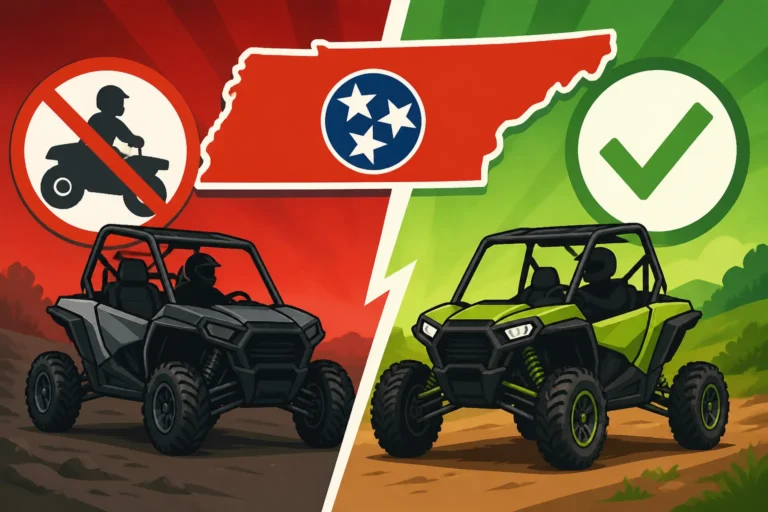
What an Adventure Tourism District Means for Riders
For years, Tennessee OHV riders faced a confusing patchwork of local rules regarding where they could and couldn't legally operate their ATVs and UTVs on public roads. It was a constant headache, trying to decipher county ordinances and wondering if your planned route would suddenly turn illegal just by crossing an invisible line. Thankfully, specific legislation has addressed this, introducing the concept of an Adventure Tourism District to simplify and expand these opportunities, particularly in key riding areas, making it much clearer for us enthusiasts to enjoy our machines beyond the trails. This guide will walk you through exactly what these districts mean for you and your off-highway vehicle.
Understanding Tennessee's Adventure Tourism Districts
When you love hitting the trails on your ATV or UTV, the dream often includes being able to ride from your cabin or campground directly to the trailhead, or even to a local store for supplies, without having to load up your machine on a trailer every time. In many places, this dream is just that – a dream – due to strict road-use laws. Tennessee recognized this common frustration, especially in areas that thrive on outdoor recreation, and created a specific legal framework to support it: the Adventure Tourism District.
These districts aren't just arbitrary lines on a map; they are specifically designated areas where local governments have been empowered to create more flexible rules for off-highway vehicle (OHV) use on public roads. The core idea is to foster tourism and economic growth by making it easier and more appealing for riders to visit and spend time in these regions. Before this legislation, a county might have had a blanket ban on OHVs on county roads, or a confusing permit system that varied wildly from one jurisdiction to the next. The Adventure Tourism District designation provides a clearer, more unified approach, allowing for specific roads to be opened up for OHV travel under certain conditions. It's a game-changer for accessibility and convenience, transforming how we can interact with the landscape and local communities.
The legislation specifically names [The Ten Counties Named in Tennessee Law] where these provisions apply, recognizing their existing popularity as OHV destinations. These counties, including favorites like Scott, Anderson, and Campbell, are the heart of Tennessee's riding country, drawing thousands of riders annually. By establishing these districts, the state acknowledged the significant role OHV recreation plays in the local economies of these areas. It means that when you're planning a trip to a spot like Windrock Park or Brimstone Recreation, you're likely within one of these zones, opening up possibilities for riding on designated public roads that might be off-limits elsewhere. This distinction is vital for any rider hoping to connect trails, access amenities, or simply enjoy a scenic ride through the countryside without constantly trailering their machine.
How Roads Open Up for OHV Use in These Districts
So, you're in an Adventure Tourism District – what does that actually mean for the roads you can ride? It's not a free-for-all, but it does mean that local authorities, specifically county commissions and municipalities within these designated areas, have the power to open up roads that would otherwise be off-limits. This is a crucial distinction. Instead of a statewide mandate for OHV road access, the power is devolved to the local level within these special districts, allowing communities to tailor rules to their specific needs and road networks.
The primary mechanism for opening roads involves a local governing body passing a resolution or ordinance. For county roads, this usually requires a [How a Two-Thirds Council Vote Opens Unpaved Roads]. This ensures there's significant local support for the decision, balancing the needs of riders with the concerns of other residents and road users. Once a road is designated, it means you can legally operate your ATV or UTV on it, provided you adhere to specific rules. This might include riding a road posted [Riding a Road Posted 45 mph or Under], which is a common speed limit for OHV use on designated public roads. These open roads often connect trail systems, allow access to local businesses, or provide routes between lodging and riding areas, significantly enhancing the overall riding experience.
It's important to remember that even within an Adventure Tourism District, not every road is automatically open. The designation empowers local governments to act, but they still have to actively designate specific roads. This means that while you're in Scott, Anderson, or [Riding Unicoi County Roads], you still need to be aware of signage and local guidance on which roads are permissible. Some roads might be restricted based on their design, traffic volume, or proximity to residential areas. Therefore, always look for clear signage indicating OHV access or consult local maps published by the county or park before venturing onto public roads. Companies like SuperATV, which provide accessories like mirrors, turn signals, and street-legal kits, become incredibly useful here, as they help riders ensure their machines comply with all the necessary equipment requirements for road use in these newly accessible areas.
Rules and Restrictions for Riding in These Zones
While Adventure Tourism Districts open up exciting new possibilities for riders, they also come with a clear set of rules and restrictions designed to ensure safety and minimize disruption. It’s not simply a matter of riding anywhere you please; there are specific guidelines you must follow to stay compliant and safe. Ignoring these rules can lead to fines or other penalties, so understanding them is paramount.
One of the most important aspects relates to equipment. When you take your OHV from a private trail onto a public road, even a designated one, it typically needs to meet certain standards. This often includes proper lighting for [Tennessee Rules for Riding After Dark] (though many districts restrict riding to daylight hours), working brakes, and sometimes specific tire requirements. Many riders looking to utilize these road access points invest in aftermarket accessories, perhaps from companies like SuperATV, to ensure their machine is perfectly equipped with essentials like DOT-approved tires, windshields, or robust winches for any unexpected recovery situations on these new routes. You'll also need proof of [Tennessee UTV Insurance Requirement] and a valid driver's license, meeting the [Tennessee Driver's License Rules for UTVs] and [Tennessee Minimum Age to Ride a Road] requirements.
| Category | General Rule (Adventure Tourism Districts) | Typical Off-Road Rule (Trails) |
|---|---|---|
| Road Access | Specific, designated county/municipal roads allowed. | Generally restricted to designated trails, private land. |
| Speed Limit | Often 45 mph or under, posted limit applies. | Varies by trail, often lower for safety. |
| Time of Day | Usually daylight hours only (sunrise to sunset). | Varies by park/trail; some permit night riding. |
| Helmet Requirement | [Helmet Rules for Tennessee Riders] apply: often mandatory for operators and passengers, especially under 18, on public roads. | Varies by park; generally recommended, sometimes mandatory for all ages. |
| Driver's License | Required for road use. | Not typically required for off-road trail use. |
| Insurance | [Tennessee UTV Insurance Requirement] often mandatory for road use. | Not typically mandatory for off-road trail use (though highly recommended). |
| Vehicle Equipment | Must meet road-legal standards (lights, turn signals, horn, mirrors, sometimes windshield). | Spark arrestor, sound limits common; other equipment varies. |
| Passengers | Must be in approved seating positions. | Varies, often stricter for children. |
Helmets are another critical factor. While [Tennessee Helmet Law Off-Road] might vary slightly depending on the park or private land, when you transition to a public road in an Adventure Tourism District, [Tennessee Helmet Law for ATV Riders] becomes much stricter. Operators and passengers, especially those under a certain age, are typically required to wear helmets. Always double-check the local ordinances for the specific county or municipality you're riding in, as rules can sometimes have nuances. [Tennessee Equipment Rules for Road Use] also details things like having a working horn, rearview mirrors, and even a windshield or eye protection. It’s about being prepared for shared road use, not just trail riding. These measures are put in place for everyone's safety, allowing riders to enjoy the expanded access responsibly.
Maximizing Your Experience in Adventure Tourism Districts
Once you understand what Adventure Tourism Districts mean and the rules that govern them, you can truly start to maximize your riding experience in Tennessee. These areas offer an unparalleled opportunity to blend the thrill of off-road adventure with the convenience of direct access to local communities and amenities. It's about more than just riding; it's about integrating your passion for OHVs into a broader travel and recreational experience.
Planning is key to making the most of these districts. Before you head out, identify which specific county roads are designated for OHV use in your chosen area. Many counties within these districts, such as [Unincorporated Scott County's Open Roads] or [LaFollette's Designated Roads Since 2017], publish maps or lists of these roads. Knowing your route ahead of time means you won't get caught off guard by an unexpected closure or a non-designated section. This preparation allows you to create seamless routes, connecting famous trail systems like Windrock or Brimstone to nearby towns for gas, food, or lodging, without the hassle of constantly loading and unloading your machine. For instance, imagine being able to ride from your campground directly to a local restaurant in Oliver Springs, then hop back on your machine for an evening ride, all within legal parameters.
Beyond the practicalities, these districts encourage a unique kind of exploration. You might discover hidden gems – a quaint local shop, a scenic overlook you'd otherwise miss, or a historical marker – simply by riding the open county roads. This expanded access also means you can often avoid crowded staging areas, instead heading directly to less-trafficked trailheads via designated routes. For those who enjoy tinkering with their machines, ensuring your ATV or UTV is properly equipped for both rugged trails and designated public roads is crucial. Whether it's heavy-duty suspension, improved lighting, or even a full street-legal kit, getting parts from reputable places like SuperATV can make a significant difference in your ability to comfortably and safely navigate all the diverse terrain these districts offer. By respecting the rules, planning your adventures, and enjoying the flexibility these districts provide, you'll unlock a whole new dimension of riding in Tennessee.
Disclaimer
This article is for general informational purposes only and does not constitute professional advice. Laws, prices and regulations vary by location and change over time. Consult a qualified professional for guidance on your specific situation.