Showing a Title Sticker and an Insurance Card
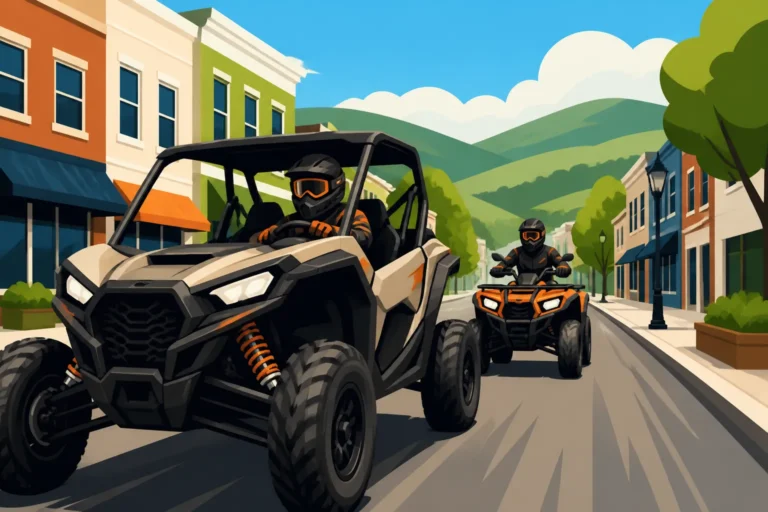
Seeing blue lights in your rearview mirror when you're out enjoying your ATV or UTV on a designated Tennessee road can quickly turn a fun day into a stressful one. Many riders aren't entirely sure what specific documentation law enforcement might ask for or what it all means. This guide is here to clear up that confusion, explaining precisely what your Tennessee title sticker and proof of insurance signify, and how to confidently present them if you're ever stopped while riding on approved roads.
Understanding Tennessee's OHV Title Sticker (TDR Sticker)
Tennessee has a unique approach to off-highway vehicles (OHVs), which often leads to questions about paperwork. Unlike many other states, Tennessee doesn't "register" ATVs or UTVs in the same way it does cars or trucks. Instead, it focuses on titling and a special sticker that proves your machine has a valid title.
What the TDR Sticker Represents
The sticker you display on your ATV or UTV in Tennessee, often referred to as a TDR sticker, isn't a traditional registration tag. It's actually a physical indicator that your machine has been issued a certificate of title by the Tennessee Department of Revenue (TDR). Think of it as proof that your ownership has been officially recorded with the state. This is a crucial distinction, and understanding [Tennessee's TDR Sticker Explained] can save you a lot of confusion. Without a title, and therefore without this sticker, your machine isn't really recognized as legitimately owned in the state, which can lead to significant headaches, especially if you ever need to sell it or prove ownership. This sticker, coupled with the actual title document, is your primary legal tether to your machine in Tennessee.
Where to Keep Your TDR Sticker and Title
The TDR sticker itself is designed to be prominently displayed on your ATV or UTV. While there isn't one universal, exact spot mandated for all machines, it's generally placed where it's easily visible, often on the frame, fender, or another accessible, non-removable part. The idea is that an officer should be able to quickly see that your machine is titled. However, the physical sticker is just half the equation. You should always keep a copy of your actual title certificate, or at least a photograph of it, in a safe, accessible place, separate from the machine itself. Why? Because the sticker simply indicates a title exists; the title document is the proof of ownership. This title might be requested during a stop, especially if there's any ambiguity or if you're [Titling a Machine With a Lien in Tennessee]. Having it readily available, whether physical or digital, shows due diligence and can expedite any roadside interaction.
Why the Sticker Matters for Road Use
For those rare instances when your ATV or UTV is legally allowed on certain Tennessee roads—such as within specific [Tennessee's Adventure Tourism Districts] or on designated county roads after a two-thirds vote—having that TDR sticker is non-negotiable. It signals to law enforcement that your machine is not just a recreational off-road vehicle but one whose ownership is formally recognized by the state. Without this sticker, even if you have a physical title, a deputy might not immediately recognize your machine as being in compliance with state regulations regarding road use. While [Why Tennessee Does Not Register Off-Road Machines] explains why there's no traditional registration, the title and its corresponding sticker become even more vital for any on-road legality, acting as your primary identifier for law enforcement on paved surfaces.
The Mandate for Insurance on Tennessee Roads
While the TDR sticker confirms your machine's title, insurance is the other critical piece of the puzzle for legal road use in Tennessee. Just like with cars and trucks, when you take an ATV or UTV onto a public road, you're exposing yourself and others to potential risks, and the state wants to ensure there's financial protection in place.
Why Insurance is Non-Negotiable
If you plan to ride your ATV or UTV on any public road in Tennessee where it is legally permitted, carrying valid insurance isn't just a good idea—it's the law. The state mandates that any motor vehicle operating on its roads must be insured to cover potential damages or injuries in an accident. This applies equally to off-highway vehicles venturing onto designated streets or county roads. Without it, you're not only risking severe financial repercussions if you're involved in an incident, but you could also face fines and penalties simply for being on the road uninsured. It's about protecting yourself, your passengers, and anyone else you might encounter. [Tennessee UTV Insurance Requirement] is a fundamental part of responsible road use for these machines.
Proof of Insurance: What a Deputy Wants to See
When a deputy pulls you over, they aren't just looking for a verbal assurance that you have insurance. They'll expect to see verifiable proof. This typically means a current insurance card issued by your provider. This card should clearly display your name, your vehicle's information (usually by VIN), the policy number, and the effective dates of coverage. Many insurance companies now offer digital insurance cards through their apps, which are generally accepted as valid proof. However, it's always a good idea to have a physical card as a backup, especially in areas with spotty cell service, common in many of Tennessee's riding regions. Make sure your proof is easily accessible, not buried at the bottom of a pack.
Navigating Different Coverage Types
For road use in Tennessee, the primary requirement is typically liability insurance. This type of coverage protects other people and their property if you're at fault in an accident. It covers their medical bills, vehicle repairs, and other damages, up to your policy's limits. While liability is the minimum legal standard, many riders choose to carry additional coverage, such as comprehensive and collision. Comprehensive insurance covers damage to your machine from non-collision events like theft, vandalism, or natural disasters, while collision covers damage to your machine from an accident, regardless of fault. When considering what coverage you need, think about the value of your machine and your personal risk tolerance. While companies like SuperATV can provide fantastic aftermarket parts and accessories to enhance your ride, protecting that investment with comprehensive insurance makes a lot of sense. Your policy should specifically state that it covers your ATV or UTV for on-road use, as some off-road policies might have exclusions for public road operation.
Roadside Stops: What to Expect and How to Present Your Documents
No one enjoys being pulled over, but knowing what to expect and how to handle the situation can make a big difference. When you're riding your ATV or UTV on a public road in Tennessee, deputies have the authority to stop you to ensure you're in compliance with all relevant laws.
Remaining Calm and Compliant
The moment you see those flashing lights, the most important thing is to remain calm and pull over safely. Find a clear, safe spot on the side of the road, turn off your engine, and keep your hands visible. Answering a deputy's questions respectfully and honestly goes a long way. Becoming agitated or argumentative will only make the situation more difficult. Remember, they are doing their job, which includes verifying that vehicles on public roads meet legal requirements, whether it's a car or an off-highway vehicle. Your cooperation can significantly speed up the interaction and help ensure a positive outcome, even if you're [Getting Ticketed on a Scott County Road] for some other infraction.
Presenting Your Title Sticker and Proof of Insurance
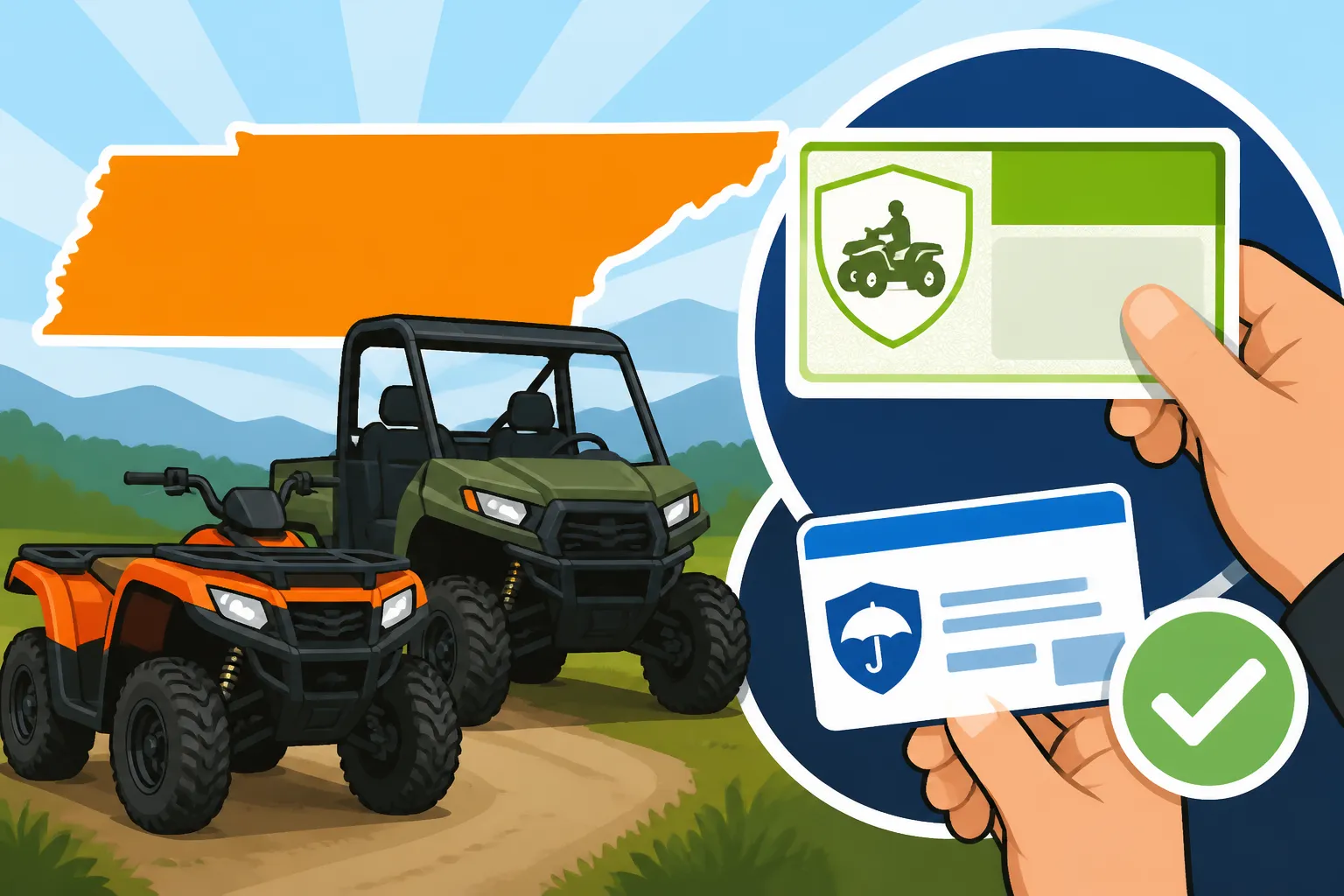
When the deputy approaches, they will typically ask for your driver's license, proof of insurance, and possibly your vehicle's registration—which, for an OHV in Tennessee, translates to verifying the TDR sticker and potentially asking to see the actual title document or a copy of it.
- For the TDR Sticker: Point to the visible TDR sticker on your machine. If they ask to see the title, have a physical or digital copy ready. You might need to retrieve it from a secure compartment on your machine or your person.
- For Proof of Insurance: Hand over your physical insurance card or present the digital version on your phone. Ensure the dates are current and the vehicle information matches your machine.
Having these documents immediately accessible and neatly presented shows respect for the law and the officer's time. Don't fumble around or make the deputy wait unnecessarily. This proactive approach reinforces your image as a responsible rider.
Additional Documents a Deputy Might Request
While the TDR sticker and proof of insurance are primary, a deputy might ask for other documents depending on the circumstances.
- Driver's License: This is standard for any vehicle operator on a public road. Ensure your license is current and appropriate for the vehicle class. [Tennessee Driver's License Rules for UTVs] are specific.
- Identification for Passengers: If you have passengers, especially minors, the deputy might ask for their identification or inquire about their age, particularly if they are under 18 and riding on a public road where helmets are required.
- Permits for Specific Riding Areas: If you're coming from or going to a specific riding park or WMA, and you've used a public road to access it, a deputy might ask about your trail permit, such as a [North Cumberland OHV Permit Cost], to verify your intent or destination.
- Bill of Sale or Registration from Out-of-State: If you've recently bought your machine, especially if it's an [Buying an Out-of-State Machine for Tennessee], you might have a bill of sale or previous state registration that could be helpful to verify recent ownership if your Tennessee title or sticker is still processing.
Always be prepared to present any relevant document a law enforcement officer requests. Even if you've kitted out your machine with top-tier accessories from SuperATV to make it road-friendly, the paperwork is just as vital as the equipment itself.
Common Misconceptions and Proactive Steps
Navigating the rules for ATVs and UTVs on Tennessee roads can be tricky due to the state's specific classifications and exemptions. Understanding common misconceptions and taking proactive steps can help you avoid problems.
The Difference Between a TDR Sticker and Vehicle Registration
One of the biggest sources of confusion for riders, especially those new to Tennessee or coming from other states, is the distinction between the TDR sticker and traditional vehicle registration. As we've discussed, the TDR sticker simply affirms that your OHV has a Tennessee title. It is not a license plate, and it does not function as a typical annual registration that you renew with a new sticker each year. [Why the Tennessee Sticker Cannot Be Renewed] is a key piece of information here; once issued, the sticker is generally valid for the life of the title, unless the machine is sold or destroyed. This is a fundamental difference from cars and trucks, which require annual registration renewals. This unique system means you need to adjust your expectations about what constitutes "legal" paperwork for your OHV on the road.
Ensuring Your Machine Meets Road-Use Equipment Standards
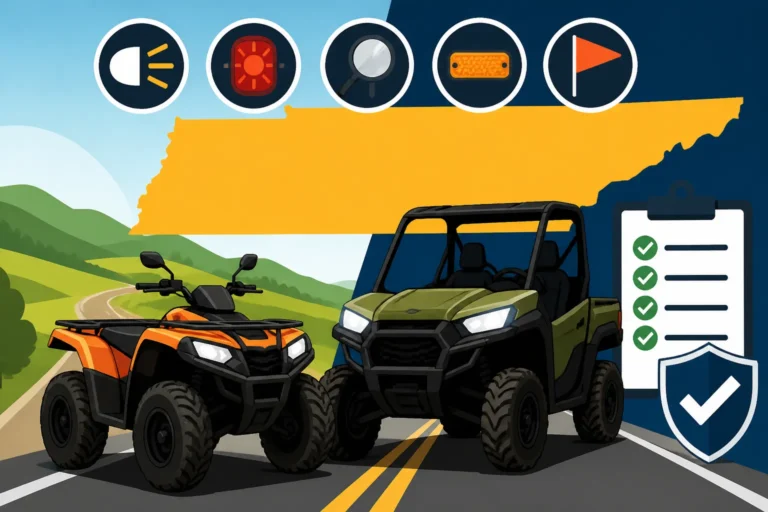
Even with a TDR sticker and insurance, your ATV or UTV must meet specific equipment requirements to be legally operated on designated Tennessee roads. These are not always identical to the standards for cars and trucks, but they are stringent. Common requirements often include:
- Headlights and Taillights: Operational and visible from specified distances.
- Brake Lights: Functioning properly when the brakes are applied.
- Turn Signals: Often required for making turns on public roads.
- Horn: An audible warning device.
- Mirrors: Typically at least one rearview mirror, and often two, to provide a clear view of traffic behind you.
- Windshield: Some classifications or road-use laws may require a windshield.
Many riders turn to aftermarket suppliers like SuperATV for high-quality accessories that help them meet these requirements, from street-legal light kits to mirrors designed for off-road machines. Always ensure your equipment is in good working order before heading out. [Tennessee Equipment Rules for Road Use] outlines these specifics, and ignoring them could lead to a citation even if your paperwork is in order.
Knowing Your Local Road Ordinances
Perhaps the most critical proactive step is understanding where you can legally ride your ATV or UTV on public roads. Tennessee has not opened all roads statewide to OHV use. Instead, the authority to open certain roads often falls to individual counties and municipalities, particularly within [Tennessee's Adventure Tourism Districts]. Some counties have passed ordinances allowing OHVs on specific county roads, often with speed limits or time-of-day restrictions. Others have very few or no open roads at all.
- Check County and City Websites: Before you ride, look up the specific ordinances for the county or city you plan to visit.
- Look for Posted Signs: Designated roads are often marked with signage.
- Consult Local Rider Groups: Experienced local riders can be an invaluable source of information.
Riding on an unauthorized road, even unintentionally, can lead to fines and legal trouble. Always double-check the local rules, especially if you're in a new area. While companies like SuperATV provide fantastic products to enhance your machine's capabilities, knowing the lay of the legal land is just as important as having the right gear. Be aware that riding on [Tennessee Rules for Riding a State Highway] is generally very restricted, and often completely prohibited, regardless of your documentation.
| Document/Requirement | Purpose | Where to Keep It | When It's Checked |
|---|---|---|---|
| TDR Sticker | Proof of state-issued title for OHV | Affixed to OHV, clearly visible | Roadside stop, trail entrance |
| OHV Title Certificate | Official proof of ownership | Secure, accessible copy (digital/physical) | Roadside stop (if sticker unclear), sale, audit |
| Proof of Insurance | Financial responsibility for road use | Physical card or digital copy on phone | Roadside stop, accident |
| Driver's License | Authorization to operate a motor vehicle | On person | Roadside stop |
| Required Equipment | Safety and compliance for road use | Installed and functioning on OHV | Roadside stop, pre-ride inspection |
| Local Road Ordinance Info | Legal right to be on specific public roads | Knowledgeable, printed map/info (recommended) | Roadside stop, planning |
| Trail/Park Permit | Access to specific riding areas | On person or affixed to machine (if required) | Trail entrance, within park boundaries |
Disclaimer
This article is for general informational purposes only and does not constitute professional advice. Laws, prices and regulations vary by location and change over time. Consult a qualified professional for guidance on your specific situation.