Getting Ticketed on a Scott County Road
There's nothing quite like the heart-stopping moment when those blue lights flash behind you while you're enjoying a ride on your ATV or UTV, especially when you're on a county road in a place like Scott County, Tennessee. Many riders, drawn by the promise of adventure in our beautiful mountains and the buzz of places like Brimstone and Windrock, find themselves confused and frustrated by Tennessee's complex and often contradictory road rules for off-highway vehicles. This guide aims to clear up that confusion, explain why you might get ticketed on a Scott County road, and give you the knowledge you need to ride legally and avoid those costly fines.
The Complex Web of Tennessee Road Rules for OHVs, Especially in Scott County
Tennessee's relationship with ATVs and UTVs on public roads has always been a bit complicated, often leading to a lot of head-scratching and more than a few unexpected encounters with law enforcement. It's a landscape of general prohibitions with very specific, geographically limited exceptions, and nowhere is this more apparent than in places like Scott County.
Understanding Tennessee's Statewide Stance on OHV Road Use
Historically, Tennessee has maintained a clear stance: ATVs and UTVs are primarily for off-road use. They are not generally considered street-legal vehicles in the same way cars and trucks are. This means that, broadly speaking, you can't just hop on your side-by-side and cruise down any paved road you please. This blanket prohibition caused a lot of friction and made accessing trailheads incredibly difficult, leading to a patchwork of local ordinances and a lot of confusion.
However, recognizing the immense popularity of off-road riding and its economic impact, especially in certain regions, Tennessee has made some significant legislative changes. The most notable of these created "Adventure Tourism Districts" in specific counties. These districts allow for some designated public roads to be opened to OHV traffic, usually under very strict conditions. This was a game-changer for many riders, but it also created new layers of complexity. It's not a free-for-all; it's a highly regulated exception to the general rule. Understanding [Tennessee's Four Vehicle Categories] is often the first step in deciphering these rules, as it clarifies how the state classifies your machine and what that means for road use.
Why Scott County is Both a Magnet and a Minefield for Riders
Scott County stands squarely in the heart of one of these Adventure Tourism Districts. It's home to some of the most famous and beloved riding destinations, like Brimstone Recreation. The sheer volume of trails and the breathtaking scenery make it an absolute magnet for OHV enthusiasts from all over the country. You'll see dozens, if not hundreds, of machines on trailers heading through towns like Huntsville and Oneida every weekend.
This constant presence of OHVs often gives riders the impression that the roads are open to them. They might see locals using certain roads, or they might simply be trying to get from their campground to a trailhead without having to re-trailer their machine. But here's where the minefield part comes in: just because it's an Adventure Tourism District doesn't mean all roads are open. Far from it. The law specifies that only designated county roads, or portions thereof, can be used, and even then, there are strict rules about speed, time of day, and equipment. The frustration is palpable when riders, often unfamiliar with these hyper-local nuances, are pulled over by a Scott County deputy. They're often just trying to get from point A to point B, believing they're in an "open" area, only to find out they've unwittingly broken the law. Knowing the precise classification of your machine, whether it falls under [Tennessee's Class I OHV Definition] or [Tennessee's Class II OHV Definition], is crucial, as this can sometimes influence which roads might be permissible if any.
Common Violations That Lead to a Ticket on Scott County Roads
When you're out riding in Scott County, it's easy to get caught up in the excitement and the vastness of the landscape. However, deputies are actively patrolling, and they know the specific local ordinances and state laws that govern OHV use on public roads. Ignorance of the law, unfortunately, is never a defense.
Riding on Undesignated or Restricted Roads
This is arguably the most common reason riders get ticketed in Scott County. While the county is part of an Adventure Tourism District, it does not mean every road is fair game. The state law requires counties within these districts to publish specific [Restricted Road Lists Published in October 2025]. These lists detail which roads, or segments of roads, are not open to OHVs. Essentially, if a road isn't explicitly designated as open for OHV use, or if it appears on a restricted list, you simply cannot ride your ATV or UTV on it.
Think about it this way: you might be leaving a general store in Huntsville, seeing a paved county road that looks like a direct route to the next trail section. You assume, because you're in Scott County, that it's okay. But if that specific road hasn't been designated by the county commission as open, or if it's on a restricted list, you're breaking the law. Some state routes, like SR 63, have even more specific rules, such as [SR 63's Two Open Weekends a Year] for OHV use, which means riding it outside those windows will definitely earn you a ticket. It's not enough for the road to be "posted 45 mph or less," which is a general rule for some road-legal vehicles; it still has to be an approved road for OHVs, and it's your responsibility to know which ones those are.
Missing Required Equipment or Safety Gear
Even on the handful of county roads that are legally designated for OHV use, you're not exempt from safety and equipment requirements. These machines need to be equipped much like a regular vehicle if they're going to share the asphalt, even for a short distance. Deputies will be looking for:
- Helmets: This is a big one. [Tennessee Helmet Law for ATV Riders] is very clear, especially for those under a certain age, but it's generally a wise and often required practice for anyone operating an OHV on a public road, even a designated one. Passengers, particularly minors, also fall under strict helmet rules.
- Lights: Your machine needs headlights, taillights, and brake lights, and they need to be operational. Riding in daylight hours only ([Riding Only Between Sunrise and Sunset]) is usually a condition for OHV road use, but proper lighting is still essential for visibility.
- Mirrors: You need at least one rear-view mirror, properly affixed, so you can see traffic behind you.
- Turn Signals: Some jurisdictions might require functional turn signals if your OHV is to be used on designated roads.
- Horn: A working horn is typically a necessity for any vehicle sharing the road.
Many aftermarket accessories from companies like SuperATV can help bring your machine up to snuff, offering kits with horns, turn signals, and mirrors. However, even with all these modifications, the equipment has to meet the specific requirements laid out in [Tennessee Equipment Rules for Road Use] to be considered compliant for road usage in designated areas. Don't assume that just because you bought a kit, it covers every base for every situation. Always check the local ordinances and state law.
Age, License, and Insurance Requirements
Operating an OHV on any public road, even a designated one, means you're operating a motor vehicle, and that comes with serious responsibilities. These are often overlooked, leading to quick tickets.
- Minimum Age: [Tennessee Minimum Age to Ride a Road] on an OHV is 16 years old. This is a hard rule, and you will be ticketed if you or a passenger operating the machine are underage.
- Driver's License: Just like driving a car, you need a valid driver's license. [Tennessee Driver's License Rules for UTVs] typically require the operator to hold at least a valid Class D driver's license. A learner's permit or a revoked license won't cut it.
- Insurance: While not always required for off-road use, if you're venturing onto designated public roads, [Tennessee UTV Insurance Requirement] often mandates liability insurance. This protects you and others in case of an accident. Always carry proof of insurance with you, just as you would in your car.
A deputy at a roadside stop will invariably ask for your driver's license and proof of insurance. If you can't provide them, that's another ticket on top of any other infractions.
Time of Day and Crossing Restrictions
Even on the rare designated OHV road, there are still rules about when and how you can use it.
- Daylight Hours Only: The most common restriction for OHV road use is that it must be done between [Riding Only Between Sunrise and Sunset]. Riding after dark, even with headlights, is generally prohibited on public roads for OHVs. This is a safety measure, as OHVs, despite their lights, can be less visible and handle differently than conventional vehicles on paved roads at night.
- Crossing Rules: You might not be allowed to ride down a road, but you might be allowed to cross it. Even then, there are specific rules. For example, [Crossing a Two-Lane at Ninety Degrees in Tennessee] is often permitted at an intersection or designated crossing point, essentially treating the road as an obstacle to get to the other side of a trail. However, driving along that road for any distance, even a short one, is usually a violation. Multi-lane state highways are almost universally off-limits, even for crossing, unless explicitly marked.
What Happens When a Deputy Pulls You Over in Scott County
No one wants to see those flashing lights, especially when you're out trying to relax and enjoy the trails. But if a Scott County deputy pulls you over, knowing what to expect can help you navigate the situation as smoothly as possible.
The Initial Stop and Document Check
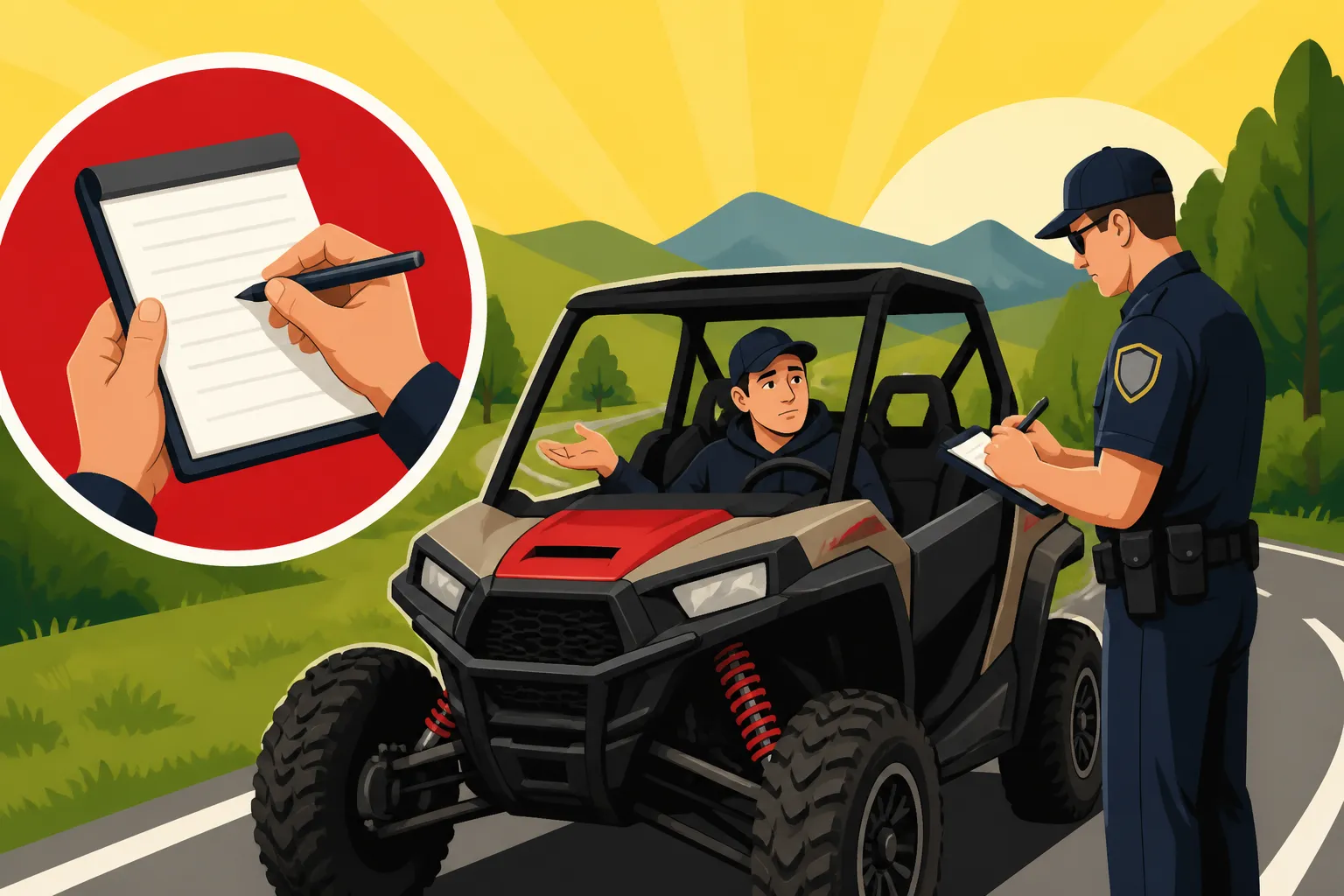
When you see the lights, pull over immediately and safely. Turn off your engine, remove your helmet (if you're wearing one), and keep your hands visible. The deputy will approach, and they will likely ask for your driver's license, vehicle registration (if applicable, though OHVs aren't generally registered like cars in Tennessee), and proof of insurance. If you have a trail permit for a nearby park like Brimstone, you might offer that as well, though it doesn't grant you road-use privileges.
The deputy will be assessing the situation, including your machine. They'll likely be checking if your vehicle meets the criteria for any specific road-use exceptions. For instance, some very specific "Low Speed Vehicles" (LSVs) or "Medium Speed Vehicles" (MSVs) have different rules, but these are purpose-built vehicles, not your typical recreational ATV or UTV, and they fall under different classifications than [Tennessee's Class I OHV Definition] or [Tennessee's Class II OHV Definition]. A standard recreational OHV found on an undesignated road will usually result in a citation.
Understanding the Charges: Fines and Misdemeanors
The consequences of getting caught riding illegally on a Scott County road can range from an inconvenient fine to a more serious criminal charge. For many minor violations, like riding on a restricted road or not having proper equipment, you might face a civil penalty, often around [Tennessee's $50 Fine]. This is typically a non-moving violation, similar to a parking ticket, and you simply pay it.
However, more serious infractions, such as operating without a valid driver's license, driving under the influence, or repeated offenses, can escalate quickly. These might result in a [A Class C Misdemeanor in Tennessee], which is a criminal charge. A misdemeanor conviction goes on your permanent record, can affect your driving privileges, and might involve court appearances, higher fines, and even potential jail time. This is why understanding the rules is so critical – it's not just about a minor inconvenience, it's about protecting your record and your freedom. The deputy will inform you whether you're receiving a citation to appear in court or a simple fine.
Your Options After Receiving a Ticket
Once you've received a ticket, you generally have a couple of paths forward. The easiest, if it's a simple fine for a minor infraction, is often just to pay it. The ticket will usually have instructions on how and where to pay, often through the Scott County clerk's office or online. Paying the fine means you're admitting guilt and closing the case.
If you believe you were wrongly ticketed, or if the charge is a misdemeanor, you have the right to contest it in court. This means you will plead "not guilty" and be given a court date. Before deciding to contest, it's highly advisable to seek legal advice from an attorney familiar with Tennessee traffic and OHV laws, especially if it's a criminal charge. They can help you understand the evidence against you, explore any defenses you might have, and guide you through the court process. Don't go into a legal battle unprepared, especially against a knowledgeable prosecutor.
Here's a quick overview of common violations and their potential outcomes:
| Violation Type | Potential Consequence | Severity |
|---|---|---|
| Riding on Undesignated County Road | $50 fine, potential impoundment | Moderate |
| No Valid Driver's License | Fine, Class C Misdemeanor, court appearance, license points | High |
| Operating Underage | Fine, Class C Misdemeanor, possible vehicle impoundment | High |
| No Proof of Insurance | Fine, possible Class C Misdemeanor, court appearance | Moderate |
| No Helmet (if required) | Fine | Low |
| Riding After Sunset | Fine, possible Class C Misdemeanor | Moderate |
| Missing Required Equipment (lights, mirrors, etc.) | Fine, possible Class C Misdemeanor | Moderate |
Riding Smart: Avoiding Tickets and Staying Safe in Scott County
The allure of Scott County's riding opportunities is undeniable, and with a little preparation and respect for the law, you can enjoy your time without the stress of a ticket. It's all about being informed and making responsible choices.
Always Check the Latest Road Designations
The single most important thing you can do to avoid a ticket on a Scott County road is to know exactly which roads are designated for OHV use and which are not. This isn't always easy, as designations can change, and what was open last year might be closed today. Your best bet is to actively seek out the official information. The county commission or sheriff's office in Scott County is the authority for [Finding the Restricted Road List Your County Published]. Sometimes local riding parks, like Brimstone or Windrock, will also provide information or maps that delineate legal road access points or crossings near their properties.
Never assume. Just because you see tire tracks or another rider on a road doesn't make it legal. That person might be breaking the law or have a very specific exemption (like for agricultural use, which has its own strict rules). Take the time to confirm the legal status of any road you plan to ride on. Remember, even if a paved county road is posted for 45 mph or less, it doesn't automatically mean it's open to OHVs. The special designation from the county is what matters.
Gear Up Appropriately
Safety gear and proper vehicle equipment aren't just about avoiding a ticket; they're about keeping you and your passengers safe. Always wear a helmet, regardless of the law. While [Do You Still Need a Helmet Off-Road at 17?] might vary by specific off-road park rules, on public roads, it's generally a non-negotiable requirement for anyone, especially younger riders. Invest in a good quality, DOT-approved helmet.
For any legal road crossings or designated road sections, ensure your machine is equipped with all necessary safety features. This includes:
- Proper Lighting: Functional headlights, taillights, and brake lights are critical for visibility.
- Mirrors: At least one functioning rearview mirror.
- Horn: A loud and clear horn.
- Tires: Road-appropriate tires, if you're spending any significant time on pavement, will also improve handling and safety.
Many riders will add aftermarket accessories from companies like SuperATV to ensure their machines are compliant for limited road use. They offer a range of products, from full turn signal kits to mirrors and horns, designed to meet various legal requirements. While these products can help, you must still verify that your specific setup meets all local and state requirements for [Tennessee Equipment Rules for Road Use].
Know Before You Go: Planning Your Ride
Ultimately, responsible riding comes down to thorough planning. Before you even load your machine onto the trailer, do your homework:
- Check the Weather: Wet conditions can make trails and unpaved roads more challenging and can lead to trail closures.
- Verify Park Rules: If you're heading to a specific riding park, check their website for current rules, closures, and permit requirements.
- Map Your Route: Plan your off-road route carefully, and if you intend to use any public roads, confirm their legal status beforehand. Understand the restrictions for [Tennessee Rules for Riding to a Trailhead] if you plan to access a trail from a nearby road.
- Carry Documents: Always have your driver's license, proof of insurance, and any relevant trail permits readily accessible.
- Stay Sober: Operating any vehicle, especially an OHV, under the influence of alcohol or drugs is extremely dangerous and carries severe legal penalties.
- Respect Private Property: Even in areas with extensive trail systems, always be aware of private property boundaries and obtain permission before riding on private land.
By being proactive and informed, you can fully enjoy the incredible riding that Scott County and Tennessee have to offer, without the unwelcome interruption of a deputy's blue lights or the sting of a costly ticket. Stay safe, ride smart, and have fun out there!
Disclaimer
This article is for general informational purposes only and does not constitute professional advice. Laws, prices and regulations vary by location and change over time. Consult a qualified professional for guidance on your specific situation.