A Helmet on a Tennessee Public Road
Navigating the rules for riding your ATV or UTV on Tennessee's public roads can feel like trying to solve a puzzle while blindfolded. It's frustrating when you just want to enjoy your machine, but the legalities around helmets, ages, and where you can even be with your off-highway vehicle (OHV) on a public thoroughfare are often murky. This guide is here to cut through that confusion, giving you a clear understanding of Tennessee's helmet law specifically for public road use, ensuring you're safe and legal on your next adventure.
The Basics of Tennessee's Helmet Law for Public Road Use
When you're rolling your UTV or ATV onto a paved or unpaved public road in Tennessee, even for a short hop, the rules shift dramatically from those on private land or dedicated trail systems. Suddenly, you're sharing space with cars, trucks, and all the usual traffic, and that brings a whole new set of responsibilities – chief among them, helmet use. It's not just a suggestion; it's a critical safety measure and a legal mandate in many situations, designed to protect you and your passengers from severe injury.
Who Needs to Wear a Helmet on Tennessee Roads?
This is where many riders get tripped up, thinking "I'm an adult, I don't need a helmet." But Tennessee law for OHVs on public roads is quite specific. Generally speaking, anyone operating or riding as a passenger on an ATV or UTV on a public road in Tennessee must wear a helmet if they are under the age of 18. This isn't just a recommendation; it's a hard and fast rule.
Imagine you're taking your 15-year-old son or daughter for a ride on a designated county road in Scott County, perhaps to get from one section of trail to another. Even if it's just a few hundred feet, both you (if you're under 18) and your passenger (if they are under 18) are legally required to have an approved helmet securely fastened. Many parents make the mistake of thinking this rule only applies to motorcycles, but it absolutely extends to OHVs when they hit public asphalt or gravel. It’s about protecting our younger riders, who might not have the same experience or reaction times as seasoned adults. For adults 18 and over, while a helmet might not always be legally mandated on all public roads designated for OHV use, it is always, always, always a smart move. Think of it this way: your brain is irreplaceable, and the risks of a head injury in an accident are significantly reduced with proper head protection.
What Kind of Helmet is Required?
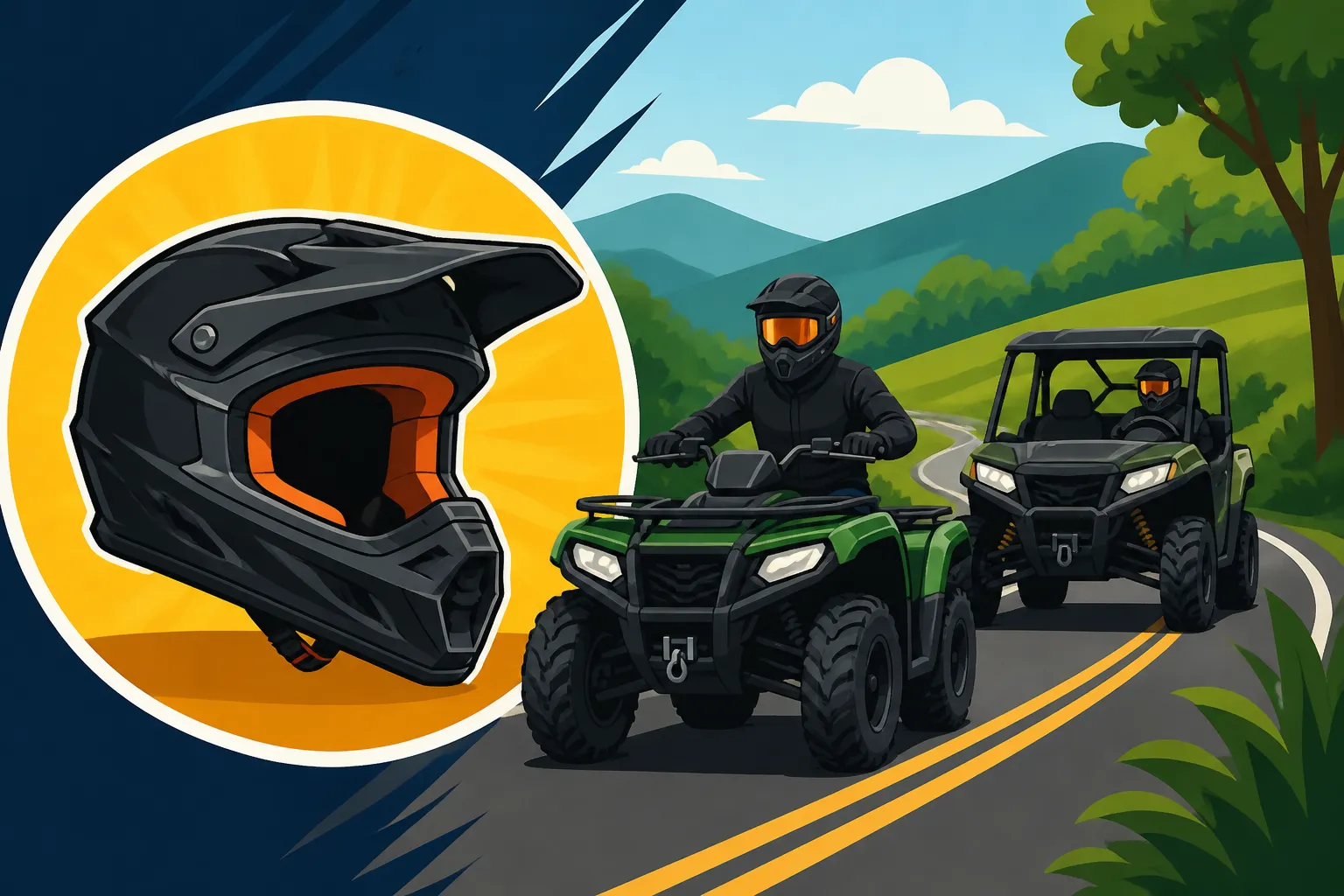
It's not enough to just put any helmet on; it needs to be the right kind of helmet. Tennessee law specifies that helmets worn on public roads must be approved by the United States Department of Transportation (DOT). You'll typically find a small DOT sticker on the back of any compliant helmet. This certification means the helmet has met rigorous testing standards for impact absorption and protection.
So, that cool-looking helmet you picked up at a flea market that doesn't have a DOT sticker? It might look the part, but it won't pass muster if a deputy pulls you over. Beyond the DOT certification, proper fit is paramount. A helmet that's too loose can shift during an impact, failing to protect your head properly, or even obstruct your vision. One that's too tight can be uncomfortable and distracting. When you're trying one on, it should feel snug all around your head, without any pressure points. If you shake your head, the helmet shouldn't wobble or slide around. The chin strap should be securely fastened, allowing only enough room for one finger to fit snugly between your chin and the strap. Whether you opt for a full-face helmet that offers maximum protection for your face and chin, or a sturdy open-face helmet with goggles for better airflow, ensure it has that all-important DOT seal. Companies like SuperATV often carry a range of helmets that meet these rigorous safety standards, giving you options that combine protection with comfort for those long rides.
Understanding Where the Helmet Rule Applies
The "where" is just as crucial as the "who" when it comes to Tennessee's helmet law for ATVs and UTVs. The state has been working to create more clarity around OHV use on public roads, especially in areas trying to boost adventure tourism. However, these new opportunities come with specific safety guidelines, and the helmet rule is a big part of that. It's vital to understand that the rules for a dedicated off-road park are often different from those governing a town's street or a county gravel road.
Designated Road Systems vs. Off-Road Trails
Tennessee's approach to allowing OHVs on public roads is often tied to specific designations, particularly within [Tennessee's Adventure Tourism Districts]. In these ten counties—Scott, Anderson, Campbell, Morgan, Jackson, Johnson, Perry, Unicoi, Fentress, and Hickman—local governments have the authority to open certain public roads (usually those posted 45 mph or less) for OHV use. When you're riding on these designated county roads, the helmet law applies to anyone under 18, and it's highly recommended for everyone.
Think about riding around Windrock Park at Oliver Springs. While you're inside the park on its extensive trail system, the park might have its own helmet rules, which often align with state law for minors but can be less stringent for adults depending on the park's specific policy. However, the moment you transition from the park's entrance onto a public road like those designated in Anderson County, the state's public road rules kick in. This means if your teenager is driving, or even just riding along, they must wear a DOT-approved helmet. This distinction is critical because many riders assume "trail rules" apply everywhere, which simply isn't the case once you hit public infrastructure. Always verify the specific rules for the county or municipality you're riding in, especially if you're exploring new areas like those in [Unicoi County Roads] or [Fentress County Roads].
Specific Exemptions to the Helmet Law
While the helmet rule is broad for minors on public roads, there are a few very narrow exceptions. The most common and widely recognized is for agricultural purposes. If you are operating an ATV or UTV solely for the purpose of farming, ranching, or other agricultural operations, and you are on a public road only to get from one part of your property to another, or to access fields, you may be exempt from the helmet requirement, even for minors. This is specifically outlined in [Tennessee's Agricultural Exception].
For example, if you're a farmer in rural Tennessee using your quad to check fences or move hay bales between two fields that require a quick jaunt down a county lane, the law recognizes the practical necessity and provides an exemption. However, this exemption is not a blanket pass for recreational riding. Taking your ATV out for a joyride with your kids on the county roads, even if you live on a farm, would still require helmets for anyone under 18. This exemption is strictly tied to the nature of the work. Similarly, emergency and wildlife vehicles operated by authorized personnel are also typically exempt from these rules when performing official duties. These exemptions are very specific and don't extend to the general public or recreational use, so it's always safer to err on the side of caution and wear a helmet if there's any doubt.
Practical Considerations and Consequences
Beyond just understanding the letter of the law, it’s important to think about the practical implications of riding your OHV on public roads in Tennessee, especially concerning safety equipment and the potential penalties for non-compliance. It's not just about avoiding a ticket; it's about protecting yourself and those you ride with.
Equipment Beyond the Helmet
While a helmet is crucial, it's just one piece of the safety puzzle when operating an OHV on public roads. Tennessee law, and common sense, dictates that other equipment is essential. Eye protection is paramount – whether it's the visor on a full-face helmet or a separate pair of goggles. Kicking up dust, gravel, or even encountering insects at speed can severely impair your vision, leading to dangerous situations. Companies like SuperATV offer excellent windshields and full cab enclosures that can provide a great deal of protection from the elements and debris, significantly enhancing rider comfort and safety on public roads.
Furthermore, seatbelts (if your UTV is equipped with them) are not optional; they are critical safety restraints that should always be worn. Many UTVs now come standard with robust seatbelt systems, and using them is as important as wearing a helmet. Proper lighting, including headlights, taillights, and brake lights, is also non-negotiable for road use, especially during dawn, dusk, or in low-visibility conditions. Turn signals, mirrors, and a horn might also be required depending on the specific road classification and local ordinances. Always double-check [Tennessee Equipment Rules for Road Use] to ensure your machine is up to snuff before hitting public asphalt. Dressing appropriately for riding, including long sleeves, pants, gloves, and sturdy boots, also adds layers of protection against scrapes, abrasions, and sun exposure.
Penalties for Non-Compliance
Ignoring Tennessee's helmet law for public road use, especially for riders under 18, isn't just a minor oversight; it carries real legal consequences. If a law enforcement officer, such as a county deputy or a state trooper, spots a minor on a public road without a DOT-approved helmet, they have every right to issue a citation. This can result in fines and, in some cases, your ride might even be impounded until the issue is resolved or a properly equipped driver can take over. The penalty for violating road use rules, including helmet requirements, can lead to a [Tennessee's $50 Fine] and be classified as a [A Class C Misdemeanor in Tennessee] in some instances.
Beyond the legal trouble, the most severe penalty for not wearing a helmet is, of course, the increased risk of serious injury or death in an accident. OHVs, by their nature, are exposed vehicles. A simple tip-over, a collision with another vehicle, or an unexpected obstacle can quickly turn into a life-altering event without proper head protection. Emergency room doctors and first responders can attest to the stark difference in outcomes between riders who wear helmets and those who don't. It's a small piece of gear that offers an immense amount of protection, making the discomfort of wearing one for a short period a negligible trade-off for your safety and peace of mind.
Age, Licensing, and Other Road Use Rules
Understanding helmet laws is a crucial first step, but it's part of a larger tapestry of regulations governing OHV use on Tennessee's public roads. To truly be street-legal and safe, you need to consider who is driving, what they need to carry, and the specific conditions under which road use is permitted. It's a complex picture, but knowing the details prevents unwanted surprises.
Minimum Age Requirements for Road Use with a Helmet
While the helmet rule focuses on anyone under 18, there's also a fundamental age requirement for operating an OHV on public roads in Tennessee, regardless of helmet use. Generally, to operate an ATV or UTV on a designated public road, a person must be at least 16 years old and possess a valid driver's license. This minimum age is critical and applies even in those special adventure tourism districts. So, if your 15-year-old is itching to drive your UTV down a county road, even with a helmet on, they simply cannot do so legally. [Why Tennessee Sets 16 as the Road Minimum] is rooted in ensuring that drivers have a certain level of maturity, experience, and understanding of traffic laws before sharing public thoroughfares with other vehicles.
This rule is in place to ensure that anyone behind the wheel of an OHV on a public road has the necessary skills and judgment to navigate traffic safely. It's not just about steering; it's about anticipating hazards, understanding right-of-way, and reacting appropriately to unexpected situations. Allowing an underage driver on a public road, even if they're wearing a helmet, puts them and others at significant risk and can lead to severe penalties for both the minor and the adult who permitted them to drive. Always ensure that the operator meets the [Tennessee Driver's License Rules for UTVs] before venturing out.
Carrying Your Proof: Licenses, Insurance, and Permits
When you're riding your OHV on a Tennessee public road, you need to be prepared to present certain documentation if stopped by law enforcement. It's similar to driving a car; you can't just cruise around without proof of your legal ability to do so. The most important items to have on hand include your valid driver's license (if you're the operator), proof of insurance, and if you're in an area that requires it, your trail permit or any other special use permit.
Tennessee mandates [Tennessee UTV Insurance Requirement] for machines operating on public roads, typically requiring at least the state minimum for liability coverage. Just as with a car, carrying your insurance card is essential. If you're utilizing one of the designated road systems within an adventure tourism district, you might also need to carry proof of a valid trail permit, even if you're just traversing a short section of road to get to another trail. For example, if you're going to [Titling Before a Windrock Weekend] and plan to use the local county roads to access the park, you'll need all your ducks in a row. A deputy at a [Tennessee Roadside Stop] will expect to see these documents. Failing to produce them can lead to citations and delays. Having all your paperwork organized and easily accessible, perhaps in a waterproof pouch on your machine or on your person, is a small effort that can save you a lot of hassle and ensure your ride is as smooth and legal as possible.
Disclaimer
This article is for general informational purposes only and does not constitute professional advice. Laws, prices and regulations vary by location and change over time. Consult a qualified professional for guidance on your specific situation.