Carrying an Insurance Card on a Tennessee Road
Navigating the ever-changing landscape of off-highway vehicle (OHV) rules in Tennessee can feel like trying to hit a moving target, especially when you want to take your side-by-side or ATV on a public road. One of the biggest points of confusion and a common source of anxiety for riders is knowing exactly what paperwork to have on hand. This guide is going to cut through the noise and clarify precisely why you absolutely need to carry your insurance card when you're riding your OHV on any Tennessee road, what that card needs to show, and what could happen if you don't.
The Mandate for Insurance on Tennessee Roads (and Why It Matters So Much)
It's easy to think of your ATV or UTV as solely a trail machine, meant for the dirt, the mud, and the exhilarating climbs of places like Windrock or Brimstone. And for that kind of riding, the rules around insurance are often quite different, sometimes even optional depending on where you're riding. But the moment you drop a tire onto a paved or unpaved public road in Tennessee, even just to cross it or travel a short distance, the legal landscape shifts dramatically. Suddenly, your machine is treated much more like a traditional automobile, and with that comes a fundamental requirement: liability insurance.
Why Your OHV Needs Insurance for Road Use
Think about it: when you're out on the trails, most risks are personal – a tip-over, a fender bender with a friend's machine, or perhaps a tree reaching out to scratch your paint. While these can be costly, they typically involve only your property or injuries to those you know. On a public road, however, the stakes are significantly higher. You're interacting with cars, trucks, and potentially pedestrians, all operating under a different set of expectations and traffic laws. If an accident happens and you're at fault, the financial fallout can be catastrophic without insurance. You could be on the hook for significant medical bills for others, extensive vehicle damage to a full-size pickup, and even legal fees if things escalate. This is why Tennessee, like nearly every other state, mandates liability insurance for vehicles operating on its public thoroughfares, regardless of whether they have a conventional license plate or are operating under specific [Tennessee UTV Road Requirements].
The state isn't just trying to make things difficult; they're trying to protect everyone on the road. An uninsured accident can devastate not just the at-fault party but also the innocent victims who might have to fight tooth and nail to get compensation for their losses. Having proper insurance provides a crucial safety net, ensuring that if something unfortunate happens, there's a mechanism in place to cover the damages and injuries sustained by others. It’s about being a responsible member of the broader community of road users, accepting the inherent risks, and preparing for the unexpected. Ignoring this requirement is akin to playing a high-stakes game of financial roulette every time you venture onto a road.
Understanding Tennessee's Minimum Coverage Requirements
Tennessee's financial responsibility law outlines specific minimum liability coverage amounts that all drivers, including those operating OHVs on public roads, must carry. While these numbers can fluctuate, traditionally, they're often cited as a split-limit policy: a certain amount for bodily injury per person, another for bodily injury per accident, and a third for property damage. For example, you might see figures like $25,000 for bodily injury per person, $50,000 for bodily injury per accident, and $15,000 for property damage. This means your insurance would pay up to $25,000 for injuries to any one person in an accident, up to a total of $50,000 for all injuries in that same accident, and up to $15,000 for damage to another person's property.
Now, while these are the minimums legally required, it's absolutely crucial to understand that they are often barely adequate in a real-world scenario. A serious injury, even a broken bone, can easily rack up tens of thousands of dollars in medical bills. Totaling someone's newer truck can quickly exceed the property damage limit. When you're involved in an accident where the damages exceed your minimum coverage, you, the policyholder, are personally responsible for the difference. This can mean liens on your property, wage garnishment, and years of financial strain. Many riders choose to carry higher liability limits or additional coverages like uninsured/underinsured motorist protection, collision, or comprehensive, especially if they've invested significantly in their machine, perhaps outfitting it with durable parts from a company like SuperATV. It's about looking beyond the bare minimum to ensure true peace of mind on the roads.
The Physical Proof: Your Insurance Card on the Road
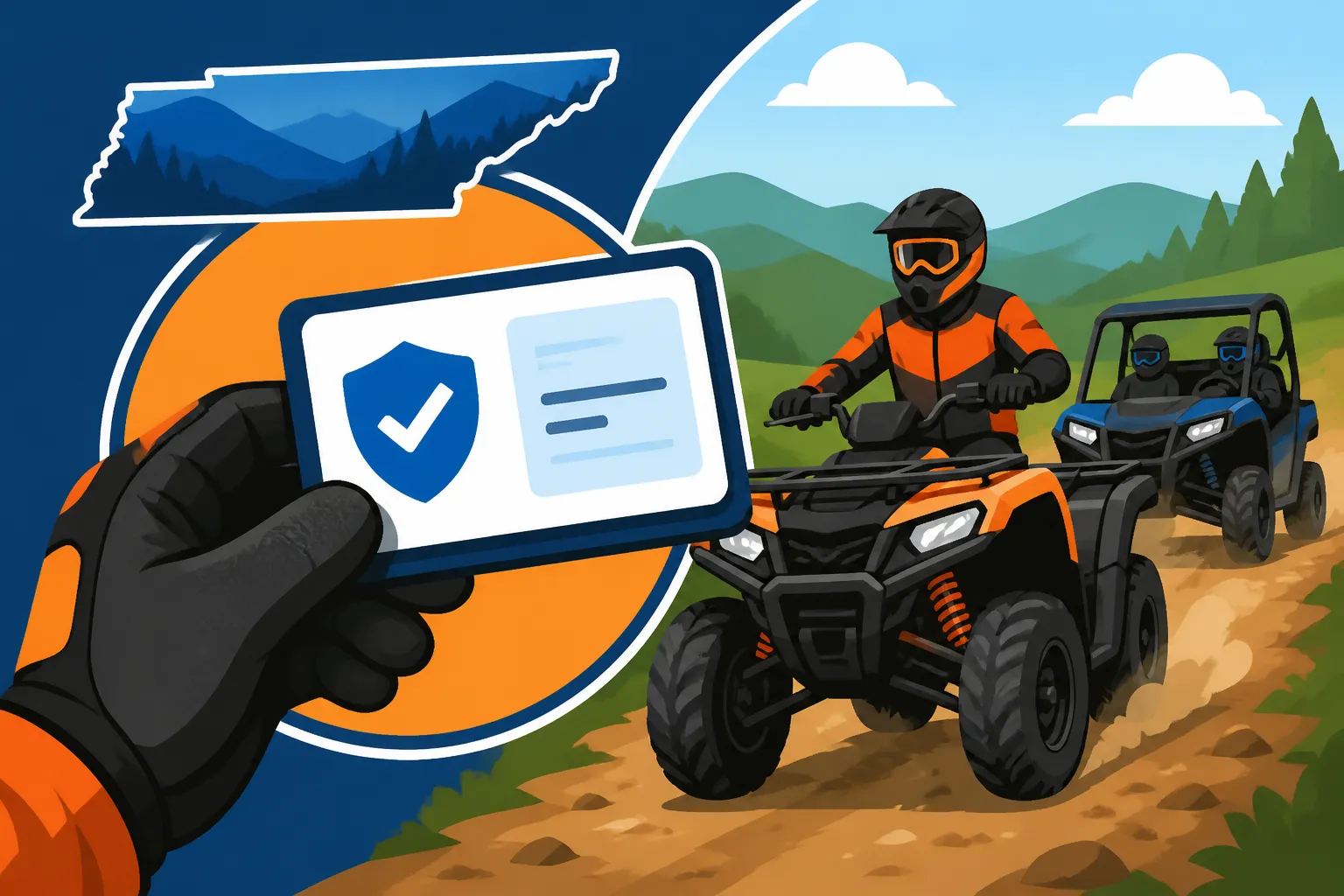
So, you've got the right insurance. Great! But having the policy isn't enough; you need to be able to prove it. Just like with your driver's license, the state requires you to carry proof of insurance whenever you're operating your OHV on a public roadway. This isn't just a suggestion; it's a legal obligation that helps law enforcement quickly verify your compliance and ensures that if an incident occurs, the necessary information is readily available.
What Constitutes Valid Proof of Insurance
A valid insurance card is more than just a piece of paper; it's a critical document that contains specific, required information. Typically, it will display the name of your insurance company, your policy number, the effective dates of your coverage (showing when it starts and when it expires), and a clear description of the insured vehicle, often including its Vehicle Identification Number (VIN). It's vital that the dates are current – an expired card, even if your policy is still active, can cause immediate issues during a stop. Law enforcement officers are looking for this specific information to confirm you meet the [Tennessee UTV Insurance Requirement].
In Tennessee, we're fortunate that the law has evolved to accept digital proof of insurance. This means if you have your insurance card saved on your smartphone or can access it through your insurer's app, that's generally considered acceptable. However, technology can be finicky. Batteries die, signal is lost in remote areas, and screens crack. While digital is convenient, many seasoned riders still prefer to carry a physical card as a reliable backup. Imagine being pulled over in a rural part of Scott County with no cell service and a dead phone battery – a physical card would save you a world of trouble.
Where to Keep Your Card (and Why Accessibility is Key)
You've got your physical card, or maybe you're relying on your phone. Now, where do you keep it? The answer is simple: somewhere secure, protected from the elements, and immediately accessible. Fumbling through a backpack while a deputy waits can add unnecessary stress to an already tense situation. For ATVs, a waterproof pouch in your jacket pocket or attached to the handlebars might be ideal. For UTVs, the glove box is a natural choice, or perhaps a dedicated storage bag that's easy to grab. Companies like SuperATV offer robust storage solutions for UTVs, from cargo boxes to secure dash organizers, which can be perfect for keeping your essential documents protected and within easy reach.
The goal is to be able to produce that card without delay when asked. Think about an accident scenario: you might be shaken up, potentially injured, and the last thing you want is to be digging around for paperwork. Having it in a consistent, easy-to-remember spot means one less thing to worry about. Protecting the card from mud, water, and sun is also important. A laminated card or a sturdy plastic sleeve can prevent it from becoming illegible after a few wet rides through a creek bed or a dusty day on a gravel road. An officer needs to be able to read it clearly to verify your coverage.
Consequences of Not Carrying Your Insurance Card
It’s one thing to understand the why behind carrying your insurance card, but it’s another to grasp the what if you don't. The repercussions for failing to produce proof of insurance on a Tennessee road can range from inconvenient fines to much more severe legal and financial headaches, affecting your ability to drive and even the status of your machine.
The Immediate Repercussions of a Traffic Stop
Let's say you're riding your UTV on a designated county road near Oliver Springs, following all the [Tennessee Rules for Riding a County Road], but a deputy pulls you over for a routine check or a minor traffic infraction. When asked for your driver's license and proof of insurance, you either can't find your card, or worse, you simply don't have one. The immediate consequence will likely be a citation. This isn't just a slap on the wrist; it's a fine, and it often means a mandatory court appearance. The fine for not having proof of insurance can be significant, and the time spent dealing with court dates, even if you can later prove you did have insurance, is a hassle nobody wants.
Sometimes, if you actually have insurance but just forgot the physical card, the court might offer a "fix-it" ticket scenario. This means if you can present valid proof of insurance to the court by a certain date, the charge might be dismissed or reduced. However, this still requires time, effort, and potentially court fees. It’s far simpler and less stressful to have that card ready when asked. Not having any insurance at all is a much graver offense, leading to more substantial penalties than just forgetting to carry the card. The officer might issue a citation for operating an uninsured vehicle, which carries heavier fines and other legal ramifications beyond a simple "no proof" ticket.
Broader Legal and Financial Implications
While forgetting your card is one thing, operating an OHV on a public road without any insurance at all opens you up to a world of serious trouble. Beyond the immediate citation and fines, Tennessee law has much stricter penalties for uninsured drivers. You could face a suspension of your driver's license, making it illegal for you to operate any motor vehicle, not just your OHV. Your OHV itself could even be impounded, leading to towing fees, storage fees, and a long, complicated process to get it back, if you can at all. These financial burdens can quickly add up, easily surpassing the cost of an insurance policy itself.
But the most devastating consequence comes if you're involved in an accident while uninsured. If you're at fault, you become personally liable for all damages and injuries sustained by others. We're talking about medical bills, property damage, lost wages, and potentially pain and suffering. Without an insurance company to absorb these costs, you could be facing lawsuits that lead to wage garnishments, liens on your property, and even bankruptcy. This financial ruin could follow you for years, making it incredibly difficult to recover. Understanding these risks highlights why the [Tennessee UTV Insurance Requirement] isn't just a suggestion; it's a critical protection for you and everyone else on the road.
Integrating Insurance with Broader Road Use Rules
Riding an OHV on Tennessee roads is no longer a fringe activity; with recent legislative changes, more opportunities exist than ever before. However, these opportunities come with a robust set of responsibilities. Your insurance card isn't just a standalone document; it's a key piece of a larger puzzle, fitting snugly into the comprehensive framework governing OHV road use.
How Insurance Fits into Tennessee's Emerging OHV Road Laws
Recent changes, notably like those outlined in [What House Bill 810 Changed in 2025], have expanded where and how UTVs and other OHVs can legally operate on public roads in Tennessee. These laws are complex, often varying by county or within designated "Adventure Tourism Districts," but a consistent thread through almost all of them is the requirement for liability insurance. It’s a foundational element of making an OHV "street legal" in any capacity. Whether you're adhering to a 45 mph limit on a specific road under [Tennessee's 45 mph Road Rule] or just making a ninety-degree crossing of a two-lane highway, having current insurance is non-negotiable.
The state is trying to balance the growing popularity of OHV tourism and recreation with public safety. By requiring insurance, they ensure that the increased presence of these vehicles on roads doesn't leave other motorists vulnerable to uncompensated damages. So, as you plan your ride through the scenic routes of Morgan County or navigate a designated street in LaFollette, remember that your insurance card is just as important as your helmet and your [Tennessee Driver's License Rules for UTVs]. It’s part of the package that allows you to legally and responsibly enjoy your machine on the pavement.
Beyond the Card: Other Essential Documents and Practices
While your insurance card is vital, it's part of a larger kit of essential documents and practices for responsible OHV road use. You'll also need to carry your valid driver's license, as required for operating any motor vehicle on public roads. For proof of ownership, it’s always a good idea to have a copy of your OHV’s title or registration information, especially if your machine is now titled. Some states require registration for street legality, even if Tennessee doesn't traditionally register OHVs for off-road use. This helps confirm the vehicle's identity and that it rightfully belongs to you.
Beyond paperwork, remember that [Tennessee Equipment Rules for Road Use] also dictate necessary items like headlights, taillights, brake lights, mirrors, and sometimes even turn signals, depending on the specific road use laws in effect. And let's not forget safety gear! Even if you’re riding a UTV with a roll cage, a helmet is often mandated for riders under 18 on public roads, and it’s always a smart choice for everyone. See [Tennessee Helmet Law for ATV Riders] for specifics. Taking the time to ensure you have all your documents, your machine is properly equipped, and you're following all safety guidelines makes for a much more enjoyable and worry-free ride, whether you're heading to the trails or simply running a quick errand on a county road.
| Consequence | Severity | Description | Mitigation |
|---|---|---|---|
| No Proof of Insurance (but insured) | Low | Citation, fine, potential court appearance. | Always carry physical or digital proof. Be able to access it quickly. |
| No Insurance (uninsured) | High | Heavier fines, license suspension, vehicle impoundment. | Secure proper liability insurance before any road use. |
| At-fault Accident (uninsured) | Extreme | Personal liability for all damages, lawsuits, financial ruin, legal battles. | Maintain sufficient liability coverage. Understand Tennessee's minimums are just that – minimums. |
| Time and Stress | Moderate | Dealing with law enforcement, court dates, paperwork, potential vehicle recovery. | Proactive compliance with all laws and carrying documentation reduces this significantly. |
Disclaimer
This article is for general informational purposes only and does not constitute professional advice. Laws, prices and regulations vary by location and change over time. Consult a qualified professional for guidance on your specific situation.