Tennessee UTV Road Requirements
Oh, the dream of just hopping on your UTV and cruising down a Tennessee road, maybe to the trailhead, or even just to grab a quick bite! It sounds idyllic, doesn't it? But for years, that dream was tangled in a frustrating web of confusing, ever-changing rules that left many of us scratching our heads and wondering if we were even allowed to cross the street. This guide is here to untangle that knot, laying out the current Tennessee UTV road requirements so you can ride with confidence and clarity.
The Evolving Landscape of Tennessee UTV Road Rules
For the longest time, figuring out where and how you could legally ride your UTV on public roads in Tennessee felt like navigating a legal labyrinth. One county might allow it, the next absolutely forbid it, and trying to keep track of the nuances was enough to make anyone want to just stick to private land. That's a huge frustration for riders who want to responsibly enjoy their machines and connect trails or reach amenities without having to trailer everywhere.
Why Road Use Was So Confusing for So Long
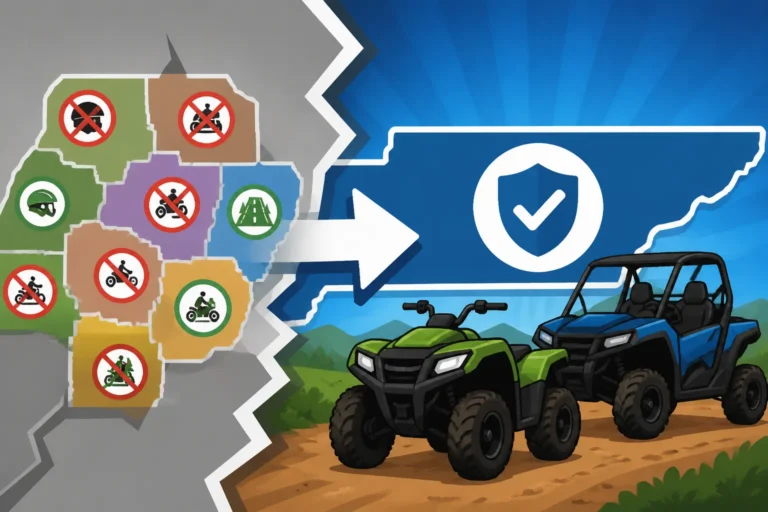
Before recent changes, the rules for riding UTVs on public roads in Tennessee were, frankly, a mess. There wasn't a consistent statewide standard. Instead, individual counties and even cities had the power to make their own ordinances regarding UTV use on their local roads. This meant that what was perfectly legal in, say, Scott County might land you a hefty fine just a few miles down the road in Morgan County. Imagine planning a ride that crisscrossed county lines – you'd need a legal expert to plot your route! This lack of uniformity was a huge headache for residents and visitors alike, creating confusion, uncertainty, and sometimes, unexpected citations. It really highlights why we desperately needed [One Statewide Standard Replacing County-by-County Rules].
The situation was particularly vexing for folks who lived near popular riding areas or had property that required them to use a short stretch of road to get to their trails. You'd see machines on the road, but no one was ever truly sure if they were operating legally or just taking a risk. This ambiguity made it hard for law enforcement to enforce consistently and even harder for riders to comply, fostering an environment of guesswork rather than clear adherence to the law.
What Changed: The Statewide Standard
Thankfully, the legislative tides have turned, bringing much-needed clarity to the issue. Tennessee has moved towards a more unified approach, establishing a statewide framework for UTV road use. This doesn't mean every road is open to UTVs, but it does mean there's a set of foundational rules that apply across the board, reducing the county-by-county confusion that plagued riders for so long. The goal was to provide a clearer path for responsible UTV use while still prioritizing public safety. These changes, often referred to in relation to [What Tennessee's 2025 UTV Law Changed], have significantly streamlined the regulations, giving riders a more predictable legal landscape to navigate.
Under the new standard, UTVs are generally allowed on certain public roads, provided they meet specific equipment requirements and operators adhere to age and licensing laws. The core idea is to treat UTVs more like traditional vehicles when they are on public thoroughfares, ensuring they are visible, controllable, and operated by qualified individuals. This shift acknowledges the growing popularity of UTVs and the desire of many owners to use their machines for practical purposes beyond just off-road recreation, such as accessing trailheads, running errands in rural areas, or even just getting from one part of their property to another that requires a brief road crossing.
Essential Equipment Your UTV Needs for Tennessee Roads
So, you're ready to hit the pavement? Before you do, your UTV needs to be properly equipped to ensure it's safe and compliant with Tennessee's road rules. This isn't just about avoiding a ticket; it's about making sure you can be seen, heard, and controlled just like any other vehicle sharing the road. Skimping on these requirements isn't worth the risk to yourself or others.
Making Your Machine Visible and Audible
When you take your UTV onto a public road, it ceases to be just an off-road toy and becomes a street-legal vehicle, at least for that moment. This means it needs to have all the basic safety equipment you'd expect on a car or truck. First and foremost, visibility is key. Your UTV must be equipped with functional headlights and taillights that are visible from appropriate distances, especially if you're riding during hours that approach dusk or dawn. Beyond constant illumination, you'll need working brake lights that clearly signal when you're slowing down or stopping. This is absolutely critical for preventing rear-end collisions.
Furthermore, signaling your intentions is paramount. Functional turn signals on both the front and rear of your machine are a non-negotiable requirement. No more hand signals like you might use on a bicycle; when you're on the road, you need clear, unambiguous indicators for other drivers. And, of course, a working horn is essential for alerting pedestrians or other vehicles to your presence in situations where a warning is necessary. Finally, you'll need at least one rearview mirror, mounted to provide a clear view of the road behind you. Many riders opt for a center rearview mirror, but some prefer side mirrors, or even both. Thankfully, a company like SuperATV offers many of these kits, making it easier to convert your machine with comprehensive turn signal kits, mirrors, and lighting options that meet these [Tennessee Equipment Rules for Road Use]. These add-ons are designed to integrate seamlessly, turning your off-road beast into a capable road-goer.
Safety Features Beyond Lights
Beyond just being seen and heard, your UTV needs to be equipped with features that enhance safety and control, bringing it closer to the standards of other vehicles on the road. Seatbelts are a must for every occupant, and they need to be properly worn. These aren't just for off-road trails; they're vital for occupant retention in the event of a sudden stop or collision on pavement. Check the condition of your seatbelts regularly – they're a critical safety device.
While specific DOT tire requirements for UTVs on Tennessee roads can vary and sometimes be a gray area, it's always wise to ensure your tires are in good condition and suitable for mixed-surface use if you plan to hit the pavement regularly. Tires designed purely for mud or extreme rock crawling might not handle well on asphalt, especially at higher speeds or during braking. Many riders who frequently use roads will opt for all-terrain tires that offer a better compromise between off-road grip and on-road manners. Additionally, a sturdy windshield is generally required to protect occupants from debris, and some regulations might even require windshield wipers for clear visibility in inclement weather. These are not just suggestions but legal necessities to meet [Tennessee UTV Road Requirements] and ensure a safer experience for everyone. Always check your specific UTV's capabilities and local interpretations of these rules to ensure full compliance.
Understanding Where You Can (and Can't) Ride in Tennessee
Now that your UTV is properly outfitted, the next crucial step is understanding the actual roads you're permitted to traverse. Tennessee's statewide rules brought more consistency, but they certainly didn't open up every road for UTV use. Knowing the specific limitations is key to a legal and enjoyable ride.
Permitted Road Types and Speed Limits
The good news is that you're no longer playing county-by-county roulette with every mile. Under the updated state law, UTVs are generally allowed on certain local and secondary roads. The primary stipulation you need to remember is the speed limit: your UTV can typically only be operated on roads where the posted speed limit is 45 mph or less. This rule is a critical one, designed to keep UTVs, which are generally not built for high-speed highway travel, off faster, more dangerous roads. You'll need to be vigilant about road signs and respect these limits. Riding on a road posted 50 mph, for instance, would put you squarely outside the legal boundaries. For more clarity, you can check [Riding a Road Posted 45 mph or Under].
Beyond speed limits, there are also restrictions on when you can ride. UTVs are typically restricted to daylight hours only when on public roads. This means from sunrise to sunset, no cruising after dark, even if you have all your lights working perfectly. This rule is another safety measure, acknowledging that UTVs might not have the same visibility profile as a car in low-light conditions. You can read more about this at [Daylight Hours Only Under Tennessee Law]. Crucially, you are barred from interstates and controlled-access highways altogether. These major arteries are simply not designed for UTV traffic, and attempting to ride one would be highly dangerous and illegal. This restriction is consistent across the state, and it's vital to respect [Why Tennessee Bars Interstates].
Crossing State Highways and Restricted Areas
While continuous travel on state highways might be restricted, the law does make provisions for crossing them. If you need to cross a two-lane state highway, you can do so, but it must be done at a ninety-degree angle to the highway, directly across the shortest distance possible. You can't just merge and drive down the highway for a stretch to get to the next road. This precise crossing method minimizes the time you spend exposed to faster-moving traffic. It’s a quick, direct maneuver. For multi-lane state highways, the rules are even more stringent: you can only cross them at designated crossing points where the Tennessee Department of Transportation (TDOT) has explicitly marked or allowed it. This isn't something to guess at; if it's not clearly designated, assume you cannot cross. You might find this useful: [Crossing a Two-Lane at Ninety Degrees in Tennessee].
It's also worth noting the concept of Adventure Tourism Districts. These are specific geographic areas, often in coal country counties known for their extensive trail systems like Scott, Anderson, and Campbell, where local governments may have additional ordinances that allow for greater UTV road access on certain designated roads. While the statewide law provides a baseline, these districts can expand upon it for their local context. However, even within these districts, you must still adhere to the fundamental safety requirements and restrictions on interstates. Finding roads you can legally access might involve trailering your UTV to an Adventure Tourism District, and a robust UTV from a brand like SuperATV can handle the varied terrain once you're there, whether it's navigating town roads to a trailhead or exploring the trails themselves. Understanding [Adventure Tourism Districts] can unlock more riding opportunities.
Driver Requirements and Other Important Considerations
Beyond outfitting your machine and knowing the permissible roads, there are crucial requirements for the person behind the wheel and other factors that ensure a safe and legal ride on Tennessee's public roads. These rules are in place to protect not only UTV riders but also everyone else sharing the road.
Who Can Operate a UTV on Tennessee Roads?
It's not just about the machine; it's also about the operator. To legally drive a UTV on designated public roads in Tennessee, you must meet certain age and licensing criteria. First, the minimum age to operate a UTV on a public road is 16 years old. This aligns with the general age for obtaining a driver's license, recognizing that road operation requires a certain level of maturity and driving skill. Anyone younger than 16, even with an adult present, generally cannot operate a UTV on these public thoroughfares. You'll find more details about this at [Tennessee Minimum Age to Ride a Road].
In conjunction with the age requirement, you must also possess a valid Class D driver's license. This means you need to have gone through the process of obtaining a standard automobile driver's license. A learner's permit, for instance, typically wouldn't suffice for solo operation on public roads. This ensures that operators have demonstrated basic driving proficiency and knowledge of traffic laws. Check out [Tennessee Driver's License Rules for UTVs] for more information. Finally, while not always required for adults off-road, helmets are typically mandatory for both the operator and any passengers under the age of 18 when riding a UTV on a public road. This is a critical safety measure, acknowledging the potential risks of road travel on an open-air vehicle. Always err on the side of caution and wear a helmet, regardless of age, for maximum protection. This rule is often mirrored in [Tennessee Helmet Law for ATV Riders].
Insurance, Enforcement, and Penalties
Even though UTVs aren't registered in the same way cars are, when you take one onto a public road, it's generally subject to the same liability insurance requirements as any other motor vehicle. This means you need to carry proof of financial responsibility. It's crucial to check with your insurance provider to ensure your UTV is covered for road use, as standard off-road policies might not extend to public road operation. Carrying your insurance card with you, along with your driver's license, is always a good practice. You can learn more about this at [Tennessee UTV Insurance Requirement].
When a Tennessee deputy pulls you over roadside, they'll be checking for a few things: your driver's license, proof of insurance, and that your UTV meets all the required equipment standards. They'll also observe your operation to ensure you're adhering to speed limits and other traffic laws. Ensure your machine, whether stock or equipped with SuperATV accessories, meets all safety standards to avoid issues during a roadside check. Ignorance of the law is not an excuse, and non-compliance can lead to fines for illegal UTV road use. These penalties can range from minor citations for equipment violations to more significant fines and even impoundment for operating on restricted roads or without a valid license. For details on potential consequences, see [Tennessee Fines for Illegal UTV Road Use]. It's always better to be fully informed and compliant than to face the unpleasant experience of a roadside stop that ends with a ticket.
Tennessee UTV Road Requirements Summary
To help keep all these essential requirements clear, here's a quick summary of what you need to know before taking your UTV onto Tennessee's public roads:
| Category | Requirement | Details/Explanation |
|---|---|---|
| Equipment | Headlights, Taillights, Brake Lights | Must be functional and visible from required distances. |
| Turn Signals (Front & Rear) | Clearly indicate turns. | |
| Horn | Must be audible for signaling. | |
| Rearview Mirror(s) | At least one, providing a clear view to the rear. | |
| Seatbelts | Required for all occupants; must be worn. | |
| Windshield (and wipers, often) | Protects occupants from debris; wipers for clear visibility in bad weather. | |
| Tires | Must be in good condition and suitable for mixed-surface (on-road) use. | |
| Operator | Age | Minimum 16 years old. |
| Driver's License | Valid Class D (standard auto) license required. | |
| Helmet | Mandatory for operators and passengers under 18 years old when on public roads. Recommended for all. | |
| Road Use Rules | Posted Speed Limit | Only on roads with a posted speed limit of 45 mph or less. |
| Time of Day | Daylight hours only (sunrise to sunset). | |
| Prohibited Roads | Interstates and controlled-access highways are strictly off-limits. | |
| Crossing Highways | Two-lane highways: 90-degree crossing only. Multi-lane highways: only at TDOT-designated crossing points. | |
| Other | Insurance | Proof of liability insurance required, similar to other motor vehicles. |
| Penalties | Fines, citations, or impoundment for non-compliance with equipment, operator, or road use rules. | |
| Adventure Tourism Districts | Specific counties may have additional ordinances allowing more expansive road use on designated roads within their district, but core state rules (like interstates) still apply. |
Disclaimer
This article is for general informational purposes only and does not constitute professional advice. Laws, prices and regulations vary by location and change over time. Consult a qualified professional for guidance on your specific situation.