Tennessee Rules for Riding After Dark
There's nothing quite like that feeling of a perfect ride in the Tennessee backcountry, the sun beginning to dip below the ridge, painting the sky in fiery colors. But then, that little voice in your head pipes up, "Can I actually keep riding after dark?" It's a question that often causes confusion and can put a real damper on your plans, especially if you're not sure about the laws. Navigating Tennessee's rules for riding ATVs and UTVs once the sun goes down, whether you're on a public road or a dedicated trail, can feel like a maze. This guide is here to untangle those rules, giving you a clear picture of what's allowed and, more importantly, how to stay safe and legal when the day turns to night.
The Core Rule: Daylight Hours Only on Tennessee Roads
Let's get straight to the heart of the matter for those looking to extend their ride onto public roadways. Tennessee has very clear stipulations about when you can operate your ATV or UTV on state-designated roads, and generally speaking, night riding on these routes is a no-go. It's a common point of frustration for many riders who might find themselves caught out as dusk settles, perhaps just trying to get back to their campsite or trailer after a long day of exploring.
Why the Sun Dictates Your Road Riding Hours
The primary reason behind the "daylight hours only" rule for ATVs and UTVs on Tennessee roads boils down to safety and visibility. Unlike traditional cars and trucks, many off-highway vehicles (OHVs) simply aren't designed with the same level of lighting, reflective surfaces, or enclosed cabins that provide the same safety margins after dark. Imagine cresting a hill on a winding county road in your UTV, only to encounter an oncoming car whose driver doesn't expect an OHV at that hour, or worse, struggles to see your lights against the backdrop of the night. It's a recipe for disaster. The state's regulations are designed to minimize these risks, protecting both OHV riders and other motorists. The law explicitly states that operations are restricted to [Daylight Hours Only Under Tennessee Law], which means from thirty minutes after sunrise to thirty minutes before sunset.
This restriction is a critical piece of information that many riders, especially those new to the state or just visiting, often overlook. You might have the most powerful headlights and auxiliary light bars imaginable on your machine, but if you're on a public road after legal daylight hours, you're still operating outside the law. A deputy making a routine check or responding to a call won't make an exception for your tricked-out lighting system. They're looking to enforce the statute designed to keep everyone safe. Getting caught can result in fines and a citation, which can quickly ruin an otherwise fantastic riding trip.
Exceptions and Nuances: What About Private Land or Trails?
Now, here's where things get a bit more nuanced and, thankfully, offer more flexibility for night owls. While public roads have strict daylight-only rules, the landscape changes dramatically when you're on private property or within the confines of a dedicated OHV park. If you own land, or have explicit permission from a landowner, you generally have the freedom to ride your ATV or UTV after dark on that private property. The key here is "explicit permission" and ensuring you're not trespassing. Always respect [Tennessee Rules for Riding Private Land] and get clear consent.
The true haven for night riding in Tennessee, however, lies in its many fantastic OHV parks and trail systems. These parks operate under their own sets of rules and, in many cases, welcome or even encourage night riding. Places like Windrock Park, for example, are famous for their 24/7 access, allowing you to explore their vast trail networks long after the sun has set. This is a crucial distinction: the state's road-use laws do not apply within the boundaries of a private park. Instead, the park itself sets the regulations, including those for [Tennessee Rules for Night Riding at a Park]. This means you can often enjoy the thrill of navigating trails under the stars, provided you adhere to the park's specific guidelines, which often include requirements for adequate lighting. Always check with the individual park before you go, as policies can vary widely.
Equipping Your Machine for Any Eventuality (Even if Not Road-Legal at Night)
Even if Tennessee law restricts your after-dark movements on public roads, that doesn't mean you should neglect proper lighting for your machine. In fact, if you plan to venture onto private land or into the many OHV parks that allow night riding, equipping your ATV or UTV with robust lighting is not just a good idea—it's absolutely essential for safety and enjoyment.
Essential Lighting for Off-Road Night Riding
Riding off-road at night presents a completely different set of challenges than daytime riding. Shadows play tricks on your eyes, puddles become bottomless pits, and obstacles you'd easily spot in the sun suddenly emerge from the darkness. That's why having a superior lighting setup is paramount. Your machine's factory headlights are often barely adequate for slow-speed trail riding during the day, let alone for navigating complex terrain after dark. You'll want to think beyond just basic illumination. Consider adding powerful LED light bars to the front of your machine, designed to throw light far down the trail and illuminate the periphery. Pod lights, strategically placed, can fill in dark spots, helping you see around corners or spot hazards that might otherwise be missed.
Don't forget the rear of your machine either. Bright taillights and brake lights are crucial, especially if you're riding in a group. They help other riders behind you maintain a safe distance and react to your movements. Some riders even add a chase light or whip light to the rear, especially in dusty conditions, to make their presence known from a distance. When you're out there on a trail system, especially one that allows continuous operation, you'll find that many of the most experienced riders heavily invest in their lighting. The ability to see clearly, anticipate the terrain, and be seen by others greatly reduces your risk and increases your confidence. The market for these accessories is huge, and reputable brands like SuperATV offer a fantastic range of durable and powerful LED light bars and pod lights that can truly transform your night riding experience.
Visibility Beyond Just Your Machine's Lights
While your machine's lighting is critical, your personal visibility as a rider also plays a significant role in safety after dark, especially if you're riding with others or might encounter pedestrians or other vehicles in a staging area. Think about reflective gear. A good quality helmet with reflective accents, a vest with high-visibility strips, or even reflective tape on your jacket can make a huge difference in how quickly you're spotted by someone else's headlights or by another rider's auxiliary lights. This isn't just about adhering to regulations; it's about making yourself as noticeable as possible in an environment where natural light is absent.
Beyond reflective elements, consider your power sources. All those fantastic lights draw power, and you don't want to be stranded in the dark with a dead battery. Many machines can be upgraded with stronger alternators or auxiliary battery systems to handle the increased electrical load from multiple light bars, winches, and other accessories. Remember, a robust lighting setup is only as good as the power supply keeping it running. Having a reliable setup means you can focus on the trail ahead, rather than worrying if your lights are going to flicker out at the worst possible moment. For detailed requirements on what your machine needs for road use, even if you're not riding at night, consult resources like [Tennessee Equipment Rules for Road Use].
Navigating Park-Specific Night Riding Rules
As we've touched on, while public roads are largely off-limits after dark for OHVs in Tennessee, the state's vibrant OHV park scene offers a different story. These parks are often the ideal place to experience the unique thrill of night riding, but it's crucial to understand that each park operates under its own specific guidelines regarding after-hours access.
Windrock's 24/7 Access and What It Means for Night Riders
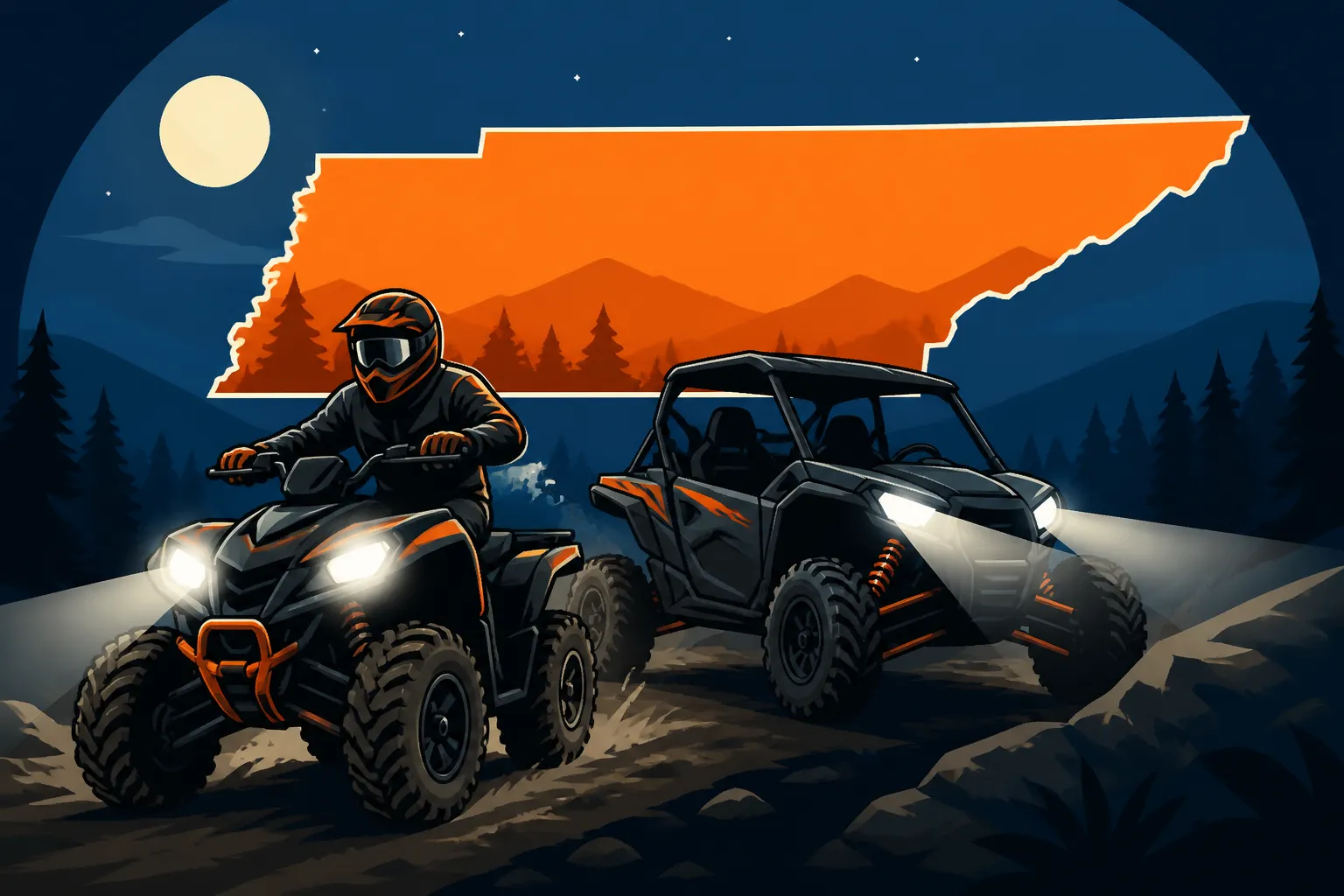
When it comes to night riding in Tennessee, Windrock Park near Oliver Springs is practically legendary. Known for its expansive network of trails across [73,000 Tennessee Acres at Windrock], it stands out as one of the few places where [Windrock Open Around the Clock] is not just a catchy phrase, but a genuine reality. This means that once you have your permit, you can literally ride from sunset to sunrise, exploring trails that take on an entirely new character under the glow of your headlights and the moon. For many riders, the challenge and solitude of navigating familiar trails in the dark offer an exhilarating experience unlike any other.
However, this freedom comes with significant responsibilities. Night riding at Windrock demands a higher level of preparedness and caution. Trails that seem straightforward in daylight can become disorienting in the dark, with changes in elevation and obstacles appearing suddenly. This is where your investment in high-quality lighting truly pays off. You'll want to ensure your machine is equipped not just with standard headlights, but with powerful LED light bars that illuminate the trail ahead, and auxiliary lights to help you see around corners and spot unexpected hazards. Windrock's vastness also means that help can be a long way off if you run into trouble after dark, emphasizing the need for group riding, emergency supplies, and a fully charged communication device.
Other Parks and Their Specific Night Policies
While Windrock is an excellent example of 24/7 access, it's vital to remember that not all parks offer the same freedom. Other popular destinations like Brimstone Recreation and Ride Royal Blue Resort have their own unique policies regarding night riding. Some parks might permit night riding on certain designated trails or during specific events, while others may have strict "sunset to sunrise" closures for general trail use. For instance, some parks might close their gates at a certain hour, preventing entry or exit until morning, even if riding within the park is allowed later.
The takeaway here is paramount: always, always check with the specific park you plan to visit before you head out after dark. A quick call to their office or a thorough review of their website can save you from a fine, a frustrating gate closure, or even a dangerous situation. These policies can change, too, so even if you've ridden a park before, it's worth a quick check for current rules. For a comprehensive overview of general regulations, you might look into [Tennessee Rules for Night Riding on a Trail], but remember, park-specific rules always take precedence within their boundaries.
Here's a general idea of how different popular Tennessee OHV parks might approach night riding:
| OHV Park / Area | General Night Riding Policy | Specific Considerations |
|---|---|---|
| Windrock Park | Generally 24/7 access for permit holders. | Requires excellent lighting, strong navigation skills, and group riding. Cell service can be spotty. |
| Brimstone Recreation | Varies; typically closes at dusk, but check for special events. | Known for organized night rides during events like Paragon. General riding usually daylight only. Check website for updates. |
| Ride Royal Blue Resort | Varies; typically closes at dusk, but check for special events. | Similar to Brimstone, general access is often daylight. Special events may include night riding. |
| North Cumberland WMA | Strictly daylight hours only. | As a Wildlife Management Area, rules are generally more stringent, often tied to hunting seasons and safety. |
| Big South Fork NRRA | Restricted; specific designated routes may have varying hours. | Rules are similar to national parks; check with park rangers for any specific trail allowances and hours. |
This table provides a snapshot, but it absolutely does not replace calling or checking the official website of the park you intend to visit.
Safety Considerations for Riding After Dark
Riding your ATV or UTV after dark, even in designated areas like Windrock, introduces a whole new layer of safety considerations. It's an exciting experience, for sure, but the reduced visibility and altered perception demand a heightened sense of caution and preparedness.
Increased Risks and How to Mitigate Them
The most obvious increased risk is, of course, significantly reduced visibility. Even with the best lighting system money can buy, your field of vision will be narrower, and your ability to judge distances and terrain changes will be impaired compared to daytime riding. A ditch that was clearly visible in the afternoon sun might blend into the shadows at night. This significantly increases the risk of rollovers, hitting unexpected obstacles like downed trees or large rocks, or veering off the trail. Wildlife, more active at night, also presents a higher risk of collision. Deer, raccoons, and other animals can appear suddenly in your path, giving you little time to react.
To mitigate these risks, think defensively. Slow down. You simply cannot safely ride at the same speeds at night as you can during the day. Ride with a group, ideally with experienced night riders, and always ensure each machine has robust lighting. Carry essential recovery gear, even if you don't typically do so during the day. A sturdy winch, like those available from SuperATV, can be a literal lifesaver if you get stuck in a tricky spot in the dark. A well-stocked first-aid kit is non-negotiable, as is a reliable communication device (a fully charged cell phone, a satellite messenger, or a two-way radio). Dress for the unexpected; temperatures can drop significantly after dark, even on a warm day, so having extra layers is a smart move. Finally, avoid alcohol or any impairing substances, as they further diminish your already reduced senses.
Planning Your Night Ride
A successful and safe night ride isn't something you just spontaneously decide to do. It requires meticulous planning, even more so than a daytime excursion. Firstly, never, ever ride alone after dark. Riding with at least one other machine ensures that if one breaks down or someone gets injured, there's immediate help available. You should all be familiar with the route you plan to take. Familiarity with the trail in daylight is a huge advantage, as it helps you anticipate turns, climbs, and potential hazards even when they're obscured by darkness.
Before you even load up, fully charge your phone, GPS device, and any auxiliary power banks. Consider downloading offline maps, as cell service can be notoriously spotty in many of Tennessee's riding areas. Let someone not on the ride know your exact route, your expected return time, and who you're with. This "float plan" is a simple but incredibly effective safety measure. Check the weather forecast carefully; night riding in rain, fog, or freezing temperatures multiplies the inherent risks exponentially. Mud becomes slicker, visibility plummets, and hypothermia can become a serious concern. By planning ahead and being prepared for the worst, you significantly increase your chances of having an incredible, safe, and memorable night riding experience. For more on communication and connectivity in remote areas, check out [Tennessee Trails With Cell Coverage].
Disclaimer
This article is for general informational purposes only and does not constitute professional advice. Laws, prices and regulations vary by location and change over time. Consult a qualified professional for guidance on your specific situation.