The Law That Created Tennessee’s Trail Permits
Tennessee’s trail permits are easy to mistake for vehicle registration, a statewide sticker, or a pass that works at every riding area. They are none of those things. The legal framework is about permission to ride on certain managed lands. Understanding what the law authorizes—and what it does not—helps you choose the right permit before you load your ATV or UTV.
What Tennessee’s trail-permit law does
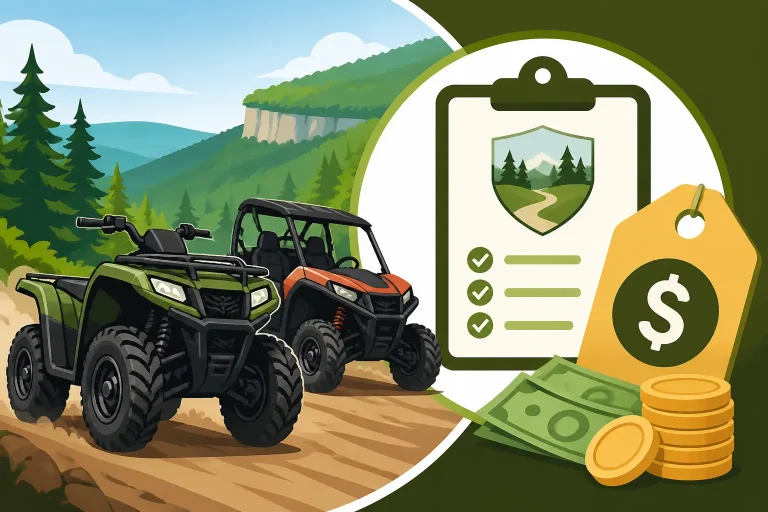
Tennessee’s trail-permit system provides a legal way to manage off-highway vehicle use on designated public lands. It allows the land manager to require a permit for riding in covered areas, set permit conditions, and use permit revenue to support the riding program and the land where it operates.
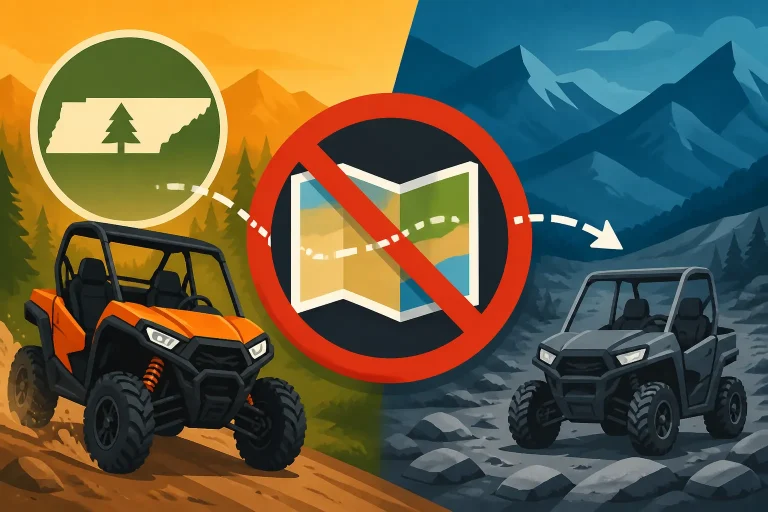
That is different from a law requiring every ATV or UTV in Tennessee to be registered with the state. Tennessee does not have one statewide trail sticker that grants access to every public and private riding area. A permit is tied to the land and program that issued it.
For riders, that distinction is the practical heart of the law:
- A permit grants access only where that permit is accepted.
- The rules of the particular riding area still apply.
- A permit does not make an otherwise prohibited road or trail open.
- A state trail permit is not a substitute for a title, vehicle paperwork, or road-use authorization.
- A private park may require its own pass even if you already have a state permit.
The permit framework is most relevant to state-managed OHV riding areas, including the North Cumberland Wildlife Management Area. If you are planning a ride there, you need to know the requirements for the specific permit program, not just assume that a state-issued pass works wherever Tennessee has trails. [Tennessee Rules for Riding a WMA] explains the land-use side of the rules, while Does One Permit Cover Every North Cumberland Unit? addresses the coverage question for riders heading to that area.
A permit is permission to use land
A useful way to think about the permit is as a land-access pass. It says that the rider has paid for or obtained the authorization required by that program, subject to its terms. It does not certify that the machine is street legal, establish who owns it, or erase restrictions on where it may travel.
That distinction matters because riders sometimes use “registration” as a catch-all word for every kind of vehicle document. In practice, a trail permit and a title serve different purposes. A title relates to ownership and the machine’s identity. A trail permit relates to access to a particular riding area. Even a machine with valid ownership documents may need a separate riding permit, and a permit does not resolve a title problem.
For help separating those concepts, see Why Tennessee Has No Statewide Trail Sticker and Why a Park Permit Replaces Registration in Tennessee. If you are sorting out ownership documents before a trip, Titling an OHV in Tennessee covers a different process.
Why the permit requirement exists
A managed riding area has to balance recreation with conservation, safety, maintenance, and other uses of the land. A permit system gives the land manager a way to set clear conditions for OHV access and to keep the riding program from being an unmanaged, open-ended right of entry.
On a large area with multiple units, access rules can vary by location and change with trail conditions or other land-management needs. A permit can help identify authorized riders, communicate restrictions, and support the costs associated with operating the program. It also gives the agency a framework for enforcing requirements, such as staying on designated routes or closing a trail when conditions call for it.
The law should not be read as a promise that every road, trail, or parcel within a broad recreation area is open to riders. Land may have boundaries, seasonal closures, special restrictions, or routes designated for particular uses. A valid permit is necessary where required, but it is not by itself a map of everything you may ride.
Before leaving home, check both the permit instructions and current land notices. A trail may be closed even when your permit is valid. Conditions can also change after rain, during hunting seasons, or as a result of maintenance work. The practical routine is simple: confirm your permit, confirm the area you plan to enter, and check for notices that apply to your route.
This is also why a permit bought for one park or land system is not automatically honored at another. Each land manager controls access on the property it manages. A state permit for a public riding area does not grant permission to cross private land, enter a closed unit, or ride a privately operated park with separate terms.
Which permits the law does and does not cover
The word “Tennessee permit” can be misleading because riders may be talking about several different programs. A state-managed OHV permit, a private park pass, a hunting-related authorization, and an event permit are not interchangeable. The name on the permit and the land it covers matter.
| Where you plan to ride | What to check | What not to assume |
|---|---|---|
| A state-managed OHV area | The current permit options, eligible units, rider conditions, and closures | That the permit opens every road or trail in the area |
| A privately operated OHV park | The park’s own access pass, waiver, vehicle, and guest rules | That a state permit is accepted as the park’s pass |
| Private land | The owner’s permission and any conditions they set | That a public-land permit grants access across private property |
| A public road | Applicable road-use, equipment, age, and operating rules | That a trail permit makes an OHV legal on the road |
| An organized ride or commercial tour | The land manager’s event or commercial-use requirements | That individual rider permits cover the organizer’s activity |
North Cumberland’s state permit program is separate from the passes used at private riding destinations such as Windrock or Brimstone. Those parks operate under their own access systems. Ride Royal Blue also has its own arrangements for riders using its property and services. Confirm the rules with the place where you intend to ride rather than relying on the label “Tennessee trail permit.”
If your trip includes more than one riding area, make a separate permit check for each one. A single weekend can involve multiple landowners and multiple sets of rules. Carrying Three Permits for Three Parks explains why riders sometimes need separate passes in one trip, and Why One Park’s Permit Is Worthless at the Next describes the problem with treating park permits as interchangeable.
Permits also do not make road use legal. A trail authorization is not a plate or road-use permit, and it does not override restrictions on public roads. If your plan includes leaving a trail system and riding on a road, check that road’s rules independently. Does Tennessee Register ATVs? and Why Your Class Decides Your Road Rights help explain why vehicle category and road access are separate questions from trail access.
Choosing and using the right permit
The best way to avoid a gate problem is to verify the permit against your exact plan rather than buying the first option that sounds close enough. Start with the land manager’s official permit information. Confirm the area, dates, rider category, and vehicle coverage before you pay.
Check coverage before choosing a permit
Ask these questions:
- Which property will you ride? Identify the actual riding area, not just the nearest town or trailhead. Similar names can refer to different units or facilities.
- What dates will you ride? Permit options may differ by length of stay or validity period. Check the current terms instead of relying on an old receipt or another rider’s recollection.
- Who needs a permit? Some programs attach a permit requirement to the adult, vehicle, or rider in a specific way. Read the current instructions for each person in your group.
- Does your machine fit the program’s requirements? Check vehicle eligibility, dimensions, and any restrictions that apply to your type of machine.
- Are there separate rules for children or visitors? Age, supervision, or residency can affect which option applies. Confirm before purchasing for a family or out-of-state group.
- Are there current closures or special conditions? A permit does not guarantee that every route will be open on the day of your ride.
If the official instructions do not make your situation clear, contact the land manager before you travel. That is particularly worthwhile for a visiting rider, a large group, a rental, or a machine that is unusual in size or type.
Keep proof accessible
Follow the program’s current instructions for carrying or displaying proof of the permit. Do not assume that a screenshot, a printed confirmation, or a permit left in the tow vehicle will be accepted in every circumstance. Save the confirmation and any terms you were given, and make sure the adult responsible for the group knows how to produce them.
A small waterproof document sleeve can help keep paperwork readable in wet or muddy conditions. You can find basic sleeves through retailers such as Amazon, but the sleeve is only for protecting documents; it is not a permit, and it does not change the program’s proof requirements. If you are ordering one, check that it fits the documents you actually need to carry rather than relying on a product photo.
The same preparation applies to maps. An online shopping site such as Amazon may be useful for general riding gear, but it cannot confirm whether a trail is open or whether a particular permit covers your route. Use the land manager’s current information for those questions. For a broader trip-planning checklist, Tennessee Trail Maps Worth Carrying can help you think through what to have with you.
Buy from the source responsible for the land
Use the official sales channel identified by the land manager. A third-party page, an old social media post, or a permit offered by someone who rode there last season may not reflect current conditions. Check the program’s current requirements and keep the purchase confirmation.
Avoid buying a permit for another person unless you understand how the program assigns it. Some permits may be associated with an individual, a vehicle, or a specific term. Do not assume a friend’s permit can be shared simply because you are riding together.
Amazon can be a convenient place to source non-regulatory items such as a document pouch or a compact first-aid kit. It is not the source to use for state riding authorization. Buy the permit through the official program and treat shopping sites as gear retailers, not as a substitute for the land manager’s rules.
Common misunderstandings and a practical checklist
The most common mistake is treating a permit as a universal pass. The law authorizes a permit system for covered lands; it does not give every permit statewide reach. Another common mistake is assuming a permit makes an ATV or UTV legal on nearby roads. Trail access and road use are different regulatory questions.
A few other misunderstandings are worth clearing up:
- “My machine has a title, so I do not need a trail permit.” A title establishes an ownership record; it does not provide access to a managed riding area.
- “I bought a permit last year, so it should still work.” Permit periods and terms vary. Check the current program rather than relying on an expired or outdated permit.
- “The trailhead is open, so the whole area is open.” Access at one point does not mean every route or unit is available.
- “A permit for one park will cover the next one.” Each operator or land manager sets its own access rules.
- “The pass means I can ride any route on the property.” Designated trails, closures, and other restrictions remain in force.
- “A rental company’s permit covers everyone in my group.” Ask the rental provider and the land manager what is included and who must hold a permit.
Before you leave, use this short checklist:
- Name every property or park on your itinerary.
- Find the current permit requirements for each one.
- Confirm whether each rider or vehicle needs separate authorization.
- Check current closures and route restrictions.
- Read the permit terms, including any age, residency, or machine conditions.
- Save proof and carry it as directed.
- Keep road-use rules separate from trail-access rules.
- Recheck official notices shortly before the ride.
If you are riding with children, renting a machine, visiting from out of state, or joining an organized group, allow extra time to verify the details. Those situations can bring additional conditions that are easy to miss when one person buys permits for everyone.
The legal framework is useful because it gives Tennessee’s land managers a way to control access and support designated OHV riding. For riders, the key is to treat each permit as specific permission for a defined place and program—not as a statewide registration, a road pass, or a guarantee that every trail is open. When in doubt, check with the agency or operator that manages the land you plan to ride.
Disclaimer
This article is for general informational purposes only and does not constitute professional advice. Laws, prices and regulations vary by location and change over time. Consult a qualified professional for guidance on your specific situation.