Does Tennessee Register ATVs?
One of the biggest head-scratchers for new ATV and UTV owners in Tennessee, or even seasoned riders moving in from another state, is figuring out what kind of official paperwork they need for their machine. It’s a common frustration to walk into a county clerk’s office expecting to register your quad just like you would a car, only to be met with blank stares or a polite correction. This guide is here to clear up that confusion, explaining exactly why Tennessee handles off-highway vehicles (OHVs) differently from your everyday car or truck, and what steps you do need to take to legally own and operate your ATV or UTV in the Volunteer State.
Understanding Tennessee's Approach to OHVs: It's Not "Registration" as You Know It
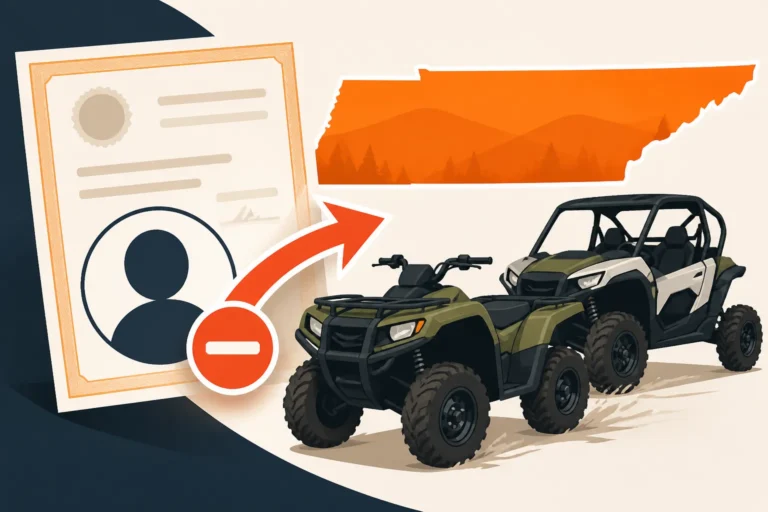
Let's cut right to the chase: Tennessee does not register ATVs or UTVs in the traditional sense that most people understand it for on-road vehicles. If you're envisioning license plates, annual sticker renewals, or proof of insurance requirements tied to a statewide registration database for your off-road machine, you're picturing a system that simply doesn't exist for these types of vehicles in Tennessee. This often catches folks off guard, especially if they're used to systems in other states where every motorized vehicle, on or off-road, gets some form of annual registration.
The Common Misconception About ATV/UTV Registration
The idea of "registration" usually implies a vehicle being formally recorded with the state for the purpose of allowing it to operate on public roads, tracking its use, and often requiring annual fees and inspections. For cars and motorcycles, this is standard practice across the country, and it directly links to roadworthiness, insurance, and the ability to travel on paved highways. When you think about an ATV, however, its primary purpose is off-road recreation or utility, far from the asphalt. This fundamental difference is key to understanding Tennessee's approach. Many riders assume that because their machine can move, it must be registered like any other vehicle, leading to unnecessary trips to the DMV or questions that leave them feeling more confused than when they started. It's a natural assumption, but it doesn't quite fit the Tennessee model for OHVs.
Why Tennessee Opted for Titling Over Traditional Registration
The Volunteer State, like several others, has made a clear distinction between vehicles designed for public road use and those intended for off-road environments. For ATVs, UTVs, and other off-highway vehicles, Tennessee's focus is on establishing clear ownership rather than tracking their operational status for public road access. That's why the state requires titling. A title is a legal document that proves you are the rightful owner of the machine. It's about property rights, preventing theft, and facilitating legal sales and purchases, much like the deed to a piece of land. This focus on ownership, rather than road-use permission, is central to [Why Tennessee Does Not Register Off-Road Machines].
The state also recognizes that most off-road machines are primarily used on private land, dedicated trail systems, or in specific agricultural or industrial settings. Requiring full, annual road-style registration for vehicles that rarely, if ever, touch a public road would be an administrative burden with little practical benefit. Instead, the titling process ensures that every machine has a clear paper trail, making it harder for stolen machines to be resold and providing a clear legal framework for buying and selling.
How Tennessee's System Differs from Neighboring States
If you've ridden in Kentucky, Georgia, or Alabama, you might have encountered different rules for your ATV or UTV. Some states have more comprehensive registration systems for off-road vehicles, while others might have stricter limitations on road use that indirectly necessitate a different form of tracking. Tennessee stands out by almost exclusively focusing on titling for proof of ownership. This means you won't be paying annual registration fees to the state for your ATV or UTV, nor will you receive a license plate to display on the machine itself.
Instead, the closest thing to a "registration" is the small sticker issued by the [Tennessee Department of Revenue and OHVs], often referred to as a TDR sticker. This sticker doesn't grant you road access; rather, it's physical proof that your machine has been properly titled in Tennessee. It's a subtle but crucial distinction that can save you a lot of headache if you understand it before heading to your local [Titling at a Tennessee County Clerk] office. This unique approach simplifies the bureaucracy for off-road enthusiasts by focusing on the core legal need: establishing who actually owns the machine.
The Core of Tennessee's System: Titling Your Off-Highway Vehicle
While the term "registration" might not apply, the concept of having your off-road machine officially recognized by the state certainly does, albeit through the process of titling. This is where your county clerk's office comes into play, acting as the front-line for processing the necessary paperwork to formalize your ownership. Understanding this distinction is vital, because neglecting the titling process can lead to complications down the line, particularly if you ever need to prove ownership, sell your machine, or even recover it if stolen.
[Titling an OHV in Tennessee] and Proof of Ownership
Titling an OHV in Tennessee is the legal cornerstone of owning one. Think of your title as the definitive document that declares you the rightful owner of your ATV or UTV. It's an official record kept by the state, detailing the vehicle's identification number (VIN), make, model, and the name(s) of the legal owner(s). Without a title, proving you own your machine can be incredibly difficult, especially if there's ever a dispute or if you purchase a machine without one. This is why it’s imperative to get your machine titled as soon as you acquire it, whether new from a dealer or used from a private seller.
The title serves multiple critical functions. First, it protects you as the owner by providing undeniable evidence of your property rights. Second, it's essential for legal transactions; you cannot legally sell an OHV in Tennessee without a clear title, and no legitimate buyer should ever purchase one from you without receiving a properly transferred title. If you're drafting legal documents for the sale, such as a bill of sale, services like LawDepot can provide templates, but the title remains the primary proof of ownership that facilitates the legal transfer. Lastly, in the unfortunate event of theft, a titled machine is much easier to track and recover through law enforcement databases.
The Purpose of the [Tennessee's TDR Sticker Explained]
Alongside your title, you'll receive a small, adhesive sticker known as the TDR (Tennessee Department of Revenue) sticker. This isn't a license plate, and it's not a permit for trail use. Instead, [A Sticker That Proves a Tennessee Title Exists] is essentially a physical manifestation of your title. It's a requirement to display this sticker on your OHV, typically in a visible location like on the fender or frame. While it might look like a registration sticker, its purpose is singularly to confirm that the machine has gone through the state's titling process and has a valid title on file.
It's a common point of confusion, but the TDR sticker doesn't expire annually or grant you specific riding privileges. It's a one-time issuance tied to the initial titling of the machine. This means that [Why a Tennessee Sticker Dies With the Sale] of the machine; the new owner will need to apply for a fresh title and TDR sticker in their name. This helps maintain an accurate chain of ownership for every OHV in the state. So, while it feels like a registration sticker, remember its true identity: proof of title.
The Process: How to Get Your Title and Sticker
Getting your OHV titled and obtaining its TDR sticker is a straightforward process, but it requires specific documentation and a visit to your local county clerk's office. You'll typically need to bring a few key items with you. For a new machine, you'll need the Manufacturer's Statement of Origin (MSO) or Manufacturer's Certificate of Origin (MCO), which acts as the "birth certificate" for your vehicle. If you're buying a used machine, you'll need the properly assigned title from the previous owner. A bill of sale is also highly recommended, even if not always strictly required by the state, as it provides a clear record of the transaction. You can find robust bill of sale templates through services like LawDepot to ensure all necessary details are covered.
You'll also need to provide personal identification, and be prepared to pay the associated fees. These fees typically include the state title fee, a county clerk fee, and potentially a lien fee if you've financed the purchase. [Tennessee OHV Title Paperwork] will involve filling out forms provided by the clerk's office, which will capture your information and details about the OHV. Once everything is submitted and fees are paid, the county clerk will process your application, issue you a temporary registration (if applicable, though usually not for OHVs), and send your information to the state to process the official title and TDR sticker. The sticker itself usually arrives by mail a few weeks later.
Navigating the Practicalities: What Riders Really Need to Know
Understanding Tennessee's titling-only system is one thing, but knowing how it impacts your actual riding experience is another. Riders often have questions about what they need to carry, what happens when they buy or sell a machine, and the ever-present confusion around road use. Let's delve into the practical side of things, so you're fully prepared for your next adventure.
What You Need to Carry While Riding
Since Tennessee doesn't have a traditional registration system for ATVs and UTVs, you won't be carrying a physical registration card like you would for a car. However, there are still important documents and items you should have on hand whenever you're out riding. The primary piece of identification for your machine will be the TDR sticker, which should be clearly displayed on the vehicle itself. This sticker confirms that your machine has been properly titled in Tennessee.
Beyond the machine's official documentation, you'll want to carry your personal identification, such as a driver's license. While you don't need a driver's license to operate an ATV off-road on private land, if you're on any public lands, crossing roads (where permitted), or interacting with law enforcement or park rangers, having valid ID is crucial. Furthermore, if you're riding on state-managed trail systems, such as those within the North Cumberland Wildlife Management Area, you'll need a specific trail permit issued by the state or the park itself. This permit is separate from titling and is necessary to access and ride on those designated trails. Always check the specific requirements of the park or trail system you plan to visit, as they often have their own rules regarding permits, safety gear, and machine specifications.
Buying and Selling an OHV in Tennessee
The titling system truly shines when it comes to the buying and selling of off-highway vehicles in Tennessee, as it provides a clear framework for transferring ownership. When you're [Buying a Used OHV in Tennessee], the most critical document you'll need to receive from the seller is the properly signed-over title. This is where the seller legally transfers ownership to you. Without this, you won't be able to title the machine in your name, which could lead to significant problems, including potential [Tennessee Fines for an Untitled OHV]. Always ensure the VIN on the title matches the VIN on the machine.
If you are the one [Selling an OHV in Tennessee], your responsibility is to sign over your existing title to the buyer and potentially provide a bill of sale. A bill of sale, while not always mandatory for the state to process a title transfer, is highly recommended for both parties as it documents the sale price, date, and condition of the machine. Utilizing a template from a service like LawDepot can help ensure all the necessary details are included for your protection. It's also important to remember that [A Tennessee Sticker Void After a Sale]; the buyer will be responsible for obtaining a new title and TDR sticker in their own name, even if your old TDR sticker is still affixed. This ensures that the state's records accurately reflect the current owner.
Limited Road Use and What the Sticker Doesn't Allow
This is where many riders get into trouble. While your ATV or UTV has a title and a TDR sticker, neither of these documents grants you free rein to ride on public roads. In Tennessee, ATVs and UTVs are generally not considered street-legal vehicles. The TDR sticker is simply proof of ownership, not permission to operate on roads. There are very specific, limited circumstances under which an OHV might be allowed on certain public roads in Tennessee, such as for agricultural purposes, emergency services, or within designated "Adventure Tourism Districts" in specific counties. Even in these cases, there are strict rules about speed, time of day, and equipment requirements, and you'll typically need additional documentation or permits specific to that road use, not just your TDR sticker.
For instance, if you're traveling from a remote cabin to a trailhead, it’s highly unlikely that your TDR sticker will suffice for road use. You must understand that [Tennessee Rules for Riding a County Road] are very particular, and riding an ATV or UTV on state highways or most county roads is prohibited and can result in significant fines and legal trouble. Never assume that because your machine has a title and a sticker, you're cleared for road travel. Always verify local ordinances and state laws regarding ATV and UTV road use, as they can be complex and vary by location.
Common Questions and Misconceptions Debunked
The world of ATV and UTV regulations can feel like a maze, especially with differing rules from state to state and even county to county. Let’s tackle some of the most frequently asked questions and common misunderstandings about off-highway vehicles in Tennessee to give you absolute clarity.
Dispelling Myths About "Street Legal" ATVs and UTVs
One of the most persistent myths is the idea that you can make an ATV or UTV "street legal" in Tennessee just by adding a few accessories like turn signals or a horn. While some states have specific provisions for converting OHVs to street-legal status, Tennessee generally does not. The state classifies ATVs and UTVs primarily as off-highway vehicles. This means they are not designed or intended for regular use on public roads and highways, and the state's titling process reflects this by not including traditional road registration.
While [Tennessee's Low Speed Vehicle Category] and [Tennessee's Medium Speed Vehicle Category] do exist, these are very specific vehicle classifications with design requirements and speed limitations that most standard ATVs and UTVs do not meet. These categories are for vehicles like golf carts or certain utility vehicles that are purpose-built for low-speed road use, not typically for the rugged off-road machines we commonly refer to as ATVs and UTVs. Trying to force an ATV into a street-legal mold in Tennessee is usually an exercise in futility and can lead to expensive citations. The legal framework simply isn't set up to allow the widespread conversion of off-road machines for general road use.
Financial Implications: [Tennessee OHV Title Cost] and Fees
While you won't be paying annual registration renewal fees for your ATV or UTV in Tennessee, there are still costs associated with the titling process that every owner should be aware of. When you title your machine at the county clerk's office, you'll incur a few different fees. The primary one is the state's title fee, which covers the administrative cost of processing and issuing your official title document. This is a flat fee set by the state.
On top of the state fee, the county clerk's office will charge its own fee for handling the transaction. This [Tennessee County Clerk OHV Fee] helps cover the operational costs of the local office. If you've financed your ATV or UTV, there will also be an [Tennessee OHV Lien Fee] to record the lienholder's interest on the title. Finally, Tennessee collects sales tax at the time of titling for new purchases or when bringing an out-of-state machine into Tennessee, if sales tax hasn't already been paid to an equivalent amount in another state. While these are one-time costs per titling event (unless you need a duplicate title later), they are important to budget for. Always call your local county clerk's office ahead of time to confirm the exact current fees and required payment methods.
Where to Find Reliable Information and Forms
Navigating state regulations can be challenging, but reliable information is out there. For the most accurate and up-to-date details on titling your OHV, your first stop should always be your local Tennessee County Clerk's office. They are the direct point of contact for processing these transactions and can provide specific guidance on required forms, fees, and any local nuances. The Tennessee Department of Revenue also provides official guidelines and forms related to vehicle titles, which can be accessed through their official website.
For general legal documents related to buying or selling, such as a comprehensive bill of sale, online legal resource platforms like LawDepot can offer customizable templates that ensure you cover all the necessary details to protect yourself in a transaction. Remember, official government sources are your best bet for regulatory information, while reputable legal document providers can assist with the transactional paperwork. Don't rely solely on forum discussions or hearsay; always go to the authoritative source to ensure you're in compliance.
Disclaimer
This article is for general informational purposes only and does not constitute professional advice. Laws, prices and regulations vary by location and change over time. Consult a qualified professional for guidance on your specific situation.