Tennessee Rules for Riding a County Road
It's incredibly frustrating when you just want to take your ATV or UTV out for a spin, maybe to get to a trailhead or cruise a little backroad, only to be met with a confusing maze of "can I?" or "can't I?" signs and rules. You hear whispers about new laws, but figuring out what actually applies to you and your machine on your county roads can feel like trying to solve a riddle wrapped in an enigma. This guide is here to untangle that mess, giving you a clear, empathetic breakdown of Tennessee's current rules for riding your machine on county roads, so you can ride with confidence and keep those pesky tickets at bay.
The Big Picture: Tennessee's Road Laws for OHVs
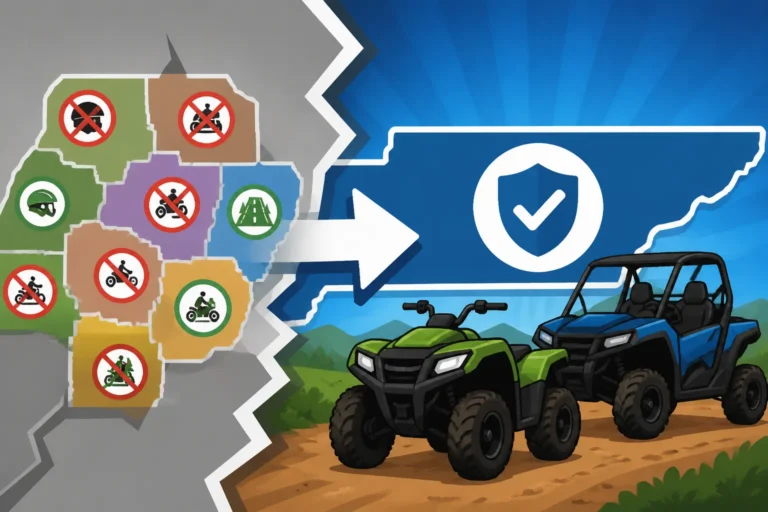
For years, riders across Tennessee faced a patchwork of rules regarding off-highway vehicles (OHVs) on public roads. What was legal in one county might land you a fine in the next, leading to a lot of confusion and understandable frustration. Thankfully, things have shifted somewhat, bringing a bit more statewide clarity, even if local nuances still exist. The landscape changed significantly with [What House Bill 810 Changed in 2025], which aimed to provide a more unified approach to how ATVs and UTVs interact with our road system.
It’s crucial to understand that Tennessee generally doesn't "register" off-road machines for general road use in the same way it does cars and trucks. The state recognized the growing popularity of these vehicles, especially in areas rich with trail systems, and sought to create a framework that balances recreation with public safety. This led to the concept of [Tennessee's Adventure Tourism Districts], which play a vital role in where and how you can ride on certain roads. These districts highlight specific counties where OHV recreation is a significant economic driver and where local governments are empowered to make specific decisions about road access.
Statewide Standards vs. Local Control
While House Bill 810 established some overarching rules, it didn't completely strip local counties of their say. Instead, it created a framework where counties within designated Adventure Tourism Districts – which include Scott, Anderson, Campbell, Morgan, Jackson, Johnson, Perry, Unicoi, Fentress, and Hickman counties – can choose to open certain county roads to OHV traffic. This means that even with statewide guidelines, you still need to be aware of what your specific county or even town has decided.
For paved county roads, the process for opening them is generally through local ordinance or resolution. However, for unpaved county roads, the law specifically requires a two-thirds vote by the local legislative body (like the county commission) to designate them for OHV use. This means a dirt or gravel road, often the most appealing for an OHV, requires a higher bar to be opened. So, while there's a [One Statewide Standard Replacing County-by-County Rules] in some ways, local decision-making remains incredibly powerful, especially for those unpaved stretches.
General Prohibitions You Need to Know
Even on designated county roads, there are fundamental rules that apply across the board. These aren't suggestions; they are the law, and ignoring them can lead to serious consequences. The most significant prohibition is that OHVs are absolutely barred from interstate highways. There are no exceptions for these high-speed, high-traffic thoroughfares; [Why Tennessee Bars Interstates] is a safety measure, plain and simple.
Another critical statewide rule dictates the speed limit on any designated county road: your OHV cannot exceed a speed of [Tennessee's 45 mph Road Rule]. Even if the posted speed limit for cars is higher, your machine must stay at 45 mph or below. Furthermore, road use is strictly limited to [Daylight Hours Only Under Tennessee Law]. This means no dawn patrol or sunset cruises on public roads, even if you have all the appropriate lighting for off-road trails. Finally, the operator of the OHV must be at least [Why Tennessee Sets 16 as the Road Minimum] and possess a valid driver's license. This isn't just a suggestion; it's a legal requirement to ensure that anyone operating a machine on a public road has demonstrated a basic level of driving competency.
Navigating Specific County Road Rules
Understanding the broad strokes is one thing, but knowing the precise rules for your chosen riding area is another challenge entirely. Since county commissions and city councils hold the power to designate specific roads, it’s up to them to publish these designations. This means the onus is on you, the rider, to do your homework before you ever hit the pavement (or gravel!).
Many riders find themselves confused when they arrive at a popular riding destination, seeing other OHVs on the road, and assume it's universally legal. However, what you're seeing might be specific to a small pocket of designated roads, or perhaps even riders who are simply taking a risk. You need concrete information, not assumptions, to avoid a citation.
Understanding Restricted Road Lists
The state law, particularly as it relates to Adventure Tourism Districts, mandates that if a county or municipality chooses to open roads to OHVs, they must publish lists of these designated roads. These are often referred to as "restricted road lists" or "designated road lists," and they are your absolute best source of information. These lists typically come from the county highway department, the county clerk's office, or the local municipality's government.
The challenge, of course, is [Finding the Restricted Road List Your County Published]. These aren't always prominently displayed or easy to find. You might need to check a county's official website, call the highway department, or even visit the county clerk's office in person. Some local communities might post physical signs, but relying solely on those can be risky. Always consult the official, most current list for the area you plan to ride in. Remember, ignorance of the law is no excuse if a deputy pulls you over.
Road Designations in Key Riding Areas
Let's look at some examples of how these rules play out in areas known for OHV riding. In places like Scott County, part of the [Scott, Anderson and Campbell Counties] Adventure Tourism District, local authorities have worked to designate certain roads. For instance, you might be able to ride [Riding South of SR 63 in Scott County] or on certain segments of the O and W Road that leave Oneida. However, even within these areas, there can be specific restrictions. SR 63 itself, a state highway, is generally off-limits to OHVs, with only [SR 63's Two Open Weekends a Year] specifically designated for OHV use to connect trail systems.
In cities like LaFollette, which lies within Campbell County, the city council took action to create [LaFollette's Designated Roads Since 2017] through a local ordinance. These are often specific city streets that connect trail access points or provide access to businesses catering to riders. Similarly, in other communities, designated streets might facilitate access from campgrounds or lodging to popular trailheads. When considering an upgrade to your machine, remember that reputable brands like SuperATV offer many accessories that can help ensure your UTV meets road requirements in these designated areas, from turn signals to proper mirrors.
Essential Equipment and Rider Requirements
Just because a county road is designated for OHV use doesn't mean you can just hop on your machine and go. Your ATV or UTV needs to meet certain equipment standards, and you, as the operator, need to meet specific personal requirements. This is where many riders get tripped up, thinking their trail-ready machine is also road-ready without any modifications.
The state's goal isn't to make it impossible but to ensure that when OHVs are sharing the road with traditional vehicles, they do so safely and predictably. This means equipping your machine with basic safety features and ensuring you have the proper credentials to operate a motor vehicle on public thoroughfares.
Your Machine's Road-Ready Checklist
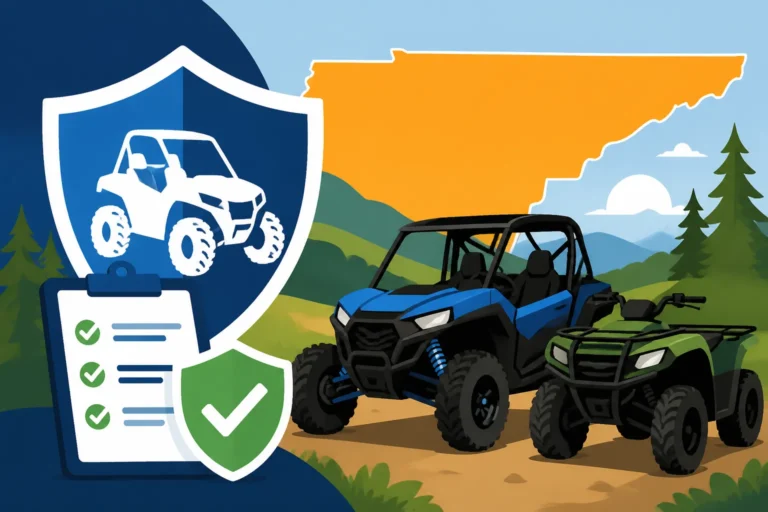
To be legally ridden on designated county roads, your OHV must be equipped with several key features, as outlined in [Tennessee Equipment Rules for Road Use]. Think of it like taking your car for an inspection; these are non-negotiable items:
- Headlights: You need at least one, and it must be illuminated whenever you're on a public road, even during daylight hours. Most modern machines come with these, but ensure they are functional and properly aimed.
- Tail Lights & Brake Lights: These are essential for visibility from the rear, letting other drivers know your presence and when you're slowing down or stopping.
- Turn Signals: Yes, like a car, your OHV needs working turn signals for both front and rear to indicate your intentions to other drivers. This is a common modification needed for many off-the-shelf machines. Many riders look to companies like SuperATV for easy-to-install turn signal kits that integrate seamlessly with their UTVs.
- Horn: A working horn is necessary to alert others to your presence or to avoid hazards.
- Mirrors: You need at least one rear-view mirror, properly affixed to the machine, allowing you to see traffic approaching from behind. Many riders choose a combination of a center mirror and side mirrors for optimal visibility.
- Spark Arrester: While primarily for off-road trail use to prevent wildfires, it's also a good idea to ensure your machine has a properly functioning spark arrestor.
The specific details of these requirements, such as the minimum candlepower for lights or the size of mirrors, can be found in the official statutes. When in doubt, it’s always better to over-equip for safety and compliance.
Rider Licensing, Age, and Insurance
Beyond your machine, you also have responsibilities. As mentioned earlier, the operator of an OHV on a designated county road must hold a valid driver's license. This isn't just any license; it needs to be an appropriate class of license that allows you to operate a motor vehicle. So, if you're [Tennessee Driver's License Rules for UTVs] and plan to ride on a public road, make sure your license is current and valid.
The minimum age for operating an OHV on a designated county road is 16 years old. This aligns with the general driving age for cars and trucks in Tennessee. This means younger riders, even if experienced off-road, cannot legally operate an OHV on these public thoroughfares. It’s also vital to be aware of [Tennessee Helmet Law for ATV Riders]. While often associated with off-road use for those under 18, Tennessee law requires all operators and passengers of ATVs and UTVs on public roads to wear a helmet, regardless of age.
Finally, while Tennessee does not require liability insurance for off-road use, if you are operating your OHV on a designated county road, you must carry proof of financial responsibility. This generally means having a valid liability insurance policy. [Tennessee UTV Insurance Requirement] is a critical piece of the puzzle to protect yourself and others in the event of an accident.
Common Pitfalls and How to Stay Legal
Even with the best intentions, it's easy to make mistakes if you're not fully informed. Many riders, excited to hit the trails or get to their favorite fishing spot, might overlook a crucial detail, leading to an unwanted encounter with law enforcement. Understanding these common pitfalls and how to avoid them is key to a smooth and enjoyable riding experience.
The goal isn't to create an obstacle course of regulations but to ensure that OHVs can coexist safely with other vehicles on public roads. By being proactive and informed, you can steer clear of fines and ensure your adventures remain fun, not financially painful.
Don't Get Caught Off Guard: Fines and Enforcement
The consequences of riding an OHV illegally on a Tennessee county road can be significant. If you're caught violating the rules, you could face a [Tennessee's $50 Fine]. While that might not sound like a fortune, it's often accompanied by a charge of a [A Class C Misdemeanor in Tennessee]. A misdemeanor can have longer-lasting impacts than just the financial penalty, potentially affecting your driving record or even future opportunities.
When a [What a Tennessee Deputy Checks Roadside], they'll be looking for several things. First and foremost, they'll want to see if you're on a designated road. They'll also verify your driver's license, proof of insurance, and check your machine for all the required equipment (lights, horn, mirrors, turn signals). They'll also be observing your speed and whether you're riding during daylight hours. Simply put, knowing the rules and adhering to them is the best way to ensure your roadside stop is a brief and pleasant interaction, rather than a ticket-issuing one.
Special Situations: Crossing, Agriculture, and Exceptions
It's important to distinguish between riding on a county road and crossing a state highway. Even if you're on a designated county road, you cannot just hop onto a state highway and ride it like a county road. However, Tennessee law does allow for [Crossing a Two-Lane at Ninety Degrees in Tennessee]. This means you can, in most cases, cross a two-lane state highway at a right angle (as directly perpendicular as possible) to get from one designated county road or trail section to another. For multi-lane highways, you can only cross where the Tennessee Department of Transportation (TDOT) has designated a crossing point. These crossings are often clearly marked, or you'll need to consult TDOT maps or local authorities for their locations.
Another important exception is for agricultural purposes. If you're using your OHV for legitimate farm work or to transport tools, equipment, or produce between fields or your home and fields, [Tennessee Rules for Agricultural Road Use] often provide an exemption from many of the standard road use rules. This is a practical recognition of how essential these machines are to farming operations across the state. Similarly, emergency vehicles and wildlife officers using OHVs in the course of their duties are exempt from these regulations, as outlined in [Emergency and Wildlife Vehicles in Tennessee]. These specific situations are designed to allow critical work to be done without unnecessary legal hurdles, but they don't extend to recreational riding.
| Feature | Requirement for County Road Use | Notes |
|---|---|---|
| Road Type | Designated County Roads (Paved or Unpaved) | Must be explicitly opened by local county/city ordinance or resolution (2/3 vote for unpaved). State Highways generally prohibited except for specific crossings. Always check local "Restricted Road Lists." |
| Speed Limit | 45 mph maximum | Regardless of the posted speed limit for other vehicles. |
| Hours of Operation | Daylight hours only | Sunrise to sunset. No night riding on public roads, even with lights. |
| Operator Age | 16 years old minimum | |
| Operator License | Valid driver's license required | Must be an appropriate class of license for motor vehicle operation. |
| Helmet | Required for all operators and passengers | Regardless of age, when on public roads. |
| Insurance | Proof of Financial Responsibility (Liability Insurance) | Required for road use, similar to a car. Not typically required for off-road-only use. |
| Equipment | Headlights, Tail Lights, Brake Lights, Turn Signals, Horn, One Mirror | Must be fully functional and properly installed. Many OHVs require aftermarket kits (e.g., from SuperATV) to meet these standards. |
| Interstates | Prohibited | No OHV use allowed on interstate highways under any circumstances. |
| Exceptions | Agricultural use, Emergency/Wildlife Vehicles, Highway Crossings | Specific rules apply for these situations. Crossing state highways requires a right angle at designated points. |
Disclaimer
This article is for general informational purposes only and does not constitute professional advice. Laws, prices and regulations vary by location and change over time. Consult a qualified professional for guidance on your specific situation.