Tennessee Rules for Campfires at a Trail Park
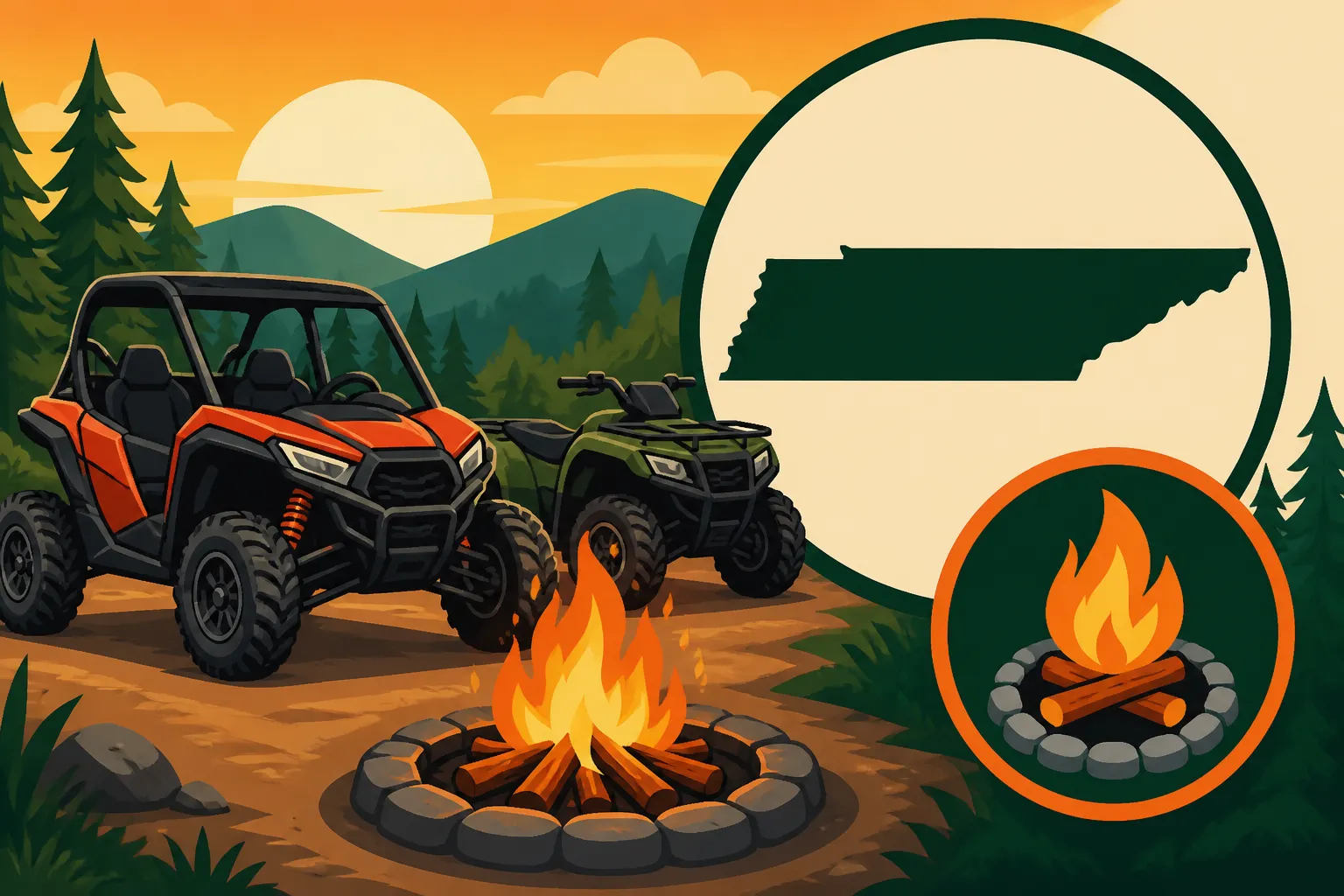
A campfire can make an ATV or UTV weekend more comfortable, but permission to ride a trail does not automatically include permission to burn wood. In Tennessee, the rules may depend on whether you are at a private trail park, a campground, or public land. Check the land manager’s current fire rules before packing firewood, and have a no-fire backup plan.
Check the park’s rules before you light a fire
There is no safe assumption that campfires are allowed everywhere riders can camp or ride. A trail park may have designated campsites with fire rings, allow fires only in certain areas, or prohibit open flames during dry or windy conditions. Rules can change with weather, fire danger, maintenance, and local restrictions.
Start with the property where you plan to stay—not just the trail system you plan to ride. A trail permit generally covers access to designated riding areas under the park’s rules. It should not be treated as permission to camp, use a fire ring, or burn wood. Camping may require a separate reservation or fee, and campfire rules may be part of that arrangement.
If you are visiting a private riding destination such as Windrock or Brimstone, check directly with the park or campground where you will camp. A park website, reservation confirmation, posted sign, or staff member can clarify whether fires are currently allowed and where. If the answer is unclear, ask specifically about a wood campfire at your intended campsite; permission to use a grill or stove is not necessarily permission to build an open fire.
The same caution applies when your ride includes public land. A campground near a trail system may be governed by different rules from the trails themselves. On a wildlife management area, for example, follow the land manager’s rules for the area and any additional campground restrictions. Do not assume that a rule at one unit, campsite, or park carries over to another. The land-use and permit details in Tennessee Rules for Riding a WMA may help you understand why the place you are riding matters.
Before leaving home, check these points:
- Are campfires permitted at your exact campsite?
- Must you use an established fire ring or another designated area?
- Are there current fire restrictions or closures?
- Are wood fires allowed, or only contained cooking devices?
- Are there limits on firewood, charcoal, or when a fire must be extinguished?
- Who should you contact if conditions change after you arrive?
A permit for one riding destination does not authorize a fire at another. If your trip includes more than one property, check each one separately. Why One Park’s Permit Is Worthless at the Next explains why it is important not to treat park access as interchangeable.
| Where you are camping | What to confirm before making a fire |
|---|---|
| Private trail park or campground | Whether fires are allowed at your site, where they may be built, and whether temporary restrictions apply |
| Campground beside a riding area | Which operator manages the campsite and whether its fire rules differ from trail rules |
| Public land or a wildlife management area | The land manager’s current fire, camping, and access rules for that specific area |
| Private land | The owner’s permission and any applicable local or state fire restrictions |
| A site with no clear posted rule | Ask the operator or land manager; do not infer permission from an existing fire ring |
Understand fire bans and local restrictions
Even when a park normally allows campfires, conditions can lead to a temporary ban. Dry vegetation, wind, nearby fire activity, or a public safety order may change what is allowed. A standing campsite rule is not a guarantee that a fire will be permitted on your travel date.
Check for notices close to your trip and again when you arrive. Look at the park’s official updates, contact the campground or land manager, and pay attention to signs at the entrance and campsite. If a restriction is posted, follow it even if other campers have fires or a fire ring is available. A ring is evidence that fires may be permitted under some conditions, not proof that they are permitted today.
Local fire restrictions can also apply independently of a trail park’s usual policies. Requirements for outdoor burning may vary by location and by the kind of burning involved. A recreational campfire is not necessarily treated the same as burning yard debris, so do not rely on general advice about burn permits. If you are unsure whether a restriction applies to your planned fire, ask the appropriate local authority or the property operator before lighting it.
When checking rules, be precise about where you will be. A countywide notice, a park-specific closure, and a restriction for a particular campsite can have different scopes. If a park employee tells you fires are allowed, ask whether that answer applies to your campsite and whether it could change with weather. Keep a screenshot or written confirmation of the park’s guidance if it helps you remember the details, but always obey newer instructions posted on site.
Include fire restrictions in the same pre-ride check as trail closures. A route that is open does not mean the campground is open to fires, and a campsite that is operating does not mean every trail is open. Tennessee Trail Closures to Check First is useful when you are reviewing access and conditions before loading your machine.
If you arrive and cannot confirm that a fire is allowed, skip it. A small stove or a meal that needs no cooking may solve the practical problem without testing the boundary of a restriction. Make sure the alternative is also permitted; a fuel-burning stove may have its own rules during high fire danger.
Build and extinguish a campfire safely
When a fire is allowed, use only the designated spot and follow the park’s instructions. An established fire ring reduces the chance of embers spreading, but it does not make an unattended fire safe. Keep the fire modest, especially when wind is moving sparks toward dry leaves, grass, tents, vehicles, or nearby campsites.
A few habits make a significant difference:
- Clear the area only as the park directs. Do not dig a new pit, move a fire ring, or scrape away vegetation unless the operator permits it.
- Keep the fire contained. Use the approved ring or fireplace, and do not let flames or embers spread beyond it.
- Keep water and a suitable extinguishing tool close. Do not wait until it is time to sleep to find out where the water is.
- Stay with the fire. Put it out before leaving the campsite, riding away, or turning in for the night.
- Extinguish it thoroughly. Add water carefully, stir the ashes, and continue until the material is cold. Warm embers can remain capable of starting a fire after flames disappear.
- Leave the site as required. Follow the operator’s directions for ash disposal; do not dump hot ashes in brush, a trash bin, or an unapproved location.
Do not use gasoline or other volatile fuel to start or revive a campfire. Keep fuel cans and other flammable materials away from flames, and never refuel a hot machine near a fire. Campers and riders often share compact sites where vehicles, tents, and cooking areas are close together, so leave enough space to prevent heat or sparks from reaching equipment.
Burn only what the park allows. Do not burn household garbage, plastic, cans, or treated and painted wood. These materials can create harmful smoke and leave hazardous residue. If bringing firewood, check the campground’s rules about outside wood. Some properties restrict outside firewood or require wood to be obtained locally; follow their instructions rather than collecting wood from the riding area.
Wind is a reason to be conservative. Sparks can travel beyond a fire ring, and a gust can make a small fire difficult to control. If conditions become gusty, if the fire is throwing sparks, or if vegetation nearby is dry, put it out. A park’s permission to have a fire does not make every moment suitable for keeping it burning.
Plan campsite use with the rest of your ride. Before leaving for a loop, extinguish the fire completely rather than assuming someone in the group will return soon. If another rider remains at camp, make that person responsible for watching and putting out the fire. Agree on who is handling it; vague assumptions are easy to miss when a group is getting ready to ride.
Plan a trip that still works without a fire
A campfire is a comfort, not a reason to take chances with fire restrictions. Pack meals and gear that work if the park prohibits wood fires, and confirm whether a portable stove, grill, or other cooking device is allowed. Do not assume an alternative is exempt from restrictions; ask the operator about the exact equipment you intend to use.
If your trip includes overnight camping, confirm the campsite and fire rules before you commit to a route. Camping Near Tennessee ATV Trails can help with the broader lodging and campsite planning. For a multi-park ride, allow time to check each property’s access rules, campsite arrangements, and fire restrictions separately. Your trail permit, campsite reservation, and permission to have a fire may be handled by different operators.
A simple pre-trip routine keeps the decision clear:
- Confirm that the campsite is open and that your reservation or camping arrangement is valid.
- Ask whether wood fires are allowed at your specific site.
- Check for current local or property-level restrictions shortly before departure.
- Ask about approved fire rings, permitted cooking devices, and firewood rules.
- Pack a no-fire meal option.
- Recheck signs and instructions on arrival.
- Put out any permitted fire fully before leaving or sleeping.
If rules conflict, follow the more restrictive instruction and contact the operator for clarification. Do not rely on what was allowed on a previous visit, what another camper says, or what you saw at a different trail park. Conditions and property policies can differ, even between nearby destinations.
For riders, the practical answer is straightforward: make the fire decision before you strike a match. Confirm permission for the exact campsite, verify that no temporary restriction is in effect, and extinguish any permitted fire completely. If you cannot confirm that a fire is allowed, enjoy the ride and use your no-fire plan instead.
Disclaimer
This article is for general informational purposes only and does not constitute professional advice. Laws, prices and regulations vary by location and change over time. Consult a qualified professional for guidance on your specific situation.