Tennessee Rules for Retrieving Game by ATV
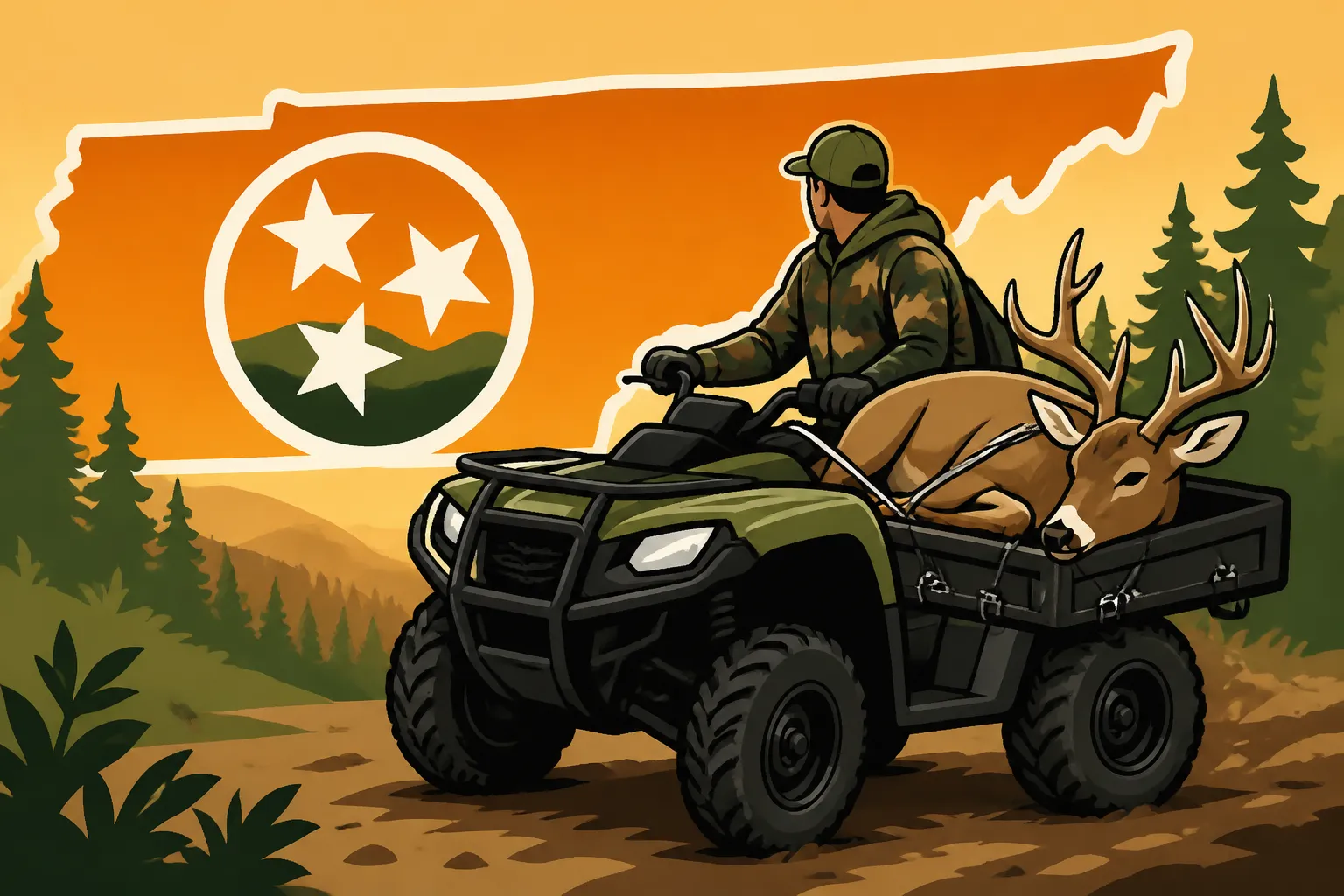
Recovering a deer or other game animal with an ATV can save a difficult carry, but a successful hunt does not automatically make every trail or route legal to ride. In Tennessee, the answer depends on where you are, which roads or trails are open, and the rules for the land you are hunting. This guide explains how to plan a retrieval without assuming an exception that may not exist.
Start with the land and route, not the ATV
The key question is not simply whether you may ride an ATV in Tennessee. It is whether the particular machine may travel on the particular route where you plan to hunt and retrieve game. Public wildlife areas, private property, trail systems and roads can each have different rules. A vehicle permit or hunting permission does not necessarily authorize travel off an established route.
Before hunting, identify the route you would use if you harvested an animal far from your vehicle. Check the current regulations and notices for that land, including any map that identifies open roads, designated trails, gates or seasonal closures. On a wildlife management area, start with Tennessee Rules for Riding a WMA; area-specific restrictions can be more important than general assumptions about ATV access.
| Where you are retrieving game | What to confirm before riding | Practical approach |
|---|---|---|
| Wildlife management area | Whether motorized travel is allowed on the route and whether that route is open | Stay on clearly authorized roads or trails; do not treat retrieval as permission to leave them |
| Private land | The landowner’s permission for both hunting and ATV use, including the route | Ask about gates, boundaries, and any limits on vehicle access |
| A public road | Whether that road is open to the ATV and what road-use rules apply | Use only a route where the machine is legally permitted |
| A trail park or riding area | Whether hunting is permitted and whether game retrieval is allowed there | Confirm with the land manager before combining a hunt and ride |
| Land with a temporary closure | Whether the closure applies to the trail or road you need | Do not go around a gate or closure sign to reach the animal |
A hunting license, a harvest tag, a trail permit and permission to operate a vehicle are separate things. Having one does not necessarily supply the others. For example, a permit to ride a designated trail may not authorize hunting there, and the fact that you legally harvested an animal does not automatically authorize a vehicle on a closed or restricted trail.
When the route crosses a boundary, check the rules on both sides. A trail that is open on one property may end at a boundary where ATV use is prohibited. If you are unsure whether a road or trail is open, stop and ask the land manager or the relevant agency rather than treating the uncertainty as permission.
Retrieval does not create a general off-trail exception
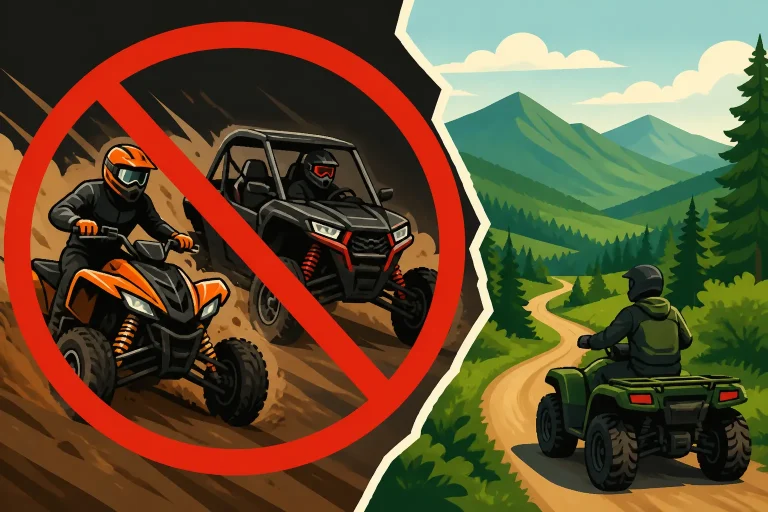
A common mistake is to assume an ATV may leave a designated route because a harvested animal needs to be recovered. Do not rely on that assumption. Restrictions on motorized travel can apply even when the purpose is to retrieve game. Rules may also distinguish between riding on an established road and driving across vegetation, a field, a creek bed or a closed trail.
Check Tennessee Rules for Riding Off the Trail and Tennessee Rules for Riding a Closed Trail before your hunt. If the animal is beyond an authorized route, the safer plan may be to reach it on foot and move it to a place where lawful vehicle access is available. If that is not practical, contact the land manager or wildlife agency for direction. Do not cut a new route, bypass a barrier or assume that a difficult recovery will excuse prohibited travel.
Plan a legal recovery before the shot
Think through the route while you are still choosing where to hunt. Consider how far the animal might be from an open road, whether the ground is steep or wet, and whether the route remains accessible during the season. A route can be closed temporarily or have restrictions that vary by area.
A simple plan should include:
- Mark the authorized access route. Use the current land map or official notice, not just an old GPS track or a path visible on the ground.
- Know the boundaries. Identify where public land ends, where private property begins and which roads are open to your machine.
- Decide how the animal will reach the route. If the ATV cannot legally reach the animal, plan to drag or carry the game to an allowed pickup point, if conditions and your ability permit.
- Have a backup. A steep slope, water, mud or a mechanical problem can make a planned route unusable. Avoid making an unsafe recovery attempt just to avoid a longer carry.
- Check again before riding. Closures and access conditions can change. Review the applicable notice before setting out and pay attention to signs at the site.
If you hunt on private land, get clear permission for vehicle travel as well as hunting. Permission to hunt does not necessarily mean permission to drive anywhere on the property. Ask whether the landowner wants you to stay on a particular lane, avoid wet ground, use an existing gate or call before crossing a boundary. The details matter; see Tennessee Landowner Permission Requirements and Tennessee Rules for Riding Private Property.
Handle the game safely and keep hunting rules separate
A vehicle can help move an animal, but it should not be used to pursue wildlife. Do not drive after an animal to locate, exhaust or corner it. After a shot, make a careful recovery plan on foot first, follow the applicable hunting rules, and use a vehicle only for lawful transport along a route where it is allowed. Requirements for the season, species and area still apply during recovery.
Keep the animal secure and avoid creating a hazard for other riders or traffic. Use appropriate tie-downs or a suitable cargo setup, distribute weight securely and do not obstruct the operator’s view or controls. Check that the load cannot slide, drag or contact hot or moving parts. If buying straps or a game carrier through Amazon or another retailer, check the product’s stated working-load limits and intended use rather than choosing by appearance alone.
Do not overload the ATV or exceed its capacity. A heavy or poorly balanced load can affect steering and braking, particularly on a slope or loose surface. If the game is too large to carry safely on the machine, make more than one trip or use a different lawful method. Never let a load compromise the rider’s ability to control the ATV.
Firearm handling deserves separate attention during a recovery. Follow the current hunting and firearm rules for the land and situation, and handle the firearm safely before loading or transporting game. A practical safety habit is to unload and secure the firearm before putting it on or around a vehicle, while following any stricter rule that applies. Review Tennessee Rules for Carrying a Firearm on an ATV and the applicable hunting regulations; do not assume that ordinary ATV access rules answer firearm questions.
Seasonal requirements may also apply to riders and passengers. Check Tennessee Rules for Riding in Deer Season and Tennessee Orange Requirements for Riders when planning a hunt. If anyone is riding, make sure each person meets the relevant requirements and can be seen by other hunters. Visibility is especially important when walking an animal out or working near an ATV.
Prepare for a longer carry than expected
A good recovery plan does not depend on the ATV reaching the animal. Bring equipment suited to the terrain and the game, and make sure at least one person can communicate the location if the group separates. A drag or other appropriate carrying aid can help on a permitted foot route, but it does not grant vehicle access to a restricted area.
Keep the ride itself conservative. Avoid spinning tires, widening a trail or driving through sensitive ground to shorten the carry. A shortcut can damage property, create a safety problem and lead to an access violation. If the machine gets stuck, do not keep revving or cut around the obstacle into an unauthorized area. Turn back or use a lawful recovery method.
If the ATV breaks down after the game is loaded, do not leave the animal unsecured or abandon the machine where it blocks a road or trail. Make the area safe, contact your riding group or the land manager as appropriate, and arrange recovery without taking a prohibited route. For a planned trip, Tennessee Rules for Riding a WMA and the current area map are useful checks before departure, not just after a problem occurs.
A practical checklist before you ride
A short check before the hunt can prevent a difficult decision after the harvest. Use the land manager’s current guidance and the rules for the season; do not rely solely on what another rider says is usually allowed.
- Confirm that hunting is permitted on the land and that you have the required hunting authorization.
- Confirm that ATV use is permitted in the area and that your intended route is open.
- Check whether the route has seasonal, weather-related or temporary restrictions.
- Get the landowner’s permission for ATV travel if you are on private property.
- Identify a legal pickup point in case the animal is beyond the route.
- Carry equipment to secure the animal without exceeding the ATV’s capacity.
- Keep the firearm handled and transported safely under the rules that apply.
- Make sure riders and passengers meet applicable safety and visibility requirements.
- Tell someone where you plan to ride and what route you expect to use.
- If the rules are unclear, ask the land manager or Tennessee Wildlife Resources Agency before riding.
For a wildlife management area, a trail permit should not be treated as a substitute for checking hunting access or area-specific restrictions. Likewise, a route that allows an ATV does not necessarily allow a hunter to ride there during every season or for every purpose. The safest interpretation is to follow the narrowest applicable rule and stay on an expressly permitted route.
If a harvested animal cannot be reached without leaving an authorized route, pause before moving the ATV. The animal’s location does not by itself establish permission to cross a boundary, bypass a closure or drive off-trail. Contact the appropriate land manager for guidance, or use a lawful foot-based recovery plan. That may take longer, but it avoids turning a successful hunt into a separate access or safety problem.
Disclaimer
This article is for general informational purposes only and does not constitute professional advice. Laws, prices and regulations vary by location and change over time. Consult a qualified professional for guidance on your specific situation.