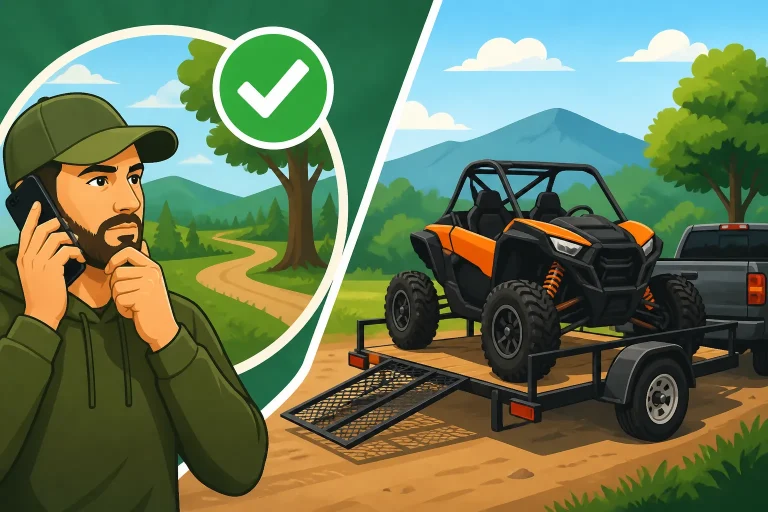
Tennessee Rules for a Guided Tour
A guided ATV or UTV tour can make a Tennessee ride easier to plan, but booking a guide does not automatically settle permits, land access, age limits, or road-use rules. The key is to find out who controls the route and what the booking covers. Use these checks before you pay, then confirm any rules that may have changed directly with the operator or land manager.
Start with the land, not the tour listing
A tour operator’s rules depend partly on where the ride takes place. Tennessee has private riding parks, state-managed riding areas, and other properties with their own access requirements. A tour may use one kind of land or combine more than one, so ask for the route or land manager before assuming a permit or waiver covers the whole outing.
On private property, the owner or park generally sets the access conditions. These may include a park permit, check-in procedure, required gear, machine restrictions, and rules for passengers. If the route enters a state-managed area, additional public-land requirements may apply. A commercial guide may also need authorization for the area where the tour operates. The guide’s permission to lead a group is not necessarily the same as each rider’s required access permit.
For a ride in a wildlife management area, check the relevant rules for that specific area and unit. The Tennessee Rules for Riding a WMA can help explain why it matters to know whether the tour uses WMA land. If the operator describes the trip as guided or commercial, ask how its authorization works and whether the group needs separate permits. You can also review Tennessee’s Guide Permit and Tennessee Rules for a Commercial Guide before contacting the operator.
Do not assume that one Tennessee permit covers every trail system. A permit issued for one property or park may not be accepted at another. Ask the operator to name every land manager involved and identify which permits are included, which you need to obtain yourself, and who is responsible for checking them. Tennessee Trail Permits Explained covers the broader distinction between riding access and a statewide vehicle registration system.
| Tour location or feature | What to confirm before booking |
|---|---|
| Private riding park | The park’s entry permit, machine rules, passenger rules, and check-in process |
| State-managed riding area | The current access permit for the area and whether commercial guiding needs separate authorization |
| Route using multiple properties | Which permits apply at each property and whether the guide has permission to cross between them |
| Public-road segment | Whether the specific road is open to that vehicle class and what equipment and documents riders must carry |
| Rental machine | Whether the tour price includes the machine, access permit, safety equipment, and any required orientation |
If the operator cannot tell you where the tour rides, treat that as an unanswered planning question, not a minor detail. Land access determines which permits, route restrictions, and operating rules apply.
Ask exactly what the guide and booking cover
“Guided tour” can mean different things. Some bookings provide a guide and route orientation while you bring your own machine. Others include a rental vehicle, a park permit, or both. The listing may not include every charge or requirement, so request an itemized explanation before you commit.
Ask these questions in writing:
- Which land or park does the tour use? Get the property or area name, and ask whether the route changes with closures, weather, or operating conditions.
- Does the booking include the required riding permit? If not, ask where to get it, when to purchase it, and whether it must be displayed or carried.
- Does the guide have the authorization needed for this route? For a commercial tour on public land, ask which land manager authorizes the guiding activity. A guide permit, where applicable, does not automatically replace customer access permits.
- What vehicle is included, if any? Confirm whether you are renting from the operator, bringing your own ATV or UTV, or joining in a passenger seat.
- What does the price include? Ask about the machine, fuel, helmet, eye protection, permit, guide, and any required damage deposit or waiver. Company terms and charges can change, so check the current booking documents rather than relying on an old listing.
- What happens if the route closes? Find out whether the operator reschedules, changes locations, or handles cancellations another way.
If you bring your own vehicle, ask whether it meets the park’s width, sound, tire, and passenger requirements. A machine that works well on one trail system may not be allowed on another. The guide may also set a group pace or route that is unsuitable for a machine with limited ground clearance, range, or capability.
If you rent, read the rental conditions separately from the tour description. Confirm who may operate the machine, what identification or license is expected, who can ride as a passenger, and what happens if the machine is damaged or recovered. A tour booking does not automatically mean that all rental or park conditions are included; see Tennessee Rules for a Rented Machine for related considerations.
For a multi-property trip, make sure the group can legally travel between areas. Permits are not automatically interchangeable, and a guide’s permission to lead on one property does not establish access on neighboring land. If there is any doubt, ask the operator to confirm the route with each land manager.
Check rider eligibility, safety, and route limits
Tour operators can set participation conditions in addition to the rules imposed by a land manager. Minimum ages, who may drive, passenger arrangements, required clothing, and group size can vary. These details are especially important for families: a child may be allowed to ride as a passenger but not be allowed to operate a machine, or the operator may set stricter limits than the land manager.
Do not rely on a general statement such as “family friendly.” Ask the operator to confirm the minimum driver age, whether a child may ride as a passenger, any height or fit requirements, and whether an adult must ride in the same vehicle. If a waiver is required, find out who must sign for a minor and whether a parent or guardian needs to attend. These may be company requirements rather than one statewide tour rule, so check the actual operator’s policy.
Ask what safety briefing and equipment are provided. A responsible operator should explain how the group communicates, what to do if a machine stops, how the guide handles a separation, and where riders should wait in an emergency. Confirm whether helmets and eye protection are included and properly sized. Requirements may depend on the location and type of ride; Tennessee Helmet Rules at a Trail Park is a useful starting point, but the park’s current rules should be checked too.
If you need to buy your own gloves, goggles, or other riding gear, choose equipment for fit and protection rather than appearance. Retailers such as Amazon may carry a wide range, but product availability and specifications vary; check the sizing and safety details before buying. Ask the tour operator whether personal gear is allowed and whether anything specific is mandatory.
A guided ride does not authorize a route that is otherwise closed or off limits. Follow the guide’s instructions, stay on designated trails, and do not ride onto private land or a closed trail without permission. The operator should be able to explain how it handles trail closures and changes. A posted closure or land-manager instruction takes priority over a route shown in an old advertisement or map.
If the tour uses a public road
Some tours may include a short road segment or a crossing between trail areas. Do not assume that a guide can make a road legal for an ATV or UTV. Road use depends on the road, the vehicle category, applicable equipment and rider requirements, and any local restrictions. Ask for the specific road segment and confirm it independently if the answer is unclear.
The Tennessee Rules for Riding a County Road and Tennessee UTV Road Requirements explain why permission to ride a trail does not automatically grant permission to use a public road. If the tour is entirely on private trails, ask the operator to confirm that no public-road segment is part of the route.
Make a final check before departure
A quick confirmation shortly before the ride can prevent a wasted trip. Trail access, weather, maintenance, hunting activity, or operating schedules may affect a route. Contact the operator and ask whether the tour is still using the planned property, whether any gate or trail closure changes the route, and what documents or equipment each rider needs that day.
Keep the booking confirmation, permit details, and operator contact information accessible. If the operator tells you to purchase a permit separately, use the stated official or park-approved channel and verify that it applies to the correct location and date. Do not count on a permit from another Tennessee park being accepted.
Before leaving home, confirm:
- The tour location and meeting point
- Which permits are included and which are your responsibility
- Driver and passenger eligibility for every person in your group
- Whether the ride uses public roads
- Whether the machine, fuel, and required protective gear are provided
- The operator’s weather, closure, cancellation, and late-arrival policies
- Whether you need identification, a signed waiver, or other documents
If answers conflict, pause and ask the operator or land manager to clarify before riding. A guide can help with navigation and group safety, but riders remain responsible for following the applicable rules and the instructions given for the property. The Tennessee Rules for an Organized Ride may also be useful if your booking is part of a larger group event rather than a standard tour.
Disclaimer
This article is for general informational purposes only and does not constitute professional advice. Laws, prices and regulations vary by location and change over time. Consult a qualified professional for guidance on your specific situation.