Tennessee Road Use Rules for ATVs
It can be incredibly confusing trying to figure out where you can and can't ride your ATV or UTV on public roads here in Tennessee. One minute you hear about new laws, the next your buddy got a ticket on a road you thought was open. It's enough to make you just want to stick to private land! But don't despair, because this comprehensive guide is here to clear up the confusion and help you understand the current Tennessee road use rules for ATVs and UTVs, so you can ride confidently and legally.
The Evolving Landscape of Tennessee Road Use
For years, the rules about riding ATVs and UTVs on Tennessee roads felt like a patchwork quilt, with every county having its own set of ordinances, or sometimes, no clear rules at all. This led to a lot of frustration and uncertainty for riders who just wanted to enjoy the trails and maybe grab a bite to eat in town without trailering their machine. Thankfully, there have been some significant developments aimed at bringing a more consistent framework to the state, making it a bit easier for us all to understand.
The Shift from County-by-County to Statewide Rules
Before more recent legislation, if you were riding your UTV in Scott County, the rules might be completely different from riding just over the line in Anderson County. It was a headache to keep track of, and it often meant you had to do a deep dive into local county commission minutes or city council resolutions before every ride. This inconsistency created a real barrier to enjoying our machines on the scattered road sections that connect trails or lead to amenities. Riders might inadvertently break a local rule simply because they crossed an invisible county line. This kind of piecemeal regulation often left riders feeling like they were constantly guessing, which isn't exactly the recipe for a relaxed ride.
However, recent legislative efforts, particularly from House Bill 810 changed things in 2025, aiming to standardize some aspects of road use across the state. While local entities still retain some control, the goal was to create a baseline of statewide regulations. This means that while you still need to be aware of specific local ordinances, especially in designated adventure tourism areas, there's a more uniform set of rules for general road use. This shift acknowledges the growing popularity of OHVs and the desire for more consistent guidelines, even if it's not a complete "street legal everywhere" solution. It's about finding a balance between local control and statewide clarity. This new framework means that instead of having to look up 95 different sets of rules, you can now focus on understanding a core set of state guidelines and then checking for local exceptions or specific designations.
Understanding Tennessee's Two Vehicle Categories
When we talk about off-highway vehicles (OHVs) in Tennessee, it's crucial to understand that the state broadly categorizes them into two main types for legal purposes: Class I and Class II. This distinction isn't just bureaucratic jargon; it directly impacts what kind of roads, if any, your machine is permitted on and under what conditions. [Tennessee's Four Vehicle Categories] helps lay out the bigger picture, but for road use, these two are key. Getting this wrong could mean the difference between a fun, legal ride and a frustrating conversation with a local deputy.
Class I OHVs are generally what most of us think of as traditional ATVs and many smaller UTVs. The law defines these machines as having a gross vehicle weight of no more than 2,500 pounds and being no more than 80 inches wide. They're typically designed for a single operator, though some accommodate a single passenger. Think of your standard quad or a compact side-by-side that's nimble on the trails. [Tennessee's Class I OHV Definition] goes into more detail, but for road use, remember that weight and width are the primary factors that land your machine in this category. Many of these machines, especially the older models, were never really intended for road use, making their adaptation a modern challenge.
Class II OHVs, on the other hand, encompass larger, heavier machines. These vehicles also have a gross vehicle weight of no more than 2,500 pounds and are generally no more than 80 inches wide, but they often include variations like dune buggies or larger multi-passenger UTVs that might meet the weight and width but have a different design or seating capacity. [Tennessee's Class II OHV Definition] clarifies that these often include things like sand rails, which have a very different profile than a traditional ATV. The key here is that both Class I and Class II OHVs, despite their differences, often fall under the same general road use restrictions and allowances once they meet the basic equipment and operational requirements. The reason these distinctions matter is that while both might share some road use privileges, their original design purpose can influence how easily they adapt to being road-worthy, often requiring specific modifications.
General Road Use Requirements in Tennessee
Even if you're on a road where OHV use is permitted, you can't just roll out of the woods and hit the pavement as-is. Tennessee law outlines specific equipment, operator, and administrative requirements that your machine and you, as the driver, must meet. These aren't just suggestions; they're legal mandates designed to ensure safety for everyone on the road. Ignoring them can lead to tickets, fines, and even a spoiled riding day.
Essential Safety Equipment for On-Road Riding
When your ATV or UTV transitions from trail to road, it needs to be equipped more like a conventional vehicle. This means ensuring visibility, the ability to signal intentions, and protection for the operator. For many stock machines, this requires some aftermarket additions. You'll likely need proper headlights and taillights that are functional both day and night, even though riding is typically restricted to daylight hours on many roads. Brake lights are absolutely critical to signal slowing or stopping to traffic behind you. Turn signals, both front and rear, are a must-have for indicating turns and lane changes. Many riders turn to brands like SuperATV for their robust, easy-to-install turn signal kits and mirrors, which are often specifically designed to meet these road-legal requirements.
Beyond lighting and signaling, your OHV must be equipped with at least one rear-view mirror, giving you a clear view of traffic approaching from behind. A windshield is also generally required, not just for rider comfort but for safety against debris. Additionally, your tires need to be appropriate for road use; knobby off-road tires, while great for mud and rocks, can be less stable and wear quickly on pavement. Finally, the vehicle must be in good working order, meaning functional brakes, a horn for signaling, and a muffler that keeps noise within acceptable limits. Remember, these requirements are about making your OHV visible and predictable to other drivers, which is paramount for safety on public roads.
Operator Licensing and Age Restrictions
Just like driving a car, operating an ATV or UTV on public roads in Tennessee requires the operator to be properly licensed and meet specific age requirements. This isn't the same as just riding on private property or within a closed park where younger riders are often allowed under supervision. For road use, the state explicitly mandates that any person operating an OHV must hold a valid driver's license. This means a standard Class D driver's license, the same one you use to drive your pickup truck or family car. This requirement ensures that operators have passed a driving test and understand basic traffic laws and road etiquette, which is crucial when sharing the pavement with other vehicles. [Tennessee Driver's License Rules for UTVs] specifies these requirements clearly.
Furthermore, there are strict age minimums. Under Tennessee law, a person must be at least 16 years old to operate an ATV or UTV on any public road where it's permitted. This 16-year-old minimum aligns with the general age for obtaining a driver's license in Tennessee, reinforcing the idea that road use for OHVs is treated with the same seriousness as operating any other motor vehicle. This is particularly important for parents or guardians who might have younger riders accustomed to operating their machines off-road. While a 13-year-old might be a seasoned trail rider, they are not legally permitted to drive on a public road, even a gravel county road, if they are under 16. These rules are in place not just for the OHV operator's safety but for the safety of everyone else sharing the road. [Tennessee Minimum Age to Ride a Road] highlights this critical point.
Insurance and Registration Realities
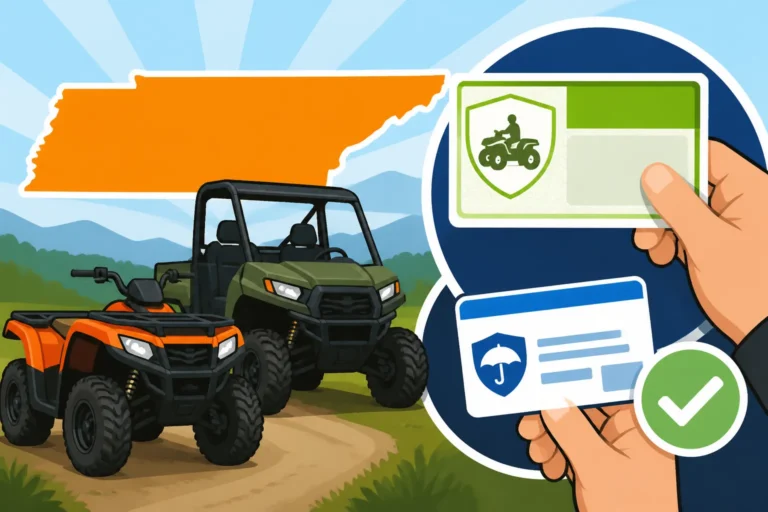
Navigating the administrative side of getting your OHV ready for road use can be one of the most confusing parts, especially when it comes to insurance and what Tennessee calls "registration." Many people mistakenly believe they need to "register" their ATV like a car with traditional license plates, but Tennessee has a unique approach to OHV record-keeping. The state does not offer traditional registration for off-road machines in the same way it does for cars and trucks. [Why Tennessee Does Not Register Off-Road Machines] explains this in detail. Instead, OHVs are titled through the county clerk's office, and this titling process includes the issuance of a special TDR sticker. This sticker simply proves that your machine has a valid Tennessee title. It's not a registration plate and doesn't grant automatic road-use privileges. [A Sticker That Proves a Tennessee Title Exists] clarifies this further.
However, when it comes to road use, insurance is a mandatory requirement, just like any other vehicle operating on public roads. You must carry proof of financial responsibility, typically in the form of liability insurance. This insurance covers damages or injuries you might cause to others while operating your OHV on a public road. Without it, you could face significant fines and penalties if stopped. It's crucial to check with your insurance provider to ensure your policy specifically covers road use for your ATV or UTV, as many standard off-road policies may only cover private property or trail riding. Don't assume your trail insurance extends to public roads; often, it requires a specific endorsement or a different type of policy altogether. Carrying that insurance card with you, along with your driver's license, is non-negotiable when you're on a public road.
Here's a quick look at some key equipment requirements:
| Item | Requirement for Road Use | Purpose |
|---|---|---|
| Headlights | Functioning, visible from 500 feet, low/high beams advised | Illuminate path, make vehicle visible to oncoming traffic |
| Taillights | Functioning, red, visible from 500 feet | Make vehicle visible from behind |
| Brake Lights | Functioning, red, activate when brakes applied | Signal stopping/slowing to following traffic |
| Turn Signals | Front (amber/white) and Rear (amber/red), flashing | Indicate intended turns/lane changes |
| Rear-View Mirror | At least one, providing clear view of traffic to the rear | Monitor traffic behind the vehicle |
| Windshield | Required | Protect operator from debris, elements |
| Horn | Functioning, audible from 200 feet | Alert other drivers to presence |
| Muffler | Maintains noise within acceptable limits | Control engine noise pollution |
| Tires | Appropriate for road use, good tread, not excessively worn | Ensure adequate traction and control on pavement |
| Seatbelts/Restraints | If originally equipped, must be used by all occupants | Enhance occupant safety in case of collision/rollover |
| Helmet | Required for operators and passengers under 18 years old | Head protection in case of an accident |
Where You Can and Cannot Ride Your OHV on Tennessee Roads
This is where things often get tricky, but recent state law has provided much-needed clarity, especially concerning county roads and certain state routes. While it's not a free-for-all, there are now more defined avenues for legal road use than ever before. Understanding these distinctions is critical to avoiding fines and ensuring a safe ride.
Permitted Road Types and Speed Limits
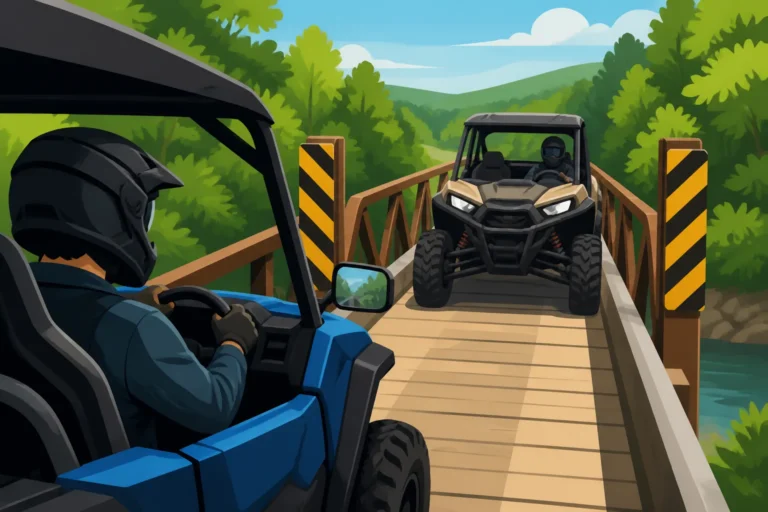
The good news is that under specific conditions, you can ride your ATV or UTV on certain public roads in Tennessee. The primary avenue for this is typically on unpaved county roads, and in some cases, paved county roads or even designated state highways. House Bill 810 established a statewide framework that allows OHVs to be operated on county roads with a posted speed limit of 45 mph or less, provided the local county legislative body hasn't voted to restrict them. This means that many of those gravel roads connecting small towns or leading to trailheads in places like Scott, Anderson, or Campbell counties could be open to your machine. [Riding a Road Posted 45 mph or Under] emphasizes this key speed limit. However, it's crucial to remember that this permission applies only between sunrise and sunset; night riding on these roads is generally prohibited. [Riding Only Between Sunrise and Sunset] is a rule you absolutely cannot forget.
Furthermore, the law allows OHVs to cross certain two-lane state highways at a ninety-degree angle, primarily to connect legal sections of county roads or trails. This is not for cruising down the highway, but for making a direct, safe crossing. Some multi-lane state routes might also allow crossings at specific intersections designated by the Tennessee Department of Transportation (TDOT). [Crossing a Two-Lane at Ninety Degrees in Tennessee] and [Crossing a Multi-Lane Where TDOT Designates] are important distinctions. When riding, always adhere to the posted speed limit, which, as noted, cannot exceed 45 mph for OHVs on county roads. Even if the speed limit is 45, you should always ride at a speed that is safe for conditions and mindful of other traffic.
Restricted Areas and Prohibited Highways
While some roads are open, many are still strictly off-limits to ATVs and UTVs. The most significant prohibition is against operating OHVs on interstates and controlled-access highways. These high-speed, multi-lane roads are simply too dangerous for off-highway vehicles and are explicitly barred from use. This means you cannot take your UTV on I-40 or I-75, regardless of how tricked out it is. Even some state routes, particularly those with higher speed limits or significant traffic volumes, remain closed to OHV traffic. For instance, specific segments like SR 63 and US 27 in areas like Huntsville are often restricted, with some exceptions for limited open weekends on SR 63. [Why SR 63 and US 27 Stay Closed in Huntsville] covers these specific exceptions and restrictions.
Additionally, while the state law provides a general framework for county roads, individual county legislative bodies still have the authority to create "restricted road lists." These lists, often published by October 2025 following the new legislation, specifically identify county roads where OHV use is not permitted. It is vital to check with the local county clerk or sheriff's office for these lists before you ride, as an open county road in one part of a county might be restricted in another. [Finding the Restricted Road List Your County Published] is a proactive step every rider should take. Also, be mindful of city limits. While counties may open their roads, incorporated cities often have their own ordinances that prohibit OHV use on city streets, even if they are technically county roads passing through town. Always check local city regulations if you plan to enter an incorporated area.
The Role of Adventure Tourism Districts
Tennessee has a strong focus on outdoor recreation, and part of that has been the designation of "Adventure Tourism Districts." These districts, found in ten specific counties, are areas where OHV recreation is a significant economic driver and where local governments have a greater degree of flexibility to accommodate OHV road use. Counties like Scott, Anderson, Campbell, Morgan, and Johnson are examples of these districts. In these areas, there's often a more rider-friendly approach to road access, with local governments actively working to open up roads or create interconnected trail systems that utilize public roads. [Why an Adventure Tourism District Matters] is key to understanding this.
Within these districts, you might find more designated roads for OHV use, or clearer signage indicating where you can and cannot ride. For instance, in areas around Windrock Park in Anderson County or Brimstone Recreation in Scott County, the local county commissions have been more proactive in opening roads to facilitate access to and from the trail systems. [Scott, Anderson and Campbell Counties] are frequently discussed in this context. While the statewide rules still apply to these districts, the local enthusiasm for OHV tourism often means that the "restricted road lists" might be shorter, or there might be specific city ordinances (like in LaFollette or Oneida) that designate certain streets for OHV use. However, even in these districts, you still need to adhere to all state equipment, licensing, and safety requirements. It's not a free pass, but rather a more welcoming environment for integrating OHVs into the local infrastructure.
Exceptions to the Rules: Farm Use and Emergency Situations
While the general rules for road use are pretty clear, Tennessee law, like many states, understands that there are practical situations where an OHV needs to operate on a public road out of necessity, not just for recreation. These specific exemptions are critical for certain individuals and professions, ensuring that the rules don't hinder essential work or emergency response. It’s important not to confuse these exceptions with recreational road use; they come with their own set of conditions and limitations.
Agricultural Exemptions
For many rural residents and farmers across Tennessee, an ATV or UTV is a vital piece of equipment, used for everything from checking fences to hauling feed across fields. Recognizing this, Tennessee law provides a specific agricultural exemption for OHV use on public roads. If you are using your ATV or UTV strictly for agricultural purposes—meaning it's being used as farm equipment—you may be able to operate it on public roads without needing to meet all the recreational road use requirements. [Tennessee's Agricultural Exception] is a fundamental part of rural riding. This exemption often applies when a farmer needs to move their machine from one part of their property to another, or to access an adjacent field, and a public road is the most direct route.
However, this isn't a blanket pass to go joyriding. The machine must be directly engaged in an agricultural operation. This means hauling farming tools, livestock feed, or produce, or traveling to perform farming tasks. If you're just driving your ATV to the local store for a gallon of milk, that doesn't count as agricultural use, even if you live on a farm. In these cases, you would still need to meet the standard road use requirements. This exemption acknowledges the practical realities of farming and allows producers to efficiently manage their operations without unnecessary bureaucratic hurdles. It's a common sight to see a farmer on an ATV making a quick run down a gravel lane between fields in places like Hickman County, and this exemption is why they can do so legally. Just remember, the moment that use becomes recreational, the standard rules kick back in.
Emergency and Utility Vehicle Privileges
Another critical set of exemptions applies to emergency services personnel and utility workers who use ATVs and UTVs in the course of their duties. These vehicles are often invaluable for reaching remote locations, navigating difficult terrain, or performing maintenance tasks that conventional vehicles cannot access. For instance, a game warden from the Tennessee Wildlife Resources Agency (TWRA) using an ATV to patrol a wildlife management area, or a power company technician using a UTV to access a downed power line, would fall under this exemption. [Emergency and Wildlife Vehicles in Tennessee] outlines some of these roles. These professionals are operating their OHVs as official vehicles and are therefore exempt from many of the recreational road use restrictions.
This exemption allows these critical services to perform their jobs effectively and safely, often in situations where time is of the essence. It ensures that firefighters can respond to brush fires in remote areas, search and rescue teams can access accident sites off-road, and utility crews can restore essential services. The machines they operate are still expected to be in safe working order, but the specific equipment, licensing, and road-type restrictions that apply to recreational riders are typically waived for official duties. It's a pragmatic approach to public safety and infrastructure maintenance, recognizing that an OHV is often the best, or only, tool for the job in certain scenarios. So, while you might see an OHV on a restricted road, if it's clearly marked as an official vehicle for an emergency or utility service, it's likely operating under these specific legal exemptions.
Navigating the Local Landscape: County and City Ordinances
Even with the statewide efforts to standardize OHV road use, local control still plays a significant role in Tennessee. Understanding how county commissions and city councils can impact your riding experience is vital, especially when planning a trip to a specific area. What might be open in one unincorporated part of a county could be closed a few miles down the road if you enter a small town.
Checking Local Designations and Restricted Road Lists
While the state law allows OHVs on county roads posted 45 mph or less, it explicitly grants individual county legislative bodies the power to create "restricted road lists." These lists essentially say, "Okay, state, we hear you, but these specific county roads in our jurisdiction are still off-limits." These lists are usually determined by a majority vote of the county commission and are published to inform riders. It is your absolute responsibility as a rider to know if such a list exists for the county you plan to ride in and, if so, which roads are on it. Ignoring these lists is a surefire way to receive a citation. [Checking a Restricted Road List] is not just good advice, it's a legal necessity.
To find these lists, your first stop should always be the county clerk's office or the sheriff's department in the county you're interested in. Many counties with active OHV tourism, like Scott or Anderson County, will have this information readily available online or at their offices. Some may even post signage at common entry points to designated riding areas. The statewide legislation specifically mentions that these restricted road lists were to be published by October 2025, providing clarity moving forward. This means the information should be out there and accessible. Always do your homework before you load up your machine and head out, especially if you're exploring new territory.
The Process of Opening Unpaved County Roads
On the flip side of restricted lists, county legislative bodies also have the power to actively open unpaved county roads to OHV use, even if there might be some local resistance or special circumstances. The law specifies that a two-thirds vote of the entire county legislative body is required to open an unpaved road or system of unpaved roads for OHV use. This supermajority requirement ensures that there is broad consensus within the county government before more roads are made available to riders. It's a way for local communities to take control of their recreational assets and cater to the growing demand for OHV tourism. [How a Two-Thirds Council Vote Opens Unpaved Roads] illustrates this specific democratic process.
This process is particularly relevant in areas that are part of Adventure Tourism Districts, where local economies often benefit significantly from rider traffic. For example, communities near Windrock Park or Brimstone Recreation have often championed opening certain county roads to create better access to trail systems or to allow riders to reach local businesses. When such a vote passes, it means those roads are officially designated for OHV use, provided riders still adhere to the statewide equipment, licensing, and daytime-only restrictions. It's a positive step that reflects a community's commitment to supporting the OHV lifestyle. So, while you're checking for restricted roads, you might also discover areas where local efforts have successfully opened up new riding opportunities.
Consequences of Non-Compliance and Staying Safe
Ignorance of the law is never a valid excuse, especially when it comes to operating vehicles on public roads. The regulations around ATV and UTV road use in Tennessee are designed to keep everyone safe, and violating them can lead to serious consequences, both legal and personal. It's not just about avoiding a ticket; it's about responsible riding.
Fines, Penalties, and Legal Ramifications
Operating an ATV or UTV illegally on Tennessee public roads can lead to a range of penalties. The most common immediate consequence is a fine. Under the statewide framework, a violation of the road use rules can result in a $50 fine. While that might not sound like a fortune, it's typically just the starting point. Depending on the specific violation, the location, and the discretion of the enforcing officer, other charges might be added. For instance, if you're operating without the required insurance, that's a separate and often more significant penalty. If you don't have a valid driver's license, you could face charges related to unlicensed operation, which carries more severe consequences. [Tennessee Fines for Illegal UTV Road Use] provides a general overview of these penalties.
Beyond financial penalties, repeated violations or more serious infractions, like reckless driving, could escalate to a Class C misdemeanor in Tennessee. A misdemeanor charge goes on your permanent record and can have implications for everything from insurance rates to future employment. Furthermore, if you're involved in an accident while illegally operating your OHV on a public road, your insurance company might deny coverage, leaving you personally liable for damages, medical bills, and legal fees, which could be financially devastating. It's a scenario no one wants to face. Law enforcement officers, particularly in counties with high OHV traffic like Scott or Anderson, are often well-versed in these laws and will enforce them to ensure public safety. [A Class C Misdemeanor in Tennessee] is a stark reminder of the seriousness of non-compliance.
Best Practices for Responsible Road Use
Given the potential penalties and, more importantly, the risks to safety, it's crucial to adopt best practices whenever you decide to use your ATV or UTV on a designated public road. First and foremost, always carry your valid driver's license, proof of insurance, and any relevant trail permits. This makes any roadside stop much smoother. Ensure your machine is in peak condition and meets all equipment requirements, including headlights, taillights, brake lights, turn signals, mirrors, and a horn. Consider a sturdy aftermarket windshield from a company like SuperATV to enhance safety and meet requirements, and confirm that your tires are suitable for pavement, even if it's just a short distance.
Always wear a helmet, especially if you're under 18, as mandated by Tennessee law. [Tennessee Helmet Law for ATV Riders] is a critical safety rule. Ride defensively and be hyper-aware of other vehicles, especially cars and trucks, which may not expect to see an OHV on the road. Drive on the far right side of the road, respect speed limits (which are capped at 45 mph for OHVs even if the road is higher), and use proper hand signals if your turn signals aren't clearly visible or functioning. Remember that OHVs handle very differently on paved surfaces than they do on dirt or gravel; adjust your speed and braking accordingly. Avoid riding in inclement weather if possible, and absolutely adhere to the sunrise-to-sunset rule, never operating your machine on public roads after dark. Finally, always check local county and city ordinances for restricted roads or specific designations before you embark on your ride. A little preparation goes a long way in ensuring a safe, legal, and enjoyable experience.
Disclaimer
This article is for general informational purposes only and does not constitute professional advice. Laws, prices and regulations vary by location and change over time. Consult a qualified professional for guidance on your specific situation.