Meeting Traffic on a One-Lane Scott County Bridge
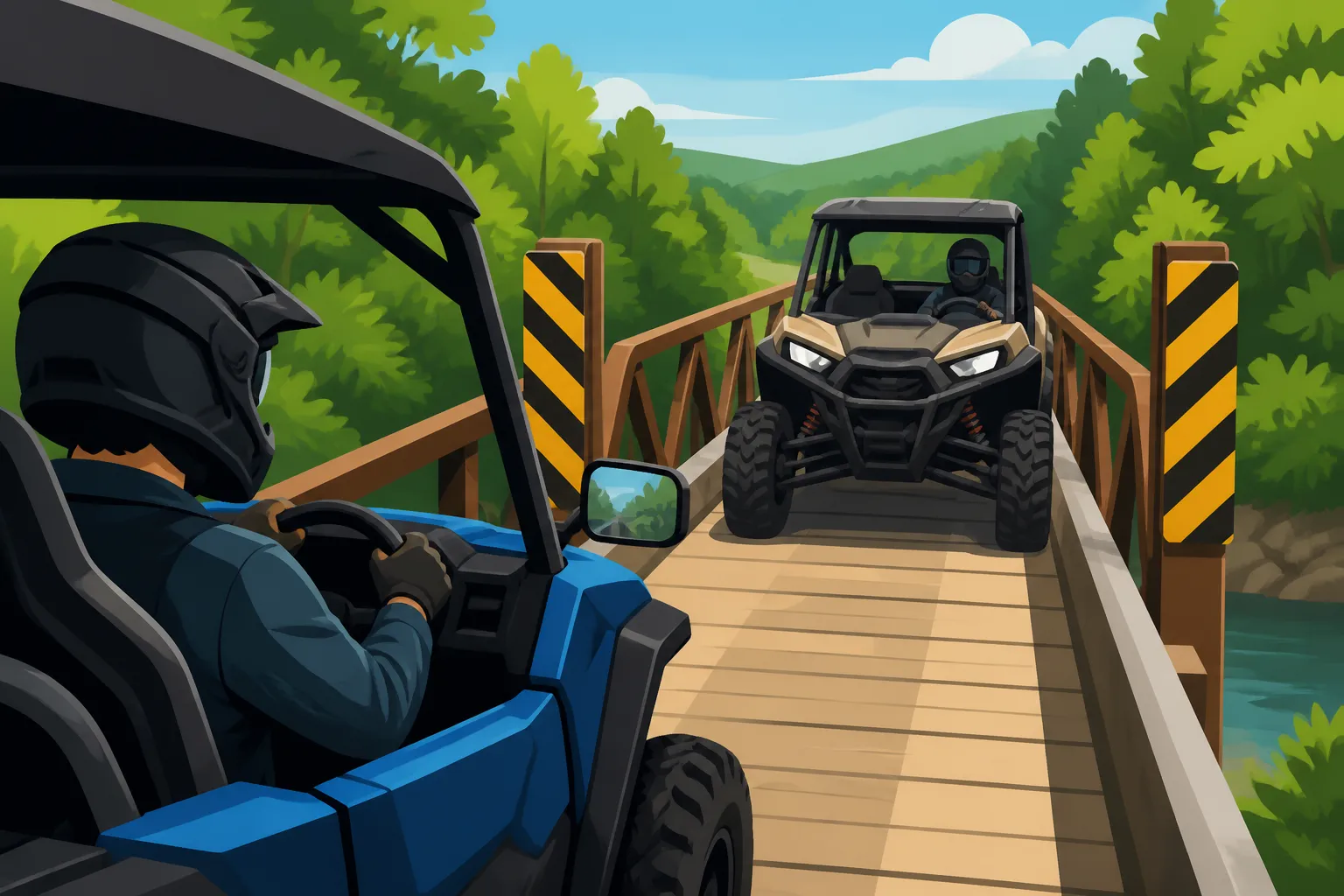
There's a unique blend of excitement and a touch of apprehension that comes with exploring the scenic, often rugged, backroads of Scott County on your ATV or UTV. These trails and rural connectors offer incredible beauty, but they also present some very real challenges. One of the most heart-stopping moments can be cresting a small rise or rounding a blind curve only to realize you're heading straight for a one-lane bridge, and there's another vehicle already on it or approaching from the other side. This guide is all about helping you navigate those specific, pulse-quickening encounters safely and confidently, so you can continue enjoying the unparalleled riding experience Tennessee offers.
The Reality of One-Lane Bridges in Scott County
Riding through Scott County, you’re often surrounded by a landscape that feels timeless. Deep hollers, winding creeks, and dense forests define the terrain, and the infrastructure often reflects this rugged, historic charm. One-lane bridges are a perfect example, an integral part of the experience that also requires respect and a keen sense of awareness.
Why They Exist and Where You'll Find Them
Many of these single-lane crossings are remnants of an earlier era, built to span the numerous creeks and small rivers that carve through the Appalachian foothills. They were designed for the traffic volumes and vehicle sizes of yesteryear, not necessarily the heavy-duty pickups and larger UTVs that traverse them today. You'll primarily encounter these bridges on the county's unpaved roads, gravel routes, and even some of the less-traveled paved secondary roads that connect smaller communities or provide access to remote properties. Think about those beautiful, tree-lined roads that lead you to a hidden swimming hole or a quiet picnic spot – chances are, there's a one-lane bridge or two along the way. They add to the adventure, for sure, but they also demand a heightened level of caution.
The Legal Framework for OHV Road Use in Scott County
It's important to remember that riding your OHV on public roads in Scott County, particularly those with one-lane bridges, comes with specific responsibilities under Tennessee law. Thanks to recent legislative changes, Scott County is part of what's now known as [Tennessee's Adventure Tourism Districts]. This designation allows for increased OHV access on designated county roads, a huge win for riders! Counties like [Scott, Anderson and Campbell Counties] have embraced this, opening up incredible opportunities to connect trails and explore more of the region.
However, this privilege comes with rules. You're typically limited to roads posted 45 mph or under, and you must operate your machine during [Daylight Hours Only Under Tennessee Law]. Understanding these overarching regulations is the first step in safely navigating any road-based challenge, including those tricky bridges. It's not just about what to do when you see another vehicle, but knowing you're legally supposed to be there in the first place, and equipped correctly.
Common Scenarios and the Inherent Risks
Imagine this: you're cruising along a beautiful, winding gravel road, dust kicking up behind your UTV, enjoying the fresh air. Suddenly, as you crest a small rise, there it is – a narrow, wooden-decked bridge – and just as you spot it, a local's beat-up pickup truck appears from the other side. Your heart jumps. This is a common scenario in Scott County.
The inherent risks are obvious:
- Limited Visibility: Curves, hills, and dense foliage often obscure your view until you're right on top of the bridge.
- Speed Discrepancies: A full-size truck might be moving much faster than your OHV, or vice versa, leading to misjudgment of approach times.
- Lack of Shoulders: Many of these bridges, and the roads leading to them, offer little to no shoulder for pulling off safely.
- Dust and Noise: Riding in a group or behind another vehicle can mean reduced visibility from dust, and engine noise can mask the sound of oncoming traffic.
- Vehicle Size: Your side-by-side might feel nimble on the trail, but it suddenly feels wide and cumbersome when faced with a head-on encounter on a bridge barely wide enough for one car.
These situations aren't just inconvenient; they can quickly become dangerous if not handled with care, courtesy, and a clear understanding of what to do.
Strategies for Safe Passage on Narrow Bridges
When you encounter a one-lane bridge, your immediate reaction can make all the difference. It's not just about reacting, though; it's about anticipating and having a plan.
Approach with Caution and Awareness
The best defense is a good offense, and on a one-lane bridge, that means slowing down and increasing your awareness long before you even see the bridge. As you ride through rural Scott County, always be scanning ahead. Look for signs of a bridge: guardrails, changes in road surface, or a sudden dip in the terrain could indicate a crossing. Listen for sounds of approaching vehicles – the rumble of a large truck or the whine of another OHV.
Here’s a practical approach:
- Reduce Speed Significantly: As soon as you suspect a bridge is ahead, ease off the throttle. Don't wait until you see it; start slowing down. This gives you more time to react and stop if necessary.
- Scan for Oncoming Traffic: Visually sweep the entire approach, not just the road directly in front of you. Look for headlights or dust clouds in the distance.
- Listen for Engine Noise: Turn down the music, or talk less in your intercom. Pay attention to the soundscape. The distinct roar of a logging truck or the hum of an approaching car can give you vital seconds of warning.
- Be Prepared to Stop: Have your foot hovering over the brake. If you spot traffic, you want to be able to stop smoothly and safely, giving yourself maximum room to maneuver.
Remember, these are often blind spots, especially on dirt and gravel roads. Assume there might be someone coming from the other side.
The Unwritten Rules of the Road
While there are explicit laws for [Tennessee Rules for Riding a County Road], rural areas often operate on a system of unwritten etiquette, especially on shared infrastructure like one-lane bridges. Understanding and respecting these customs can prevent misunderstandings and ensure smoother passage for everyone.
Generally, the rule of thumb is:
- First Come, First Served: The vehicle that reaches the bridge first, or is already on it, has the right-of-way. If you see someone approaching the bridge before you, or if they're already halfway across, it's your turn to yield.
- Big Yields to Small (Sometimes): While not a hard-and-fast rule, it's often a courtesy for larger vehicles, if they have an easier time pulling off, to let smaller, less maneuverable vehicles pass. However, as an OHV rider, you should generally expect to be the one yielding to full-size vehicles like trucks and cars, as they typically have less flexibility in pulling off the road.
- Communication is Key: A quick flash of your headlights can signal "I see you, I'm yielding." A friendly wave can confirm "Go ahead." Don't assume the other driver knows your intentions. Be clear and courteous.
When to Yield and How to Navigate
So, you've spotted an oncoming vehicle. Now what?
- Find a Safe Pull-Off: Look for the widest spot on the road leading up to the bridge, ideally before the bridge itself. This could be a small shoulder, a wider section of the road, or even a driveway entrance if you can pull in safely and temporarily without blocking it.
- Stop Completely: Don't just slow down; come to a full stop. This clearly communicates your intent to yield.
- Signal Your Intentions: A quick flash of your high beams or a simple hand wave can acknowledge the other driver.
- Wait Patiently: Let the other vehicle cross the bridge completely and pass you safely before you proceed.
- No Safe Pull-Off? If there's truly no room to pull off before the bridge, and you've already started across when you spot an approaching vehicle, the situation becomes trickier.
- If You're Closer to the End: Accelerate safely to clear the bridge quickly.
- If the Other Vehicle is Closer: It might be necessary to back up. This is challenging on an OHV, especially if you're pulling a trailer or in a group. Use your mirrors, proceed slowly, and if possible, have a passenger or another rider spot for you.
Always remember that safety is paramount. Getting home in one piece is more important than getting across a bridge first.
Equipping Your Machine for Better Visibility and Safety
While driver awareness is crucial, your machine's setup can significantly enhance your safety on shared roads, especially at bridges with limited visibility. Many of the accessories designed for off-road performance also offer major benefits for road use.
- Lighting Upgrades: Stock headlights and taillights are good, but brighter LED lights can make a huge difference, particularly on dusty or shadowed approaches to bridges. Consider adding auxiliary lights to the front, which not only illuminate the path better for you but also make your machine more visible to oncoming traffic. Companies like SuperATV offer a wide range of LED light bars and pod lights that are incredibly bright and durable, perfect for standing out on a rural road.
- Mirrors: Side mirrors are often required by law for [Tennessee Equipment Rules for Road Use] when operating on public roads, and for good reason. They give you a much better view of what's behind you, which is essential if you need to back up or simply want to keep an eye on your convoy. Wide-angle rearview mirrors can also be a game-changer.
- Horn: A loud, clear horn is a simple but effective communication tool. A quick, polite honk can alert an oncoming vehicle to your presence, especially if they're not paying attention.
- Winch: While not directly related to visibility, a winch is an invaluable piece of equipment for any off-road machine, and it can become a literal lifesaver if you find yourself in a sticky situation near a bridge – perhaps sliding off a muddy approach while trying to yield. SuperATV also provides robust winch options that are easy to integrate into most UTVs.
- Tire Choice: While many riders focus on aggressive mud tires, if you spend a lot of time on mixed terrain, consider tires that offer a good balance of grip on loose gravel and stability on hard-packed surfaces. This can improve your braking and maneuvering capabilities when approaching a bridge.
Think of these upgrades not just as enhancements, but as essential safety tools that help you mitigate the risks of sharing the road with other traffic, especially in challenging situations like one-lane bridges.
Legal Considerations and Best Practices for OHV Riders
Beyond the immediate challenges of navigating a bridge, there are broader legal and practical considerations that every OHV rider in Scott County should keep in mind.
Understanding Tennessee's Road Use Regulations
Tennessee's approach to OHV road use is progressive, but it's not a free-for-all. As mentioned, [Are UTVs Street Legal in Tennessee?] is a common question, and the answer is nuanced. While many county roads in designated areas like Scott County are open to OHVs, you must adhere to specific rules:
- Designated Roads Only: You can only ride on roads specifically designated by the county or state for OHV use. Don't assume all roads are open. Check local ordinances. [Tennessee Rules for Riding a County Road] provides more detail.
- Speed Limits: You generally cannot exceed 45 mph, and often must adhere to lower posted speed limits. [Tennessee's 45 mph Road Rule] is a key one.
- Daylight Hours: Riding is typically restricted to [Daylight Hours Only Under Tennessee Law]. This significantly reduces the risk on one-lane bridges, as visibility is at its peak.
- Driver's License: Operators must possess a valid driver's license.
- Insurance: Most states, including Tennessee, require liability insurance for vehicles operating on public roads. [Tennessee UTV Insurance Requirement] is critical.
- Helmets: While not always mandatory for adults off-road, [Tennessee Helmet Rules for Operator and Passengers] often apply when operating on public roads, especially for younger riders.
Ignoring these rules not only puts you at risk of fines (a [Tennessee Fines for Illegal UTV Road Use] can be a real buzzkill) but also contributes to negative perceptions of OHV riders, which could jeopardize future access.
Required Equipment for Road Use
To legally operate your ATV or UTV on a public road in Tennessee, even in an adventure tourism district, your machine needs to meet certain equipment standards. This isn't just bureaucratic red tape; these items are designed to make you safer and more visible to other road users, which is especially important on shared infrastructure like one-lane bridges.
Here’s a quick checklist of common requirements:
- Headlights and Taillights: Must be fully functional and properly aimed.
- Brake Lights: Essential for signaling your intentions to traffic behind you.
- Mirrors: At least one rearview mirror, typically on the left side, is a common requirement. Adding a second mirror, or even a panoramic rearview mirror, significantly improves situational awareness.
- Horn: A working horn is mandatory for signaling.
- Seatbelts: If your UTV is equipped with seatbelts from the factory, they must be worn.
- Spark Arrestor: While more for fire prevention off-road, it's generally a good practice to ensure your machine is equipped with one.
Always ensure your machine is up to snuff before heading out on public roads. A quick pre-ride check before you even leave your staging area can save you a lot of grief if you encounter [A Deputy at a Tennessee Roadside Stop].
The Importance of a Spotter or Lead Rider in Groups
If you're riding in a group, approaching a one-lane bridge requires even more coordination. It’s a great idea to designate a lead rider to approach the bridge cautiously.
Here’s how a group can handle it:
- Lead Rider Advances: The lead rider approaches the bridge slowly, scanning and listening.
- Signal Clear or Stop: If the bridge is clear, the lead rider can signal the rest of the group to proceed (e.g., a thumbs up or a specific hand signal). If there's oncoming traffic, the lead rider should stop before the bridge and signal the rest of the group to hold back.
- Staggered Crossing: If the bridge is long, or if you're crossing with multiple vehicles, consider having your group cross one or two at a time rather than all at once. This reduces the overall time your group is on the bridge and minimizes risk.
- Rear Guard: The last rider in the group should also be aware of any traffic approaching from behind, ensuring no one attempts to pass the group unsafely while it's traversing the bridge.
Good communication and a practiced system make these crossings much less stressful.
What to Do in Case of an Incident
Even with all the precautions, incidents can happen. Knowing what to do in the immediate aftermath can help ensure everyone's safety and streamline any necessary reporting.
- Prioritize Safety: First and foremost, check on everyone involved, including yourself and any passengers. If there are injuries, call for emergency medical services immediately (911).
- Secure the Scene: Move vehicles out of the flow of traffic if possible and safe to do so. Turn on hazard lights.
- Exchange Information: Get contact and insurance information from the other driver. Note their vehicle's make, model, license plate number, and any visible damage.
- Document Everything: Take photos or videos of the scene from multiple angles, showing vehicle positions, damage, road conditions, and any relevant signage.
- Do Not Admit Fault: Stick to the facts. Let the authorities and insurance companies determine fault.
- Report to Authorities: Even if it seems minor, it's often wise to report the incident to the local sheriff's department or Tennessee Highway Patrol, especially if there's any property damage or disagreement. This creates an official record.
- Contact Your Insurance: Notify your insurance provider as soon as possible.
Staying calm and methodical will help you manage a difficult situation effectively. Being prepared for these less-than-ideal scenarios is part of being a responsible OHV rider.
| Scenario for Approaching a One-Lane Bridge | Safe Approach | Risky Approach | Outcome of Safe Approach |
|---|---|---|---|
| Visibility | Slow down significantly before blind curves/crests. | Maintain speed until bridge is in full view. | Ample time to see traffic and react. |
| Oncoming Traffic Spotted | Stop completely, find a safe pull-off point before bridge. | Attempt to 'race' the other vehicle to the bridge. | Smooth, courteous passage for all. |
| No Pull-Off/Mid-Bridge | Yield to vehicle closer to bridge exit; back up if needed. | Insist on right-of-way, force a dangerous squeeze. | Avoids collision; possible minor inconvenience. |
| Group Riding | Lead rider signals; group crosses one or two at a time. | Entire group attempts to cross simultaneously. | Coordinated, safe passage for all riders. |
| Machine Equipment | Bright LEDs, functioning horn, mirrors checked. | Rely solely on stock, dim lights; no horn/mirrors. | Increased visibility, better communication. |
| Post-Encounter | Wave courteously; proceed when clear. | Glare or express frustration; rush off. | Positive interaction, good reputation. |
Disclaimer
This article is for general informational purposes only and does not constitute professional advice. Laws, prices and regulations vary by location and change over time. Consult a qualified professional for guidance on your specific situation.