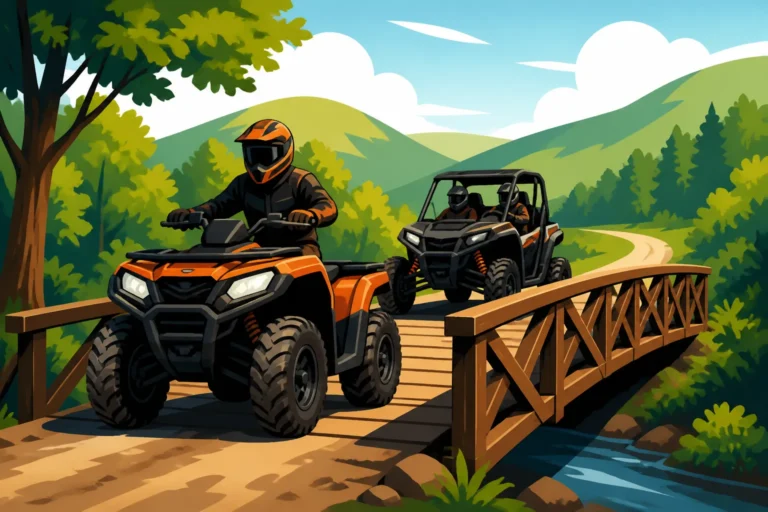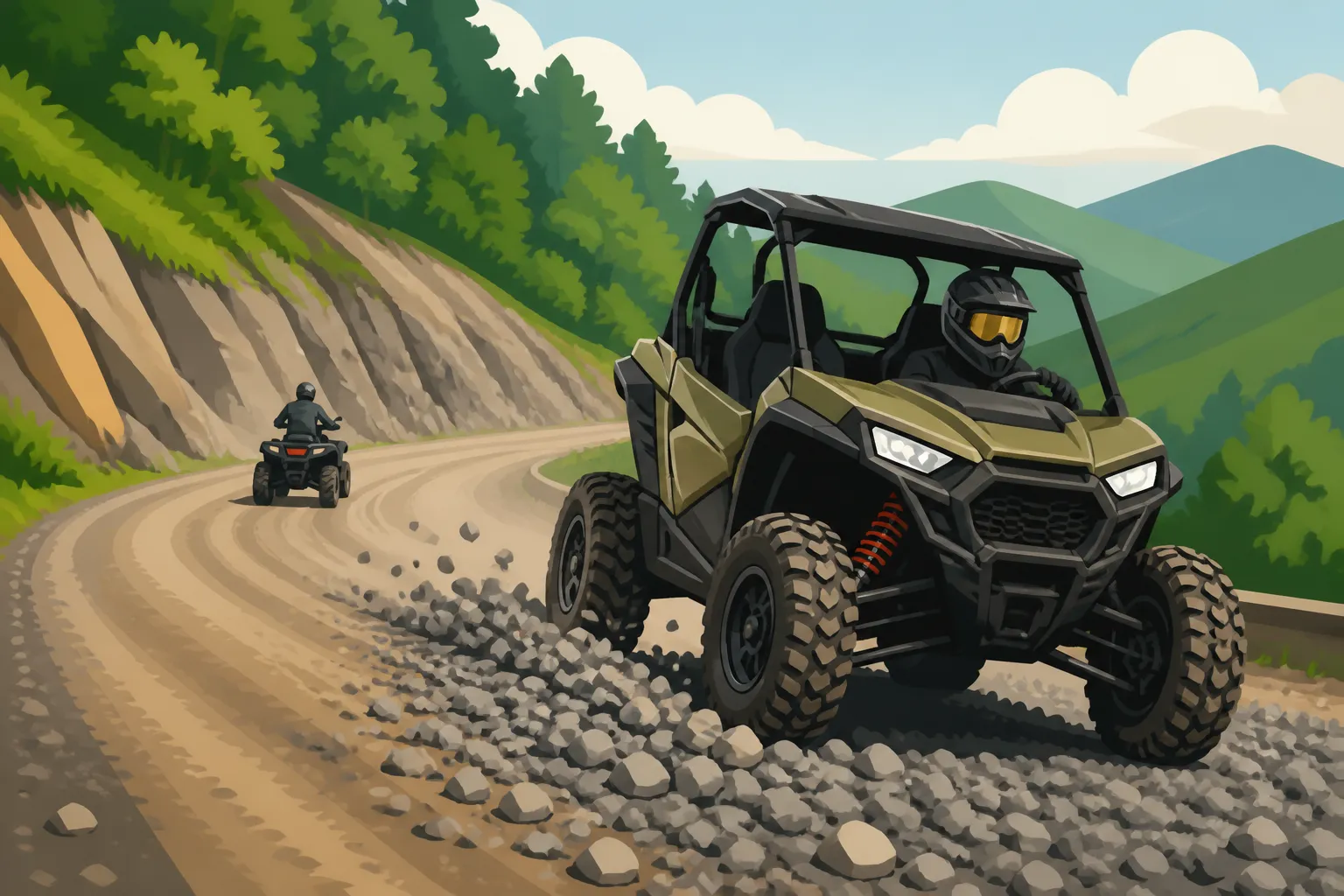
Gravel Washed Onto a Cumberland Road
There's nothing quite like the feeling of loading up your ATV or UTV and heading out to explore the stunning natural beauty of Tennessee. But for many of us, getting to those remote trailheads or simply navigating between properties means traversing stretches of unpaved, gravel, or even dirt roads. And if you've spent any time on these backroads, especially after a good rain, you know the sinking feeling of spotting where the recent downpour has dragged gravel right off the road, leaving behind a treacherous washout. This guide is here to walk you through the realities of riding on Tennessee's gravel roads, especially when they've been impacted by weather, and what you need to know to stay safe and legal.
The Reality of Tennessee's Unpaved and Gravel Roads for OHVs
Tennessee's landscape is diverse, from the rolling hills of Middle Tennessee to the rugged mountains of East Tennessee. This means a vast network of secondary roads, many of which are unpaved, gravel, or a mix of both. While these roads offer access to some incredible places, they also come with their own unique set of challenges for ATV and UTV riders. It’s not just about the loose gravel; it's about understanding how these roads are managed, what common hazards lurk, and the specific legal landscape for off-highway vehicles on them.
Understanding County Road Maintenance or Lack Thereof
Unlike the well-maintained state highways, many county roads, particularly the unpaved ones, might see less frequent attention from local maintenance crews. This isn't a knock on the hardworking folks in county road departments; it's simply a reality of limited budgets and vast areas to cover. A stretch of gravel road that was smooth last week might be pockmarked with potholes and ruts after a heavy rain or prolonged dry spell. You might encounter graders working, or freshly laid gravel that's exceptionally loose. Sometimes, sections that were once graveled are now mostly dirt and rock, especially on steeper inclines where material quickly washes away.
It means that conditions can change dramatically from one week to the next, and even from one mile marker to the next. What you experienced on a particular road last spring might be completely different in the fall. This variability is a key reason why riders need to approach these roads with a high degree of caution and never assume consistent conditions. It’s also important to remember that these roads aren't always designed for heavy off-road vehicle traffic, even if OHVs are legally allowed on them in certain areas.
Common Hazards Beyond Loose Gravel
While loose gravel is the most obvious challenge on these roads – reducing traction and increasing stopping distances – there are many other hazards to watch out for. After heavy rains, culverts can become clogged, leading to water overflowing the road, sometimes eroding the shoulders or creating new channels. You might encounter deep ruts from larger vehicles, especially in softer sections, which can easily catch a tire and throw your machine off course. Sometimes, debris like fallen branches, rocks, or even old tires can be pushed onto the road by water or other vehicles.
Dust is another significant issue, especially in dry conditions. On popular routes or those shared with agricultural vehicles or logging trucks, dust can severely limit visibility, making it dangerous to follow another vehicle or to encounter oncoming traffic. [Tennessee Rules for Riding a Gravel Road] discusses this in more detail. In remote areas, it’s not uncommon to find washouts that have completely undermined sections of the road, leaving gaping holes or extremely uneven surfaces. These aren’t just inconvenient; they can be genuinely dangerous, leading to rollovers or severe damage to your machine if hit at speed.
Legal Considerations for OHV Use on These Surfaces
Navigating Tennessee's unpaved roads isn't just about managing the terrain; it's also about understanding the law. While Tennessee has made strides in allowing OHV use on certain public roads, especially in designated adventure tourism districts, it's never a blanket permission. You might be allowed on some county roads but strictly prohibited from others. Local ordinances and state laws can vary, and it's your responsibility to know the rules for the specific area you're riding in. [Tennessee Rules for Riding a County Road] is a great resource here.
Generally, if a road is designated for OHV use, there will be specific requirements for your machine, such as working headlights, taillights, brake lights, mirrors, and often turn signals. Your machine may also need to meet certain width or weight restrictions, and you'll typically need to carry proof of insurance and have a valid driver's license if you're operating on a public road. Riders under a certain age may have additional restrictions or helmet requirements. Ignoring these rules, even on a remote gravel road, can lead to fines and other legal trouble.
Navigating Gravel Washouts and Erosion Safely
Gravel washouts and erosion are perhaps the most unpredictable and dangerous aspects of riding on unpaved roads, especially after heavy rains. They can appear suddenly, sometimes in places you've ridden a hundred times before, and catch even experienced riders off guard. Knowing how to spot them, assess their severity, and react appropriately is crucial for safety and minimizing damage to your machine.
Identifying and Assessing a Washout
The first step to safely navigating a washout is to spot it before you're right on top of it. Always ride at a speed that allows you to react to unexpected hazards, especially around blind corners, over crests, or after heavy rainfall. Look for tell-tale signs:
- Color changes: Freshly exposed dirt or rock that is a different color from the surrounding roadbed can indicate a recent wash.
- Water flow patterns: Even if dry, visible channels where water has recently flowed across or along the road are a red flag.
- Uneven tire tracks: If other vehicles have navigated the area, their tracks might show dips or swerves that indicate an obstacle.
- Debris: Mud, leaves, or small rocks scattered outside the normal road surface can suggest water has been rushing through.
Once you spot a potential washout, slow down significantly. If possible, stop completely and get off your machine to inspect it on foot. Don't be a hero; what looks like a minor dip from a distance can be a deep gully up close. Look for the depth, the angle of the banks, any hidden obstacles like rocks or roots, and the firmness of the remaining road surface. Is the ground soggy or stable? Are there any sharp edges that could damage your tires or suspension? A few minutes of assessment can save you hours of repairs or a costly recovery.
Techniques for Safe Passage or Avoidance
If you deem a washout passable, approach it slowly and deliberately. If it's a deep V-shape, try to cross it diagonally at a very low speed, allowing one wheel at a time to drop in and climb out, rather than both front wheels or both rear wheels hitting at once. This minimizes the chance of high-centering or a harsh impact. If the washout runs across the road, creating a deep trench, you might need to find the shallowest point. Sometimes, riders can use their machine's articulation to carefully "crawl" through. For many OHVs, especially those with good ground clearance, a careful, slow approach is often the best strategy.
Consider investing in suspension upgrades like those from SuperATV, which can provide additional travel and durability to help absorb impacts from unexpected terrain features. A heavy-duty skid plate from SuperATV is also a smart investment to protect your machine's underside from hidden rocks or exposed roots in deeper washouts. If a washout looks too deep, too steep, or too unstable, the safest option is always to turn around and find an alternate route. No ride is worth risking your safety or damaging your expensive machine. Sometimes, the path of least resistance is no path at all.
Equipment and Upgrades for Challenging Terrain
When you're frequently riding on unmaintained gravel roads prone to washouts, having the right equipment and modifications can make a huge difference.
| Equipment/Upgrade | Benefit |
|---|---|
| Heavy-Duty Tires | Better puncture resistance, improved traction on loose gravel and muddy sections. |
| Lift Kits/High Clearance | Increases ground clearance, reducing the risk of high-centering in deep ruts or washouts. |
| Skid Plates | Protects vital undercarriage components (engine, transmission, A-arms) from impacts. |
| Winches | Essential for self-recovery if stuck in a deep rut, mud, or a tricky washout. |
| Suspension Upgrades | Improves ride comfort, handling, and durability when traversing rough, uneven terrain. |
| LED Lighting | Better visibility for spotting hazards, especially in low light or dusty conditions. |
For instance, robust tires with aggressive treads will give you better grip on loose gravel and help you crawl out of muddy sections often associated with washouts. A lift kit, perhaps one designed by SuperATV, can give your UTV that extra inch or two of ground clearance, which can be the difference between clearing a washout and getting stuck. Don't forget a quality winch; even if you ride with a group, a self-recovery winch is invaluable when you're the first one to find a tricky spot. [Tennessee Equipment Rules for Road Use] outlines general requirements, but these are upgrades for performance and safety.
Pre-Ride Preparation and Post-Ride Care for Gravel Roads
Riding Tennessee's unpaved roads, particularly those with unpredictable conditions like washouts, demands more than just a spur-of-the-moment decision to hit the trails. Proper preparation before you even leave your driveway and diligent care after your ride can significantly enhance your safety, extend your machine's lifespan, and save you from frustrating breakdowns.
Checking Local Conditions and Forecasts
Before you load up your rig, make it a habit to check local weather forecasts for the area you plan to ride. Heavy rain, especially prolonged downpours, is the primary cause of gravel washouts and increased erosion. If recent heavy rain has occurred, expect road conditions to be significantly worse. Look for local reports, if available, or even call a local outfitter or county road department if you have specific concerns about a known route. While real-time updates are rare for every single gravel road, understanding the general conditions can help you make informed decisions about your route or even whether to ride at all.
Beyond the weather, consider the time of year. Spring thaw can make unpaved roads particularly soft and muddy, while late summer droughts can create extremely dusty conditions. During hunting season, you might encounter more truck traffic or even other OHVs, so being aware of potential dust clouds or unexpected stops is crucial. Being prepared for varying conditions, whether it's bringing extra water for a hot, dusty day or waterproof gear for a damp ride, goes a long way.
Essential Gear and Vehicle Checks
A thorough pre-ride inspection is non-negotiable when you're heading for rough gravel. Start with your tires: check the pressure and inspect for any cuts, bulges, or embedded objects. Ensure all lug nuts are tight. Next, check your fluids – oil, coolant, brake fluid – and inspect all hoses and lines for leaks or damage. Test your brakes, both front and rear. Verify that all your lights are working, including headlights, taillights, and brake lights; these are crucial for visibility, especially if dust is kicked up or you're out later than planned. [Tennessee UTV Road Requirements] will list the general necessities.
Beyond the machine, pack essential recovery gear: a shovel, tow strap, and a fully charged winch remote (if you have one). A basic tool kit, tire repair kit, and a small air compressor can get you out of a bind. Carry plenty of water, snacks, a first-aid kit, and a fully charged phone (though signal can be spotty in remote areas). It's also wise to have a physical map or a downloaded offline map on your device, as GPS can sometimes be unreliable. Don't forget your helmet, eye protection, and appropriate riding attire! [Tennessee Helmet Law for ATV Riders] is a critical read.
Maintaining Your Machine After a Rough Ride
After a challenging ride on gravel roads, especially one that involved washouts or mud, your machine needs some love. The first and most important step is a thorough cleaning. Mud, dirt, and gravel can hide in crevices, accelerating wear and corrosion. Pay special attention to your suspension components, brakes, and cooling system. A good power wash, or at least a thorough rinse, is a great start. Once clean, inspect everything again. Look for:
- Loose bolts or nuts: The constant vibration and impacts can loosen fasteners.
- Damaged suspension components: Check A-arms, shocks, bushings, and tie rods for bends, cracks, or excessive play.
- Brake wear: Gravel can accelerate pad wear and get lodged in calipers.
- Tire damage: Re-inspect for punctures, cuts, or uneven wear.
- Prop shaft and CV boot integrity: Mud and debris can tear boots, leading to expensive CV joint failure.
Lubricate moving parts, check fluid levels, and perform any necessary maintenance indicated by your machine's service schedule. This proactive approach not only helps prevent future breakdowns but also allows you to catch minor issues before they become major, costly problems. Think of it as preventative medicine for your OHV, ensuring it's ready for the next adventure on Tennessee's ever-changing roads.
The Broader Legal Framework for OHV Road Use in Tennessee
Riding on gravel roads in Tennessee isn't just about managing the physical terrain; it's also about understanding and adhering to the state's ever-evolving laws regarding OHV road use. What might seem like a secluded, forgotten path is still a public thoroughfare, and that means rules apply. Ignoring these rules, even on a road where [Gravel Washed Onto a Cumberland Road] has created hazards, can lead to unpleasant encounters with law enforcement.
General Rules for Designated Road Use
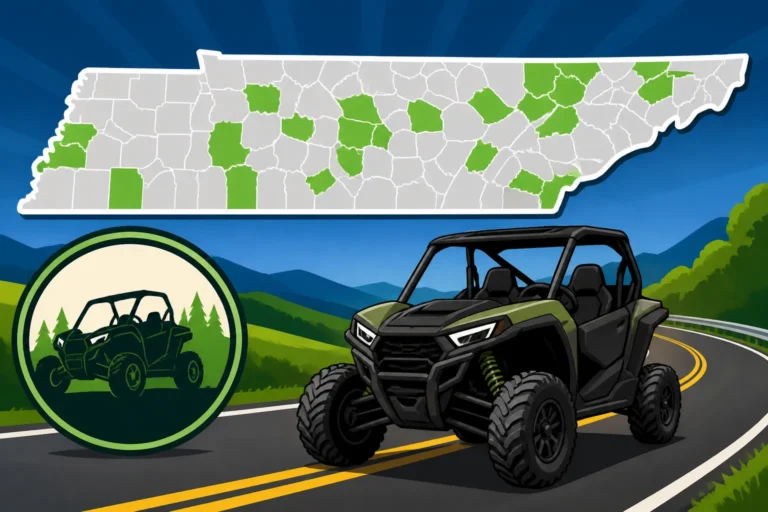
Tennessee has specific regulations governing where and how ATVs and UTVs can be operated on public roads. Generally, OHVs are not street-legal for widespread use on all public roads across the state. However, the law does provide for their use on certain designated county roads, particularly within the state's "adventure tourism districts." These districts, found mostly in East Tennessee counties known for their rugged terrain and trail systems, have the authority to open specific roads, often unpaved or gravel, for OHV use. [Tennessee Counties That Allow UTVs on Roads] provides a good overview.
Even on these designated roads, there are usually conditions. For instance, many designated roads are limited to daylight hours only. Speed limits are typically low, often 35 mph or less, regardless of the posted vehicle speed limit for cars. OHVs must be equipped with essential safety features like headlights, taillights, brake lights, mirrors, and often turn signals, making sure your machine is up to par before hitting the pavement or gravel. [Tennessee Rules for Riding a Road Posted 45 mph or Under] outlines more specifics. It's crucial to consult the county clerk's office or sheriff's department in your specific riding area to verify which roads are open and what the local restrictions are.
Insurance, Helmets, and Other Critical Requirements
Beyond the machine's equipment, Tennessee law places requirements on the operator and the vehicle's registration status when riding on public roads. You absolutely must have liability insurance. Just like driving a car, operating an OHV on a public road, even a gravel county road, without proof of insurance is illegal and can result in significant fines. Always carry your insurance card with you, as a deputy will ask for it. [Tennessee UTV Insurance Requirement] is not something to overlook.
Helmets are another critical safety and legal consideration. While Tennessee's helmet laws for OHVs off-road have nuances, on public roads, the rules are clearer. Operators and passengers under 18 years of age are generally required to wear a helmet. However, some jurisdictions or specific road designations may extend this requirement to all riders, regardless of age. Always err on the side of caution and wear a DOT-approved helmet. [Tennessee Helmet Law for ATV Riders] is explicit on this. Furthermore, the operator of the OHV on a public road must possess a valid driver's license.
What to Expect from Law Enforcement
Law enforcement officers, whether from the county sheriff's office, state patrol, or wildlife resources agency, are responsible for enforcing these rules. They are often very familiar with the local roads and the patterns of OHV use. If you are operating an OHV on a public road, you should expect to be treated like any other motorist. [What a Tennessee Deputy Checks Roadside] typically includes your driver's license, proof of insurance, and checking your machine's equipment for compliance.
If you're stopped, be polite, cooperative, and have your documents readily available. Do not argue about whether a road is "really" public or not; that's a discussion for another time. If you're on a road that is not designated for OHV use, or if your machine lacks required equipment, or if you don't have insurance, you could face citations and fines. These fines can range from minor civil penalties to more serious misdemeanor charges, depending on the infraction and the specific county. Understanding and respecting these laws protects not only you but also ensures the continued privilege of legal OHV access on public roads in Tennessee. [Tennessee Fines for Illegal UTV Road Use] can be quite steep, so it pays to be prepared and compliant.
Disclaimer
This article is for general informational purposes only and does not constitute professional advice. Laws, prices and regulations vary by location and change over time. Consult a qualified professional for guidance on your specific situation.