Tennessee Minimum Age to Ride a Road
It’s a common scenario across Tennessee: you've got an ATV or a UTV, maybe your teenager is itching to get behind the wheel, and you’re wondering exactly when and where they can legally operate it, especially on public roads. The confusion is real, and the rules aren't always crystal clear, leaving many folks scratching their heads about age limits and what's permissible. This guide is here to untangle the complexities of Tennessee's laws regarding the minimum age for riding ATVs and UTVs on public roadways, ensuring you and your family can ride safely and legally.
The Sixteen-Year-Old Threshold for Tennessee Roads
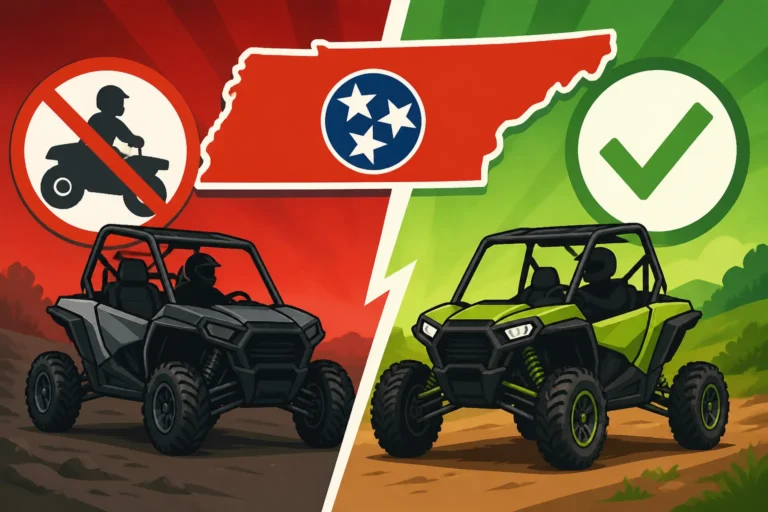
Let's get straight to the heart of the matter: in Tennessee, if you plan to operate an ATV or a UTV on any public road where it's legally permitted, the operator must be at least 16 years old. This isn't just an arbitrary number; it's directly linked to the requirement of holding a valid driver's license. Unlike riding on private property or designated off-road trails, navigating public roads comes with a whole new set of responsibilities and legal prerequisites.
Why Tennessee Sets 16 as the Road Minimum
The age of 16 for road operation aligns with Tennessee's general motor vehicle laws. To operate any motor vehicle on a public road, you need a driver's license, and 16 is the minimum age to obtain a standard Class D license in the state (after holding a learner permit for a certain period). OHVs, when used on roads, are treated much like other vehicles in this respect. The legislature understands that public roads involve interaction with cars, trucks, and other traffic, demanding a certain level of maturity, knowledge of traffic laws, and driving experience that typically comes with being licensed. It’s about ensuring everyone's safety, not just the ATV or UTV rider. If your child is under 16, even if they are an expert rider on the trails, they simply cannot legally operate an ATV or UTV on a public road. This is a hard and fast rule that local law enforcement takes very seriously.
Think about it: a 15-year-old, no matter how skilled they are on a trail system like Windrock, isn't legally allowed to drive a car on a state highway, and the same logic applies to an ATV or UTV on designated county roads. The dangers of mixing an unlicensed, underage operator with other traffic are too great. The state wants to ensure that anyone operating an off-highway vehicle on a public thoroughfare possesses the necessary driving skills, road awareness, and understanding of traffic laws that come with a driver's license. This applies whether you're just crossing a short stretch of pavement or riding on a designated route within an adventure tourism district.
Operator Age and Driver's License
For anyone 16 or older wanting to ride their ATV or UTV on a legal Tennessee road, a valid driver's license is non-negotiable. This means not just a permit, but a full, unrestricted Class D driver's license. The moment you pull onto a public road, even a gravel county road, you're expected to comply with standard traffic laws, and showing proof of a valid license is one of the first things a deputy or state trooper will ask for during a roadside stop. [Tennessee Driver's License Rules for UTVs] are clear on this point: the UTV operator needs to be licensed.
This is critical because an ATV or UTV, even one equipped with all the SuperATV accessories to make it technically road-legal, isn't considered a toy once it hits the asphalt or gravel. It's a vehicle, subject to vehicle laws. So, if your 16-year-old has just gotten their license, they are now legally able to operate a road-approved OHV where permissible. However, if they only have a learner's permit, they are still not legally allowed to operate an ATV or UTV on a public road without a licensed adult in the passenger seat (if it's a UTV) or direct supervision, just like with a car, and even then, specific OHV road use rules might add more restrictions. Always carry your license with you when riding on public roads; it's not just a good idea, it's a legal requirement.
Beyond the Operator: Passengers, Exemptions, and Crossing Roads
While the 16-year-old minimum for operators on roads is clear, other age-related nuances exist, especially concerning passengers, specific types of road use, and agricultural exemptions. It's vital to understand these distinctions to avoid fines or accidents.
Passenger Age Considerations
Tennessee law doesn't explicitly state a minimum age for passengers on ATVs or UTVs when riding on roads, but common sense and safety regulations should guide your decisions. The primary concern is ensuring the passenger can safely reach and use handholds, keep their feet on the floorboards, and be properly secured by a seatbelt or other restraint system. Many manufacturers recommend specific age or size limits for passengers in their machines, and these guidelines are excellent starting points. For a child, even if the operator is 16 or older and licensed, if they can't sit properly and safely use the vehicle's restraints, they shouldn't be a passenger on a public road.
Beyond physical capabilities, consider the environment. Public roads mean other vehicles, potentially higher speeds, and unexpected situations. A very young child might be easily startled or distracted, making them a less safe passenger on a public road compared to a controlled trail environment. While there's no legal age mandate for passengers, the operator is responsible for their passenger's safety. Some parks or private facilities may have their own internal age rules for passengers, but for public road use, it falls largely on the operator's judgment and the vehicle's design. This is a point where accessories like safety harnesses, often available from companies like SuperATV, can make a difference in securing younger passengers more effectively, but they don't override the need for proper fit and maturity.
Agricultural and Emergency Exemptions
Tennessee law does provide certain exemptions for the use of ATVs and UTVs on public roads, primarily for agricultural, utility, or emergency purposes. However, these exemptions typically relate to what the vehicle is being used for, not who is operating it. Even if an ATV or UTV is being used for legitimate farm work – say, moving tools from one field to another across a county road – the operator still generally needs to meet the minimum age and licensing requirements for road use. [Tennessee Rules for Agricultural Road Use] specify that these machines can be used for farm-related tasks on roads, but they don't waive the driver's license requirement.
The intent of these exemptions is to facilitate necessary work, not to bypass safety regulations. For instance, a farmer's 14-year-old son might be perfectly capable of driving an ATV to haul feed across a field on private property. But if that task requires crossing a public road, even a brief crossing, the 14-year-old is still too young to legally operate the machine on that public road. The age limit for public road operation remains a steadfast rule, regardless of the purpose, unless very specific and narrow emergency circumstances arise, which are rare and highly situational.
Crossing Roads vs. Sustained Road Use
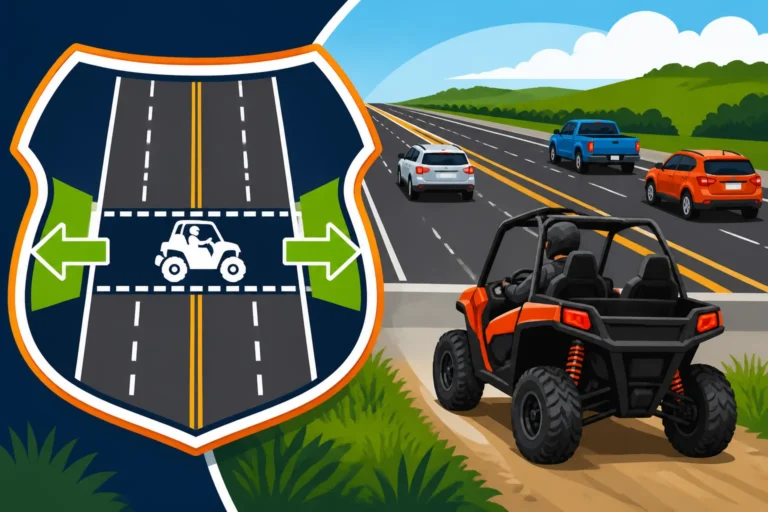
A common area of confusion is the distinction between briefly crossing a public road and engaging in sustained travel on it. While Tennessee has progressively opened up more roads for OHV use, especially in [Tennessee's Adventure Tourism Districts], the rules around crossing remain strict. Generally, an ATV or UTV may cross a two-lane highway at a ninety-degree angle to the flow of traffic, after yielding to all oncoming traffic. For multi-lane highways, crossings are usually only permitted where designated by the Tennessee Department of Transportation (TDOT).
Crucially, even for these brief crossings, the operator must meet the 16-year-old minimum and possess a valid driver's license. There isn't a "junior" exemption for just crossing a road. The potential for a collision, even during a quick crossing, is still significant, and the state maintains that only licensed, adult operators should attempt this maneuver. So, whether you're planning a long ride on a designated county road or just a quick dart across a paved section to get to another trail, the person at the controls needs to be at least 16 with a driver's license. [Tennessee Rules for Crossing a Highway] clearly outlines these requirements.
Beyond Age: Other Road-Use Essentials
Meeting the minimum age is just one piece of the puzzle when it comes to riding ATVs and UTVs on Tennessee roads. There are several other critical requirements that operators must adhere to, many of which are directly tied to safety and the operator's responsibility, regardless of age once they hit 16.
Helmets and Youth Riders
While Tennessee has specific helmet laws for motorcycle riders, OHV road use falls under a slightly different framework. For anyone operating or riding as a passenger on an ATV or UTV on a public road, a helmet is generally required for those under the age of 18. This is a crucial safety measure aimed at protecting younger riders, even if they meet the 16-year-old operator requirement. So, if your 16-year-old is legally driving their UTV on a county road, they still need to wear a helmet. [Tennessee Helmet Law for ATV Riders] makes this clear.
Even if you're over 18, wearing a helmet is always a smart choice, providing an extra layer of protection against unexpected bumps or falls, especially on unfamiliar road surfaces or when interacting with other traffic. While SuperATV offers a range of protective gear, including helmets, it's essential to ensure any helmet worn meets appropriate safety standards (like DOT certification). Never compromise on head protection, especially when sharing roads with other vehicles.
Licensing, Insurance, and Vehicle Equipment for Road Use
As established, a valid driver's license is paramount for any 16-year-old or older operating an OHV on a public road. But that's not all. You'll also need to consider insurance and ensure your vehicle is properly equipped. [Tennessee UTV Insurance Requirement] mandates liability insurance for UTVs that are being operated on public roads, just like any other motor vehicle. This protects you in case of an accident.
Beyond personal documentation and insurance, the ATV or UTV itself must meet certain equipment requirements to be considered road-legal. While these can vary by local ordinance and the type of road, common requirements include headlights, taillights, brake lights, turn signals, a horn, a rearview mirror, and sometimes a windshield. Many riders turn to aftermarket suppliers like SuperATV for these kinds of accessories, ensuring their machine is up to code before venturing onto public roads. Remember, simply being 16 with a license isn't enough if your machine isn't properly equipped for road use. A deputy checking your vehicle roadside will look for these items. [Tennessee UTV Road Requirements] are extensive, so ensure your machine is fully compliant.
Understanding Local Ordinances and Adventure Tourism Districts
Tennessee's approach to allowing ATVs and UTVs on roads is often hyper-local, with counties and municipalities having the authority to designate which roads are open and which are closed. This is particularly relevant in areas designated as [Tennessee's Adventure Tourism Districts], such as parts of Scott, Anderson, and Campbell counties. Even within these districts, there are specific lists of open roads, and you can't just assume every road is fair game.
While these designations open up more opportunities for riders, they do not waive the age and licensing requirements. A 16-year-old with a driver's license can enjoy these designated routes, but their younger siblings or unlicensed friends cannot. It's the operator's responsibility to know the specific local rules, the designated road lists, and of course, ensure they meet all personal and vehicle requirements. Ignoring these rules, even unknowingly, can lead to a [A Class C Misdemeanor in Tennessee] and substantial fines. Always check the local county clerk's office or the sheriff's department website for the most current information on road designations before you ride.
Table: Tennessee OHV Road Use Age & Requirements Overview
To help clarify the various age-related rules for ATVs and UTVs in Tennessee, here's a quick overview:
| Scenario | Minimum Age for Operator | Driver's License Required? | Helmet Required (Under 18)? | Insurance Required? | Key Considerations |
|---|---|---|---|---|---|
| Operating on Public Roadways | 16 | Yes (Class D) | Yes | Yes (Liability for UTVs) | Must meet all road-legal equipment standards, follow traffic laws. |
| Briefly Crossing a Public Road | 16 | Yes (Class D) | Yes | Yes (Liability for UTVs) | Must cross at 90-degrees, yield to traffic, only where permitted. |
| Operating on Private Property/Trails | No State Minimum | No | Recommended (often required by parks) | Recommended | Landowner permission, park rules may set minimums. |
| Passenger on Public Roadways | No State Minimum | N/A | Yes (if under 18) | N/A | Must be able to sit securely, use restraints; operator's responsibility. |
| Agricultural Use on Public Roadways | 16 | Yes (Class D) | Yes | Yes (Liability for UTVs) | Purpose-specific use, still subject to road rules. |
This table provides a snapshot, but always remember that laws can be nuanced. Staying informed and compliant means a safer, more enjoyable riding experience for everyone in Tennessee.
Disclaimer
This article is for general informational purposes only and does not constitute professional advice. Laws, prices and regulations vary by location and change over time. Consult a qualified professional for guidance on your specific situation.