Eagle Rock Resort and Campground
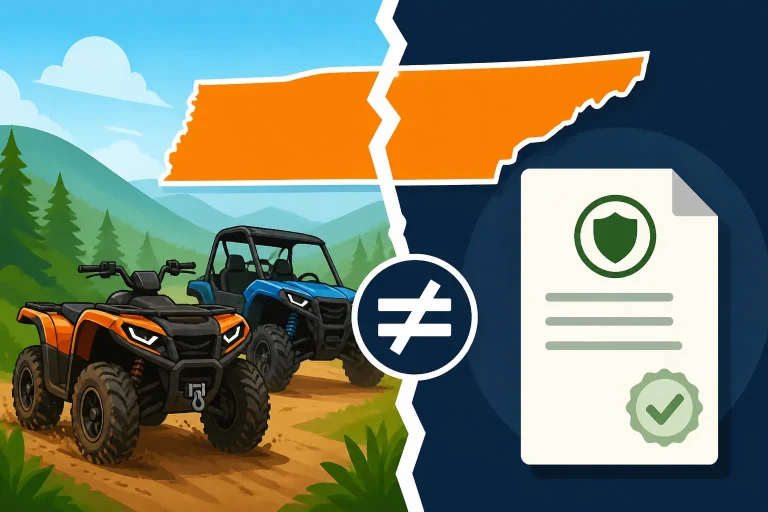
Eagle Rock Resort and Campground can make a Tennessee ATV or UTV trip easier by combining a place to stay with access to riding nearby. The important detail is that lodging, machine rental, trail access, and permits may come from different businesses. Confirm how each part works before you book, especially whether a rental is actually available at the property.
What to Confirm About Eagle Rock Resort and Campground
A campground with “resort” in its name can sound like a complete riding package, but that does not necessarily mean it rents ATVs or UTVs, sells trail permits, or sits directly on a rideable trail. These are separate services, and availability can change. Treat the property first as a lodging option, then check exactly what riding arrangements it offers.
Start with the basics: the property’s current accommodation types, the dates it can host your group, and the route from the lodging to the trails you intend to ride. Ask whether the access route is paved, whether you need to trailer your machine, and where you can park a truck and trailer. If you plan to ride a rental, ask where pickup takes place and whether the outfitter allows the machine to be transported to the campground.
Do not assume that a trail visible on a map is open, legal, or accessible from the campground. A private driveway, forest road, coal road, and public road can look similar on a map while having very different access rules. Get clear directions from the property and the trail operator, and confirm that any route between them is legal for the machine you will use.
If you are considering the area as a base for Windrock, verify the current drive time and the permitted route with both the campground and the riding operation. A nearby lodging address does not by itself grant access to Windrock’s land or trails. Check the current details for Windrock’s Trail Permits and Windrock’s Daily and Annual Permits before relying on a particular ride plan.
Before you reserve, ask the property these questions:
- Which lodging options are available for your dates, and what is included?
- Is there space for your truck, trailer, and any extra vehicle?
- Can guests bring their own ATV or UTV, and where may they unload and park it?
- Are there rules about washing a muddy machine, parking it overnight, or storing fuel?
- Does the property offer rentals itself, or does it refer guests to an independent outfitter?
- If it refers you elsewhere, where is rental pickup, and can the machine be taken to the property?
- Are there quiet hours, gate procedures, or other rules that could affect an early start or late return?
- What is the cancellation policy if severe weather, a trail closure, or a mechanical issue changes the trip?
Ask for important details in writing, particularly what is included in a reservation and what costs extra. Lodging descriptions can use terms such as “trail access” or “near trails” in different ways. Clarify whether that means direct legal access, a short drive to a staging area, or simply a location within the broader riding region.
Renting an ATV or UTV for a Stay
Do not book a room on the assumption that the campground also has a rental fleet. Confirm directly whether rentals are operated on-site, arranged through a partner, or available only from a separate business. If the property does not rent machines, ask whether it can recommend a nearby operator, but verify availability and terms with that operator rather than relying on an informal referral.
For an overview of rental choices in the region, see Tennessee Rentals Near Windrock. When comparing options, focus less on the machine’s name and more on the practical fit: passenger capacity, cargo space, ground clearance, safety equipment, and the terrain the operator permits you to ride. A UTV with seats for your whole group may be more convenient than several smaller machines, but it also requires every rider to follow the operator’s passenger and seat-belt rules.
A rental package can include different things. One operator may provide a machine and required safety equipment, while another may charge separately for items, trail permits, fuel, or optional coverage. Ask for an itemized explanation before paying or signing. If you are not sure which questions matter, What a Tennessee UTV Rental Includes and Tennessee Rental Insurance and Waivers are useful starting points.
Check where you are allowed to ride
A rental does not automatically come with permission to ride every trail nearby. Ask the rental company which properties and trails the machine may be used on, whether the permit is included, and whether the operator expects you to collect the machine at a designated location. A permit for one park should not be assumed to work at another. Review Why One Park’s Permit Is Worthless at the Next before building a multi-park route.
If the rental is advertised through a booking platform, confirm the actual operator and the pickup location. Platforms such as Viator can help travelers find guided activities, but the listing should be checked for the specific route, ride duration, included equipment, permit responsibility, passenger limits, and cancellation terms. A listing that uses broad regional wording may not mean the activity begins at Eagle Rock Resort and Campground.
For a guided ride, ask whether the guide leads the entire trip or meets you at a trailhead, how many machines the guide can manage, and what happens if a rider has little experience. If you want an independent ride, make sure the operator allows it. Do not assume you can leave a rental at the campground, drive it on public roads, or use it on an unlisted trail.
Understand the rental handoff
Rental arrangements often require more than showing up at the appointed time. Ask what identification and driving credentials the operator requires, which adult must sign, and whether every passenger must be present for a waiver or safety briefing. For a family trip, confirm the minimum age for drivers and passengers before reserving. Requirements can differ between operators and vehicles.
Ask how the rental company handles the deposit or card hold, fuel, cleaning, damage, recovery, and late returns. These terms can matter more than the advertised rental duration if your group gets delayed on a trail or returns a muddy machine. Photograph the ATV or UTV at pickup, including existing scratches and any damage, and report concerns before leaving the lot. Read the written damage terms rather than assuming that a waiver covers every situation.
If you are hiring a guide as well as a machine, find out what the guide’s fee covers. It may cover guidance only, while the rental, permit, and gear remain separate. A useful comparison is Tennessee Guided UTV Tours, especially if your group wants someone else to choose a route and manage navigation.
Trail Access, Permits, and Road Use
The word “access” can mean several different things on an ATV trip. It may mean access to a campground, a trailhead, a private riding area, or a specific trail system. Those are not interchangeable. Confirm which land you will ride, who controls it, and what permit or permission is required before you unload a machine.
For a Windrock ride, check the current permit requirements with Windrock and establish whether the rental company or each rider is responsible for obtaining the permit. If you are riding somewhere else, check that property’s rules separately. State, park, private-land, and campground requirements can all apply to different parts of the same trip. Tennessee Trail Permits Explained outlines why riders should verify the permit for the actual riding area rather than assume one statewide sticker covers everything.
If you bring your own machine, ask the campground about parking, unloading, and storage, then check the trail operator’s access rules. A machine’s title or registration paperwork does not replace a trail permit. Likewise, a trail permit does not authorize riding on a nearby public road. For a straightforward overview of why title paperwork and riding permission are different, see Why Tennessee Does Not Register Off-Road Machines.
Do not plan to ride from the property to a trail system along a public road unless you have confirmed that the specific machine and route are legal. Tennessee road-use rules depend on the type of machine, the road, and the circumstances. Some riders may be allowed to use particular roads under specific conditions; that is not a general permission to connect trails by riding on any road. Start with Are UTVs Street Legal in Tennessee? and check the rules that apply to your exact route.
A route may also cross private property or a road controlled by a landowner. A trail appearing online is not proof that the public may use it. Get written permission where required, stay on marked routes, and obey gates and closure notices. If the campground or outfitter describes a route as “access,” ask who authorizes it and whether the permission applies to your machine and the dates of your visit.
Before loading or leaving the campground, make a simple access checklist:
- Identify the riding property and its official entrance or staging area.
- Confirm whether the route from your lodging to the entrance is legal for your machine.
- Check current operating hours, closures, permit rules, and any seasonal restrictions.
- Confirm the permit is valid for each person or vehicle as required by the operator.
- Save the address and directions for the actual staging area, not just the campground.
- Carry the required documents and follow the operator’s rules for helmets, passengers, and equipment.
Conditions can change after a reservation is made. Heavy rain, maintenance, special events, or a temporary closure can affect a planned ride. Check the trail operator’s current notices shortly before travel, and have a backup activity that does not depend on trail access. A lodging booking does not guarantee that a particular trail will be open.
Planning the Stay Around the Ride
A practical itinerary depends on whether you are bringing your own machine, renting one, or booking a guided tour. Each option changes the timing, transport, and amount of equipment you need to bring.
| Trip setup | What to confirm first | Main planning concern |
|---|---|---|
| Bring your own ATV or UTV | Trailer parking, unloading, overnight storage, and trail permits | Getting the machine to a legal staging area |
| Rent from a separate outfitter | Pickup location, allowed riding area, permit, and return time | Coordinating the rental schedule with lodging |
| Book a guided tour | Meeting point, group size, included gear, and cancellation terms | Arriving on time with every participant ready |
| Stay without riding your own machine | Nearby activities and transport options | Not assuming the campground provides a shuttle or rental |
For a one-day ride, keep the plan simple. Arrive with enough time to check in, complete rental paperwork, collect gear, and reach the permitted riding area. Do not schedule a tight checkout or meal reservation immediately after the ride. A slow return, a flat tire, or a trail delay can make a fixed timetable difficult.
For a multi-day stay, decide whether you want to repeat one trail system or travel to different riding areas. Different parks or properties may have separate permit systems, operating rules, and staging locations. Moving between them can take more time than expected, especially if you need to return a rental before changing locations. Check Carrying Three Permits for Three Parks if your itinerary includes more than one operator.
If you are bringing a trailer, think through the full parking sequence before arrival. Ask whether the campground has room for the tow vehicle and trailer together, whether the site requires backing into a tight space, and whether you can leave the trailer there while riding. A lodging site that fits a regular vehicle may not comfortably fit a long truck-and-trailer combination. If the property cannot accommodate your setup, find out whether there is a separate staging lot and whether overnight parking is allowed there.
Pack for the riding conditions rather than the campground’s name or the season alone. A warm afternoon does not rule out a cool start, and a dry forecast does not guarantee that every trail is dry. Bring riding clothes that can get dirty, eye protection, gloves, sturdy footwear, water, and any required protective gear. If the rental provides helmets or other equipment, confirm the sizes and condition in advance. For machine-specific packing considerations, see Tennessee Rentals That Include Safety Gear.
Keep the lodging and riding schedules aligned. If the rental company requires a fixed pickup time, check whether the campground’s arrival process gives you enough time to reach it. If the campground has a gate or check-in hours, ask what to do if you arrive late. On the final day, confirm whether you must return the machine before checkout and whether you have somewhere to store luggage while riding.
A good plan also accounts for people who are not riding. Ask whether the campground has activities or facilities that suit non-riders, but verify which are open and included rather than relying on old photos or listings. If your group includes children, older adults, or riders with little experience, agree on a pace and ride length before leaving. A trail can feel much longer when everyone is tired, wet, or unfamiliar with the machine.
Booking Carefully and Avoiding Common Problems
The simplest way to avoid a disappointing trip is to treat lodging, rental, trail access, and transportation as four separate bookings until someone confirms they are bundled. Get the details from the provider responsible for each service. A campground cannot necessarily promise that an independent rental company has machines available, and a rental company may not control campground policies or trail closures.
Before paying, compare the full trip cost rather than the room or machine rate alone. Depending on the arrangement, the total can include lodging, a rental, permits, required gear, fuel, taxes, a security hold, optional protection, cleaning, and transport. Providers set their own current charges and policies, so ask for the complete terms directly instead of relying on an old listing or a third-party summary.
Read cancellation terms separately for each part of the trip. The campground may have one policy, the outfitter another, and a tour platform a third. Ask what happens if the trail closes, rain makes the ride unsuitable, a machine becomes unavailable, or a participant cannot ride. Find out whether changes lead to a refund, a reschedule, or a credit, and note the deadline for contacting each business.
Pay particular attention to the words used in descriptions:
- “Near trails” may describe the region, not direct access.
- “Trail access” may refer to a particular route or entrance, not every nearby trail system.
- “Rental available” may mean an independent operator is nearby, not that a machine is included.
- “Guided” may describe the ride, but not necessarily the drive from your lodging to the meeting point.
- “Permit included” should identify the exact riding property and who receives the permit.
Save reservation confirmations, directions, contact numbers, waiver information, and permit instructions where you can reach them without a strong mobile signal. Cell service can vary in rural and mountainous areas. Download maps or directions before leaving a town with reliable service, and tell someone your expected return time. For broader trip preparation, Tennessee Trail Conditions Before You Ride and Tennessee Trail Closures to Check First can help you build a last-minute trail check into your plans.
If a machine develops a problem, follow the rental operator’s instructions rather than attempting an unsafe repair or leaving the vehicle on a trail. Ask before the ride how to report a breakdown and how recovery is handled. Save the operator’s number and find out whether its recovery service covers the trails you plan to use. Carry only the tools and supplies the operator allows, and do not take a rental beyond its approved area.
Finally, be realistic about how much riding fits into a day. Rental pickup, waivers, gear checks, travel to the trailhead, lunch, and the return process all use time. A shorter ride that ends comfortably before dark is generally easier to manage than a route that depends on perfect timing. If the group is new to the area, a guided outing or a clearly marked, moderate route may be a better first day than trying to cover the largest possible trail network.
Frequently Asked Questions
Does Eagle Rock Resort and Campground rent ATVs or UTVs?
Confirm directly with the property. Do not assume rentals are on-site; an outfitter may be a separate business with its own pickup point, rules, and availability.
Does staying at the campground include access to Windrock?
Not automatically. Confirm the exact route, riding property, and permit requirements with the campground and the trail operator. Lodging and trail access are separate unless the providers clearly say otherwise.
Can I ride from the campground to the trails?
Only if the route is explicitly permitted for your machine. Check whether it uses private land, a designated trail, or a public road, and do not rely on map appearance as proof of legal access.
What should I confirm before booking a rental?
Ask about the machine, passenger limits, driver requirements, pickup and return locations, permitted riding area, permit responsibility, included safety equipment, fuel, deposits, damage terms, and cancellation policy.
Is a guided tour a good choice for first-time visitors?
It can simplify navigation and help a group choose a suitable route, but confirm what the tour includes and where it begins. The guide, rental, permit, and transport may be separate arrangements.
Disclaimer
This article is for general informational purposes only and does not constitute professional advice. Laws, prices and regulations vary by location and change over time. Consult a qualified professional for guidance on your specific situation.