Why a Tennessee Rental Permit Is Separate
A Tennessee ATV or UTV rental gets you a machine, but it does not always get you permission to ride every trail. That distinction can be easy to miss when booking a weekend or guided tour. The key is to treat the rental agreement and trail permit as separate things, then confirm which permits your specific ride requires and who is responsible for obtaining them.
What a rental permit does and does not cover
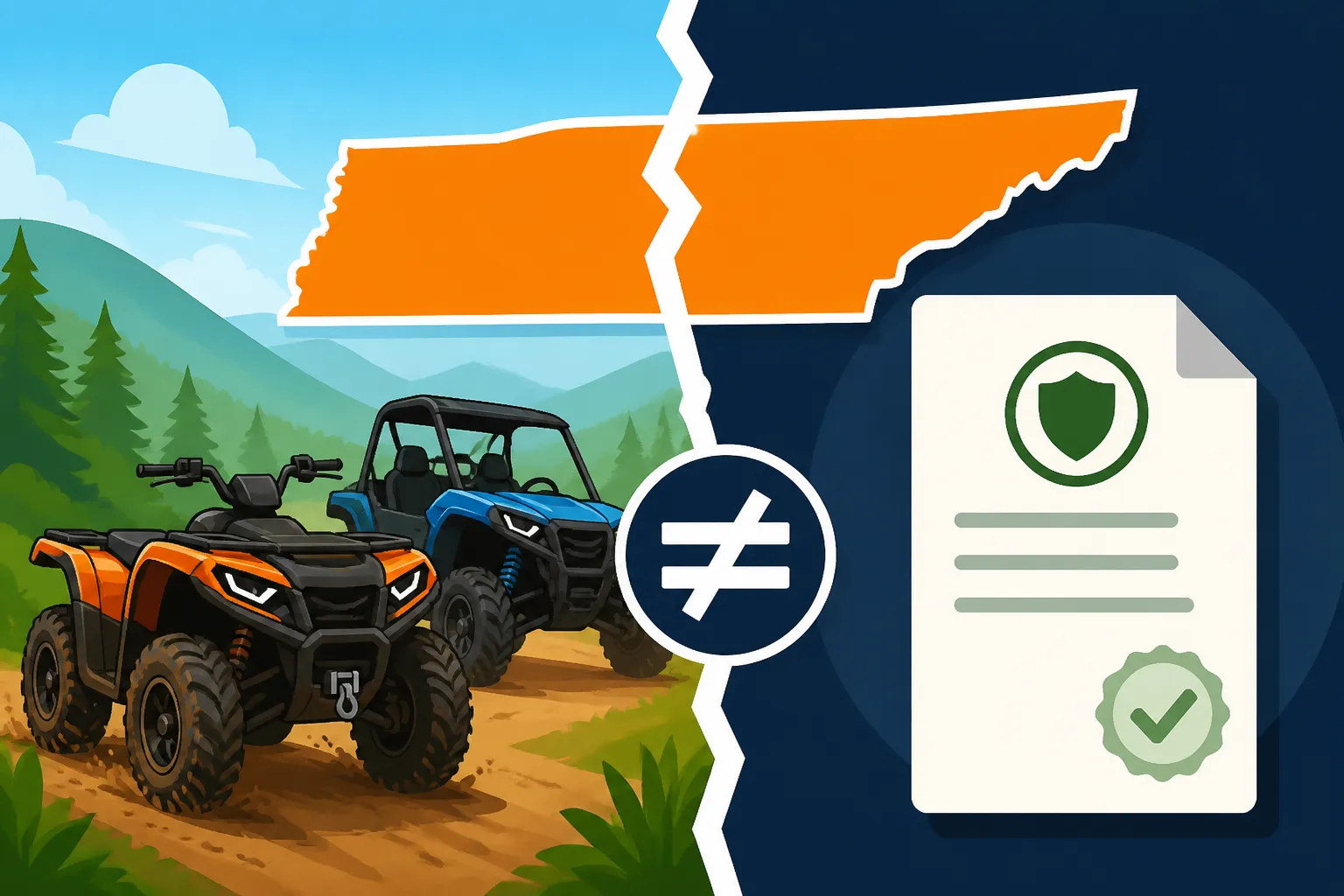
A rental agreement gives you permission to use a machine under the rental company’s conditions. A trail permit or land-use permit gives you permission to ride in a particular place under that land manager’s rules. They solve different problems, so one does not automatically replace the other.
Think of the rental as access to the vehicle, and the permit as access to the riding area. The rental company may handle both, but the two permissions can still be issued, priced, and controlled separately. That is why a booking confirmation for a side-by-side is not enough to establish that you can ride a particular trail.
A permit also is not the same as vehicle registration or a title. Tennessee does not have one general OHV sticker that grants access to every trail. Trail access depends on where you ride, and the rules can differ between public land, private recreation areas, and other properties. Why Tennessee Has No Statewide Trail Sticker explains that distinction, while Tennessee Trail Permits Explained covers how different permit systems fit into a ride plan.
| What you have | What it generally allows | What it does not automatically allow |
|---|---|---|
| Rental agreement | Use of the rental machine under the company’s terms | Riding on any trail or property you choose |
| Trail or land-use permit | Access to a specified riding area under its rules | Use of another park’s trails |
| Guided-tour booking | Participation in the tour described by the operator | Independent riding outside the tour or its permitted area |
| Title or registration paperwork | Documents relating to ownership or vehicle status | Trail access by itself |
| Rental waiver or insurance option | Coverage or risk terms described in the rental documents | A trail permit or permission to enter private land |
The word “permit” can mean different things in a rental conversation. A park may require a permit for every eligible rider, a vehicle, or a particular use. A rental company may also issue a permit, attach one to the machine, or include the cost of access in the package. The details depend on the property and the operator, so ask which specific permit is included rather than relying on the general phrase “permit included.”
Most importantly, a permit is limited by its terms. It may apply only to a named park, land manager, period, or type of use. It should not be assumed to cover a second riding area just because both places are in Tennessee. Why a Tennessee Park Permit Does Not Travel explains why permits from separate parks are not interchangeable.
Why rental companies keep the permit separate
The rental operator and the land manager control different parts of the experience. The rental company controls the machine, its use, and the rental contract. The land manager controls access to its property, trails, and facilities. Keeping those permissions separate makes it possible for each party to set and communicate its own conditions.
The rental and the trail are different services
A rental business can provide a machine without owning the trail system where you plan to ride. Even when the rental shop is located near a park, proximity does not prove that the machine is permitted there or that your booking includes trail access. The operator may sell a rental only, offer an access add-on, or bundle the two into a single booking.
That arrangement matters if you are comparing a self-guided rental with a guided tour. A tour operator may organize the route and arrange the required access for the group. A self-guided rental may leave you responsible for choosing an approved area and meeting its permit rules. Check what the product actually includes before treating the two options as equivalent. For an overview of the rental side, see Renting an ATV in Tennessee.
Parks set their own access rules
Tennessee riding areas do not all use the same permit system. A state-managed riding area and a privately operated recreation property may have different ways to authorize access. Some parks sell their own permits, while a state land manager may have a separate permit process. A rental permit issued or sold for one system should not be assumed valid at another.
For instance, Windrock and Brimstone have their own land-use arrangements. The relevant park information is in Windrock’s Trail Permits and Brimstone’s Land Use Permits. These are useful starting points, but confirm current access instructions directly with the park and rental provider before you travel.
The permit boundary can also matter within a larger public riding area. Do not assume one permit covers every unit or trail simply because the areas belong to the same broader system. Check the current rules for the exact unit and route you intend to ride. Does One Permit Cover Every North Cumberland Unit? addresses that question.
Permits are tied to a particular use
Access requirements can vary with the rider, vehicle, and activity. A day of recreational riding, an organized group event, and a paid guided outing may not be treated identically. A permit for one rider or vehicle may not cover everyone in a group. The number of people riding, whether a passenger is included, and whether you are using a guide can all affect what needs to be arranged.
This is one reason rental companies may not automatically buy a permit for every customer. They may need to know which park you plan to visit, how many people are riding, and what type of booking you have. If you are riding with children or passengers, ask whether each person needs a separate permit or other authorization. Do not assume the operator’s permit covers the whole group unless the terms say so.
Rental terms and permit terms are not the same contract
A rental agreement may describe deposits, damage responsibility, return conditions, safety requirements, and permitted use of the machine. A park permit may describe access, trail restrictions, operating hours, or conduct on the property. Signing one document does not necessarily mean you have met the requirements in the other.
Read the rental terms and park rules as separate documents. If the rental company says the machine is allowed at a park, confirm whether that means the vehicle is compatible with the park’s rules or whether your actual permit is already arranged. Ask for a clear answer about what you must show at the gate or keep with you during the ride.
How to confirm whether your rental includes access
Do not rely only on a listing headline, a phone conversation, or a phrase such as “ready to ride.” Ask specific questions before paying or arriving. The goal is to identify the riding area, permit type, and person responsible for obtaining it.
- Name the exact riding area. Ask where the rental is authorized to go. If the answer is only “Tennessee trails,” ask for the park, land manager, or property name.
- Ask whether the permit is included. Find out whether it is included in the booking, available as an add-on, or something you must purchase separately.
- Clarify who the permit covers. Ask whether it applies to the operator only, the vehicle, passengers, or all eligible riders in your group.
- Ask how the permit is issued. It may be attached to the rental, provided electronically, bought at a park office, or obtained through another process. Follow the park’s current instructions.
- Confirm the dates and use. Check that the permit is valid for the planned riding period and covers your intended activity, including any tour or organized outing.
- Ask what to carry. Find out whether you need a confirmation, permit record, identification, or other documentation at check-in or on the trail.
- Get the answer in writing. Keep the booking details or a message that states what access is included and what you need to do yourself.
A useful question is: “Does my booking include the land-use permit for this exact riding area, for every person who needs one, or do I need to buy something separately?” That wording is more precise than asking whether the rental is “all-inclusive.”
If you are booking through a marketplace such as Viator, read the activity description carefully and confirm any unclear permit details with the actual tour or rental operator. A marketplace listing may help you compare experiences, but the operator and land manager are the right places to verify access requirements. Likewise, if a rental is arranged through Polaris Adventures, check the specific outfitter’s terms and the riding area’s rules rather than assuming a vehicle booking includes land access.
For state-managed permit systems, use the current official instructions to confirm how to obtain the permit and what information is required. Buying a Tennessee Permit Online may help explain the process, but verify the current steps before you set out. For a private park, check with that park directly. The rental company’s location or brand does not determine which land manager’s rules apply.
If the company says the permit is included
Ask how you will receive it and whether there is anything you must do before arrival. “Included” might mean the operator has already arranged access, or it might mean the permit is available as part of the package but must still be collected or activated. Confirm the exact meaning.
Also ask whether the permit covers a passenger. A machine rental may permit a passenger under the rental company’s terms, while the park may have its own passenger, age, or permit requirements. The operator’s approval to carry someone does not automatically answer the park’s access rules.
If the company says the permit is separate
Ask where to obtain it, who must hold it, and whether you need to complete the permit process before the rental pickup. Check that the permit is for the same property where the rental is approved to operate. A permit purchased for another park may not help, even if that park is nearby.
Keep the permit confirmation accessible in the format the park requires. If you have questions about a specific machine’s eligibility, width, or permitted use, ask both the operator and the park before booking. Do not assume that the rental provider’s fleet is automatically permitted on every route.
Common situations that lead to confusion
A separate permit can be easy to overlook because rental arrangements are often sold as one trip. These are the situations where it pays to slow down and verify the details.
The rental includes a guide
A guided tour can simplify planning because the operator may select the route and coordinate access. But a guided booking is not a blanket right to ride elsewhere before or after the tour. Ask whether the tour’s access arrangement covers only the scheduled outing, and whether you need anything additional if you plan to continue riding independently.
The guide can also clarify whether the group’s permit covers each participant or whether riders must obtain individual authorization. Do not infer the answer from the fact that the tour has a guide or that everyone is riding together.
You rent near a park but plan to trailer elsewhere
A rental shop may be close to one trail system while you intend to take the machine to another. First confirm that the rental contract allows transport to your destination. Then verify that the destination accepts the machine and that you have the correct permit.
This is a two-part check: the rental company must allow the use, and the land manager must allow access. A valid permit cannot override a rental contract that restricts where the machine may go. Conversely, the rental company’s permission to transport the machine does not give you access to the destination.
You book several vehicles for a group
Group bookings can create a false sense that one person can handle every requirement. Find out whether each vehicle or rider needs separate authorization, and whether the booking organizer can complete the process on behalf of the group. If the park requires each person to hold or show a permit, make sure each rider knows how to comply.
Keep a record of which rentals and permits belong to which people or vehicles. That can prevent confusion at check-in, particularly when the group arrives at different times or some participants are passengers rather than operators.
The rental package says “permit included”
Treat that phrase as a prompt to verify, not as the last word. Ask whether the included permit is valid for the park you have chosen and whether it covers the full group. Find out whether the permit is included in the booking price or simply arranged for purchase through the provider. Those are different promises.
The topic Rentals That Include the Park Permit can help you understand how bundled access may be presented. Even if a permit is included, check whether you need to collect a physical item, complete a waiver, or show identification before riding.
You have a permit from another trip
A permit from a previous visit may not apply to a new rental, date, vehicle, or park. Do not assume it can be reused or transferred. Review the permit’s own conditions and ask the land manager if the terms are unclear. Why a Tennessee Park Permit Does Not Travel is especially relevant when an itinerary includes multiple parks.
The rental company may also have its own requirement that you use a particular access arrangement. A permit you already hold does not necessarily satisfy the provider’s rental conditions, so disclose it and confirm before pickup.
A simple pre-ride checklist
Before you book, identify where you want to ride and whether the rental provider allows that destination. Then confirm the permit process with the park or land manager. This is especially important when you are comparing a rental near one trail system with a tour operating somewhere else.
Before pickup, check that the rental agreement matches your plans and that any required permit is in hand or arranged. Confirm whether passengers and other group members need separate authorization. Bring whatever documentation the provider or park instructs you to carry, and save confirmations where they are easy to retrieve.
At the trailhead, follow the posted rules even if the rental provider has given you general instructions. Trail closures, route restrictions, and operating requirements can change. A permit grants only the access described by its terms; it does not guarantee that every trail is open or suitable for your machine.
| Before the trip | What to verify |
|---|---|
| When choosing a rental | The approved riding area and whether transport elsewhere is allowed |
| Before booking | Whether the trail permit is included, separate, or arranged as an add-on |
| For each rider | Who must hold a permit and whether passengers are covered |
| Before pickup | What documents or confirmation to show |
| At the park | Current trail access, closures, and posted rules |
If the booking details and the park’s instructions appear to conflict, pause before riding and ask both parties to clarify. It is better to resolve the issue before leaving the rental counter than to discover at a gate that the machine, group, or permit does not match the access rules.
Frequently Asked Questions
Does renting an ATV or UTV in Tennessee include a trail permit?
Not automatically. Some providers may bundle access or arrange a permit, while others leave it to the renter. Confirm the exact riding area and who is responsible for the permit before booking.
Can I use one park permit at another Tennessee riding area?
Do not assume so. Permits are tied to the relevant land manager and its terms. Check with each park you plan to visit.
Does a rental permit cover passengers?
That depends on the applicable permit and park rules. Ask whether the permit covers passengers or whether each eligible rider needs separate authorization.
Is a rental permit the same as registration?
No. A rental agreement, trail permit, title, and registration paperwork serve different purposes. A trail permit does not by itself establish ownership or vehicle registration status.
Disclaimer
This article is for general informational purposes only and does not constitute professional advice. Laws, prices and regulations vary by location and change over time. Consult a qualified professional for guidance on your specific situation.