What a Tennessee UTV Rental Includes
A Tennessee UTV rental can mean more than a machine for the day, but the details vary by outfitter, trail system, and booking. A helmet, trail permit, fuel, guide, or damage protection may be included—or billed separately. Knowing what each part covers helps you compare bookings, avoid surprises at pickup, and plan a ride that fits your group.
What a Tennessee UTV rental usually includes
The core of a rental is access to a UTV for a defined period, plus the items and services the operator specifies in the booking. That sounds simple, but “rental” can describe anything from a basic machine handoff to a guided outing with equipment and trail access arranged together.
A typical package may include the vehicle, a basic operating orientation, and paperwork such as a rental agreement and safety waiver. Some operators also provide helmets or include a trail permit. Others treat those as separate items. Fuel, damage protection, passenger charges, and guided support are especially likely to vary.
| Rental component | What it may cover | What to confirm |
|---|---|---|
| UTV | The machine reserved for the booked time | Model, seat count, condition, and permitted use |
| Orientation | Basic controls and operating instructions | Whether it includes route advice or only vehicle operation |
| Helmet or safety gear | One or more items for some or all riders | Sizes, condition, and whether goggles are provided |
| Trail access | A permit or admission for a named riding area | Which park or land unit, and which riders are covered |
| Fuel | Fuel in the tank at pickup or a stated fuel arrangement | Whether you return it full or pay for fuel afterward |
| Guide | A leader accompanying the group | Duration, group size, route, and guide fee |
| Damage protection | A contract option or limited protection, if offered | Exclusions, deductible or responsibility, and rollover terms |
| Deposit or card hold | A security hold or other reservation requirement | Amount, payment method, release process, and timing |
Treat the booking description as a starting point, not a complete inventory. A listing might say “helmet included,” for example, without clarifying whether it supplies one for every passenger. “Trail access” might apply to a particular property but not a second park you hope to visit. “Guided tour” may describe a set route with a guide, not free riding after the tour ends.
The most useful question is not simply “What comes with the rental?” Ask what is included for your specific reservation, for the number of people in your group, and for the place where you plan to ride. If you book more than one vehicle or have passengers in separate machines, verify whether each vehicle and rider is covered in the same way.
It also helps to distinguish the machine rental from the whole outing. A rental company may supply the UTV, while a trail operator controls access, permits, maps, and closures. Sometimes an outfitter arranges several pieces together. In other cases, you must organize them separately. The title Tennessee Rentals That Include the Permit is useful when sorting out whether access is bundled into a rental or needs its own purchase.
A booking is only as clear as its written terms. Save the confirmation, read any attachments, and ask the operator to put important answers in writing. If a package description and the agreement seem to conflict, have the operator explain which terms govern before you pay or sign.
The vehicle, seats, and operating orientation
A UTV is the central part of the package, but “UTV rental” does not guarantee a particular machine or configuration. Two-seat and four-seat models are common descriptions, yet the exact model, seating arrangement, features, and availability can depend on the outfitter and date. Confirm the vehicle you are reserving rather than assuming a photograph or model name on a listing guarantees the same unit at pickup.
Match the machine to the group
Start with the number of people who will ride in each vehicle. Count everyone, including children, and ask whether the specific UTV has enough manufacturer-designated seating for the group. Do not treat an open cargo area or an extra space as a passenger seat. A four-seat machine may be a practical fit for a family or small group, but passengers still need proper seating and restraints.
Then consider luggage and riding conditions. A machine that fits the passenger count may have limited room for water, layers, a first-aid kit, or other essentials. Ask whether storage is available and whether you may bring a small bag. If you have accessibility needs, a child who needs a particular restraint arrangement, or a rider who cannot easily climb into a high vehicle, talk to the operator before booking. A model’s seat count alone does not answer those questions.
Also ask about the machine’s condition and equipment at pickup. Useful details include whether the vehicle has seat belts, a roof, a windshield, doors or nets, a winch, and other features that matter for the trail or weather. These items are not guaranteed by the word “UTV.” If a feature is important to your group, request confirmation for the reserved machine.
Ask what the orientation covers
A short orientation is common, but its depth varies. It may cover the gear selector, throttle, brakes, parking procedure, seat belts, and emergency shutoff. It may also explain basic trail etiquette and what to do if the machine develops a problem. Do not assume that a brief talk is a full driver-training course or that the rental company will teach advanced terrain skills.
At minimum, each driver should understand how to start and stop the vehicle, select gears, use the parking brake, operate lights, and secure passengers. Ask how to contact the outfitter during the ride and what to do if the machine gets stuck, overheats, or has a flat tire. If the explanation is rushed or unclear, ask for a demonstration before leaving.
Confirm who is allowed to drive. Rental operators can set age, license, and experience conditions, and those requirements may differ from rules for riding your own machine. Check Tennessee Rental Age and License Rules and then verify the operator’s current terms directly. A passenger’s age or size can matter too, so ask how the operator handles children and who may sign the rental documents.
A rental’s allowed use matters as much as its equipment. Ask whether the machine is restricted to a particular park, trail network, or route, and whether road use is prohibited. A machine supplied for off-road riding should not be assumed to be street legal. When the booking includes a guide, confirm whether the guide controls the route and whether riders may leave the group or ride ahead.
Check pickup and return expectations
The booking window may include check-in, paperwork, orientation, and return inspection, or the riding period may begin at a specified time. Ask when the rental clock starts and when the vehicle must be back. Clarify what counts as a late return and whether the operator allows time for fueling or cleaning before drop-off.
Before departing, walk around the machine with staff. Photograph or record existing scratches, dents, cracked plastic, worn tires, warning lights, and any other visible issue. Make sure the staff member knows about anything you notice and follow the operator’s process for documenting it. This simple check can help prevent a disagreement about whether damage was present before your ride.
Helmets, safety gear, and personal equipment
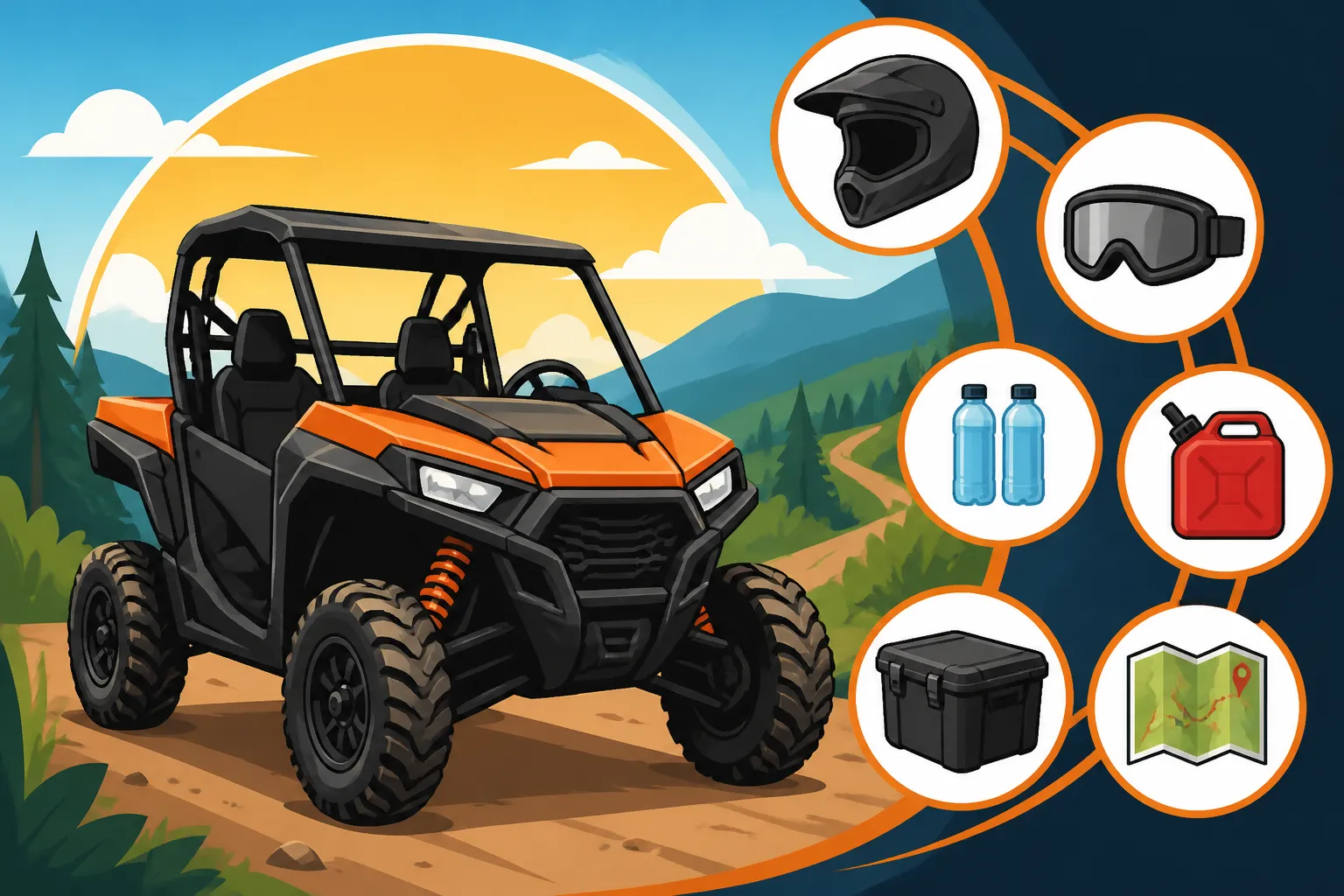
Safety equipment is one of the easiest areas to misunderstand. Some rentals provide helmets; others require riders to bring their own or offer gear separately. Even where helmets are included, the number of helmets, available sizes, and condition should be confirmed before the trip.
Ask the operator exactly what is supplied. Does “helmet included” mean one for the driver, one per occupant, or a limited number that must be requested? Are goggles included? Are there children’s sizes? Is the helmet designed for the riding conditions and in serviceable condition? If the answers are unclear, bring suitable gear or arrange it in advance. The related topic Tennessee Rentals That Include a Helmet covers the questions to raise before you reserve.
A helmet is not a complete riding kit. Depending on weather and trail conditions, riders may also want eye protection, gloves, sturdy closed-toe footwear, long sleeves, and clothing that can get dirty. A helmet does not protect against every hazard, and a rental’s roof or windshield does not remove the need to secure passengers and ride within your ability.
Bring gear that fits the day rather than relying on a listing photo. On a dry ride, dust can make goggles and a face covering useful. After rain, mud and water can soak clothing and footwear. A light layer may be welcome at a cool trailhead even if the afternoon is warm. Pack drinking water and keep it secured so it cannot interfere with controls or become a projectile.
If the operator provides helmets, ask about cleaning and fit. A helmet should sit securely and be fastened properly; a loose or poorly fitting helmet is not a good substitute for one that fits. If a rider has a medical, mobility, or fit concern, discuss it before arriving rather than assuming a rental counter can solve it on the spot.
The rental agreement may also spell out who is responsible for equipment that is lost or damaged. Clarify whether you can use your own helmet and what safety equipment is mandatory under the operator’s rules. Do not assume that personal gear replaces equipment the rental company requires, or that supplied gear is optional.
For passengers, check that everyone can use the seat belt or restraint system correctly. Children should not be carried in a position or manner the machine manufacturer does not designate for passengers. The operator should be able to confirm which vehicle and seating arrangement are appropriate for the group, but the driver remains responsible for following the vehicle instructions and rental terms.
Trail permits, access, and guides
A vehicle reservation and permission to ride are related, but they are not always the same purchase. Tennessee has private riding areas and public lands with their own access rules. The rental company may sell or arrange a permit, include it in the package, or expect you to obtain it separately. Never infer access from the fact that a company is located near a trail system.
Ask which specific property or trail network the rental covers. If you plan to ride at Windrock, Brimstone, Ride Royal Blue, or another destination, confirm that the rental is authorized there and that the route is open to that type of machine. A permit for one operator or land area should not be presumed valid somewhere else. The practical overview Tennessee Permits for Riders Explained can help you understand why access arrangements need to be checked park by park.
Be precise about who needs a permit. A rental package might cover the machine, the driver, or multiple people, depending on how the operator and trail area arrange access. Ask whether each passenger needs an individual permit, whether a permit is tied to a specific vehicle, and what proof you must carry or display. A vague answer such as “the permit is included” is not enough if it does not say what it includes.
Also ask what happens if weather, a closure, or a trail condition changes your plans. A permit may be limited to a particular date or location, and a rental booking can have a separate cancellation policy. Find out who notifies you of a closure and whether the outfitter offers a reschedule or another option. Do not assume the rental company controls the land or can reopen a closed route.
What a guided rental may add
A guided UTV tour generally adds a person who leads the group along a planned route. The service can be helpful for visitors unfamiliar with the area, groups that prefer a structured outing, and riders who do not want to plan navigation themselves. But “guided” does not necessarily mean the guide rides in your vehicle, provides unlimited instruction, or takes responsibility for every choice made by the driver.
Ask whether the guide travels in a separate machine, rides with your group, or accompanies a convoy. Find out how many vehicles the guide leads, whether the route is adjusted for beginners, and what happens if a rider needs to stop. Confirm whether the tour has a set duration, whether stops are included, and whether the guide’s time ends when the group returns to the staging area.
A guide may know the route and local operating practices, but riders still need to follow instructions, stay with the group when required, and operate the vehicle safely. Ask whether the guide can help with navigation only or also provides practical driving tips. If your group wants an independent ride, check that the booking is a self-guided rental rather than a tour. For more detail, see Tennessee Guided UTV Tours.
Booking through a marketplace can make it easier to compare available outings, but the platform listing is not a substitute for the operator’s terms. A listing through Viator, for instance, should still be checked for the actual outfitter, meeting point, inclusions, cancellation rules, and who to contact on the day. Likewise, a Polaris Adventures listing or partner offering should be evaluated by its specific booking conditions, not by the brand name alone.
Fuel, deposits, protection, and possible extra charges
The advertised rental amount is only one part of the cost. The total can depend on fuel, permits, deposits, damage terms, extra riders, equipment, cleaning, recovery, and late return rules. For named companies and products, figures and policies can change, so check the provider for current terms rather than relying on an old listing or a friend’s past booking.
Fuel arrangements
Rental operators may provide a machine with fuel and expect it to be returned at a stated level, or they may handle fuel another way. Ask what level the vehicle will have at pickup and what level is required at return. If the operator refuels it after the ride, clarify how the fuel charge is calculated and whether it is separate from the rental charge.
Do not assume there will be a convenient fuel stop on the route. Ask about the expected range for the machine and planned ride, especially if you will be traveling far from the staging area. The rental staff can tell you whether carrying fuel is allowed and what storage method is acceptable. Do not bring a fuel container without checking the operator’s rules first.
The written Tennessee Rental Fuel Policy should answer how fuel is supplied, measured, and charged. If it does not, ask for the policy before pickup. Keep the receipt or other record if the operator asks you to refuel, and do not modify the machine or its fuel system.
Deposits and payment holds
A deposit or card hold may be used to secure the booking or cover obligations under the rental agreement. A hold is not necessarily the same as a final charge, but the timing and release process can affect how much available credit you have during a trip. Ask what payment method is accepted, whether the cardholder must be present, and when any hold is released after return.
Clarify whether the deposit is per vehicle or per reservation, whether it can be reduced by an optional protection product, and what happens if the machine comes back late or damaged. Do not rely on a verbal statement that “the deposit comes right back.” The card issuer’s processing time can differ from the operator’s release timing. For related questions, see Tennessee Rental Deposits and Damage Holds.
Damage, protection, and waivers
A rental agreement can make the renter financially responsible for damage, loss, or certain costs. Optional damage protection, where available, may limit some responsibility but often has conditions and exclusions. The word “insurance” in a conversation or listing does not tell you what is covered, who is insured, or what the renter still owes.
Ask for a plain-language explanation of the coverage or protection product. Does it apply to damage to the rental vehicle, injury to riders, damage to another person’s property, or some combination? What is excluded? Does the agreement treat rollover, water intrusion, tire damage, misuse, or unauthorized routes differently? Are there separate charges for towing or recovery? The answers should come from the contract and operator, not assumptions based on a credit card benefit or personal auto policy.
A waiver is also not a promise that all risk disappears. It may acknowledge risks, release certain claims, or set out responsibilities, but its effect depends on the actual terms and applicable law. Read it before signing and ask about anything you do not understand. The companion topic Tennessee Rental Insurance and Waivers is a useful starting point for separating waivers from insurance coverage.
Other charges to ask about
Before booking, ask whether the operator charges separately for a passenger, a helmet, a guide, trail access, fuel, cleaning, damage protection, or an extra hour. Also ask what happens if you return late, need roadside help, or cannot finish the ride. These are not necessarily charges every rental will impose; they are simply the terms worth identifying before you commit.
Cleaning deserves particular attention after a muddy ride. Some operators expect normal trail dirt, while others may charge for excessive mud or cleaning beyond their usual process. Ask what condition is considered an ordinary return and whether you should rinse or clean the machine yourself. Do not use a wash area or cleaning product on the vehicle unless the operator authorizes it.
The specific contract may use different names for fees or responsibilities. Read the agreement and ask for examples of how the terms apply. A clear explanation before pickup is far more useful than trying to interpret the policy after a problem occurs.
How to compare, book, and prepare for pickup
A well-planned rental starts with a few direct questions. Get answers from the operator that will provide the machine, even if you found the listing through a booking site or a tourism page. Save the answers along with your reservation confirmation.
Use this process to compare options:
- Set the group details. Count drivers and passengers, note children’s ages if relevant, and decide whether you want a self-guided ride or a tour.
- Choose the riding area. Identify the park or property you want to visit and verify that the rental is allowed there.
- Compare vehicles. Confirm seat count, model or class where relevant, basic equipment, and any feature your group needs.
- List inclusions in writing. Ask about helmets, permits, fuel, guide services, orientation, and any other equipment.
- Review the full terms. Check payment, deposits, cancellation, damage responsibility, late return, cleaning, and recovery.
- Confirm logistics. Verify the meeting point, arrival time, parking or trailer arrangements, and how to contact the operator.
- Save the paperwork. Keep the confirmation, rental agreement, permit details, and operator contact information accessible.
A useful comparison table can expose differences that a headline price or package name hides:
| Question | Rental A | Rental B |
|---|---|---|
| Which machine and how many seats? | Confirm exact configuration | Confirm exact configuration |
| Is trail access included? | Name the property and riders covered | Name the property and riders covered |
| Is a helmet supplied for every rider? | Confirm size and quantity | Confirm size and quantity |
| Is fuel included or billed separately? | Confirm pickup and return rules | Confirm pickup and return rules |
| Is a guide included? | Confirm route and schedule | Confirm route and schedule |
| What is the deposit or hold process? | Ask when it is released | Ask when it is released |
| What damage terms apply? | Read the agreement | Read the agreement |
| What is the cancellation policy? | Check deadlines and conditions | Check deadlines and conditions |
When the package is unclear, use specific questions rather than “Is everything included?” For example: “Does this reservation include trail permits for both occupants?” “Do you provide two helmets in our sizes?” “Is fuel included, and what level must the vehicle have at return?” “What costs could apply if we need recovery?” Specific questions are easier to answer and easier to compare.
Read Tennessee Rental Cancellation Policies before booking. Weather, trail closures, illness, and travel delays can affect plans, but cancellation and rescheduling options depend on the booking terms. If you reserve through a marketplace, check both the platform’s process and the local operator’s instructions so you know whom to contact.
Before you leave home
Bring the information the operator requests, such as identification or a valid driving credential, and make sure the person who will drive meets the rental conditions. Confirm whether the payment card must belong to the driver or reservation holder. The rules can vary by operator, so do not wait until arrival to resolve a mismatch.
Pack clothing suited to the forecast and trail conditions. Consider closed-toe footwear, eye protection, gloves, and layers that can get dusty or wet. Bring water and any personal medication you may need, and keep items secure. If the company supplies a helmet, do not assume it supplies goggles, gloves, rain gear, or a change of clothing.
Charge your phone and save the operator’s number, but do not count on steady cell service everywhere. Ask whether the company provides a map, route instructions, or an emergency contact method. If you will be following a guide, find out how the group communicates if someone falls behind or must stop.
At the rental counter
Arrive with enough time for check-in and orientation. Read the agreement rather than signing while rushed. Ask the staff to show you the controls and explain the return procedure. Have each driver listen to the instructions, not just the person who booked.
Inspect the machine with an employee and document existing damage. Check that seat belts work, note warning lights, and make sure the included gear is present. Confirm the permit or access instructions before departing. If something promised in the booking is missing, resolve it before the group leaves the staging area.
Finally, agree on a conservative plan. Choose a route that suits the least experienced driver, keep the group together as required, and turn back with enough time to meet the return deadline. A rental package can supply a machine and helpful support, but it cannot replace judgment about terrain, weather, fatigue, or a rider’s comfort level.
Frequently Asked Questions
Does a Tennessee UTV rental automatically include a trail permit?
No. Some packages include access or arrange a permit, while others require you to obtain it separately. Confirm the exact riding area, dates, vehicles, and riders covered.
Are helmets included with every UTV rental?
Not necessarily. Ask whether helmets are supplied, how many are included, which sizes are available, and whether goggles or other gear are separate.
Does a guided tour mean the guide drives the UTV?
Usually, a guide leads or accompanies the group; that does not mean the guide operates your rental vehicle. Confirm where the guide rides, how the route works, and what assistance is included.
Is fuel included in the advertised rental?
Fuel terms vary. Ask whether the machine is supplied with fuel, what level is required at return, and whether refueling or fuel use can create a separate charge.
What should I check before signing the rental agreement?
Review the permitted riding area, driver and passenger conditions, deposit process, fuel and return rules, damage responsibility, protection exclusions, and any cleaning or recovery terms. Ask the operator to explain anything unclear before you sign.
Disclaimer
This article is for general informational purposes only and does not constitute professional advice. Laws, prices and regulations vary by location and change over time. Consult a qualified professional for guidance on your specific situation.