Off The Tracks ATV Spot
Off The Tracks ATV Spot may be on your shortlist for a Tennessee ride, but a name or listing alone won’t tell you what matters most: what you can rent, where you can ride, what the booking includes, and what happens if plans change. Confirm those details before you pay. The checks below help you compare the experience with your group’s needs.
What to confirm about Off The Tracks ATV Spot
Start by establishing exactly what the business offers for your intended visit. A listing might describe rentals, guided rides, tours, or access to a riding area, but those terms are not interchangeable. A rental may give you a machine to operate yourself; a guided tour may include a guide and a set route; access to trails may require a separate permit or depend on the landowner or park.
Before choosing a date, contact the provider through a current official channel and ask for the details that affect your plans. Don’t rely on an old directory entry, a photo caption, or a third-party booking page for information that could have changed.
Useful questions include:
- Is the experience a self-guided rental, a guided ride, or both?
- Where does the ride start, and where does it finish?
- Which trails or riding areas are available to customers?
- Is trail access included, or do riders need to buy a separate permit?
- What type of machine is available, and how many people can ride in it?
- What are the minimum age and driver requirements?
- What safety gear is supplied, and what should riders bring?
- What are the deposit, damage, fuel, and cancellation terms?
- What happens if weather, trail conditions, or a closure affects the booking?
The answers should be specific enough to help you plan. For example, “trail access included” is more useful when the provider names the area and explains whether the access applies to every machine and every rider. “Helmet provided” is clearer when you know whether it is included for each passenger and whether sizes are available for children.
If you are comparing a rental with a tour, ask what control you will have over the route and pace. On a guided ride, the group may need to stay together and follow the guide’s instructions. A self-guided rental can offer more flexibility, but you may need to navigate, monitor fuel, and handle minor delays without a guide. Read Renting an ATV in Tennessee for a broader overview of how a rental differs from bringing your own machine.
Check the machine, group fit, and rider requirements
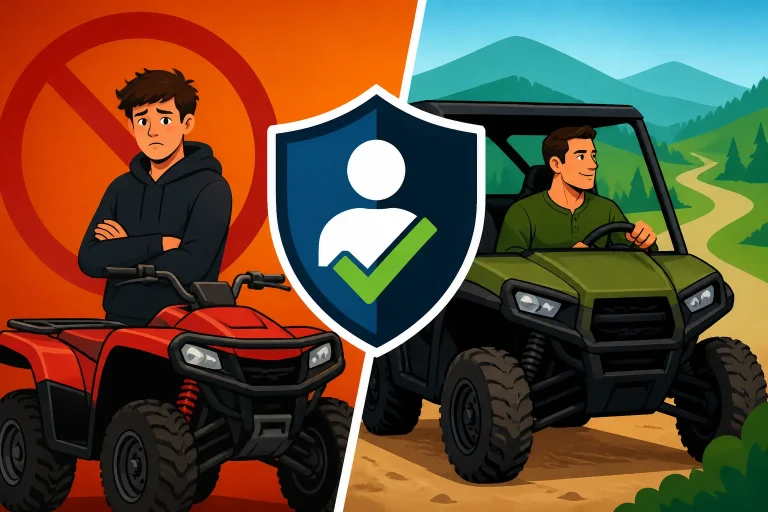
The right vehicle depends on who is riding and what kind of outing you want. An ATV is generally a single-rider machine, while a side-by-side can carry a driver and one or more passengers, depending on its design and approved capacity. Don’t assume that a listing’s photos show the exact machine you will receive. Confirm the model or vehicle type, passenger capacity, and whether the business can guarantee that configuration for your date.
A two-seat side-by-side may suit a couple or an adult riding with a child, while a four-seat vehicle may make sense for a family or small group that wants to ride together. Capacity is only one part of the decision. Ask whether passengers must meet an age or size requirement, whether child-sized helmets are available, and whether a child can comfortably sit in the vehicle with the supplied restraints.
If your group includes beginners, ask whether the vehicle is suitable for first-time riders and whether someone explains the controls before departure. A guided tour may provide more direction, but it does not remove the need for every participant to follow safety instructions. For self-guided trips, ask how the provider handles route questions, a mechanical problem, or a rider who needs to turn back.
Verify the driver rules before booking. Rental companies can set minimum ages and license requirements, and the rules may vary by machine or activity. A person who can legally operate a vehicle in one context may not meet a rental company’s requirements. Review Tennessee Rental Age and License Rules and confirm the provider’s own terms in writing. If a teen will ride as a passenger, check the age and supervision rules separately from the minimum age for drivers.
A practical comparison can help narrow the choice:
| Your group or plan | What to ask Off The Tracks ATV Spot | Why it matters |
|---|---|---|
| First-time riders | Is there a control briefing, and is a guide available? | Beginners may need more support than a route map alone provides. |
| Family with children | What are the passenger age rules, and are child-sized helmets available? | Vehicle capacity does not automatically mean every child can ride. |
| Couple or two friends | Is a two-seat machine available for the chosen date? | Photos or general listings may not reflect current fleet availability. |
| Larger group | Can the provider supply enough matching vehicles, and will the group ride together? | Fleet size and tour arrangements can affect the whole booking. |
| Riders seeking a long outing | What is the ride duration, route, and fuel arrangement? | A listed time may not include check-in, instruction, or breaks. |
| Riders bringing their own gear | Which items are accepted, and what must be supplied by the provider? | Gear requirements and fit can differ between operators. |
For every participant, make sure the planned ride is a good match for their comfort level. A passenger may be uneasy on steep terrain or in rough conditions even if they meet the provider’s minimum age. Ask about route difficulty, expected pace, and whether the operator can adjust the outing. If the answer is vague, don’t assume the most challenging route will be easy to avoid after you arrive.
Understand trail access, permits, and where the ride goes
A rental does not automatically give you permission to ride anywhere. The machine, the route, and access to the land are separate parts of the arrangement. A business might operate on private property, direct customers to a public riding area, or use a combination of locations. Confirm the actual riding area rather than relying on a broad description such as “Tennessee trails.”
Ask for the name of the trail system or property, the meeting point, and any route restrictions that apply. Check whether the rental price includes the required access permit for each rider and vehicle. If it does not, ask where to buy the permit and whether it must be purchased before arrival. Tennessee has different access arrangements across private parks and public lands, so a permit for one location should not be assumed to work at another. Tennessee Trail Permits Explained explains why riders should treat permits as specific to the place they plan to use.
Also ask what happens if a trail is closed. Closures can follow weather, maintenance, land-management decisions, or other conditions. A rental provider may offer an alternate route, reschedule the booking, or apply its normal cancellation terms; don’t assume which option applies. Check the provider’s policy and the riding area’s current notices close to departure.
The distinction between an outfitter and a riding park is useful here. An outfitter supplies equipment or an organized experience. A park or land manager controls access to its property and sets its own rules. One business may handle both parts, but a customer should verify that rather than infer it from the booking page.
Before paying, get clear answers to these access questions:
- What is the exact trail or property name?
- Is the booked experience restricted to a set route or riding area?
- Is a permit required for the driver, passengers, or each machine?
- Is the permit included, or is it a separate purchase?
- Who provides updates about closures and trail conditions?
- If the planned area closes, what alternatives or booking remedies are available?
If you plan to ride somewhere beyond the route arranged by the provider, get explicit permission and instructions first. Do not rely on a map pin or an informal suggestion as proof that a machine is permitted on a nearby road or trail. Public-road use is a separate issue from off-road access, and a rental agreement may prohibit it even where road use might otherwise be allowed. Tennessee Rules for Riding a WMA can help explain why access rules depend on the specific land and riding area.
Compare the full booking cost and the contract
The amount shown in a listing may not be the full cost of the outing. Rental charges can be only one line in the total. Depending on the provider and activity, separate costs may apply to a trail permit, additional riders, protective equipment, fuel, a guide, taxes, or optional damage coverage. Ask for an itemized total before confirming, and check whether any amount is due at booking, at pickup, or after the ride.
A refundable deposit or card hold is different from a rental fee. Confirm the amount, how it is collected, what conditions could lead to a deduction, and how long the release may take after the vehicle is returned. Do not assume that a damage waiver removes every possible charge. It may have exclusions, limits, or conditions, so ask for the actual written terms. Tennessee Rental Insurance and Waivers is useful background before you decide whether an offered protection option fits your needs.
Fuel terms deserve special attention. Ask whether the vehicle is supplied with fuel, whether you must return it at a particular level, and whether fuel is charged separately. If the route is long or remote, find out how much fuel is available on the ride and what the procedure is if the machine runs low. A vague answer can turn a manageable outing into an avoidable disruption.
Read the cancellation policy before paying, not after the weather forecast changes. Look for the deadline to cancel, whether the payment is refundable or transferable, and what happens when the operator cancels. Ask whether rain or muddy conditions count as a cancellation reason, and whether the provider makes that decision or the trail manager does. If the booking is through a third-party platform, check both the platform’s policy and the operator’s rules. A platform’s booking process does not necessarily mean it controls the provider’s weather or damage policies.
Polaris Adventures may be relevant if the provider identifies itself as part of that network, but don’t infer an affiliation from a vehicle brand or a listing. Likewise, a Viator listing can help you compare an advertised tour, but confirm the actual inclusions and terms with the operator before relying on them. For either route, save the booking confirmation and any written answers about cost, vehicle type, permits, and cancellation.
A useful cost checklist:
- Base rental or tour charge
- Permit or riding-area access
- Additional rider or passenger charges
- Required gear or optional equipment
- Deposit or card hold
- Damage waiver or other protection option
- Fuel and return requirements
- Tax and any disclosed service charges
- Cancellation, rescheduling, and late-return terms
The total is only one comparison point. A lower advertised price may exclude items another provider includes, while a higher quote may cover a guide, gear, or trail access. Compare like with like, and don’t book until you understand what is included and what could be charged later.
Prepare for pickup and the ride
Once the booking is confirmed, use the time before departure to reduce uncertainty. Save the provider’s contact details, the pickup address, check-in time, and the number to call if you are delayed. Confirm whether the group needs to arrive early for waivers or instruction. A reservation time may not be the same as the time the machine begins moving.
Bring the identification and payment method the operator requires. Check the provider’s age, license, and waiver requirements for each driver. If someone else made the reservation, ask whether the named driver must be present at check-in and whether the payment cardholder must attend. These details are simple to resolve in advance and can prevent a group from losing ride time at the counter.
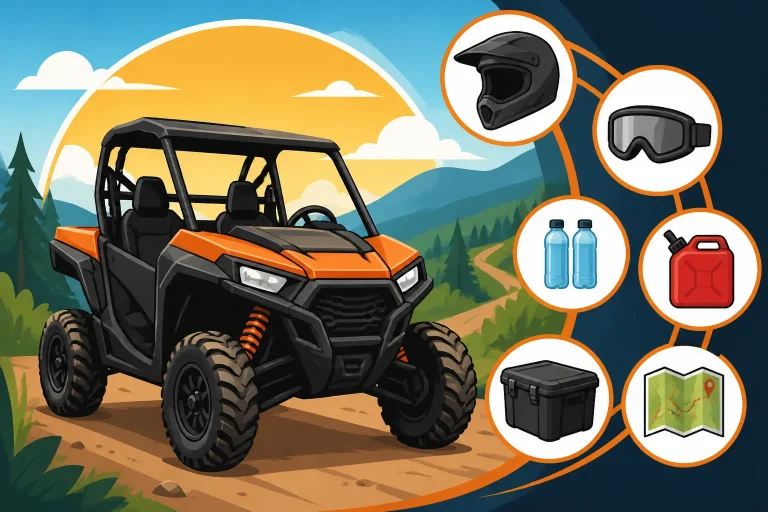
Dress for the expected conditions, not just the forecast at the parking area. A ride can involve dust, mud, changing temperatures, and brush. Ask which protective gear is supplied and what is mandatory. If you bring your own helmet or goggles, confirm that they meet the provider’s requirements and fit securely. For family bookings, do not rely on an adult-size helmet being suitable for a child.
At pickup, take a few minutes to inspect the machine before leaving. Photograph existing scratches, cracked panels, worn tires, or other visible damage, and ask the staff to note anything that should be recorded. Confirm how to operate the controls, engage four-wheel drive if available, use the brakes, and respond to warning indicators. Know where the emergency contact information is and what to do if the vehicle develops a problem.
A quick pre-ride check should include:
- Seat belts and passenger restraints, if fitted
- Brakes, steering, tires, and lights
- Helmet and protective equipment fit
- Fuel level and expected range
- Communication method and route information
- Recovery or breakdown instructions
- Return location and deadline
Treat the briefing as part of the rental, not as a formality. Ask questions if you do not understand how to use a control or what to do on a steep, narrow, or muddy section. Keep within the route and conditions the operator has approved. If the ride feels beyond your group’s ability, stop somewhere safe and contact the provider rather than pushing on to keep up.
If you are deciding between self-guided riding and a guided experience, consider more than convenience. A guide may help with route-finding and group pacing, while self-guided riding may suit people who are comfortable navigating and following the provider’s instructions independently. Check whether a guide is actually included in the booking, whether the group rides at a fixed pace, and whether the guide can accommodate different experience levels. Tennessee Guided ATV Tours offers broader context on what to ask when comparing organized rides.
Frequently Asked Questions
Is Off The Tracks ATV Spot a rental business or a tour operator?
Confirm the exact service directly with the provider. A listing or business name alone does not establish whether the booking is for a self-guided rental, guided tour, trail access, or a combination.
Does an ATV or UTV rental include trail access?
Not necessarily. Ask which property or trail system the booking uses and whether access permits are included for every rider and vehicle. Confirm the arrangement before paying.
Can children ride with a parent?
That depends on the machine, the provider’s passenger rules, and the child’s ability to fit the seat and restraints. Ask about minimum ages, child-sized helmets, and supervision requirements before booking.
What should I ask about a rental deposit?
Confirm whether it is a charge or a temporary card hold, what damage or other conditions could affect it, and how and when it is released. Read the written agreement for exclusions and return requirements.
What if weather closes the planned riding area?
Check the operator’s cancellation and rescheduling policy and ask who decides whether conditions prevent the ride. A weather closure may be handled differently from a customer cancellation, so get the terms before booking.
Disclaimer
This article is for general informational purposes only and does not constitute professional advice. Laws, prices and regulations vary by location and change over time. Consult a qualified professional for guidance on your specific situation.