Does Tennessee Honor Out-of-State Registration?
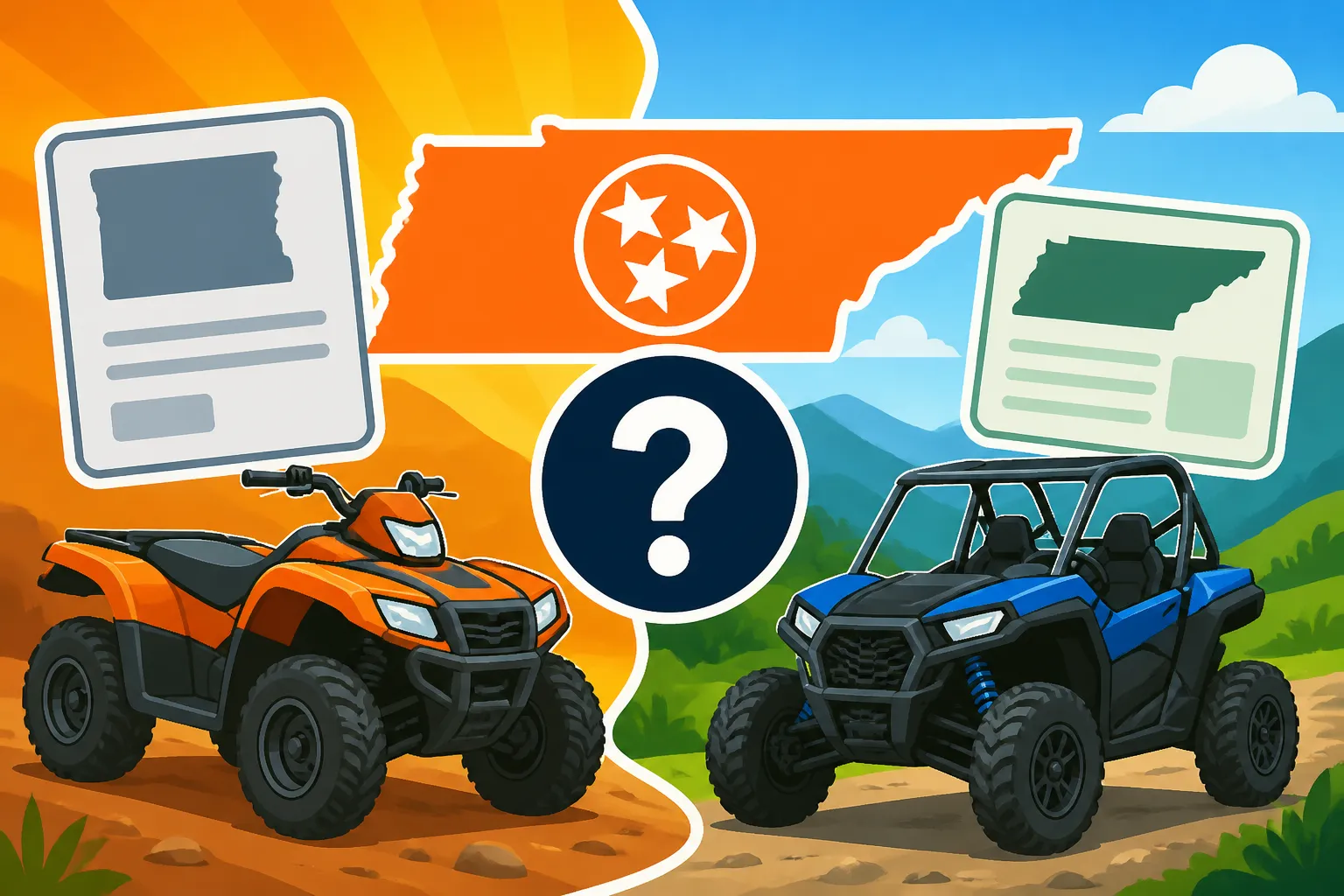
Bringing an ATV or UTV into Tennessee can raise a confusing question: does a registration card or plate from your home state let you ride here? The short answer is that out-of-state registration does not replace Tennessee trail permits or a riding area’s own rules. Knowing what your paperwork does—and does not—prove can help you avoid arriving at a gate without the required authorization.
What Out-of-State Registration Does in Tennessee
Tennessee does not rely on a single, statewide OHV registration sticker that gives an ATV or UTV permission to ride every trail. A registration document from another state may identify the machine or show it is registered where you live, but it does not automatically serve as a Tennessee trail permit.
It helps to separate four things that are often called “registration” in casual conversation:
| Document or authorization | What it generally addresses | What it does not automatically provide |
|---|---|---|
| Home-state registration | The machine’s status under your home state’s rules | Permission to ride every Tennessee trail or park |
| Title and title-related sticker | Ownership and title documentation | A permit for a particular riding area |
| Trail or land-use permit | Access to a specific public or private riding area | Statewide access to unrelated trails |
| Road-use authorization | Whether and how a machine may use a particular public road | Permission to ride off-road trails |
Tennessee’s title process and trail access are separate issues. The state has a title-related sticker system, but that is not a statewide trail pass. For background, see Why Tennessee Has No Statewide Trail Sticker and What the TDR Sticker on Your Title Means.
In practical terms, the answer depends on where you plan to ride. A machine may be allowed onto a particular property after its operator obtains the required permit, even though its home-state registration is not being treated as a Tennessee permit. Conversely, having a current registration card does not mean a park or public land manager must let the machine in without its own required authorization.
This distinction matters most when a rider assumes a plate, decal, or registration card will work like a universal pass. Before your trip, identify each riding area and check its current rules directly. Why Tennessee Reciprocates Nothing explains the broader reciprocity issue; for an individual visit, [Tennessee Rules for a Visiting Rider] is also useful.
Permits Depend on Where You Ride
There is no single answer that covers every trail system, park, or private property in Tennessee. The operator of the land sets the access requirements for that area, subject to applicable law. A home-state registration card does not erase those separate requirements.
Public land and the North Cumberland area
The North Cumberland Wildlife Management Area has its own OHV permit system. Visitors should check the current permit rules, eligibility requirements, and access conditions before riding. Do not assume that a state registration from home, a permit from another Tennessee area, or a hunting or fishing license covers an OHV ride.
The permit rules can also depend on the rider’s residency and the type or duration of permit. Since fees and permit options can change, confirm current details through the state’s official permit channel rather than relying on an old receipt or a friend’s previous trip. For more on the rules for that land, see Tennessee Rules for Riding a WMA and Does One Permit Cover Every North Cumberland Unit?.
Other public lands can have different access rules, closures, and restrictions. A permit for one area should not be treated as permission to ride another. Check the current rules for the specific unit, trail, or property you intend to use.
Private parks and trail resorts
Private riding areas commonly require their own land-use permit, waiver, or check-in process. For example, Windrock and Brimstone each have separate permit systems. A North Cumberland permit, home-state registration, or permit bought from another park should not be assumed to meet those requirements.
Before you load the machine, check:
- Whether the park requires a permit for each rider, vehicle, or both.
- Whether passengers need a separate authorization.
- Whether the permit must be displayed, carried, or shown at a gate.
- Whether the park requires a waiver or proof of age.
- Whether the specific trail area is open and suitable for your machine.
See Windrock’s Trail Permits and Brimstone’s Land Use Permits for examples of park-specific requirements. Always confirm details with the park because access rules and permit terms can change.
Private property and other trail areas
On private land, access generally depends on the landowner’s permission and any conditions they set. A plate from another state does not give a rider permission to cross private property. Likewise, a trail pass for a commercial park does not grant access to adjoining land unless the park’s terms explicitly say so.
For more on permission and land access, see [Tennessee Rules for Riding Private Property]. If a trip includes several destinations, treat each one as a separate check rather than assuming one permit travels with you.
Registration Is Not the Same as Road Permission
A registration card can be especially misleading when the planned route includes public roads. Having a machine registered in another state does not, by itself, make it legal to ride on every Tennessee road. Road use is a separate question from trail access, and Tennessee’s rules can depend on the type of road, the machine, and the conditions for that route.
Some public-road use may be allowed only in specific circumstances or on designated roads. Requirements can include limits on where and when a machine may be operated and equipment or operator conditions. A road-use provision is not blanket permission to ride across the state, and it does not convert an ordinary trail permit into road authorization.
Before planning a road connection between trail areas, check the rules that apply to the exact road and locality. Start with Tennessee Rules for Riding a County Road or Tennessee Rules for Riding a State Highway, depending on the route. If you are relying on a newer road-use rule, confirm its current conditions with an official source before riding.
It is also important to distinguish road permission from a machine’s title status. A home-state title or registration document may be relevant to identifying the vehicle, but it is not proof that a trail is open or that a public-road route is allowed. For a broader explanation of title requirements for visitors, see Tennessee OHV Title for a Nonresident. If the machine was purchased outside Tennessee and you are bringing it into the state permanently, the questions may differ from those for a temporary visit.
A Practical Check Before You Travel
Use this process before towing an ATV or UTV into Tennessee. It helps catch the most common mistake: arriving with proof of home-state registration but without the permit or permission required at the destination.
- List every place you plan to ride. Name the park, public-land unit, private property, or other riding area. If the route includes a road, identify that road too.
- Check the access rules for each destination. Look for permit requirements, current closures, vehicle restrictions, age conditions, and any waiver or check-in process.
- Buy or obtain the correct permit. Do not assume that a permit issued for one Tennessee park or public area works somewhere else.
- Carry your home-state paperwork anyway. It may help identify the machine or show its status under your home state’s system, even though it is not a substitute for a Tennessee riding permit.
- Keep ownership documents available if relevant. If you are asked about the machine’s identity or ownership, having its title or other appropriate paperwork accessible can help. For Tennessee title questions, see Tennessee OHV Title for a Nonresident.
- Check again close to departure. Permit rules, fees, operating conditions, and trail closures may change. Use the official land manager or park information rather than a past trip report.
A quick comparison may help:
| Your situation | What to verify before riding |
|---|---|
| Visiting a private OHV park | That park’s permit, waiver, vehicle, and passenger rules |
| Riding the North Cumberland WMA | The current state permit and unit-specific access rules |
| Riding another public area | The land manager’s current permit and operating requirements |
| Crossing or riding a public road | Whether that exact road is open to the machine and what conditions apply |
| Moving to Tennessee with the machine | Tennessee title and other applicable requirements, not just trip permits |
If the machine is only visiting for a weekend, focus first on the rules for the places where you will ride. If you have moved to Tennessee or are keeping the machine here, check the applicable title requirements separately; temporary out-of-state registration should not be treated as a permanent substitute for any state paperwork that may be required.
The safest bottom line is simple: bring your home-state documents, but do not rely on them as your Tennessee access pass. Confirm the permit and operating rules for every destination, and verify road use separately from trail use.
Disclaimer
This article is for general informational purposes only and does not constitute professional advice. Laws, prices and regulations vary by location and change over time. Consult a qualified professional for guidance on your specific situation.