Signing a Waiver at the Brimstone Office
Signing a waiver at the Brimstone office is a small but important part of getting ready to ride. Know who may need to sign, what to bring, and how the waiver differs from a trail permit so you can handle the paperwork without confusing it with permission to ride.
Before You Go to the Brimstone Office
A waiver is a document about risk and responsibility. A trail permit is permission to use a particular riding area under its rules. They may be handled during the same visit, but they are not the same thing. Signing a waiver does not, by itself, prove that you have bought the right permit or that your machine is cleared to ride.
Brimstone’s current paperwork and office process can depend on why you are there. You might be checking in for a day of riding, arranging an annual permit, or dealing with a rental or organized outing. Confirm the current procedure with Brimstone before traveling, especially if your party includes minors or someone who cannot be present at check-in. The details in Brimstone’s Land Use Permits and Brimstone’s Daily and Annual Permits can help you understand the separate permit questions to ask.
A little preparation makes the visit smoother:
- List everyone who expects to ride or participate. Ask whether each person must sign a waiver, including passengers and members of the group who are not driving.
- Check the rules for minors in advance. Find out which parent or legal guardian must be present and whether the office accepts any alternative arrangement. Do not assume another adult can sign in a parent’s place.
- Bring identification if the office requests it. Requirements may differ for a one-day visit, an annual permit, or a rental. If anyone in the party has an annual permit or needs it associated with their identity, ask what they should bring.
- Have your visit details ready. Know the date, number of riders, machine or rental plans, and whether the group is meeting an outfitter or guide.
- Allow time for questions and paperwork. Don’t plan to arrive at the last minute and rush through a form that affects your participation.
If you are visiting with a group, designate someone to confirm the check-in plan, but do not assume that one person can sign on behalf of everyone. A group organizer may be able to coordinate details; each rider may still have to complete their own paperwork. For rental trips, ask both the rental provider and Brimstone which forms are handled at the rental counter and which are handled at the recreation office. A rental company’s paperwork may not replace Brimstone’s own requirements.
What to confirm before the trip
Contact the office using current contact information from Brimstone’s official channels. Ask practical questions rather than relying on what a friend remembers from a previous visit:
- Is a waiver required for every rider, passenger, or other participant in my group?
- Does each adult need to sign in person?
- What is the process for a rider under 18, and which adult must be present?
- Is identification needed for the waiver, permit, or both?
- Can the paperwork be completed ahead of time, or must it be signed at the office?
- What should a rental customer complete at the rental desk?
- Does my planned visit require a separate permit, and what is the current way to obtain it?
This is particularly useful if you are traveling a long distance, bringing children, arriving outside normal office hours, or joining an event. A form that can be completed before arrival may save time, but do not rely on an old copy or assume an online form is accepted unless Brimstone confirms it.
What Signing the Waiver Does and Does Not Do
Read the form before signing. A waiver may describe risks connected with off-road riding, set out responsibilities, and explain what a participant is agreeing to. The exact language matters, and it can change. If a clause is unclear, ask the office staff to explain the process or point you to the relevant section. Staff can clarify how Brimstone handles the form, but they may not be able to advise you on its legal effect in your individual situation.
Do not treat a waiver as a checklist that automatically grants access. The waiver and riding permit answer different questions:
| Item | What it generally addresses | What it does not establish by itself |
|---|---|---|
| Waiver | A participant’s acknowledgment of risks and terms | That the participant has the required riding permit |
| Trail permit | Permission to ride in the applicable area under its rules | That all riders have signed required forms |
| Rental agreement | Terms for using a rented machine | That Brimstone’s separate requirements are met |
| Identification | Helps verify a person or permit where requested | That the person is eligible to ride or has completed all steps |
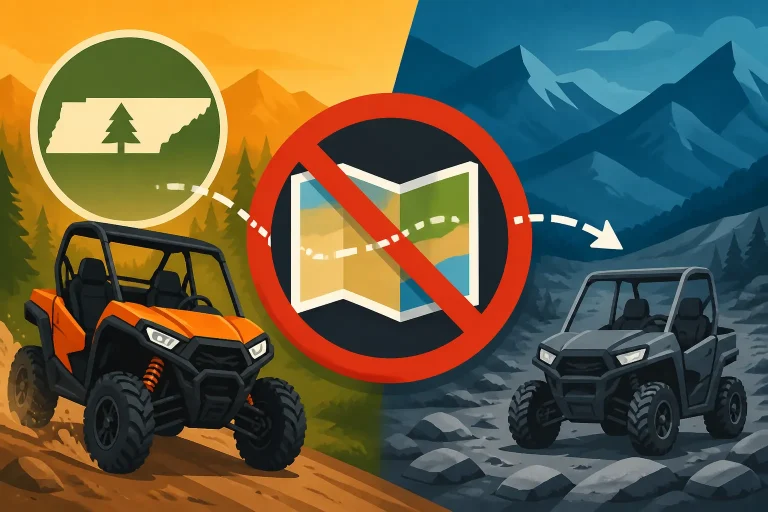
Brimstone’s permit is for Brimstone; it is not a statewide trail pass. A permit from another riding area should not be assumed to work there either. The same is true in reverse: having a Brimstone permit does not automatically authorize riding at another park or on public roads. For the broader distinction, see Why a Tennessee Park Permit Does Not Travel and Why Tennessee Reciprocates Nothing.
A waiver also does not change the rules that apply to the machine or the ride. Riders still need to follow the park’s current operating requirements, posted notices, and any applicable Tennessee rules. If you are unsure whether a permit covers your passenger or a specific type of ride, ask the office before setting out. Does a Rental Cover a Brimstone Passenger? addresses a common question for rental groups, but confirm the arrangement for your particular booking.
Read carefully instead of signing from memory
People often sign forms routinely when checking in, but it is worth slowing down when the form covers risks, equipment, or a minor. Check that the names and details are accurate. Make sure you understand whether the form applies only to the named participant or also addresses other people in the group. If a blank is unclear, ask before filling it in; do not guess about legal names, guardian relationships, or who is responsible for a child.
If you are signing for yourself, do not sign on behalf of another adult unless the form and staff explicitly permit it. If you are a parent or guardian, ask whether the form requires your signature, the minor’s signature, or both. The rules can differ by age and by the type of activity, so a vague answer such as “the kids are covered” is not enough. The office can tell you which signature it needs, while questions about what a signature means legally may require qualified legal advice.
Keep a copy or photograph of completed paperwork only if the office permits it and doing so does not expose other people’s private information. Ask whether you receive confirmation or need to retain any receipt, permit, or identification item during the ride. A waiver copy is not a substitute for a trail permit or proof of payment if those are separately required.
Minors, Groups, Rentals, and Common Check-In Problems
Families and riders under 18
When children are in the party, verify the waiver and supervision process before leaving home. The adult accompanying a child may not necessarily have authority to sign for that child. Ask whether Brimstone requires a parent or legal guardian to be physically present, whether the young rider must also sign, and whether any age-based riding restrictions apply to the activity you booked.
Do not rely on an assumption that a parent can complete a form remotely or send a signed note with another adult. If a parent cannot attend, call ahead and ask what Brimstone accepts. If there is no approved alternative, arranging for the appropriate adult to be present is safer than arriving and discovering the child cannot check in. The topic of who signs is also covered in Which Adult Signs a Tennessee Waiver, while Brimstone’s Rate for Riders Seventeen and Under is relevant to separate age-related permit questions. Confirm current terms directly before the visit.
For a family group, make a simple roster with each person’s name, age, role, and whether they will drive or ride as a passenger. This helps you ask focused questions and catch missing signatures early. Do not assume a child who will only ride as a passenger is exempt from paperwork.
Organized rides and larger parties
For a club outing, work group, or other organized ride, check whether the organizer must complete any separate event paperwork. Individual participant waivers and event approval are different matters. A signed waiver does not necessarily authorize an organized activity, commercial service, or other use that may require advance permission.
Send the organizer’s questions to the office before the group arrives. Ask how check-in should be coordinated, whether participants can sign separately, and what the organizer needs to communicate to the group. Avoid collecting sensitive information or signatures unless you have a clear reason and are authorized to do so. It is usually more reliable for each participant to follow the process Brimstone provides.
If a group is split between riders, passengers, and people who are only visiting the staging area, make those distinctions clear when asking about paperwork. The office can tell you who must sign for each role. This is also a good time to clarify permit coverage, since a waiver for one participant does not mean an entire group is covered by one permit.
Rental customers
Rental customers may encounter several forms: the rental agreement, a damage or use acknowledgment, and the recreation-area waiver. Ask the rental provider which paperwork it handles and whether you still need to stop at the Brimstone office. Do not assume the rental company’s form covers every requirement at the park.
Before signing a rental agreement, understand the provider’s instructions for permitted routes, passengers, returns, and reporting problems. Those terms are separate from the Brimstone waiver. If you are comparing the two, What a Tennessee Waiver Does Not Cover offers context on why a waiver should not be treated as complete protection from every responsibility or cost.
If the rental booking is for a family or group, check age and passenger rules with both the outfitter and Brimstone. A rental company may set its own driver qualifications, while the park has separate access and permit requirements. If the answers do not match, ask each party to explain which rule applies to its part of the visit before you pay or depart.
If something is missing or unclear
If someone forgot identification, a guardian is absent, or a name is wrong, speak with the office before signing or riding. Do not alter a form to make it appear that a requirement has been met. Staff can explain whether the issue can be corrected, whether another document is acceptable, or whether the person must return with the required information.
If the office is closed when you arrive, do not assume that a signed waiver from another visit, a photo of a permit, or a different park’s paperwork is enough. Check Brimstone’s current instructions for after-hours arrival and contact options. If you cannot confirm that the waiver and permit requirements are satisfied, delay riding until you know what is accepted.
Keep the distinction clear throughout the visit: the waiver concerns participation and stated terms; the permit concerns access to the riding area. Both may matter, and neither should be treated as a substitute for the other. Before loading up, check current Brimstone instructions, make sure each person has completed the correct steps, and verify that your group has the permit it needs for that day.
Disclaimer
This article is for general informational purposes only and does not constitute professional advice. Laws, prices and regulations vary by location and change over time. Consult a qualified professional for guidance on your specific situation.