Riding Unicoi County Roads
There's nothing quite like the freedom of exploring the beautiful Tennessee landscape on your ATV or UTV. But if you've ever tried to figure out exactly where you can legally ride your machine on public roads, especially in scenic spots like Unicoi County, you've probably felt a bit like you're trying to solve a complicated riddle. With ever-evolving laws and local ordinances, it can be a real headache to know what's allowed and what could land you a hefty fine. This comprehensive guide is here to clear up that confusion, offering clear, actionable information on how to navigate the roads of Unicoi County safely and legally.
Understanding Tennessee's Approach to OHV Road Use
For years, the thought of legally riding your ATV or UTV on a public road in Tennessee was pretty much a pipe dream for most recreational riders. The state generally kept a tight leash on off-highway vehicles, viewing them as machines designed specifically for dirt, trails, and private land, not asphalt and traffic. This led to a lot of frustration for riders who wanted to connect trails, access services in town, or simply enjoy a scenic backroad cruise. It felt like you were always hauling your machine on a trailer, even for the shortest distances.
However, recent legislative changes have started to shift this paradigm, creating specific pathways for some counties to allow limited road use. It's not a free-for-all, and it's certainly not uniform across the entire state, which is where a lot of the confusion comes in. What's perfectly fine in one county might be strictly forbidden just a few miles down the road. Understanding this general framework is key before diving into the specifics of Unicoi County.
The General Statewide Rules for ATVs and UTVs
Before any county-specific allowances come into play, it's crucial to grasp the baseline state laws that historically governed OHV use on public roads. Generally speaking, Tennessee has prohibited the operation of ATVs and UTVs on public streets, roads, and highways. This broad prohibition was designed to keep these machines, which lack many of the safety features of traditional cars, off thoroughfares where they could pose a risk to themselves and other motorists.
These general rules included strict limitations on where and when you could ride. For instance, riding during daylight hours was typically the only exception, and even then, usually only to cross a road at a ninety-degree angle, not to travel down it. Speed limits for OHVs on any permissible road crossings were often much lower than the posted limit for other vehicles, emphasizing caution. Furthermore, interstates and other multi-lane state highways remained absolutely off-limits, regardless of any local ordinances. The state prioritized safety, and for a long time, that meant keeping OHVs almost exclusively off paved public roads. You can learn more about [Tennessee Road Use Rules for ATVs].
What Changed with Adventure Tourism Districts
The real game-changer for counties like Unicoi came with the creation of "Adventure Tourism Districts" in Tennessee. This wasn't just a catchy name; it was a legislative acknowledgment of the significant economic impact that outdoor recreation, particularly OHV riding, could have on certain rural communities. Many counties, especially those with vast stretches of natural beauty and existing trail systems, saw the potential to attract more tourists, support local businesses, and boost their economies by allowing OHV access to specific roads.
The state law, specifically House Bill 810 passed in 2025, carved out an exception to the general prohibition. It allowed certain counties, primarily those already known for their robust trail riding opportunities, to designate specific roads for OHV use. This was a direct response to the demand from riders and local communities who felt constrained by the previous blanket restrictions. The idea was to create a more integrated riding experience, letting riders move from trailheads to towns for gas, food, and lodging, all while supporting the burgeoning adventure tourism industry. You can dive deeper into [Tennessee's Adventure Tourism Districts] to understand the full scope of this legislation.
Unicoi County: A Designated Adventure Tourism District
Unicoi County is one of the beneficiaries of this forward-thinking legislation, placing it squarely within the new framework for OHV road use. This designation is a big deal for riders and local businesses alike, offering new possibilities for exploration and commerce. It means Unicoi County has been recognized by the state legislature as a place where off-highway vehicle recreation is not just permitted, but actively encouraged within a structured legal framework.
However, this doesn't mean every road in Unicoi County is now fair game. The state law provides the authority to the county, but the county itself still has the responsibility to enact specific ordinances, define designated routes, and communicate those to the public. This two-tiered system—state authorization followed by local implementation—is what makes understanding the rules so critical for riders.
The Impact of Being One of "The Ten Counties"
Unicoi County is explicitly named as one of [The Ten Counties Named in Tennessee Law] that are authorized to establish designated routes for ATVs and UTVs. This legislative inclusion is a powerful endorsement of Unicoi's potential as an adventure tourism destination. For riders, it means that instead of a blanket ban, Unicoi County has the legal ability to open up certain public roads, typically county-maintained roads, to OHV traffic.
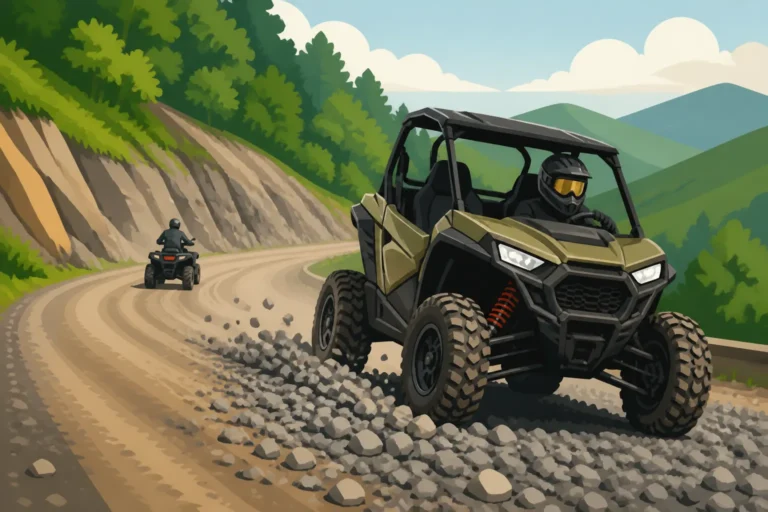
What kinds of roads are we talking about? Often, these are unpaved county roads, gravel roads, or less-trafficked paved routes that connect trail systems, provide access to scenic overlooks, or lead to services in small towns. The intention is to facilitate a continuous riding experience, allowing riders to seamlessly transition from dedicated trails to connector roads and back again, all without the constant need to load and unload their machines onto a trailer. This designation also opens up economic opportunities, as riders are more likely to spend money in communities where they can easily access amenities from their machines.
Identifying Open Roads in Unicoi County
Even with Unicoi County's designation, it's not enough to simply know the county can open roads. The crucial next step is to find out which specific roads they have opened. The state law requires these designated counties to publish clear, publicly accessible lists of roads where OHV operation is permitted. This means you can't just assume; you must check the official county ordinances or maps.
Typically, Unicoi County's designated roads will be those posted with specific signage indicating OHV access, or they will be explicitly listed in official documents from the county mayor's office or the county clerk's office. Riders should look for information published on the county's official website, local government offices, or even at popular trailheads and visitor centers. It's not uncommon for these lists to be updated periodically, so a quick check before each trip is always a good idea. Remember, riding a road not on the designated list, even in a permitted county, could still lead to a citation for [Tennessee Fines for Illegal UTV Road Use].
A helpful approach is to think of it like this: the state gave Unicoi County a toolbox, and now Unicoi County is using those tools to build specific pathways for riders. Your job as a rider is to find the blueprint for those pathways before you start your engine.
Preparing Your Machine and Yourself for Unicoi Roads
Riding legally on Unicoi County roads isn't just about knowing which roads are open; it's also about ensuring your machine is properly equipped and you, as the operator, meet all the necessary requirements. Just because a road is designated for OHV use doesn't mean you can just hop on any machine and go. The state and local authorities still impose strict rules to ensure the safety of OHV riders and other road users. Think of it as preparing your machine for battle – you need the right armor and the right training.
Mandatory Equipment and Safety Gear
When operating your ATV or UTV on any public road in Tennessee, even a designated one in Unicoi County, your machine must meet specific equipment requirements. This isn't optional; it's about road legality and safety.
- Headlights and Taillights: Your machine must have working headlights and taillights. While many OHVs come equipped with these for trail use, ensure they are fully functional and visible for road conditions, especially if you plan on riding near dusk or dawn (though generally, [Riding Only Between Sunrise and Sunset] is the rule).
- Brake Lights: A functional brake light is crucial for signaling stops to any vehicles behind you.
- Mirrors: You will need at least one rearview mirror, and often two, for adequate visibility of traffic approaching from behind. Many aftermarket companies, like SuperATV, offer a wide range of durable mirrors designed specifically for ATVs and UTVs that can withstand the rigors of off-road and on-road riding.
- Horn: A working horn is necessary to alert other drivers or pedestrians to your presence.
- Tires: Your tires must be in good condition and suitable for road use. While knobby off-road tires are great for mud and rocks, ensure they are DOT-compliant if the local ordinance requires it for paved roads.
- Seatbelts/Restraints: If your UTV is equipped with seatbelts, they must be worn by all occupants. This is a non-negotiable safety feature.
- Spark Arrester: A U.S. Forest Service-approved spark arrester is typically required for any off-road machine, whether on a trail or a connecting road, to prevent wildfires.
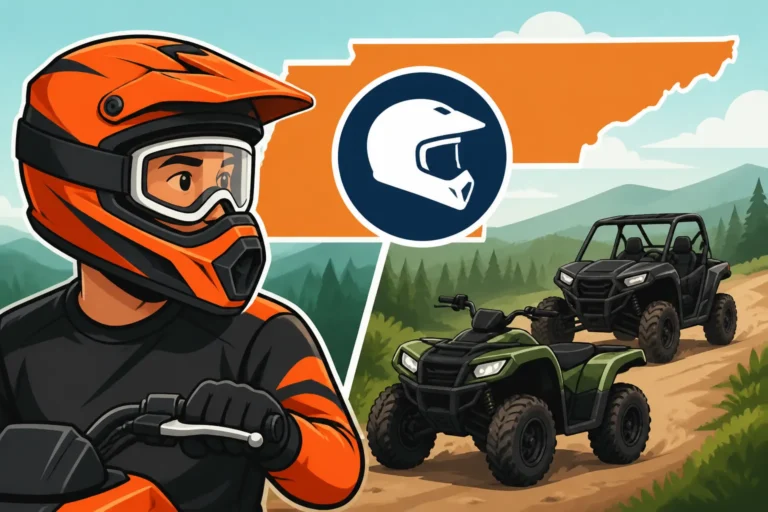
- Helmets: Tennessee's helmet laws are a serious matter. For riders and passengers under the age of 18, helmets are mandatory on public roads. While the law might be less clear for adults on designated county roads, it is always a wise decision to wear a DOT-compliant helmet for your safety. Always prioritize safety, as explained in [Helmet Rules for Tennessee Riders].
Always check the specific Unicoi County ordinances, as they might have additional equipment requirements beyond the state minimums. Ensuring your machine is up to snuff before you leave your driveway will save you headaches—and potential fines—later.
Driver Qualifications, Insurance, and Legalities
It's not just your machine that needs to be ready; you, the driver, also have to meet certain legal requirements to operate an OHV on Unicoi County roads.
- Driver's License: Anyone operating an ATV or UTV on a public road in Tennessee, including designated county roads, must possess a valid driver's license. This means a standard automobile driver's license, not just a permit or an off-road certification. This is a key part of [Tennessee Driver's License Rules for UTVs].
- Minimum Age: The operator must generally be at least 16 years old to drive an OHV on public roads. This aligns with standard driving age requirements and is crucial for safety and legal compliance.
- Insurance: Proof of financial responsibility (i.e., liability insurance) is usually required. Just like with your car, if you're involved in an accident on a public road, you need to be covered. Carry your insurance card with you, as it's something a deputy will likely check during a roadside stop. Understanding [Tennessee UTV Insurance Requirement] is essential for all road users.
- Vehicle Classification: Be aware of how your machine is classified. Tennessee differentiates between Class I and Class II OHVs, as well as Low Speed and Medium Speed Vehicles. Your machine's classification can impact where and how you can ride it, particularly if it's over a certain width or weight.
- Registration/Titling: While Tennessee does not register OHVs for road use like cars, it does require them to be titled. You should have proof of title, and some counties might require a visible sticker indicating proper titling, like the Tennessee Department of Revenue (TDR) sticker.
- Local Permits: While the state enables Unicoi County, the county itself might implement its own local permits or fees for road access. Always check with the Unicoi County government or local tourism boards for any additional permits required.
Remember, ignorance of the law is not a defense. Taking the time to understand these requirements will ensure your ride on Unicoi County roads is both exhilarating and entirely legal.
Navigating and Respecting Unicoi County's Roadways
With your machine prepped and your legal ducks in a row, the next step is actually hitting those designated roads in Unicoi County. This involves not just knowing where to go, but how to conduct yourself safely and respectfully in a shared environment. It's a privilege to ride these roads, and responsible behavior is key to maintaining that privilege for all riders.
Deciphering Restricted and Open Road Lists
The biggest challenge for many riders in counties with designated OHV routes is understanding exactly which roads are open and which are not. As mentioned, Unicoi County will publish these lists, and it's your responsibility to consult them.
Here's how to approach it:
- Official Sources are Key: Always go directly to Unicoi County's official government website (e.g., the County Clerk's office, County Mayor's office, or Sheriff's Department) for the most up-to-date information. Avoid relying solely on forum posts or social media groups, as information can quickly become outdated.
- Look for Maps and Signage: Ideally, the county will provide maps highlighting designated roads. On the ground, look for specific signage indicating OHV access points or routes. The absence of such signage should be taken as a strong indicator that the road is not open to OHVs.
- Road Types and Speed Limits: Designated roads are typically county roads, not state highways or interstates. Pay close attention to posted speed limits for OHVs, which may be lower than for regular vehicles. Generally, [Riding a Road Posted 45 mph or Under] is the rule, meaning roads with higher limits are usually off-limits.
- Connect the Dots: Often, designated roads are meant to connect existing trail systems or provide access to specific points of interest. Plan your route in advance, ensuring you understand where the designated section begins and ends. Using GPS apps that allow you to overlay custom maps can be incredibly helpful here.
- Don't Assume: Just because a road looks like a good place to ride, or you've seen others riding it, doesn't mean it's legal. Always verify with official sources. A natural break in a trail might lead to a tempting shortcut on a paved road, but unless that road is specifically designated, it's off-limits.
Here's a simplified example of how Unicoi County might communicate its designated roads:
| Road Type | State Highway (e.g., SR 107) | County Maintained Gravel Road (e.g., Rocky Fork Road) | County Maintained Paved Road (e.g., Spivey Mountain Road) | Interstates (e.g., I-26) |
|---|---|---|---|---|
| OHV Status | Generally Prohibited | Potentially Designated | Potentially Designated (with limits) | Strictly Prohibited |
| Conditions Apply | N/A | Check County List; Daytime, <45 mph, Equipment Rules | Check County List; Daytime, <45 mph, Equipment Rules | N/A |
| Signage | No OHV signs | Look for "OHV Route" signs | Look for "OHV Route" signs | No OHV signs |
Always consult the official Unicoi County releases for accurate and current information.
Being a Responsible Rider in a Mixed-Use Environment
Riding an OHV on public roads, even designated ones, means sharing the space with cars, trucks, cyclists, and pedestrians. This requires a heightened level of responsibility and courtesy.
- Obey All Traffic Laws: Treat your OHV like any other vehicle on the road. This means obeying stop signs, yield signs, traffic signals, and posted speed limits. Failure to do so not only puts you at risk but also jeopardizes the privilege of road access for all OHV riders.
- Stay Right and Single File: On narrow roads or those with blind curves, stay as far to the right as safely possible. If riding in a group, ride single file to minimize your footprint and allow other vehicles to pass safely.
- Manage Dust and Noise: OHVs can kick up a lot of dust, especially on gravel roads. Reduce your speed when passing homes, other vehicles, or pedestrians to minimize dust clouds. Similarly, be mindful of your machine's exhaust noise. While some aftermarket parts, like those from SuperATV, can enhance performance, ensure your exhaust system meets sound regulations and doesn't become a nuisance to residents.
- Respect Private Property: Designated roads are public rights-of-way. Do not trespass onto private property from the road, even if it looks like an enticing path. This is a quick way to sour community relations and potentially lose road access.
- Leave No Trace: If you stop on the side of a designated road, pack out everything you pack in. Leave the area cleaner than you found it.
- Be Visible: Even during daylight hours, wear brightly colored clothing. Consider adding flags or additional lighting to your machine for maximum visibility, especially if riding with others. This enhances safety for everyone.
- Yield to Others: Be courteous to other road users. Slow down and give a friendly wave to pedestrians, cyclists, and horse riders. Remember, you are an ambassador for the OHV community.
By adhering to these principles, you contribute to a positive perception of OHV riding in Unicoi County, ensuring that the privilege of road access remains available for years to come. Enjoy the beautiful scenery of Unicoi County, but do so with respect for the land and its people. You can find more tips on [Tennessee Rules for Riding a County Road].
Disclaimer
This article is for general informational purposes only and does not constitute professional advice. Laws, prices and regulations vary by location and change over time. Consult a qualified professional for guidance on your specific situation.