Tennessee Rules for Towing With a UTV
It's an age-old question for many UTV owners across Tennessee: can I actually hitch something up to my machine and haul it down the road, or even just across my property? The versatility of a UTV is a huge part of its appeal, but understanding the line between what you can do and what you're legally allowed to do, especially when it comes to towing, can feel like navigating a rocky creek bed without a map. This guide is here to clear up that confusion, offering clear, actionable information on Tennessee's rules for towing with your UTV, whether you're planning on hauling a small utility trailer, pulling a fishing boat to the lake, or just moving equipment around your farm.
Understanding the Basics of UTV Towing in Tennessee
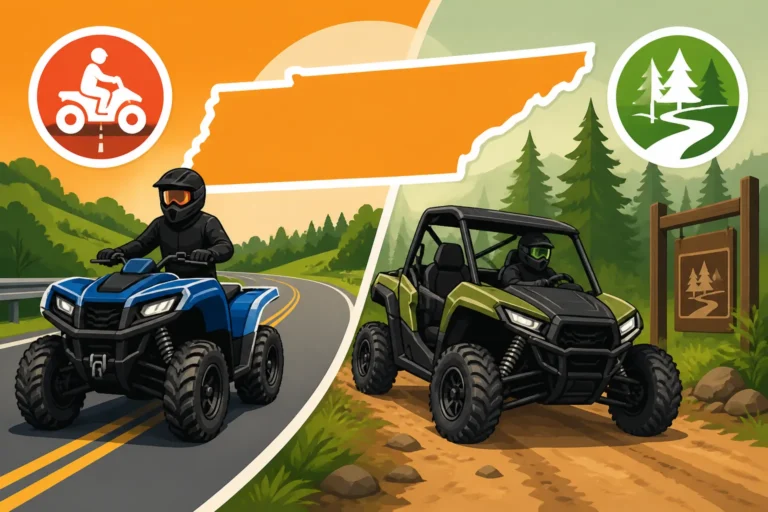
Before you even think about hitching up that trailer, it's crucial to understand that Tennessee treats UTVs differently depending on where they are operated and what they are doing. This distinction is absolutely critical when it comes to towing. You might be able to tow a substantial load on private land or within a designated off-road park, but that same setup could land you in hot water the moment your tires hit a public road.
The state's approach isn't always straightforward, and it's easy for folks to assume that if their UTV has a hitch, they can use it. Unfortunately, that's not always the case, especially on public thoroughfares. Tennessee law is primarily concerned with public safety and the safe operation of vehicles on its roads. For UTVs, which are generally not designed or regulated like conventional on-road vehicles, this means extra scrutiny when they venture onto paved surfaces, especially with a load in tow.
What Constitutes "Towing" for a UTV?
When we talk about towing with a UTV, it's not always just about pulling a large utility trailer. It can encompass a range of activities, and the legal implications might shift based on what you're actually pulling.
- Utility Trailers: This is perhaps the most common scenario, whether it's a small trailer to haul firewood, gardening tools, or even a small boat or jet ski. These trailers typically have their own wheels and often require proper lighting and, depending on weight, even brakes when used on public roads.
- Agricultural Implements: For those in rural areas or on larger properties, a UTV might be used to pull plows, spreaders, or small cultivators. Often, these are used exclusively on private land or within specific agricultural exemptions.
- Recovery and Assistance: Sometimes towing means pulling a stuck friend out of the mud, or retrieving another disabled vehicle. While this isn't usually "towing" in the sense of hauling cargo, it involves similar forces and equipment, and its legality on public roads is just as restricted.
- Off-Road Gear Trailers: Many riders going on extended trips to places like Windrock or Brimstone might want to tow a small trailer with extra fuel, camping gear, or tools. This usually falls under the rules of the specific riding area rather than general road laws.
The key takeaway here is that "towing" isn't a single, uniform act in the eyes of the law. The context—what you're towing, where you're towing it, and for what purpose—matters immensely.
UTV Road Access and How it Impacts Towing
Before you can even consider towing on a road, your UTV must be legally allowed on that road in the first place. This is a huge hurdle for UTV owners in Tennessee. Generally, UTVs are classified as Off-Highway Vehicles (OHVs) and are not designed for, or typically permitted on, public roads.
However, there are exceptions. Tennessee has made some strides in recent years to allow UTVs on certain roads, particularly in designated "Adventure Tourism Districts" like parts of Scott, Anderson, and Campbell counties. These areas have specific rules about [Tennessee UTV Road Requirements], including speed limits, equipment, and daylight-only operation. If your UTV is street-legal under these specific provisions, then you might begin to consider towing, but it's still not a free-for-all.
For example, if you're in an area like Huntsville, where certain streets are open to UTVs from sunrise to sunset, you might be tempted to use your UTV to haul some supplies from the hardware store. But you'll need to confirm that towing is also permitted under those specific local ordinances, and ensure your trailer meets all requirements.
On state highways, the rules are much stricter, often prohibiting UTVs entirely, let alone UTVs towing a trailer. Crossing a two-lane road at a ninety-degree angle is sometimes allowed, but that's a quick dash, not sustained towing. [Tennessee Rules for Crossing a Highway] rarely extend to leisurely drives with a trailer. This general restriction on road use is the foundation upon which all towing rules are built. If your UTV can't be there, it certainly can't be there with a trailer.
Legal Considerations for On-Road Towing with a UTV in Tennessee
This is where many UTV owners run into the most confusion and potential trouble. While a UTV might be perfectly capable of pulling a load, the legal framework for doing so on Tennessee's public roads is highly restrictive. It's not just about the UTV itself, but also about the trailer and the combined unit's compliance with state vehicle codes.
Road Classification and UTV Eligibility
The primary barrier to on-road towing is the limited legal access for UTVs on public roads. As we mentioned, most UTVs are not considered street-legal in Tennessee. There are exceptions, primarily for:
- Designated Adventure Tourism Districts: In counties like Scott, Anderson, and Campbell, local ordinances, often facilitated by state legislation, have opened certain county roads to UTVs. These areas usually have strict rules on speed, operating hours, and required equipment. Even here, however, explicit permission for towing must be verified. Just because you can ride your UTV on a road doesn't automatically mean you can tow a trailer.
- Agricultural Exemption: If you're genuinely using your UTV for farm work, there's a specific [Tennessee's Agricultural Exception] that often allows the operation of OHVs on roads for short distances between fields or to access different parts of your property. This exemption might extend to towing small farm implements or supplies directly related to agricultural work. However, this is not a blanket pass for general utility use or recreational towing. The nature of the exemption is tied to farm operations, not personal errands.
- Low and Medium Speed Vehicles: Tennessee has specific classifications for [Tennessee's Low Speed Vehicle Category] and [Tennessee's Medium Speed Vehicle Category]. These are purpose-built vehicles that meet federal safety standards for road use and are registered like cars. While some UTVs can be modified to meet these standards, most stock UTVs do not. If your vehicle is legally classified and registered as an LSV or MSV, then it would follow the towing rules for those vehicle types, which are distinct from OHV rules.
For the vast majority of UTV owners, the ability to tow on a public road is severely curtailed by these limitations.
Trailer Requirements for On-Road Use
Let's say, for a moment, that your UTV is legally allowed on a specific public road. Now, what about the trailer you're towing? Tennessee has clear rules for trailers operated on public roads, regardless of what's pulling them.
- Registration and Tag: Depending on its weight and size, a trailer may need to be registered with the state and display a license plate. If it's a small utility trailer designed for light loads, it might fall under an unregistered category, but anything substantial will likely need paperwork.
- Lighting: This is non-negotiable for any trailer used on public roads, especially after dark (though UTVs themselves often have daylight-only restrictions). Brake lights, tail lights, and turn signals are typically required to be operational and visible.
- Safety Chains: All trailers must be connected to the towing vehicle by two independent safety chains or cables, strong enough to prevent the trailer from separating from the towing vehicle if the primary hitch fails.
- Brakes: For heavier trailers, independent braking systems might be required. The specific weight thresholds vary, so it's essential to check the Tennessee Department of Safety guidelines.
- Width and Length: Trailers, when combined with the towing vehicle, must not exceed certain maximum width and length restrictions. UTVs are generally wider than many vehicles, so ensure your combined setup doesn't illegally stretch across the lane.
If your trailer doesn't meet these standards, it doesn't matter if your UTV is permitted on the road; you'll still be in violation. This is where companies like SuperATV come in handy, offering a variety of heavy-duty hitches and wiring kits that can help ensure your UTV is properly equipped to connect to a compliant trailer, although always remember to check the legal specifics for your particular use case.
Speed Limits and Equipment for Towing
Even in areas where UTVs are allowed on roads, there are typically speed restrictions. For example, [Tennessee UTV Speed Limit on Roads] often caps machines at 35 mph or on roads posted 45 mph or less. Towing adds another layer of complexity.
- Reduced Speed: Towing a trailer, especially off-road or with a heavy load, naturally reduces your speed capability. On public roads, operating significantly below the posted speed limit can itself be a hazard and, in some cases, lead to citations for impeding traffic.
- Proper Hitch and Receiver: Your UTV must have a properly installed hitch receiver and a ball of the correct size for your trailer. Many UTVs come with a standard 2-inch receiver, but always double-check its weight rating against the trailer and its load. Ensure the ball mount and hitch pin are secure.
- Weight Capacity: Your UTV has a maximum towing capacity specified by the manufacturer. Exceeding this can lead to mechanical failure, loss of control, and is highly unsafe. This isn't just about what your engine can pull, but what your frame, suspension, and braking system can safely handle.
It's a lot to consider, and the bottom line is that on-road towing with a UTV in Tennessee is highly restricted and often not practical or legal for general use. Stick to these rules, or you risk fines and a Class C Misdemeanor.
Off-Road Towing: What's Allowed on Trails and Private Land
While public road towing is a minefield of regulations, off-road towing is generally much more permissible, provided you adhere to the rules of the specific property or riding area. This is where the utility of a UTV truly shines.
Towing on Designated OHV Trails and Parks
Tennessee is blessed with fantastic riding areas like Windrock Park, Brimstone Recreation, and Ride Royal Blue Resort. These parks are set up to handle all sorts of OHVs, and towing is often allowed, within their specific guidelines.
- Park-Specific Rules: Each park will have its own rules regarding towing. This might include limits on trailer size, specific areas where towing is permitted, or even requirements for your UTV's engine size or seating capacity if you're pulling a certain type of trailer. Always check the park's website or visitor center before you go. For instance, at a place like Windrock, you might see riders pulling small gear trailers to remote campsites, but they're doing so on private land with specific permits.
- Safety First: Even on private trails, safety is paramount. Overloading your UTV, using an improper hitch, or towing at excessive speeds can be incredibly dangerous on uneven terrain. The same principles of having strong safety chains and appropriate lighting for visibility (especially if riding near dusk or dawn) apply, even if not legally mandated.
- Recovery Operations: Within these parks, it's common to see UTVs assisting others with recovery. Having a robust tow strap or even a winch (many riders get theirs from trusted brands like SuperATV) is invaluable for helping a buddy out of a tough spot or self-recovering. These aren't typically "towing" in the cargo sense, but they are essential aspects of off-road utility.
You'll find that parks are generally much more lenient than public roads because they manage the environment and user safety directly. However, respect their rules—they're there for everyone's protection. [Tennessee Rules for Riding a WMA Trail] might also include specific towing rules if you're on public hunting land.
Towing on Private Land and Farm Use
This is perhaps the most common and least regulated scenario for UTV towing. On your own private property, or with express permission from a landowner, you have considerable freedom.
- Landowner Permission: If you're not on your own land, always get [Tennessee Landowner Permission Requirements] in writing. This protects you from trespass charges and ensures you're operating within the owner's wishes, which might include specific rules about towing.
- Farm Utility: For many farmers across rural Tennessee, a UTV is an indispensable workhorse. It's used for hauling feed, tools, fencing materials, or even small livestock trailers around the farm. As long as these operations remain on private property, the state's stringent road-use rules don't apply. This includes crossing farm lanes or gravel roads that are part of the property.
- Common Sense and Safety: Even with legal freedom, common sense and safety are critical. Don't overload your UTV beyond its capacity. Ensure your hitch is secure, and your load is balanced. Accidents on private land can be just as severe as those on public roads. If you're using your UTV to haul materials for a project, like clearing timber in a holler near your home, ensure you have the right drawbar and tow strap.
In these environments, your primary concern shifts from legal compliance to practical safety and efficiency. This is where the sheer utility of a UTV for towing truly shines without the red tape.
Essential Gear and Best Practices for Safe UTV Towing
Regardless of whether you're towing on a designated trail or just moving brush on your back forty, having the right gear and following best practices can make all the difference for safety and efficiency.
Must-Have Towing Equipment
Having the right tools for the job isn't just about convenience; it's about preventing accidents and costly damage.
- Hitch Receiver and Ball: Most UTVs come with a standard 2-inch receiver. Ensure your hitch ball matches your trailer's coupler size (usually 1 7/8 inch or 2 inch). Always check the weight rating of both your UTV's receiver and the hitch ball itself. Many manufacturers, including SuperATV, offer specialized UTV hitches designed for optimal fit and performance, sometimes even increasing ground clearance.
- Tow Straps or Recovery Straps: Essential for recovery, these are typically made of nylon or polyester with some stretch, designed to absorb shock. Do not use chains for recovery as they can snap dangerously. A good quality tow strap is a lifesaver when you or a friend gets stuck.
- Winch: For serious recovery or self-extraction, a winch is invaluable. Mounted on the front or rear of your UTV, it can pull impressive loads. Look for reputable brands and ensure it's rated for at least 1.5 times your UTV's gross vehicle weight.
- Safety Chains: As mentioned, if you're even contemplating road use, safety chains are legally required. Even off-road, they provide a critical backup if your primary hitch fails.
- Lighting and Wiring: If your trailer needs lights, ensure your UTV has the correct wiring harness to power them. Many UTVs come pre-wired or have kits available.
- Appropriate Tires: Towing can put extra strain on your tires. Ensure they are properly inflated and have adequate tread for the terrain. If you're on soft ground, a wider footprint might be beneficial.
Safe Towing Practices
Even with all the right gear, improper technique can lead to disaster. These tips apply universally, from a paved county road to a muddy trail at Brimstone.
- Check Your Load: Ensure the trailer's load is balanced. Too much weight on the tongue (the part that connects to the hitch) can put excessive strain on your UTV's suspension and potentially lift the front tires, reducing steering control. Too little tongue weight can cause the trailer to sway violently, especially at speed. A good rule of thumb is 10-15% of the total trailer weight on the tongue.
- Inspect Your Equipment: Before every tow, quickly inspect your hitch, ball, safety chains, and trailer coupler. Make sure everything is securely fastened, free of damage, and functioning correctly. Check tire pressure on both the UTV and the trailer.
- Drive Slower and Smoother: Towing significantly increases your stopping distance and makes sharp turns more challenging. Drive at a reduced speed, especially on rough terrain or when approaching turns. Avoid sudden acceleration or braking.
- Anticipate: Look further ahead than usual. Give yourself more time and space to react to changes in the trail or road. This is particularly important on winding trails or when navigating obstacles.
- Use Lower Gears: When climbing hills or navigating difficult terrain, shift your UTV into a lower gear. This provides more torque, reduces strain on your engine and transmission, and gives you better control.
- Watch Your Mirrors: Constantly monitor your trailer through your mirrors. Look for swaying, tire issues, or any signs of trouble. This is especially important on public roads where other traffic is a factor.
- Practice: If you're new to towing with a UTV, practice in a safe, open area before taking on challenging trails or public roads. Get a feel for how your UTV handles with a load. Backing up with a trailer is a skill that takes practice!
By adhering to these guidelines and having the proper equipment, you can ensure that your UTV remains the incredibly versatile tool it's designed to be, helping you accomplish tasks safely and efficiently, whether you're working the farm or just bringing supplies to your favorite camping spot.
Disclaimer
This article is for general informational purposes only and does not constitute professional advice. Laws, prices and regulations vary by location and change over time. Consult a qualified professional for guidance on your specific situation.