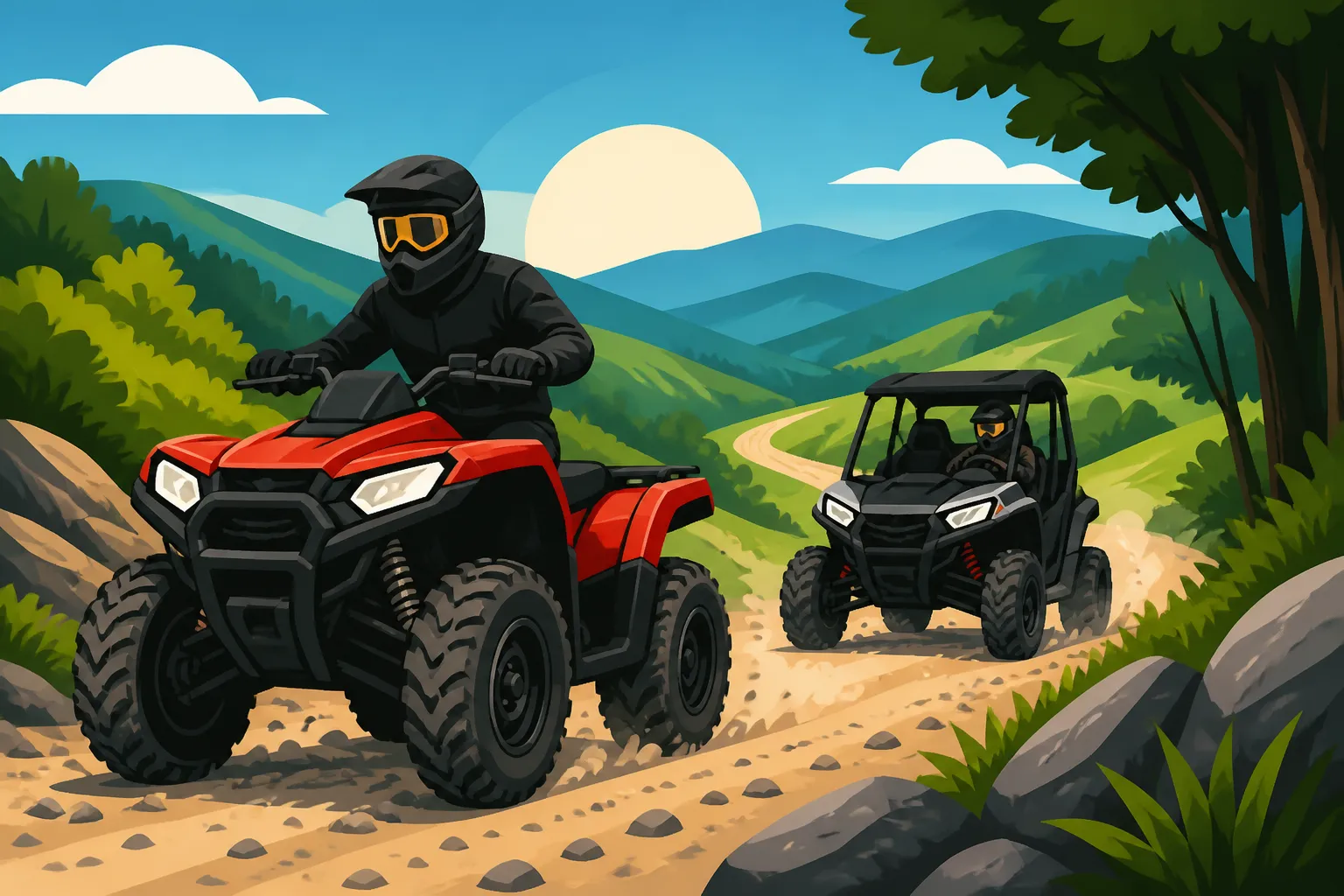
Tennessee Rules for Riding a Gravel Road
Ah, the gravel road conundrum! So many of us look at those winding, unpaved stretches of Tennessee beauty and think, "Surely, this is where my ATV or UTV can roam freely." It feels like off-road territory, doesn't it? But then you hear whispers of laws, fines, and confusion, leaving you scratching your head about whether you're breaking the rules just by trying to get from your cabin to the trailhead, or even from one part of your own property to another. This guide is here to clear up that confusion, diving deep into Tennessee's rules for riding a gravel road, so you can ride with confidence, not worry.
The Nuance of Tennessee's Road Laws for OHVs
Let's face it, when you're out exploring the stunning Tennessee countryside, those gravel roads often seem like a natural extension of the trails you love. They're unpaved, sometimes dusty, sometimes muddy – they feel like they should be fair game for your off-highway vehicle (OHV). This common misconception, however, can lead to real trouble if you're not careful. Tennessee's laws regarding OHV use on public roads, including those made of gravel, are quite specific and often different from what riders assume.
Why Gravel Roads Feel Different
It's completely understandable why a gravel road might feel like a different beast than a paved highway. There's no double yellow line, often no shoulders, and sometimes you see more deer than cars. Many riders come from states or areas where "dirt roads" or "gravel roads" are indeed considered less regulated, or even explicitly open for OHV use to connect trails or access remote properties. You're just trying to get from point A to point B, maybe to a [Windrock Park at Oliver Springs, Tennessee] trailhead, or perhaps just to visit a neighbor down the holler. It feels like a practical, harmless solution. The frustration sets in when you realize that what feels right isn't necessarily what's legal.
The reality is that, in Tennessee, a gravel road, if it's a public right-of-way maintained by the county or state, is still legally considered a "road" in the eyes of the law. This distinction is crucial because it means that the general prohibitions against OHVs on public roads typically apply, regardless of whether that road is paved with asphalt or covered in crushed rock. So, while it might look and feel like an off-road adventure, you're technically on a road, and you need to play by specific road rules.
The Core Principle: Designated Roads Only
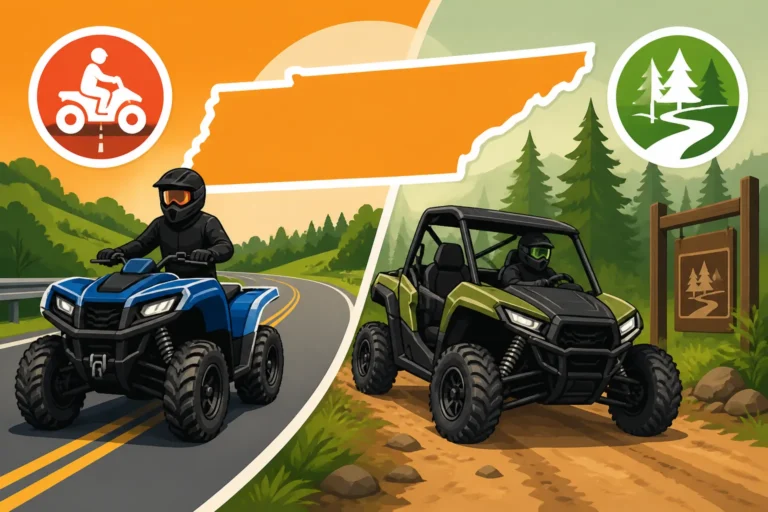
This brings us to the fundamental principle underpinning OHV road use in Tennessee: your ATV or UTV is generally not permitted on any public road, whether paved or gravel, unless that road has been specifically designated for OHV use. This isn't just a suggestion; it's the baseline rule. If you're on a public road that hasn't been explicitly opened for OHVs, you're likely in violation of the law.
The designation process is what makes all the difference. It's not about the surface material of the road; it's about its official legal classification and whether local or state authorities have taken specific action to allow OHVs. Without that official designation, a gravel road holds the same legal status as a paved road for OHV purposes – generally off-limits. This rule aims to manage safety, minimize road wear, and protect the public. So, before you even think about hitting that beautiful gravel stretch, your first question should always be: "Is this specific road designated for OHV use?" Without a clear "yes," the answer is usually "no."
Understanding the Exceptions: Adventure Tourism Districts and Local Ordinances
Now, don't despair entirely! While the general rule is "designated roads only," Tennessee has created mechanisms for opening up some of those enticing gravel roads for OHV use. The key is understanding how these exceptions work and realizing they aren't blanket permissions but rather very specific allowances tied to certain areas or local decisions.
The Power of Adventure Tourism Districts
One of the most significant developments for OHV enthusiasts in Tennessee has been the creation of "Adventure Tourism Districts." These are specific counties where the state legislature has empowered local governments to make decisions about OHV road access. There are currently ten counties named in the statute: Scott, Anderson, Campbell, Morgan, Jackson, Johnson, Perry, Unicoi, Fentress, and Hickman.
In these [Tennessee's Adventure Tourism Districts], counties have the authority to designate certain roads, including gravel roads, for OHV use. This means a gravel road that would normally be off-limits in, say, Loudon County, might be perfectly legal to ride in [Scott, Anderson and Campbell Counties] or [Morgan, Jackson and Johnson Counties], if the local government has passed an ordinance to specifically open it. This isn't a free-for-all, though. Each county must go through a formal process, and the designation is typically for specific roads or sections of roads, not the entire county road network. So, you might find that while County Road 123 (a gravel road) is open, County Road 456 (also gravel) remains closed. It's all about that official designation, often published as a list of open roads. These districts are a huge win for riders, but they demand that you do your homework on the ground.
County and City Ordinances
Beyond the Adventure Tourism Districts, other counties and even incorporated cities in Tennessee can also pass their own local ordinances to permit OHV use on specific roads within their jurisdiction. This is less common but still possible. Imagine a small town in a rural county that wants to encourage tourism from nearby trail systems; they might vote to open a few main streets or connecting gravel roads.
The challenge here is that these ordinances are hyper-local and can vary wildly. What's allowed in one county or town might be strictly forbidden just across the county line. This is why checking with the local county clerk's office, sheriff's department, or municipal government website is absolutely crucial. They are the keepers of the official lists and rules. You're looking for specific ordinances or published lists of designated roads where OHV use is permitted. Without this official documentation, you should always assume the road is closed to OHVs. The process for [How a Tennessee Town Opens Its Roads] often involves public hearings and specific criteria, making it a deliberate decision, not a casual one. For riders, this means diligence is key – you can't rely on word-of-mouth or what you see other people doing. Always verify the rules for your specific route before you ride.
The Equipment and Rider Requirements for Legal Road Use
Okay, so you've done your homework, and you've found that glorious gravel road in an Adventure Tourism District, or perhaps a local ordinance, that explicitly allows OHVs. That's fantastic! But just because the road is open doesn't mean you can roll out of your driveway as-is. Tennessee has specific requirements for both your machine and you, the rider, if you plan to use any public road, including designated gravel ones. This is where your OHV starts to look a little more like a conventional vehicle.
Machine Requirements for Road Use
If you're going to legally operate your ATV or UTV on a designated gravel road, your machine needs to be equipped for it. We're not talking about minor tweaks; we're talking about essential safety and signaling components. Generally, you'll need:
- Headlights: Must be on and functional.
- Taillights: Required for visibility from the rear.
- Brake Lights: To signal when you're slowing down or stopping.
- Turn Signals: Both front and rear, to indicate your intentions.
- Mirrors: Typically at least one rearview mirror, often two (one on each side) for full visibility.
- Horn: A working horn for signaling.
- Windshield: While not always explicitly required for all OHVs, many UTVs benefit greatly from a windshield, especially on dusty gravel roads, for safety and comfort. This is where aftermarket solutions really shine. You'll find plenty of kits and components to meet these needs, like those offered by SuperATV, which specializes in accessories designed to get your machine ready for various terrains, including road-legal conversions.
It's vital to remember that simply adding these accessories doesn't magically make your OHV street-legal everywhere. These modifications only make your machine eligible to be ridden on those specific designated roads. The moment you venture onto a non-designated public road, you're back to square one, regardless of your modifications. [Tennessee Equipment Rules for Road Use] are quite clear about what needs to be present.
Beyond these basic safety features, be aware of machine classifications. [Tennessee's Low Speed Vehicle Category] and [Tennessee's Medium Speed Vehicle Category] have their own distinct rules, typically involving vehicles that are manufactured to meet certain speed and safety standards. Most ATVs and many UTVs won't fall into these categories without extensive, often prohibitive, modifications and certifications. Also, be mindful of general size restrictions, such as the [2,500 Pounds and 80 Inches] rule, which dictates the maximum width and weight for some OHV categories, influencing which roads they might be allowed on.
Rider Requirements on Designated Roads
It's not just the machine that needs to be ready; you, the operator, also have responsibilities when riding on a designated gravel road.
- Driver's License: You must possess a valid driver's license to operate an OHV on any public road, including designated gravel roads. This isn't an "off-road license"; it's a standard Class D (or higher) Tennessee driver's license. [Tennessee Driver's License Rules for UTVs] are unambiguous here.
- Minimum Age: Generally, the minimum age to operate an OHV on a public road in Tennessee is 16. This aligns with standard driving age requirements. While younger riders can enjoy trails off-road with supervision, road use is a different ballgame. [Tennessee Minimum Age to Ride a Road] applies here.
- Helmet Laws: This is a point of frequent confusion. While Tennessee's helmet law for street-legal vehicles exempts adults in some cases, for OHVs (which are distinct from typical street-legal vehicles even when allowed on roads), the rules are usually stricter. [Tennessee Helmet Law for ATV Riders] generally mandates that all operators and passengers under the age of 18 must wear a helmet. Some interpretations might suggest that if your OHV technically meets all requirements to be considered a Low or Medium Speed Vehicle, then adult helmet laws for street-legal vehicles might apply, but for typical OHVs on designated roads, always assume the OHV helmet laws are in effect. It's always safest to wear a helmet, regardless of age, especially on rough gravel roads. For added safety and compliance, consider accessories from SuperATV that enhance visibility or provide structural protection, like robust roll cages or full doors, which complement helmet use.
- Insurance: You are required to carry liability insurance on your OHV if you're operating it on a public road. Just like with your car, this protects you and others in case of an accident. Always have proof of insurance with you. [Tennessee UTV Insurance Requirement] is a serious one – don't skip it.
By ensuring both your machine and your riding qualifications meet these standards, you're setting yourself up for a legal and safe experience on Tennessee's designated gravel roads.
Practical Steps for Riding a Gravel Road Legally
You're excited, you're informed, and you're ready to hit those gravel roads. But before you do, let's walk through the practical steps to ensure your ride is not just fun, but fully legal and free from unnecessary stress or fines. This isn't a "set it and forget it" situation; it requires proactive effort on your part.
Researching Your Route and Local Laws
This is the most critical step, and honestly, where most people fall short. You can't just assume a gravel road is open because you saw someone else on it, or because it "looks" like an ATV might belong there.
- Identify Your County: First, pinpoint the specific county (or counties) where you plan to ride. Remember, laws vary from place to place.
- Check the County's Official Website: Look for sections related to county ordinances, transportation, or even the sheriff's department. Many counties that allow OHV road use will have a specific ordinance or a published list of designated roads available online.
- Contact the County Clerk or Sheriff's Office: If you can't find clear information online, pick up the phone. The county clerk's office is often the repository for local ordinances, and the sheriff's department will know what they are enforcing. Ask for specific details about OHV use on county roads, especially gravel roads, and inquire about any maps or lists of designated routes.
- Look for Restricted Road Lists: Sometimes, it's easier to find a list of roads where OHVs are prohibited rather than where they are allowed. Even if it's a restricted list, it gives you valuable information. [Finding the Restricted Road List Your County Published] and [Checking a Restricted Road List] are crucial research steps.
- Assume Closed Until Proven Open: The safest approach in Tennessee is to operate under the assumption that any public road (paved or gravel) is off-limits to OHVs unless you have explicit, official documentation proving otherwise for that specific stretch of road.
What to Do on a Designated Gravel Road
Once you've confirmed that a specific gravel road is legally designated for OHV use and your machine and rider qualifications are in order, you can hit the road! However, riding on a public road, even a gravel one, comes with responsibilities:
- Adhere to Speed Limits: Just like any other vehicle, you must obey all posted speed limits. Gravel roads can be deceiving; while they may feel less formal, the speed limits are still there for a reason.
- Daylight Hours Only: Most county ordinances or state laws permitting OHV road use specify "daylight hours only." Unless a specific ordinance explicitly states otherwise, plan your rides between sunrise and sunset.
- Stay on the Designated Portion: If only a certain segment of a road is designated, make sure you don't accidentally venture beyond those boundaries. Pay attention to signage.
- Be Courteous to Other Traffic: Gravel roads are often shared by passenger cars, farm vehicles, pedestrians, cyclists, and even horses. Drive defensively, give way to larger vehicles, and reduce dust for others. Installing a durable mirror kit from SuperATV can significantly improve your awareness of traffic behind you, making shared road use much safer.
- Carry Documentation: Always have your driver's license, proof of insurance, and any relevant park permits or printouts of county ordinances with you. It makes any roadside stop much smoother.
Consequences of Illegal Road Use
Ignoring these rules can lead to more than just a stern talking-to. Tennessee takes OHV road violations seriously, and the consequences can be costly and frustrating:
- Fines: You could face significant fines for operating an OHV illegally on a public road. These can range from dozens to hundreds of dollars, depending on the jurisdiction and the specific violation. [Tennessee Fines for Illegal UTV Road Use] are real.
- Citations: Beyond the financial penalty, you'll receive a citation, which can go on your record.
- Impoundment: In some cases, especially for repeat offenses or reckless operation, your OHV could even be impounded, leading to additional fees for towing and storage.
- Misdemeanor Charges: Depending on the severity and nature of the violation, illegal OHV road use can escalate to a [A Class C Misdemeanor in Tennessee], which carries more serious legal ramifications.
Remember, the plea of "I didn't know" typically won't hold up in court. It's your responsibility as the operator to know and follow the laws. A little research upfront can save you a lot of headache and money down the road.
Here's a quick overview of general rules for riding a gravel road in Tennessee:
| Aspect | General Rule (Most TN Public Roads) | Designated Road (ATD/Local Ordinance) |
|---|---|---|
| Road Surface | Paved or Gravel – both treated as "roads" | Paved or Gravel – surface doesn't change legal status |
| OHV Access | Generally prohibited | Permitted on specifically designated roads only |
| Machine Equipment | Not applicable (as generally prohibited) | Headlights, taillights, brake lights, turn signals, mirrors, horn (and often windshield for UTVs) |
| Driver's License | Not applicable | Required (valid Class D or higher) |
| Minimum Age | Not applicable | 16 years old |
| Helmet Requirement | Not applicable | Required for operator and passengers under 18 |
| Insurance | Not applicable | Required (liability insurance) |
| Operating Hours | Not applicable | Typically daylight hours only (check local ordinance) |
| Consequences | Fines, citations, potential impoundment, misdemeanor charges | Fines, citations if violating specific road-use rules |
Disclaimer
This article is for general informational purposes only and does not constitute professional advice. Laws, prices and regulations vary by location and change over time. Consult a qualified professional for guidance on your specific situation.