35 mph on a Tennessee Road
Oh, the open road in Tennessee! It sounds so simple, doesn't it? Just hop on your UTV and cruise down a scenic country lane. But if you've ever tried to figure out the actual rules, you know it's not that straightforward. The frustration of wanting to connect trails or grab a bite in town, only to be unsure if you're even allowed on that stretch of asphalt, is a feeling many of us know too well. This guide is here to clear up the confusion, specifically tackling the 35 mph rule for UTVs on Tennessee roads and helping you navigate the sometimes murky waters of local regulations.
Understanding Tennessee's Road Use Laws for OHVs
For years, it felt like the laws governing off-highway vehicles (OHVs) on public roads in Tennessee were a patchwork quilt, with every county making up its own rules. One minute you were legal, the next you were breaking the law, often without even realizing it. This inconsistent approach led to a lot of headaches, tickets, and missed opportunities for riders who just wanted to enjoy the beautiful Tennessee landscape responsibly. It was a situation ripe for change, and thankfully, some progress has been made to bring a bit more clarity, at least in certain areas.
The good news is that Tennessee has started to create a framework that, while still needing local adoption, offers a path for more consistent road access for UTVs. No longer is it purely a wild west of county-by-county discretion in every single instance, though local rules still play a massive role. This evolution reflects a growing understanding of how riders use their machines and the economic benefits that OHV tourism brings to many rural communities. It’s an acknowledgment that these aren't just farm machines anymore; they're integral to recreation and local economies.
The Evolving Landscape of Tennessee OHV Road Access
The journey to clearer OHV road access in Tennessee has been a winding one, much like some of our favorite trails. Historically, the default position was that ATVs and UTVs were not street legal, full stop, with only very specific, limited exceptions for agricultural use or crossing roads at designated points. This made it incredibly difficult for riders to use their machines to connect trail systems, access amenities like gas stations or restaurants, or even just get from a cabin to a trailhead without having to trailer their rig. The confusion and frustration were palpable among the riding community, leading to many debates and calls for more sensible regulations.
Thankfully, recent legislative efforts have begun to pave the way for a more standardized approach, particularly within what are now designated "Adventure Tourism Districts." This isn't a blanket legalization of all OHVs on all roads, which is important to understand. Instead, it empowers certain counties to establish designated road networks under specific conditions, providing a legal pathway for UTVs to operate on public roads where previously it was strictly forbidden or unclear. This shift has been a welcome relief for many, but it does come with its own set of detailed rules and requirements that riders absolutely must understand before hitting the pavement. It’s a step forward, but still requires due diligence.
The Basic Statewide Framework for Road Use
While the state has made strides, it's critical to understand that Tennessee still does not have a "universal" street-legal law for all ATVs and UTVs across all roads. The general rule remains restrictive. However, the introduction of the Adventure Tourism Districts has created specific zones where local governments can opt-in to allow UTV road use. This framework is designed to support tourism and provide access to vast trail systems, especially in areas where trail networks are extensive but interconnected by public roads.
Essentially, the state law provides the overarching authority, but the actual implementation and designation of specific roads are left to the county commissions within these specified districts. This means that while the possibility exists, you still can't just assume any road in an Adventure Tourism District is open. You must check the local ordinances and published lists for the specific county you plan to ride in. This layered approach can still feel a bit complex, but it's a significant improvement from the previous landscape where nearly all road use outside of very narrow exceptions was considered illegal. It gives local communities the power to shape their riding future while maintaining state oversight for consistency.
Deciphering the 35 mph Rule
Okay, let's talk about the specific speed limit that causes a lot of head-scratching: the 35 mph rule. This isn't just an arbitrary number; it's a crucial component of Tennessee's UTV road use laws, and understanding its nuances is key to staying legal and safe. Many riders initially misunderstand what this rule truly means, often thinking it simply means their machine can't go faster than 35 mph. While that's part of it, there's another, equally important layer to consider.
The intention behind this specific speed regulation is safety. UTVs, while robust off-road, are generally not designed for sustained high-speed travel on paved roads alongside conventional vehicles. Their handling characteristics, braking distances, and overall stability can differ significantly from cars and trucks. By limiting the operational speed on public roads, Tennessee aims to reduce the risk of accidents and ensure that UTVs integrate more safely into the existing traffic flow, especially on narrower, lower-speed county roads where interactions with other vehicles are common.
What the 35 mph Limit Actually Means
When the law states a 35 mph limit, it's referring to the maximum speed your UTV can travel on designated public roads. This means that even if the road you're on is posted for 45 mph, you, as the UTV operator, are legally bound to not exceed 35 mph with your machine. This isn't about your UTV's top speed capabilities; it's about your adherence to the posted limit for your specific vehicle type. It's a fundamental distinction that often gets overlooked in the excitement of finally being able to ride on pavement.
Crucially, this rule also intertwines with the speed limit of the road itself. If a road is posted above 35 mph, it's generally off-limits for UTVs under this specific provision, even if you could technically drive your machine slower. So, for example, a rural state highway with a 55 mph speed limit would not be a legal place for your UTV, regardless of how slowly you attempt to drive. You're looking for roads where the posted speed limit is conducive to this type of operation, and then you must adhere to your machine's 35 mph cap. It requires careful observation of road signs and awareness of your surroundings.
Roads Posted Forty-Five or Less in Tennessee
Here's where the second critical piece of the 35 mph puzzle comes into play, as detailed in [Tennessee's 45 mph Road Rule]. The law specifies that UTVs are permitted only on public roads with a posted speed limit of 45 mph or less. This is a crucial distinction from simply saying your machine can't go over 35 mph. You must find roads that meet this posting criterion first, and then remember that your UTV's operational speed cannot exceed 35 mph on those roads.
So, if you're on a county road that's clearly marked with a 45 mph speed limit, you're permitted to be there (assuming it's a designated road in an Adventure Tourism District). However, you must still keep your UTV's speed at or below 35 mph. This safety measure acknowledges the speed differential between UTVs and other vehicles, particularly on roads where traffic might be moving at the higher end of the 45 mph limit. It also means that roads posted at 50 mph or higher are definitively not permitted for UTV use under this section of the law, even if you feel you could safely travel at a lower speed. Always check the sign, then check your speedometer.
Navigating these posted limits requires a responsible mindset and a keen eye. Before you embark on your journey, especially if you're exploring new areas, make it a habit to check the speed limit signs frequently. Rural roads can change speed limits without much warning, transitioning from a 45 mph zone to a 55 mph zone, and suddenly you're operating outside the legal parameters. This diligent approach not only keeps you compliant with the law but also significantly enhances your safety and the safety of other motorists sharing the road. Remember, the law isn't designed to catch you out, but to ensure everyone's well-being on shared public spaces.
Where This 35 mph Rule Applies
Understanding the "what" of the 35 mph rule is only half the battle; the "where" is equally, if not more, important. Tennessee isn't simply opening up all its roads to UTVs; rather, it has carved out specific geographical areas and established a framework for local governments within those areas to designate permissible routes. This targeted approach aims to balance recreational opportunities with public safety and local community needs.
It's a common misconception that if you're in an area known for great trails, you automatically have road access. Not so fast! The state law provides the opportunity for road access, but the specific authorization still largely rests with the local county commission. This means your best resource will always be the local authorities in the area you plan to ride. Never assume, always verify.
Adventure Tourism Districts and Their Role
The concept of "Adventure Tourism Districts" is central to understanding where UTVs can legally use public roads in Tennessee. As outlined in [Tennessee's Adventure Tourism Districts], the state has identified ten specific counties where UTV road use can be permitted under state law. These counties are: Scott, Anderson, Campbell, Morgan, Jackson, Johnson, Perry, Unicoi, Fentress, and Hickman. These areas were chosen primarily due to their extensive natural resources, existing trail systems, and potential for outdoor recreation tourism.
Within these districts, county commissions have the authority to designate certain public roads for UTV use, provided they adhere to the statewide requirements, including the 35 mph operational limit and the 45 mph or less posted speed limit for the road itself. This framework is a big deal because it empowers local communities to boost their economies by making it easier for riders to access businesses, lodging, and trailheads. However, it’s not a blank check; each county still has to do the work of identifying and formalizing which specific roads are open.
Local Ordinances and Designated Roads
Just because you're in one of the ten Adventure Tourism Districts doesn't mean every road is open to your UTV. This is where the local county commissions step in. They must pass specific ordinances and, crucially, publish clear lists of the roads that are designated for UTV use. Without a local ordinance and a published list, those roads are still considered off-limits, even within an Adventure Tourism District. This process ensures that local concerns, such as residential areas, school zones, or high-traffic corridors, can be properly addressed.
It's absolutely essential for riders to consult these local publications before planning a road-connected ride. You can often find this information on the county's official website, at the county clerk's office, or sometimes even at local sheriff's departments or visitor centers. Ignoring this step is one of the quickest ways to find yourself facing a fine for illegal road use, which can quickly put a damper on your adventure. Tools like [Finding the Restricted Road List Your County Published] and [Checking a Restricted Road List] are invaluable resources in this planning stage. Remember, diligence now saves headaches later.
Equipment and Operator Requirements for Road Use
Beyond knowing where and how fast you can ride, it's equally critical to ensure your UTV and you, as the operator, meet specific requirements for road use in Tennessee. Think of it like preparing for a big trip; you wouldn't just jump in the car without checking the oil and gas, right? Similarly, preparing your UTV for designated road use involves ensuring it's properly equipped and that you, the driver, are legally qualified. These aren't suggestions; they are mandates designed for safety and legal compliance.
Ignoring these requirements isn't just a risk for a ticket; it's a significant safety hazard. A UTV operating on a public road needs to be visible, signal its intentions, and be controlled by a competent, licensed driver. The state takes these details seriously because you'll be sharing the road with cars, trucks, and potentially even bicycles, all of whom expect a certain level of predictability and safety from other vehicles. Taking the time to get these details right ensures a smoother, more enjoyable, and most importantly, a safer riding experience for everyone.
Essential Gear for Road-Legal UTVs
For your UTV to be considered road-legal on Tennessee's designated routes, it must be equipped with several key safety features, similar to a traditional motor vehicle. These requirements are in place to ensure visibility and communication with other road users. According to [Tennessee Equipment Rules for Road Use], your UTV will need:
- Headlights: Functioning headlights are a must, though remember, road use is restricted to daylight hours only.
- Taillights and Brake Lights: These are crucial for visibility from the rear and to signal when you're slowing down or stopping.
- Turn Signals: You need working front and rear turn signals to indicate your intentions to other drivers when changing lanes or turning.
- Mirrors: At least one rearview mirror is typically required, allowing you to see traffic approaching from behind. Many riders opt for two, one on each side, for better situational awareness.
- Horn: A functional horn is essential for signaling warnings to other drivers or pedestrians.
- Windshield: A windshield is often required to protect the operator and passengers from debris.
- Seatbelts: All occupants must have and use properly functioning seatbelts.
Many riders find that their factory UTVs don't come with all of these components, especially turn signals or a proper horn. That's where aftermarket solutions come in handy. Companies like SuperATV offer comprehensive "street legal kits" that include all the necessary lights, signals, mirrors, and horns, often designed for easy installation on popular UTV models. Investing in a quality kit ensures you meet all the legal requirements without having to piece together individual components. It's a convenient way to ensure your machine is compliant and ready for the road.
Who Can Drive and What They Need
It's not just about the machine; the operator themselves must meet specific qualifications to legally drive a UTV on Tennessee's public roads. This isn't like riding on private land or a dedicated trail park where age and licensing rules might be more relaxed. When you're on a public road, you're operating a motor vehicle and are subject to the same general laws as car drivers.
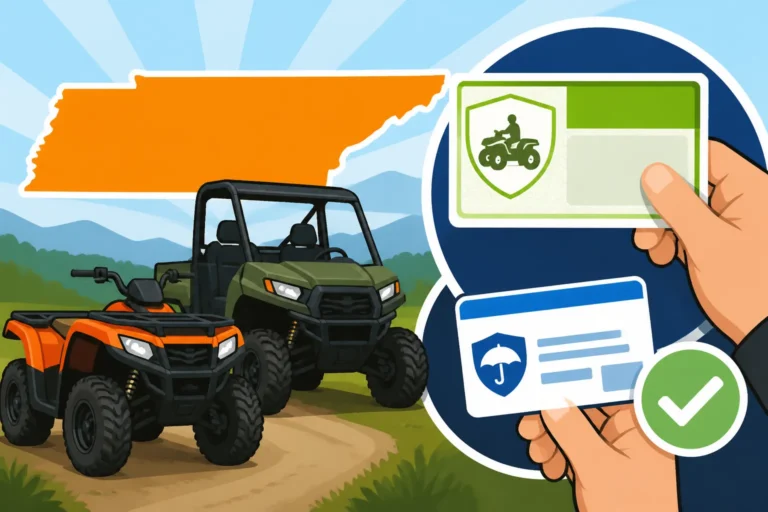
First and foremost, the operator must hold a valid driver's license. There's a minimum age requirement, with drivers needing to be at least 16 years old to operate a UTV on designated public roads. This aligns with the state's general driving age and ensures that operators have demonstrated a baseline level of driving competency. For more detailed information on this, you can refer to [Tennessee Driver's License Rules for UTVs].
Additionally, operating an OHV on a public road in Tennessee requires you to carry minimum liability insurance. This isn't just a good idea; it's a legal mandate. In the unfortunate event of an accident, this insurance protects you and others from financial repercussions. Always carry proof of insurance with you, as law enforcement officers can and will ask for it during a roadside stop. More specifics on this can be found in [Tennessee UTV Insurance Requirement]. While [Tennessee Helmet Law for ATV Riders] primarily addresses helmets for ATVs, it's always wise to consult all local regulations, as some areas might have broader helmet mandates or it's simply a good safety practice regardless.
Navigating Road Use Safely and Responsibly
Riding your UTV on designated Tennessee roads, even those with lower speed limits, requires a different mindset than trail riding. The environment is entirely different – you're sharing space with a variety of vehicles, pedestrians, and potential hazards that simply don't exist in the backcountry. Therefore, safety and responsible operation become paramount. Understanding the specific rules that govern road use for UTVs isn't just about avoiding a ticket; it's about preventing accidents and ensuring that UTV riders continue to be welcomed on these routes.
This means being extra vigilant, understanding your machine's limitations on pavement, and always anticipating the actions of other drivers. Many conventional motorists may not be accustomed to sharing the road with UTVs, so operating predictably and courteously is crucial for fostering a positive relationship between the riding community and other road users. Let's delve into some key aspects of safe and responsible road navigation.
Daylight Hours Only Under Tennessee Law
One of the most critical restrictions for UTV road use in Tennessee is the time of day. The law explicitly states that UTVs are only permitted on designated roads during daylight hours only. This means from sunrise to sunset, no exceptions. You can find more details on this specific restriction in [Daylight Hours Only Under Tennessee Law]. This rule is firmly in place for a very good reason: visibility.
UTVs, even with proper lighting, can be less visible to other motorists during dusk, dawn, or nighttime hours compared to a standard car or truck. Their lower profile, different lighting patterns, and often open-air design can make them harder to spot, especially on unlit rural roads. The potential for a serious accident dramatically increases when visibility is compromised. Therefore, planning your rides to begin after sunrise and conclude well before sunset is not just a legal requirement but a fundamental safety practice. Trying to squeeze in "just a few more minutes" after the sun starts dipping below the horizon isn't worth the risk of an encounter with law enforcement or, worse, another vehicle.
Crossing Highways and Intersections
While Tennessee's updated laws allow for some UTV road use, there are very strict rules about how you can interact with certain types of roadways, particularly state highways and interstates. You might be able to ride on some designated county roads, but crossing or traveling on major arteries is a different ballgame.
When it comes to crossing a two-lane state highway, UTVs are permitted to do so, but only under very specific conditions. You must cross the highway at a ninety-degree angle, making the crossing as direct and quick as possible. This minimizes your time in potentially fast-moving traffic. Furthermore, such crossings are only allowed where designated by the Tennessee Department of Transportation (TDOT). You cannot just cross a highway anywhere you please. [Crossing a Two-Lane at Ninety Degrees in Tennessee] provides more insight into this. Crucially, interstates are absolutely, unequivocally off-limits for UTVs. There are no exceptions for UTVs on interstates in Tennessee, for very good reasons pertaining to high speeds and large traffic volumes. If you're wondering about this, [Why Tennessee Bars Interstates] clarifies the issue completely. These rules are in place for maximum safety and should be followed without deviation.
Avoiding Common Pitfalls and Fines
Despite the best intentions, it's easy to make a mistake when navigating complex road laws, and Tennessee's UTV regulations are no exception. One of the most common pitfalls is simply not knowing the specific designated roads in a particular county. As mentioned, even within an Adventure Tourism District, local ordinances are key. Riding on an undesignated road, even briefly, can result in a fine. Always double-check those published lists!
Another mistake is exceeding the 35 mph operational limit or riding on a road with a posted speed limit higher than 45 mph. It’s easy to get carried away or simply misread a sign. Law enforcement officers are vigilant, and ignorance of the law is not an excuse. Fines for illegal UTV road use can be substantial, and in some cases, repeated offenses could lead to more serious consequences, including impoundment of your machine. You can learn more about the penalties in [Tennessee Fines for Illegal UTV Road Use]. Additionally, ensure your vehicle always has the proper equipment (lights, mirrors, etc.) and that you possess a valid driver's license and proof of insurance. Tools and accessories, like GPS units that can display speed limits or apps that show designated OHV routes (some even offered by companies like SuperATV or integrated into their mapping software), can be incredibly helpful in staying compliant and avoiding these costly mistakes.
Planning Your Ride: Making the 35 mph Rule Work for You
So, you've got your UTV equipped, you understand the speed limits, and you know about the Adventure Tourism Districts. Now comes the fun part: planning your actual ride! This is where you can truly make the 35 mph rule work in your favor, transforming what might have been a frustrating logistical puzzle into an opportunity for seamless adventures. Proper planning is the bridge between knowing the rules and enjoying the freedom that comes with them.
Think of it as creating a custom adventure map. Instead of just focusing on the trails, you're now integrating the designated roads as essential connectors, allowing you to extend your range, access new areas, and support local businesses. This holistic approach to ride planning not only enhances your experience but also demonstrates responsible riding, which is crucial for the continued acceptance and expansion of UTV road access in Tennessee.
Pre-Ride Checks and Route Planning
Before you even load your UTV onto the trailer or roll it out of the garage, dedicated route planning is non-negotiable. This isn't just about finding the coolest trails; it's about integrating the legal road segments into your journey. Your first stop should be the website of the county you plan to ride in, specifically looking for their local ordinances and published lists of designated UTV roads. Remember, the state provides the framework, but the county specifies the roads. Without this crucial step, you're essentially riding blind.
Once you have the designated road list, map out your route. Use a reliable GPS device or app that allows you to pre-load your intended path. Pay close attention to the posted speed limits along your chosen roads, ensuring they are all 45 mph or less. Identify any points where you'll need to cross a state highway, and make sure those crossings are TDOT-designated and can be made at a ninety-degree angle. This meticulous pre-planning helps you stay within the 35 mph operational limit for your UTV and avoids any accidental detours onto prohibited high-speed roads. Having a physical map or an offline digital map can be a lifesaver in areas with spotty cell service, a common occurrence in many of Tennessee's beautiful, but remote, riding areas.
Combining Trail Riding with Road Connections
The real magic of Tennessee's 35 mph road rule is its ability to seamlessly connect disparate trail systems and provide access to essential amenities. Imagine riding a challenging trail all morning, then effortlessly transitioning onto a designated county road to reach a gas station, grab lunch in a small town, or even connect to another trail system a few miles away. This capability dramatically expands your riding possibilities, transforming isolated trail parks into a more expansive network.
This isn't about using your UTV as a primary mode of highway transportation; it's about strategic, short-distance road use. It allows you to base yourself further from a trailhead, resupply without trailering up, or simply link together different sections of an adventure. By leveraging these designated road segments, you can plan multi-day trips that involve exploring various trails and towns, truly immersing yourself in the local culture and landscapes. This kind of thoughtful integration also supports the local businesses that rely on adventure tourism, demonstrating the positive economic impact that responsible OHV use can have on rural communities. Remember, the goal is enhanced adventure and responsible exploration.
Here's a quick summary of key rules for UTV road use in Tennessee:
| Rule Category | Requirement | Details |
|---|---|---|
| Speed Limit | Max 35 mph on machine | Your UTV cannot exceed 35 mph. The road's posted speed limit must be 45 mph or less. |
| Time of Day | Daylight Hours Only | Operation is permitted only between sunrise and sunset. |
| Operator Age | 16+ | Operator must be at least 16 years old. |
| Driver's License | Valid Driver's License | Operator must possess a valid driver's license. |
| Insurance | Minimum Liability Required | Proof of minimum liability insurance must be carried. |
| Location | Designated Roads within Adventure Tourism Districts | UTVs are only allowed on specific roads designated by county commissions within the 10 state-defined Adventure Tourism Districts (Scott, Anderson, Campbell, Morgan, Jackson, Johnson, Perry, Unicoi, Fentress, Hickman). Check local ordinances! |
| Required Equipment | Headlights, Taillights, Brake Lights, Turn Signals, Horn, Mirrors, Windshield, Seatbelts | UTV must be equipped with functional safety gear similar to a conventional vehicle. |
| Highway Crossing | Limited and Specific | Crossing two-lane state highways is allowed at a 90-degree angle only where designated by TDOT. Interstates are strictly prohibited. |
Disclaimer
This article is for general informational purposes only and does not constitute professional advice. Laws, prices and regulations vary by location and change over time. Consult a qualified professional for guidance on your specific situation.