Tennessee Counties That Allow UTVs on Roads
Oh, the age-old question that keeps many a UTV owner scratching their head here in Tennessee: "Where can I actually ride my side-by-side on the pavement without getting into trouble?" It's a valid frustration, because for years, it felt like a total patchwork quilt of rules, with every county doing its own thing, leaving riders feeling confused and often a little nervous about venturing off the trails. This guide is here to untangle that knot, shedding light on the specific counties where UTVs are permitted on public roads and what you need to know to stay legal and safe.
Navigating Tennessee's UTV Road Use Laws
For a long time, trying to figure out where you could legally ride your UTV on a paved road in Tennessee was like trying to hit a moving target while blindfolded. One county might be totally fine with it, while crossing into the next could land you a hefty ticket. This inconsistency was a huge source of confusion and frankly, a major headache for anyone just wanting to enjoy their machine responsibly. Thankfully, the state has made strides to bring some much-needed clarity, creating a framework that, while still giving local jurisdictions a say, provides a clearer path for UTV enthusiasts.
The Statewide Standard and Local Control
The state of Tennessee has recognized the growing popularity of off-highway vehicles, including UTVs, and the desire of riders to occasionally use them to access trails, move between staging areas, or simply connect with local businesses. This led to legislation aimed at creating a more uniform approach, replacing the completely arbitrary county-by-county landscape with a system that has a statewide foundation, yet still respects local decision-making. It's a balancing act, for sure. On one hand, you have the state saying, "Yes, this can be done," and on the other, you have individual counties deciding if and how they'll opt in.
What this means for you, the rider, is that while there's a general framework, the specific roads and conditions can still vary. It's not a blanket "all Tennessee roads are open to UTVs" situation, which I know can be disappointing when you just want a simple yes or no. Instead, it's about understanding where the state has enabled this use, and then drilling down into which specific areas have taken advantage of those provisions. It's about finding those places where local governments have embraced the adventure tourism potential and opened their gates, so to speak, to UTV traffic on certain designated routes.
Understanding Adventure Tourism Districts
At the heart of Tennessee's UTV road use legislation is the concept of "Adventure Tourism Districts." Think of these districts as special zones where the state has explicitly recognized the economic and recreational benefits of off-highway vehicle activity. These aren't just arbitrary lines on a map; they're defined areas, usually encompassing counties with significant existing trail systems or a strong heritage of outdoor recreation. The idea behind these districts is to foster tourism and economic development by making it easier for riders to access trailheads, local shops, restaurants, and lodging without having to trailer their machines every single time.
These districts are crucial because they empower the counties within them to take specific actions regarding UTV road access. Without being part of an "Adventure Tourism District," a county faces much stricter limitations on allowing UTVs on its public roads. The creation of these districts was a game-changer for regions like our beloved Coal Country Trail Triangle, providing a legal basis for opening up certain road segments. It acknowledges that for many riders, their UTV isn't just a trail machine; it's also a way to get from the campground to the gas station or from one trail system to another. This designation allows counties to craft ordinances that better suit the needs of riders and local businesses, creating a more integrated outdoor recreation experience. For instance, [Why an Adventure Tourism District Matters] explores this in more detail.
The Designated Counties: Where You Can Ride (and Where You Can't)
So, you're probably asking, "Enough with the theory, just tell me where I can ride!" And I hear you. The good news is that Tennessee law specifically names a handful of counties where UTV road use is, by legislative design, more readily allowed. These are often the counties that already have bustling OHV parks and a deep-rooted riding culture. But it's not a free-for-all, even in these places. There are always caveats and specific designations to be aware of.
The "Named Ten" Counties and Their Specific Rules
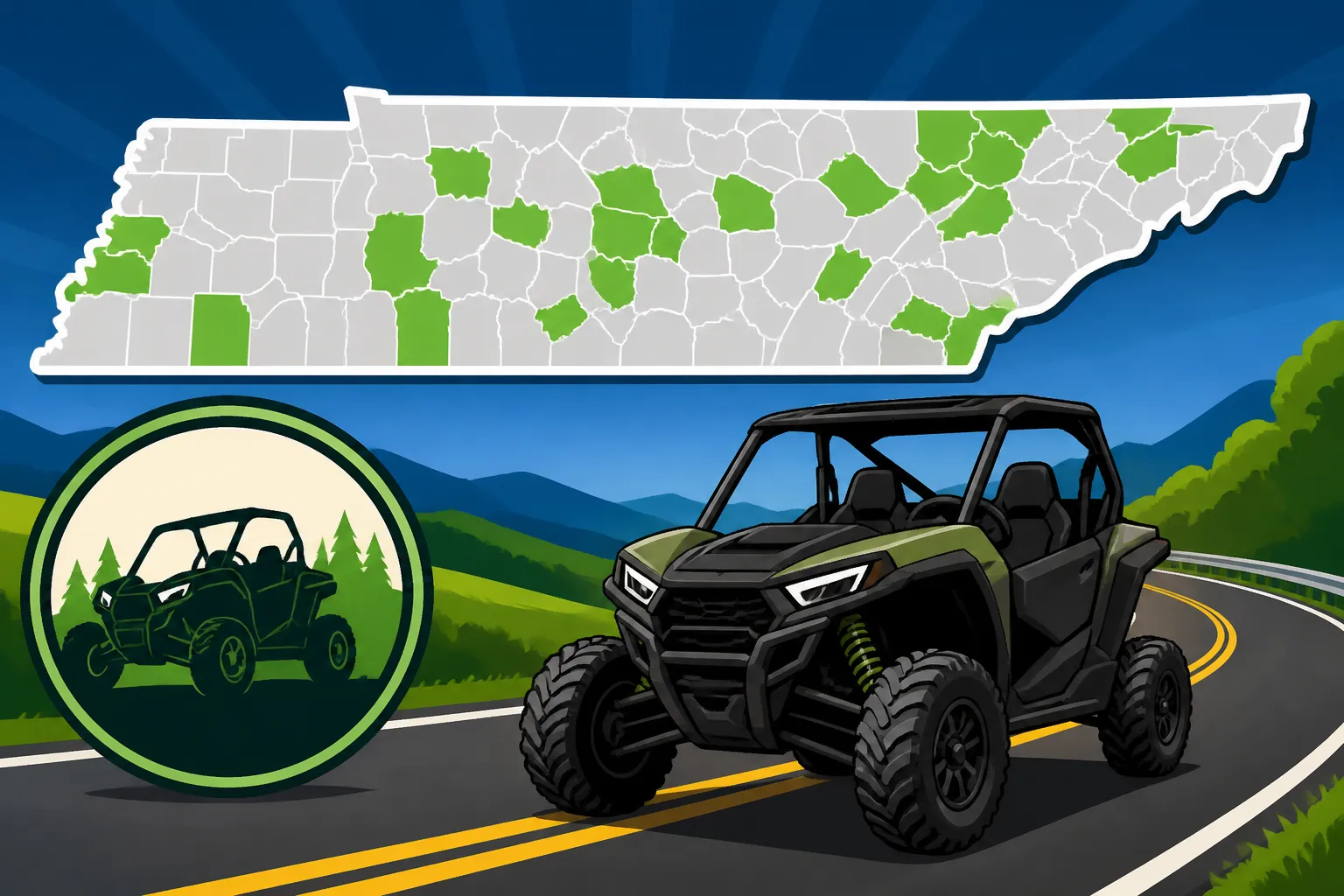
The Tennessee legislature specifically identified ten counties that could implement UTV road use without some of the more complex hurdles other counties might face. These counties are:
- Scott County
- Anderson County
- Campbell County
- Morgan County
- Jackson County
- Johnson County
- Perry County
- Unicoi County
- Fentress County
- Hickman County
These are the counties that have been explicitly given the green light to designate certain roads for UTV use. For example, in places like Scott County, home to Brimstone Recreation, or Anderson County, where Windrock Park reigns, you'll find areas where UTVs are a common sight on local roads, especially around the major trailheads and small towns. You might ride [Between Brimstone Road and Norma Road] or even through parts of Huntsville. The key here is that even within these named counties, the decision to open specific roads rests with the local legislative body – the county commission. They are responsible for publishing lists of designated roads, often with speed limits and other restrictions. This isn't just about general acceptance; it's about specific, legally defined routes. So, while these counties are known for being UTV-friendly, it's still absolutely critical to consult their local ordinances or designated road lists. You'll often see specific routes like [Riding the O and W From Oneida] become open.
The goal in these regions is to make it easier for riders to access everything they need for their adventure. Imagine being able to ride from your cabin rental directly to the Windrock General Store for supplies, or cruise into town for a bite to eat after a long day on the trails. This is the vision that these legislative changes support. However, remember that even in these areas, you won't be hitting the interstate or major state highways unless explicitly designated for specific crossings.
How Other Counties Can Join In
What about the counties not on that initial "named ten" list? Does that mean UTV road use is completely off the table for them? Not necessarily! The law also provides a mechanism for other counties in Tennessee to allow UTVs on their local roads. It's not as straightforward as for the named ten, but it's certainly possible if there's enough local will and desire.
The process typically involves a formal vote by the county's legislative body. For unpaved county roads, the law requires a two-thirds vote of the county commission to designate them for UTV use. This high bar ensures that there's broad consensus among local leaders before opening up gravel and dirt roads. For paved county roads, the process might be slightly different, often involving a resolution or ordinance passed by the commission, detailing which specific paved roads or segments are open, and under what conditions. This is where you might see smaller towns or rural communities, even outside the named ten, decide to open a few key routes to connect neighborhoods or provide access to local businesses.
This local decision-making power is a double-edged sword. On one hand, it allows communities to tailor rules to their unique circumstances. On the other, it means riders in these "opt-in" counties need to be incredibly diligent in verifying local regulations. There won't be a single, statewide list for all counties. You'll have to check directly with the county clerk or the sheriff's department in that specific county to see if they've passed any resolutions or ordinances opening their roads to UTVs. This system underscores the importance of local engagement; if you want UTV road access in your county, getting involved and advocating for it at the local level is often the most effective route. You can learn more about the local decision process in [How a Tennessee Town Opens Its Roads].
Road Use Requirements and Limitations for UTVs
Just because a county allows UTVs on some of its roads doesn't mean you can just hop on and ride without a care in the world. There are crucial requirements and limitations designed to ensure safety for everyone on the road. Ignoring these can not only put you and others at risk but also land you a ticket, even in the most UTV-friendly areas. It's about being street legal in the spirit of the law, not just by location.
Equipment and Operator Requirements
When you take your UTV onto a designated public road in Tennessee, it needs to be equipped similarly to other motor vehicles to ensure visibility and safety. This typically includes:
- Headlights and Taillights: Operational headlights and taillights are a must, especially if you're riding during any low-light conditions, though generally, road use is limited to daylight hours.
- Brake Lights: You need working brake lights to signal your intentions to traffic behind you.
- Turn Signals: While some older machines might not have come with them, turn signals are generally required for road use to communicate turns and lane changes effectively. Many riders find aftermarket kits from brands like SuperATV incredibly useful for adding these essential safety features if their machine didn't come street-legal from the factory.
- Rearview Mirrors: At least one rearview mirror is usually required, giving you a clear view of what's behind you.
- Horn: A working horn is necessary for signaling warnings.
- Windshield: While not always explicitly required for off-road use, a windshield is often mandated for road use to protect against debris and weather.
- Seatbelts: Occupants must be wearing the factory-installed seatbelts.
- Driver's License: The operator must hold a valid driver's license. [Tennessee Driver's License Rules for UTVs] has more details.
- Age Restriction: Operators must typically be at least 16 years old to drive a UTV on public roads.
- Helmet Use: While there are specific [Tennessee Helmet Law Off-Road] rules, generally, operators and passengers under 18 must wear a helmet on public roads, even if the county permits UTVs. Some areas may even require all riders, regardless of age, to wear helmets on public roadways. It's always best to err on the side of caution.
These requirements aren't just bureaucratic hurdles; they are fundamental safety measures that protect you, your passengers, and other drivers. Before heading out, do a quick walk-around and check all your lights, signals, and mirrors. Having a machine that meets these standards not only keeps you legal but also greatly enhances safety.
Speed Limits and Restricted Road Types
Even in counties that allow UTVs on designated roads, you won't be able to treat them like a car on the interstate. There are strict limitations on where you can ride and how fast you can go.
Most notably, UTVs are typically restricted to roads with a posted speed limit of 45 mph or less. This means major state highways, US routes, and certainly interstates are generally off-limits for UTV travel, unless there's a specifically designated crossing or short segment. In fact, [Why Tennessee Bars Interstates] makes this very clear. The intent is to keep UTVs on lower-speed, less-trafficked roads where they can safely coexist with other vehicles. Many local ordinances will specify an even lower maximum speed, such as 35 mph on a Tennessee Road, so always watch for posted signs.
Furthermore, UTVs are usually only permitted during daylight hours. This means no night riding on public roads, even if your machine has fantastic aftermarket LED light bars (which, by the way, are great for the trails, but you still need to adhere to the daylight-only rule on public roads). If you're planning a ride around sunset, make sure you're back at your trailhead or destination before it gets dark. You can learn more in [Tennessee Rules for Riding After Dark].
Specific crossings of multi-lane highways might be allowed, but only at designated points or at a ninety-degree angle on two-lane roads, ensuring you're minimizing your time on the main thoroughfare. These crossings are often clearly marked or detailed in local regulations. Always be on the lookout for specific signage, and if in doubt, choose an alternative route or trailer your machine. Remember, the goal is to safely connect trail systems or access amenities, not to use UTVs as primary commuter vehicles.
Staying Legal and Informed on Tennessee Roads
The ever-evolving nature of UTV laws can feel like a moving target, even with the state's efforts to clarify things. The best defense against confusion and potential fines is proactive information gathering. You wouldn't hit a new trail without checking a map, and you shouldn't hit a new road without checking the local rules.
Checking Local Ordinances and Maps
This is perhaps the most critical piece of advice: always verify the current regulations with the specific county or municipality you plan to ride in. Don't just rely on what you heard from a friend or saw in an old forum post. Laws change, and local ordinances can be updated.
Here's how to go about it:
- Contact the County Clerk's Office: This is often the best starting point. They can direct you to the county commission's resolutions or ordinances regarding UTV road use. They're the keepers of the official local records.
- Reach out to the Local Sheriff's Department: Law enforcement officers on the ground will know the current rules and can often provide practical advice on which roads are open and which are not. They're the ones enforcing the rules, so their interpretation is vital.
- Look for Online Resources: Many counties and even specific towns (like LaFollette or Huntsville) that embrace UTV tourism will often publish information on their official websites, including maps or lists of designated roads. Look for terms like "Restricted Road Lists Published in October 2025" as a mechanism that counties use to provide current information to riders.
- Consult Local Rider Groups and Businesses: Local OHV clubs, outfitters, and businesses that cater to riders are often excellent sources of up-to-date, on-the-ground information. They live and breathe this stuff and are usually happy to share their knowledge. However, always cross-reference this with official sources if you can.
Remember, what's legal in Scott County might not be in a neighboring county that hasn't passed the necessary resolutions. Staying informed is your responsibility as a rider, and it ensures a much smoother, more enjoyable experience for everyone.
The Consequences of Illegal Road Use
Let's be frank: riding your UTV illegally on public roads in Tennessee can lead to some unpleasant consequences. It's not just a slap on the wrist. Depending on the violation, you could be looking at a significant fine, and in some cases, even a Class C misdemeanor. [Tennessee Fines for Illegal UTV Road Use] details this.
Imagine you're out for a weekend ride near a park like Windrock or Brimstone, and you decide to take a shortcut on a county road that isn't designated for UTVs. A deputy pulls you over. Suddenly, your fun weekend turns into a legal hassle, a fine you didn't budget for, and potentially points on your driver's license. Your machine could even be impounded in some extreme cases.
Beyond the legal penalties, there's also the impact on the riding community. Every time a rider gets caught breaking the rules, it can make it harder for other counties to consider opening their roads. It reinforces negative stereotypes and can lead to stricter regulations, rather than more access. This is why adhering to the rules isn't just about avoiding a ticket; it's about being a responsible ambassador for the entire UTV community and helping to preserve the access we do have. So, always do your homework, respect the law, and ride responsibly. It benefits everyone.
Tennessee UTV Road Use Overview
For quick reference, here's a summary of key aspects regarding UTV road use in Tennessee, especially concerning the named Adventure Tourism Districts.
| Feature | Description |
|---|---|
| Designated Counties | Ten specific counties (Scott, Anderson, Campbell, Morgan, Jackson, Johnson, Perry, Unicoi, Fentress, Hickman) have enhanced ability to open roads. |
| Other Counties | Can open unpaved roads with a two-thirds county commission vote; paved roads through resolution/ordinance. |
| Adventure Tourism Dists. | Crucial for named counties; framework for economic development via OHV access. |
| Speed Limit | Generally restricted to roads with a posted speed limit of 45 mph or less; local ordinances may specify lower (e.g., 35 mph). |
| Operating Hours | Primarily daylight hours only on public roads. |
| Operator Age | Must be at least 16 years old and possess a valid driver's license. |
| Helmet Requirement | Operators and passengers under 18 must wear helmets on public roads; some local ordinances may require for all ages. |
| Equipment | Must have working headlights, taillights, brake lights, turn signals, rearview mirror(s), and a horn. Seatbelts must be worn. |
| Prohibited Roads | Interstates and most major state highways are typically off-limits, unless specific crossings are designated. |
| Information Source | Always check with the specific county clerk's office or sheriff's department for current, detailed local ordinances and designated road lists. |
Disclaimer
This article is for general informational purposes only and does not constitute professional advice. Laws, prices and regulations vary by location and change over time. Consult a qualified professional for guidance on your specific situation.