Unincorporated Scott County’s Open Roads
Navigating the ever-changing landscape of off-highway vehicle (OHV) laws in Tennessee can feel like trying to find your way through a dense forest without a compass. One minute you're riding a fantastic trail, and the next you're wondering if that dirt road leading to the next section is even legal for your machine. This confusion is especially true when it comes to riding your ATV or UTV on public roads, and Scott County, with its unique status, often leaves riders scratching their heads. This guide will cut through the fog, detailing the specific rules and realities of [Unincorporated Scott County's Open Roads] so you can ride with confidence and stay on the right side of the law.
Understanding Scott County's Unique Status for OHVs
For years, the dream of seamlessly connecting trails with country roads in Tennessee felt out of reach for many riders. Each county seemed to have its own patchwork of ordinances, creating a frustrating maze of legal and illegal routes. However, recent legislative shifts have started to change this, creating new opportunities, especially in areas like Scott County, which is at the heart of Tennessee's adventure tourism efforts.
The Power of Adventure Tourism Districts
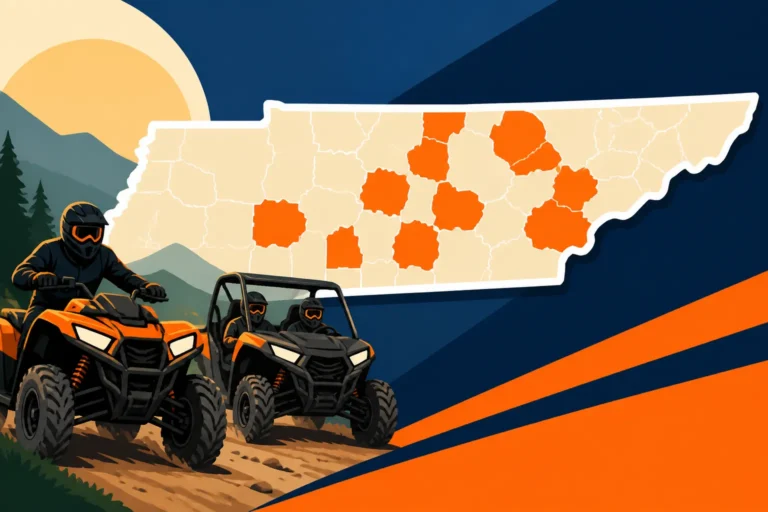
Tennessee recognized the immense potential of its natural landscapes for outdoor recreation and the economic boost it brings. To foster this, the state legislature established a framework for "Adventure Tourism Districts." These districts, which include specific counties, are given greater latitude to designate certain roads for OHV use, effectively bridging the gap between vast trail systems and local communities. Scott County is one of the ten counties explicitly named in this legislation, making it a pivotal area for understanding how these new rules play out in practice. It's a game-changer for riders who want to enjoy the full scope of the region's offerings without constantly worrying about legal boundaries.
Distinguishing Unincorporated Areas
It’s absolutely critical to understand that when we talk about [Unincorporated Scott County's Open Roads], we are specifically referring to roads outside of any city or town limits within Scott County. Places like Oneida or Huntsville, which are incorporated municipalities, retain the authority to set their own rules for OHV use on their city streets. This means a road that is perfectly legal for your side-by-side in a rural, unincorporated part of the county might become off-limits the moment you cross into city limits, unless that city has passed its own specific ordinance. Always pay attention to signage that indicates town boundaries or specific local designations, as the rules can shift abruptly. The beauty of the unincorporated areas is that they are generally the ones connecting directly to major trailheads and providing access between vast wilderness areas.
Why Not Every Road is Open
Even within unincorporated Scott County, it's not a free-for-all. The law doesn't simply open all county roads. Instead, it empowers the county legislative body (like the county commission) to actively designate which roads are open for OHV use. This designation process involves careful consideration, often in consultation with local law enforcement, emergency services, and community members. Furthermore, state highways (those maintained by the Tennessee Department of Transportation, or TDOT) are generally under a different set of rules. While counties can open their roads, state routes typically remain closed to OHVs unless specific, limited crossing provisions are made or specific sections are explicitly designated by TDOT, which is a rare occurrence. This distinction is vital for planning your rides, ensuring you don't inadvertently find yourself on a road where your machine is unwelcome or illegal.
Specific Road Designations and Restrictions
Riding in Scott County requires a bit of homework, but it’s worth it to unlock the potential of the area. The county, leaning into its Adventure Tourism District status, has taken steps to open up certain routes, primarily to connect trail systems and allow riders to access amenities like fuel, food, and lodging.
Designated Open Roads in Scott County
The Scott County legislative body has the authority to designate specific county roads as open for OHV use. These are typically local, unpaved, or low-traffic paved roads that help link various segments of the vast trail networks like Brimstone Recreation and the North Cumberland Wildlife Management Area. To legally ride on these designated roads, it's paramount to know which ones they are. Local counties are required to publish lists of these restricted roads (which, by their nature, means all non-listed roads are generally considered open if they are county roads). You might find yourself on a winding gravel road, perhaps one that feels like a trail itself, connecting you from one riding area to another. This is where the magic of [Unincorporated Scott County's Open Roads] truly comes alive, allowing for epic rides that combine trail challenges with scenic county road cruising. Just remember, these are still public roads, and you must adhere to traffic laws, even if you’re riding a side-by-side designed for rugged terrain.
Roads with Time-Based Restrictions
Some roads, particularly state routes that might otherwise be off-limits, can have very specific, time-based windows for OHV use. A prime example is [SR 63's Two Open Weekends a Year]. This state route, which serves as a significant thoroughfare, is generally closed to OHVs. However, during special events or specific, pre-determined weekends, parts of it may be opened temporarily to accommodate large groups of riders or organized events. These openings are rare and always accompanied by significant publicity and law enforcement presence. If you plan to take advantage of these limited opportunities, you need to be absolutely sure of the dates and times and any special conditions that apply. Beyond these specific event windows, you should always assume state routes are closed unless explicitly and officially stated otherwise, especially outside of those designated periods.
Completely Restricted State Routes
While Scott County has made strides in opening up its county roads, state routes remain largely off-limits to OHVs. Highways like SR 63 (outside of its specific open weekends) and [US 27 Stay Closed in Huntsville], for instance, are primarily designed for traditional vehicle traffic. OHVs, by their nature, often don't have the speed, stability, or safety features to safely integrate with high-speed highway traffic. For this reason, state departments of transportation (like TDOT) are generally very cautious about opening them. If you encounter a state route during your ride, your primary options are to cross it safely at a designated intersection (often at a 90-degree angle, as briefly as possible) or find an alternative designated county road that runs parallel or provides a bypass. Attempting to ride extended distances on restricted state routes can lead to fines, citations, or even more serious legal trouble. Always double-check [Checking a Restricted Road List] for the most current information.
Navigating Road Use in Practice
Riding your OHV on the roads in unincorporated Scott County isn't just about knowing which roads are open; it's about understanding how to use them responsibly and legally. It’s a different experience than trail riding, requiring a shift in mindset and adherence to traffic laws.
Local Ordinances and Posted Signage
Even though Tennessee has statewide legislation regarding Adventure Tourism Districts, the specific implementation falls to the counties. This means local ordinances dictate the finer points of OHV road use. Always look for official signage. Designated roads should ideally be marked as such, indicating that OHVs are permitted. Conversely, roads that are not open to OHVs might have "No OHV Access" signs. Sometimes, you'll see signs indicating [Riding a Road Posted 45 mph or Under], which is often a key threshold for OHV road legality in many areas – though specific speed limits for OHVs might be lower. Pay attention to speed limits, stop signs, and yield signs, just as you would in a car. Local law enforcement officers patrol these areas, and while they appreciate the tourism OHVs bring, they are also responsible for public safety. Ignoring posted signs or local rules is a sure way to incur a [Tennessee Fines for Illegal UTV Road Use] and spoil your trip.
Crossing State Highways Safely
One of the most common dilemmas for riders connecting trails in Scott County is how to handle state highways that intersect their chosen route. Tennessee law often permits OHVs to cross a two-lane highway at a ninety-degree angle, making the crossing as direct and quick as possible. This is not an invitation to ride along the highway, but rather to traverse it from one designated county road to another. For multi-lane highways or more complex intersections, TDOT may designate specific crossing points, and it's imperative to use only those. [Crossing a Multi-Lane Where TDOT Designates] means looking for official signage or markings. Always exercise extreme caution, yielding to all traditional vehicle traffic, and ensuring clear visibility in both directions before attempting a crossing. Think of it like crossing a busy railroad track – you get across as quickly and safely as possible.
Planning Your Route for Legal Road Use
Gone are the days when you could just point your machine in a direction and hope for the best on public roads. With the specific designations in Scott County, route planning is more important than ever. Before you even load your machine, study maps that show the designated OHV routes. Many local tourism offices or trail system headquarters provide updated maps that highlight open county roads. Utilize GPS apps that can incorporate these specific routes into your navigation. Consider bringing a robust GPS unit or smartphone app that allows you to pre-load routes. Tools like those from SuperATV can help equip your machine with navigation mounts and durable accessories to withstand the rigors of both trail and road use. Planning your ride means understanding [Riding Only Between Sunrise and Sunset] (a common restriction for OHV road use), knowing where fuel stops are located along designated routes, and identifying safe parking areas for your truck and trailer if you're staging for a ride. This proactive approach minimizes confusion, prevents unintentional infractions, and ensures you have a smooth, enjoyable ride.
Equipment, Helmets, and Age Requirements
Riding on designated public roads, even in unincorporated Scott County, introduces a whole new layer of safety and legal requirements that might not apply when you're strictly on private trails. It’s not just about what roads are open, but what condition your machine is in and who is operating it.
Mandatory Safety Gear on Open Roads
Tennessee law places specific requirements on riders when operating OHVs on public roads. Helmets are almost universally required for operators and passengers, especially those under a certain age. While [Tennessee Helmet Law Off-Road] might have some nuances, on public roads, the rules are much stricter. Generally, anyone under 18 years old must wear a helmet on a public road, and many local ordinances extend this to all riders, regardless of age. Beyond helmets, eye protection is always a wise choice, as dust, gravel, and debris can become significant hazards on roads, even at slower speeds. Protective clothing, gloves, and sturdy footwear should also be considered essential gear. Don't forget any required safety equipment for the machine itself, which we'll cover next.
Vehicle Equipment for Road Legality
Your ATV or UTV might be perfectly suited for the trails, but for road use in unincorporated Scott County, it needs to meet certain minimum equipment standards to be considered "street legal" on those designated roads. These typically include:
- Headlights: Must be operational and used during daylight hours (not just at night or in low visibility).
- Taillights and Brake Lights: Essential for visibility from the rear and signaling stops.
- Turn Signals: Required for indicating turns, just like a car.
- Horn: A functional horn for signaling other motorists or pedestrians.
- Mirrors: At least one rearview mirror, and often two (side mirrors), for visibility. Many riders opt for aftermarket mirrors from brands like SuperATV that are rugged and designed for OHV use.
- Windshield (for UTVs): While not always explicitly mandated, a windshield can be crucial for rider safety and comfort, especially against road debris.
- Spark Arrester: While primarily for fire prevention on trails, this is a good piece of equipment to always have.
- Proof of Insurance: Tennessee generally requires liability insurance for any motor vehicle operated on public roads. You should carry proof of this with you, similar to how you would in your car.
A good rule of thumb is to ensure your machine can effectively communicate with and be seen by traditional vehicles. Without these items, even if you're on a designated road, your machine isn't legally equipped for it.
Age and Licensing for Road Operators
Operating an OHV on a designated road in Scott County, or any public road in Tennessee where it's permitted, means the operator must meet specific age and licensing requirements. Generally, the operator must hold a valid driver's license, just as if they were driving a car. This means [Tennessee Minimum Age to Ride a Road] is 16, as that's the minimum age for a Tennessee driver's license. Riders under this age are typically restricted to off-road trails and cannot operate an OHV on designated public roads, even with adult supervision. Furthermore, the number of passengers and where they can ride on the machine (e.g., [Four Passengers on a Tennessee Class I] UTV) must comply with both the machine's design and local regulations. Always verify the most current age and licensing requirements before allowing anyone to operate your OHV on a public road.
Beyond Scott County: Regional Context
While Scott County has made significant strides in embracing OHV road use, it's part of a larger regional picture. Understanding how its rules fit into the broader Tennessee landscape for off-road enthusiasts is crucial for planning longer trips and appreciating the state's evolving approach to adventure tourism.
The Broader Adventure Tourism District Landscape
Scott County is not alone in its designation. As mentioned, it's one of [The Ten Counties Named in Tennessee Law] that are part of the state's Adventure Tourism District initiative. These counties – which include places like Anderson, Campbell, Morgan, and Johnson counties – are also empowered to create similar frameworks for OHV road access within their unincorporated areas. This means that eventually, a rider might be able to traverse a much larger network of trails and designated roads across multiple counties, creating truly epic, multi-day riding experiences. The goal is to create a seamless experience that attracts more visitors and supports local businesses. Companies like SuperATV often have dealers or partner shops in these regions, recognizing the growing market for OHV parts and accessories needed for these extended adventures. However, each county's implementation of the law will differ, so what's legal in Scott County might not be in an adjacent district without specific designation.
Understanding Neighboring County Rules
Just because you're riding in Scott County, you can't assume the same rules apply the moment you cross into a neighboring jurisdiction. For example, if you ride from Scott County towards Campbell County, you must be aware of [Riding a Holler Road in Campbell County] and what their specific ordinances allow. While both might be within the broader Adventure Tourism District framework, each county commission makes its own decisions regarding road designations. Always research the specific rules for each county you plan to enter. Some counties might have very few designated roads, while others might have more extensive networks. This is where the frustration of state-by-state, and now county-by-county, differences can still emerge for riders. The ideal scenario is a harmonized set of rules across the district, but until then, vigilance is key.
Future Changes and Advocacy
The landscape of OHV laws in Tennessee is not static; it's continuously evolving. As more riders discover the joys of the state's trails and designated roads, and as communities see the economic benefits, there will likely be further legislative adjustments and local ordinance changes. Staying informed is paramount. Follow local news, join OHV advocacy groups, and participate in public discussions when opportunities arise. Your voice can help shape future policies, pushing for clearer, more consistent rules that benefit riders and communities alike. The designation of [Unincorporated Scott County's Open Roads] is a testament to what advocacy can achieve, creating a model for how other parts of the state might one day open their doors to responsible OHV recreation.
Summary of OHV Road Use in Unincorporated Scott County
To help you keep track of the main points, here's a quick overview of what you need to remember when riding your OHV on public roads in unincorporated Scott County:
| Category | Rule/Requirement | Important Considerations |
|---|---|---|
| Location | Primarily designated county roads within unincorporated areas of Scott County. | Rules do not automatically apply within incorporated cities/towns (e.g., Oneida, Huntsville). Always verify local ordinances. |
| Road Status | County roads are designated by the county legislative body. State routes are generally restricted, with rare, specific exceptions (e.g., [SR 63's Two Open Weekends a Year]). | Always check official county lists of designated (or restricted) roads. Assume state routes are closed unless explicitly marked otherwise. |
| Crossing State Highways | Permitted to cross two-lane highways at a 90-degree angle; multi-lane crossings only where TDOT designates. | Crossing must be direct and safe, yielding to all traffic. Not for riding along the highway. |
| Operating Hours | Generally restricted to daylight hours only. | [Riding Only Between Sunrise and Sunset] is a common statewide rule. Verify local specifics. |
| Operator Requirements | Valid driver's license required. Minimum age 16 for road operation. | Passengers must adhere to machine capacity and safety guidelines. [Tennessee Minimum Age to Ride a Road] is a strict enforcement point. |
| Vehicle Equipment | Must have headlights, taillights, brake lights, turn signals, horn, and at least one rearview mirror. | Check that all lights are functional. Consider aftermarket upgrades from brands like SuperATV for durability and compliance. |
| Safety Gear | Helmets required for operators and passengers under 18; often recommended/mandated for all ages by local ordinance. Eye protection highly recommended. | Always prioritize safety gear. [A Helmet on a Tennessee Public Road] is a non-negotiable for young riders. |
| Insurance | Liability insurance typically required for OHVs operated on public roads. | Carry proof of insurance with you at all times. |
| Speed Limits | Must adhere to posted speed limits, often limited to 45 mph or less for OHVs even if the posted limit for cars is higher. | [Riding a Road Posted 45 mph or Under] indicates where OHV use is often considered, but specific OHV limits may be lower. |
Disclaimer
This article is for general informational purposes only and does not constitute professional advice. Laws, prices and regulations vary by location and change over time. Consult a qualified professional for guidance on your specific situation.