Why Tennessee Bars Interstates
It’s a common scenario for many of us who love hitting the trails in our side-by-sides or ATVs here in Tennessee: you're planning an epic trip to Windrock or Brimstone, and you dream of just jumping on the interstate to get there, bypassing all the backroads and the hassle of trailering. But then reality hits – you can't. That feeling of frustration, wondering why your capable machine can tackle the toughest terrain but can't cruise down I-40, is completely valid. This guide is here to unravel the precise reasons why Tennessee's laws draw a hard line at interstates for off-highway vehicles, helping you understand the rules so you can ride safely and legally.
The Core of Tennessee's OHV Road Rules
Tennessee has made significant strides in recent years to allow more flexibility for OHV use on certain public roads, especially in our beautiful "Adventure Tourism Districts." However, there's a fundamental distinction between an off-highway vehicle (OHV) and a traditional street-legal car or truck, and this distinction forms the bedrock of why interstates remain off-limits. It's not just an arbitrary rule; it's deeply rooted in the design, safety, and intended purpose of these machines.
Why a Special Sticker Isn't a License to Roam
When you go through the process of getting your machine ready for potential road use in Tennessee, you'll encounter the special sticker issued by the Tennessee Department of Revenue. This [What the TDR Sticker on Your Title Means] is a crucial part of the process, indicating that your OHV has been properly titled and that sales tax has been paid. For many new riders, or even seasoned veterans just getting into road-legal use, there's often a misconception that once you have this sticker, your machine is essentially "street legal" in the same way a car is. This isn't the case. The TDR sticker primarily serves as proof of ownership and tax compliance, a foundation for possible limited road use, but it doesn't magically transform your off-road beast into a highway cruiser. It's designed to facilitate titling and registration for specific, permitted uses, not to open up every road.
The sticker itself comes with its own set of rules, often surprising to those unfamiliar with the state's OHV regulations. For instance, [Why the Tennessee Sticker Cannot Be Renewed] in the traditional sense, and it's [Why the Tennessee Sticker Cannot Be Transferred] with the machine when it's sold. These specific quirks highlight that the sticker is a very particular type of identifier, not a blanket registration for general road travel. Its existence acknowledges your machine, but it doesn't grant universal access.
The Fundamental Difference Between an OHV and a Car
At its heart, an OHV – whether it's an ATV, UTV, or side-by-side – is engineered for terrain, not tarmac. Think about the heavy-duty suspension designed to absorb massive impacts from rocks and roots, the aggressive tread patterns on tires meant to grip loose dirt and mud, and the higher ground clearance for navigating obstacles. These features, which make OHVs so incredible on the trails, are actually detrimental on high-speed, paved roads.
Cars and trucks, on the other hand, are built for stability, predictable handling, and efficient performance at sustained high speeds on smooth surfaces. They have sophisticated steering systems, braking designed for rapid stops on asphalt, and tires with finely tuned compounds and tread patterns for maximum grip and water dispersion at speed. These are entirely different design philosophies, and trying to force an OHV into a role it wasn't designed for on an interstate simply creates an unacceptable safety hazard for everyone on the road.
Speed, Safety, and Design Limitations
When you're blasting down a trail at Windrock, hitting those bumps and drifts, you appreciate every aspect of your machine's design. But imagine trying to maintain 70 mph for an hour straight on I-75 with that same setup. It quickly becomes clear why interstates are a no-go. The core reasons boil down to speed capability, stability, braking performance, and general visibility, all of which are critical for safe highway travel.
Why OHVs Aren't Built for Highway Speeds
Most off-highway vehicles simply aren't engineered to maintain the sustained high speeds required on interstates. Their engines, while powerful for torque and acceleration over rugged terrain, are typically not designed for continuous high-RPM highway cruising. This can lead to overheating, excessive wear, and premature mechanical failure. More critically, the tires on an OHV, with their deep lugs and soft compounds, heat up rapidly and wear unevenly on pavement at speed, potentially leading to blowouts.
Consider the geometry and suspension. A side-by-side, for example, often has a relatively narrow track width and a high center of gravity compared to a typical car. This design is excellent for maneuverability on tight trails but makes it inherently less stable at high speeds, especially during sudden maneuvers or crosswinds on an open interstate. The steering systems, while responsive for off-road obstacles, can feel overly sensitive or imprecise at highway speeds, making it difficult to maintain a straight line safely. SuperATV, for instance, focuses on robust suspension components and lift kits designed to enhance off-road capability, not to convert a machine for interstate travel.
The Dangers of Mixed Traffic on High-Speed Roads
Interstates are environments where vehicles typically travel at high rates of speed, often 60 mph or more. Introducing vehicles that are slower, less stable, and less protected creates a significant hazard. Imagine a large semi-truck traveling at 70 mph coming up behind an OHV struggling to maintain 45 mph. The speed differential alone is a recipe for disaster, drastically reducing reaction time for both the OHV operator and other drivers.
Visibility is another major concern. While many modern UTVs come with headlights and taillights, they often lack the full array of lighting and reflective elements required for safe highway travel, making them harder to see, especially at dawn, dusk, or in inclement weather. The sheer size and mass difference between an OHV and even a small passenger car mean that in the event of a collision, the OHV occupant is at a severe disadvantage due to minimal crumple zones and protection. The consequences of such an accident on an interstate could be catastrophic, not only for the OHV rider but for everyone involved.
Legal Framework and Designated Roads
Tennessee's approach to OHV road use is very specific, aiming to balance recreational access with public safety. The laws are designed to permit limited use in specific contexts while firmly prohibiting it where the risks are deemed too high, such as on interstates. Understanding this legal framework is key to knowing where you can and cannot ride.
What the Law Says About Interstates
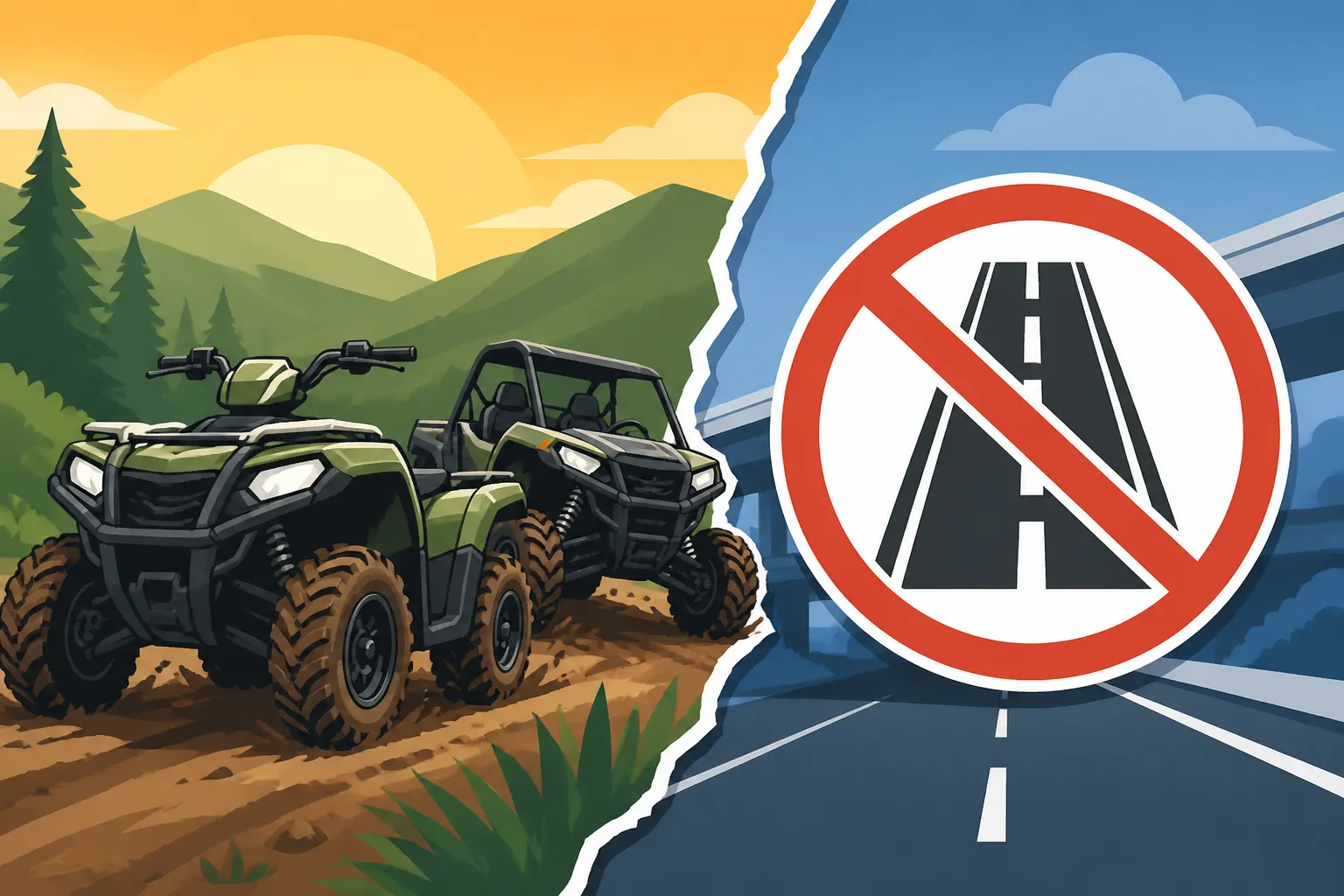
Tennessee law explicitly prohibits off-highway vehicles from operating on interstates. This isn't a vague guideline; it's a clear legislative mandate. The state categorizes roads and vehicle types, and interstates, by their very design and the speeds they accommodate, are simply not compatible with the characteristics of OHVs. The General Assembly has deemed that the safety risks associated with OHVs on these high-speed, high-volume thoroughfares outweigh any potential convenience for riders.
This prohibition extends beyond just interstates to many other controlled-access highways and state routes that are primarily designed for higher speeds. While some state routes may allow OHV crossings in very specific, designated circumstances, sustained travel on them, particularly those with higher speed limits, is generally forbidden. This distinction is critical and is enforced by law enforcement across the state. Violating these rules can lead to significant fines and penalties, not to mention putting yourself and others in harm's way.
Where You Can Ride
While interstates are off-limits, Tennessee has created avenues for OHV use on other types of public roads, particularly in areas geared towards outdoor recreation. The state's road use laws, especially as they've evolved, delineate specific conditions and locations where OHVs can be operated. Generally, this includes designated county roads, sometimes paved, sometimes unpaved, within specific geographical areas. For instance, [Tennessee Rules for Riding a County Road] specify conditions that are much less stringent than interstate regulations.
The best places to ride often fall within or connect to popular trail systems and [Adventure Tourism Districts]. These areas recognize the economic benefit of OHV tourism and have worked to create a legal framework for riders to access trails and amenities from their staging points. When considering road use, it's essential to understand [Tennessee UTV Road Requirements], which outline everything from lighting and mirrors to age and licensing prerequisites. This means you might be able to ride from your cabin to a trailhead on a county road, but you'll never be able to ride that same route via the nearest interstate.
Understanding the "Adventure Tourism District" Exception
The concept of "Adventure Tourism Districts" has been a game-changer for OHV enthusiasts in Tennessee, but it's important to understand what these districts do and don't allow. They offer more flexibility for road use than other parts of the state, but they do not, under any circumstances, override the prohibition against riding on interstates.
The Intent Behind Adventure Tourism Districts
Tennessee's Adventure Tourism Districts were established with a clear goal: to bolster local economies by leveraging the state's natural beauty and growing interest in outdoor recreation, particularly OHV riding. The law recognizes that in certain rural, mountainous counties, OHVs are not just recreational vehicles but also a means of local transport and a significant draw for tourism. The idea is to allow greater access to trails and businesses that cater to riders by permitting OHVs on certain local roads that connect these attractions. [Why an Adventure Tourism District Matters] to riders is simple: it opens up possibilities that didn't exist before, reducing the need to trailer your machine everywhere within these specific regions.
These districts aim to create a cohesive riding experience, allowing riders to travel between trailheads, campgrounds, gas stations, and restaurants without having to constantly load and unload their machines. This means you might be able to ride your machine on a gravel road from your cabin to a specific trail entrance at Windrock or Brimstone, or even down a quiet, paved county road to grab some lunch. Companies like SuperATV, whose products are geared towards enhancing off-road experiences, benefit from these districts as they facilitate more extensive riding opportunities.
Limitations Even Within Designated Areas
Crucially, even within an Adventure Tourism District, the statewide prohibition on interstates remains absolutely firm. These districts are not a free-for-all for all public roads. Instead, they grant county legislative bodies the authority to designate specific county roads where OHV use is permitted. These designated roads are typically chosen based on lower traffic volumes, appropriate speed limits, and their connectivity to established trail systems.
Furthermore, there are still strict rules about how OHVs must be equipped and operated on any public road, even those designated for use within a district. This includes requirements for headlights, taillights, brake lights, mirrors, a horn, and often turn signals. Riders must also adhere to specific speed limits, typically much lower than those on interstates, and are often restricted to daylight hours only. For example, [Tennessee Rules for Riding After Dark] are very restrictive for OHVs on roads. So, while an Adventure Tourism District offers welcome flexibility, it does not mean your machine can suddenly handle high-speed highway travel or that you can ignore other fundamental safety and equipment requirements.
Equipment Requirements for Any Road Use
Even if you're not planning on hitting the interstate (because, as we know, that's not allowed!), understanding the equipment requirements for any permitted road use in Tennessee is vital. Whether you're crossing a two-lane road in Scott County or riding a designated road in an Adventure Tourism District, your machine needs to be properly outfitted for safety and legal compliance. Ignoring these can lead to tickets, accidents, or both.
Lights, Signals, and Other Mandatory Gear
To operate an OHV on any designated public road in Tennessee, even for a short distance, your machine must meet specific equipment standards that are designed to make it more visible and controllable in a mixed-traffic environment. This typically includes:
- Headlights: At least one, fully operational and capable of illuminating the road ahead.
- Taillights: At least one, visible from the rear.
- Brake Lights: Functioning brake lights that activate when the brakes are applied.
- Turn Signals: Often required, especially if you're riding on roads with higher speed limits or significant traffic. Check local county ordinances in Adventure Tourism Districts, as requirements can vary slightly.
- Rearview Mirrors: At least one, providing a clear view of the rear. Many riders add a second for improved visibility.
- Horn: A working horn to alert other drivers or pedestrians.
- Spark Arrester: A U.S. Forest Service-approved spark arrester on the exhaust to prevent wildfires, particularly important when riding through wooded areas near roads.
While companies like SuperATV offer fantastic aftermarket lighting solutions and mirrors that greatly enhance visibility on the trails, they are also crucial for ensuring you meet these road-use requirements. Having bright, reliable lights makes you far more noticeable to other drivers, which is paramount when sharing any paved or gravel road.
Helmets and Passenger Rules
Beyond the machine itself, the operators and passengers also have specific requirements, particularly concerning safety gear. This is an area where Tennessee law is quite clear, focusing on protecting riders, especially younger ones.
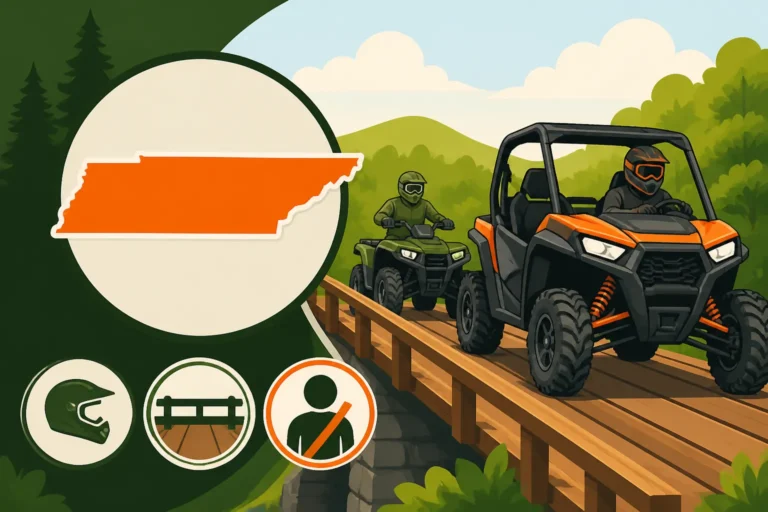
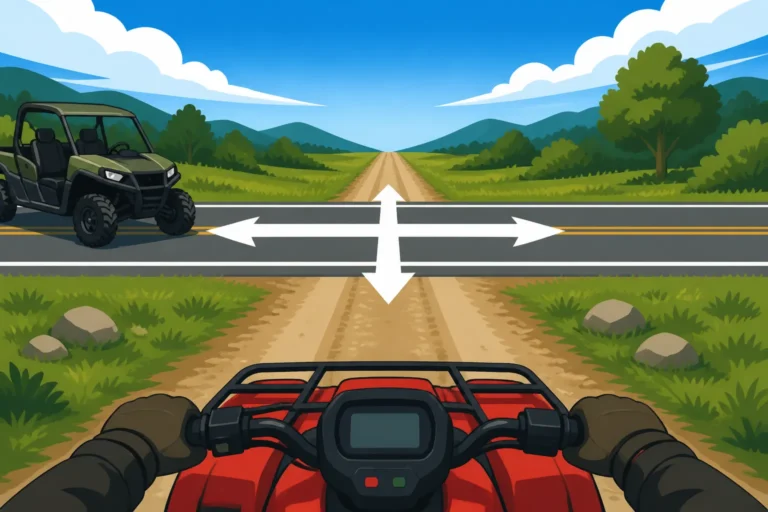
- Helmet Use: If you are operating an OHV on any public road, regardless of whether it's designated as an Adventure Tourism District road or simply [Crossing a Two-Lane at Ninety Degrees in Tennessee], helmet laws apply. For anyone under the age of 18, a helmet is legally mandated, even when riding off-road on private property, unless specifically exempted (like for farm work). While not legally required for adults over 18 off-road, it is strongly recommended for all riders. However, for any public road use, [Tennessee Helmet Law for ATV Riders] requires a helmet for the operator and any passengers if the vehicle is capable of speeds greater than 20 mph. This means most modern UTVs and ATVs.
- Passenger Rules: The number of passengers an OHV can carry on a public road is limited to the manufacturer's design capacity. If your side-by-side is a two-seater, you can only carry one passenger. If it's a four-seater, you can carry three. Passengers must be able to reach the handholds and footrests. [Tennessee Rules for a Passenger on a Road] generally align with common-sense safety practices to ensure that everyone riding is secure and protected.
These rules, from equipment to helmets, are all designed to mitigate the inherent risks of mixing off-road vehicles with traditional road traffic. While they might feel restrictive at times, they are in place to keep you, your passengers, and other motorists safe on our diverse Tennessee roads.
Table: OHV vs. Highway Vehicle – Why No Interstates?
To summarize the key differences that prohibit OHVs from interstate travel, here's a quick comparison:
| Feature/Characteristic | Off-Highway Vehicle (OHV) | Highway Vehicle (Car/Truck) | Interstate Suitability |
|---|---|---|---|
| Intended Use | Trails, rough terrain | Paved roads, sustained speed | No |
| Maximum Speed | Varies, generally lower | 70+ mph sustained | No |
| Tires | Aggressive tread, soft compound, off-road grip | Smooth tread, harder compound, highway grip | Poor |
| Suspension | Long travel, high impact absorption, articulation | Shorter travel, smooth ride, stable cornering | Poor |
| Stability | Higher center of gravity, narrower track | Lower center of gravity, wider track | Poor |
| Braking | Designed for dirt/gravel stops, less effective on pavement at speed | Designed for rapid stops on pavement at speed | Poor |
| Visibility | Often minimal lighting & reflective features | Extensive lighting, reflectors, aerodynamic design | Poor |
| Protection | Open cabins, roll cages, minimal crumple zones | Enclosed cabin, airbags, crumple zones | Poor |
| Engine Design | High torque, short bursts, lower sustained RPM | High power, efficient for sustained high RPM | No |
| Legal Status | Restricted road use | Full road access | No |
Disclaimer
This article is for general informational purposes only and does not constitute professional advice. Laws, prices and regulations vary by location and change over time. Consult a qualified professional for guidance on your specific situation.