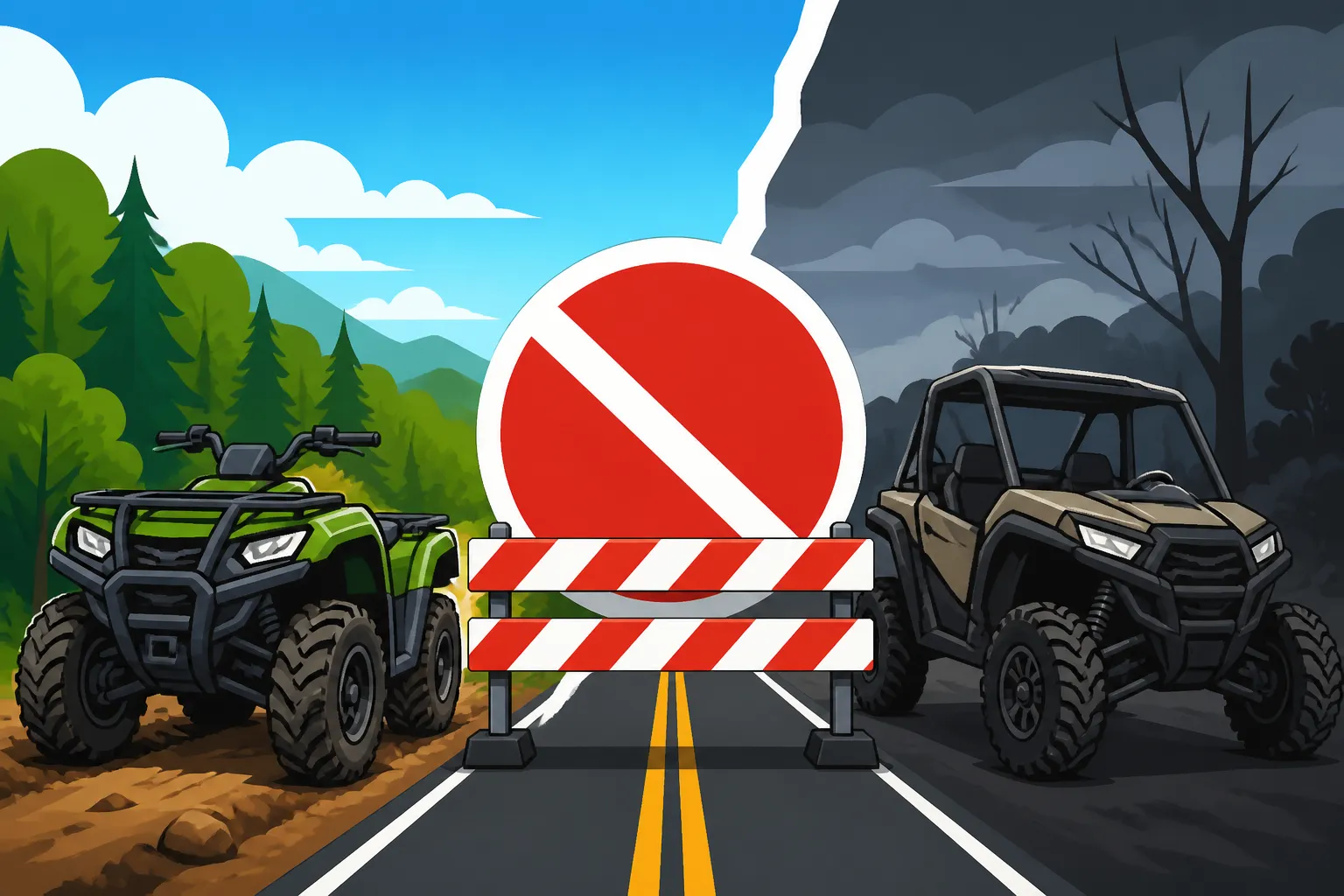
Why SR 63 and US 27 Stay Closed in Huntsville
It's incredibly frustrating, isn't it? You've got your side-by-side or ATV loaded up, ready to hit some trails, maybe even link up a few by road, only to find that some of the most obvious connections, especially around popular riding areas like Huntsville, are strictly off-limits. This guide is here to unravel the complex web of Tennessee's road-use laws for ATVs and UTVs, specifically tackling why certain key routes like SR 63 and US 27 remain closed to off-highway vehicle traffic, even within designated adventure tourism zones.
Understanding Tennessee's Evolving Road Laws for OHVs
For years, the dream of being able to legally connect trails by riding your OHV on public roads in Tennessee felt like a distant fantasy for many enthusiasts. The laws were scattered, often confusing, and heavily restricted. You either towed your machine everywhere or risked a ticket on a road that seemed perfectly fine for a short hop. Thankfully, things have shifted, but the changes haven't been a complete free-for-all, and specific state routes remain a major point of contention and confusion for riders. It’s a classic case of progress with caveats, leaving many scratching their heads about what's actually allowed.
The Legislative Journey to Road Use
The path to even limited road access for OHVs in Tennessee has been a long and winding one, born out of persistent advocacy from rider groups, tourism boards, and local communities who saw the economic potential of embracing off-road culture. It wasn't a single, sweeping piece of legislation that changed everything overnight. Instead, it was a series of bills and amendments over several legislative sessions, each chipping away at the restrictions and trying to find a balance between rider access, public safety, and existing traffic infrastructure. Early efforts often faced significant hurdles, with concerns ranging from increased accidents to damage to road surfaces.
What eventually emerged was a framework that focused on specific geographic areas, acknowledging the unique landscape and existing trail systems in places like East Tennessee. This incremental approach meant that while some roads became accessible, it was never an across-the-board opening of all public thoroughfares. It created a patchwork of regulations, requiring riders to be keenly aware of their exact location and the local ordinances in play. This complex legislative dance is a big part of why riders still encounter closed signs on what seem like perfectly reasonable connecting routes.
The Role of Adventure Tourism Districts
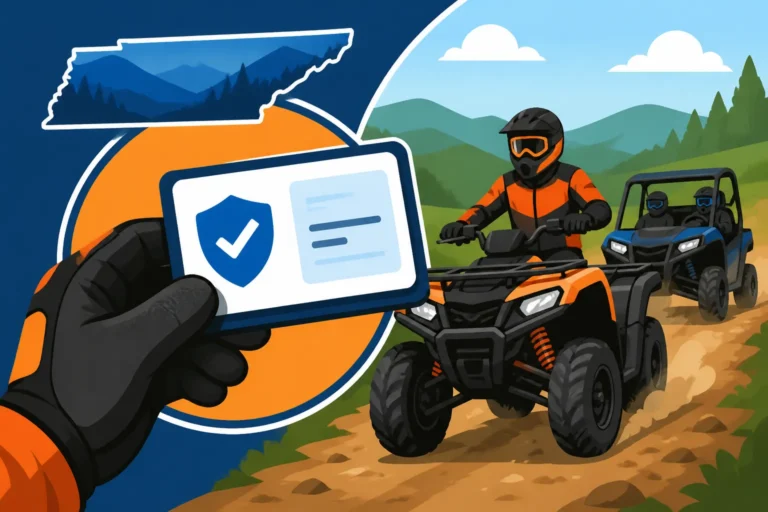
A significant turning point in Tennessee's OHV road use laws came with the establishment of "Adventure Tourism Districts." This concept was a direct response to the economic opportunities that OHV recreation brings, especially in counties with extensive trail networks like Scott, Anderson, and Campbell. The idea was to create zones where local counties could, with specific criteria and processes, designate certain roads for OHV use, facilitating easier access to trailheads, local businesses, and lodging. [Tennessee's Adventure Tourism Districts] were designed to formalize what many communities were already experiencing informally: a surge in visitors drawn by the promise of off-road adventure.
These districts aren't just lines on a map; they come with specific legal powers that allow participating counties to pass ordinances opening their county roads. However, and this is a critical point of frequent misunderstanding, this authority generally applies to county-maintained roads, not necessarily state highways or federal routes that crisscross these same districts. The state retains ultimate jurisdiction over its own highways, which often carry much higher traffic volumes and serve different transportation purposes. Understanding this division of authority is key to grasping why routes like SR 63 and US 27 often remain closed.
The Specifics of Designated Roads and Closures
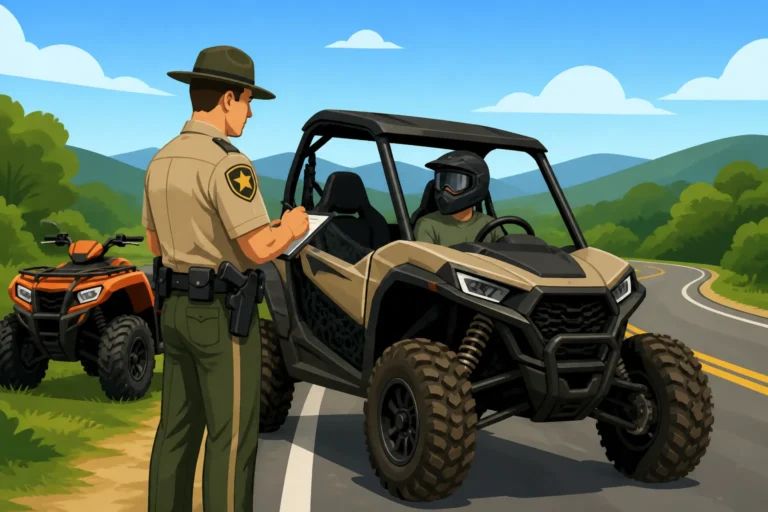
When you're out riding in Tennessee, especially around popular spots like Brimstone Recreation or Windrock Park near Huntsville, you might assume that all roads within these adventure-rich areas are fair game. Unfortunately, that's a common misconception that can lead to a roadside chat with a very unamused deputy. The reality is far more nuanced, particularly concerning major state and federal arteries. These specific routes present unique challenges for legal OHV integration, often due to their primary function as high-volume transportation corridors.
The Case of State Route 63
State Route 63, which runs through areas central to Tennessee's off-road scene, is a prime example of a route that remains largely closed to general OHV use, despite its proximity to popular riding destinations. The reason often boils down to traffic volume, speed limits, and safety considerations. SR 63 is a vital artery for general vehicular traffic, connecting towns and facilitating commerce. Integrating slow-moving OHVs onto such a road presents significant safety risks, not just for the OHV riders but for other motorists as well. The state, through the Tennessee Department of Transportation (TDOT), has a mandate to ensure the safe and efficient flow of all traffic on its highways.
However, there's a very narrow exception that causes a lot of confusion: [SR 63's Two Open Weekends a Year]. This is a highly specific, time-limited allowance, typically coordinated with major events in the area. It's not a permanent designation, and outside of those very few, specific dates, the road is absolutely closed to OHVs. Riders often misinterpret this limited allowance as a general opening, leading to frustration or, worse, citations. It's a reminder that "open sometimes" is not "open always," and you must check official announcements meticulously for those specific windows.
US 27 and Its Permanent Status
Even more restrictive than SR 63 is US 27, a federal highway that also traverses some of Tennessee's prime OHV territory. For this route, the answer to "Can I ride my OHV on it?" is almost universally "No." US 27, by its nature as a U.S. federal highway, is designed for interstate and inter-county travel, often featuring higher speed limits and considerable commercial truck traffic. The safety implications of allowing OHVs on such a critical corridor are deemed too great, making it a permanent exclusion from any permissive OHV road-use legislation.
The distinction here is crucial: while state legislation allows counties to open their roads within adventure districts, it rarely, if ever, grants permission to ride on federal highways like US 27. These routes fall under a different jurisdiction and have a different purpose in the overall transportation network. Trying to use US 27 as a connector, even for a short distance, is a surefire way to run afoul of the law and put yourself and others at serious risk. There are virtually no exceptions for OHV use on this major thoroughfare.
Huntsville's Specific Designations
Huntsville, Tennessee, nestled right in the heart of Scott County's adventure district, is a great example of how local communities have embraced OHV tourism. While state routes like SR 63 and US 27 largely remain closed through Huntsville, the town itself, and Scott County, have actively worked to designate certain local streets and county roads as OHV-friendly. This means you might be able to ride your machine from your cabin rental directly into town for supplies, or connect to a trailhead, but only on specifically marked and approved local roads. [Riding Main Street in Huntsville] or other local streets requires checking the specific city or county ordinances.
It’s important to understand that Huntsville's local designations do not magically override state or federal restrictions on major routes that pass through the town. You can't, for example, ride your OHV on Main Street and then turn onto US 27 expecting it to be legal. The "open" status applies very strictly to roads that the local government has the authority to designate. Riders must be diligent in seeking out and adhering to the published maps and signage that indicate which town streets are part of the legal OHV network. These local efforts aim to provide convenience for riders while respecting the broader legal framework.
Navigating Permitted Road Sections
So, if major state and federal highways are mostly off-limits, where can you actually ride your OHV on a road in Tennessee? The key lies in understanding the difference between state-controlled routes and local county or municipal roads, especially within the designated Adventure Tourism Districts. It's not about guessing; it's about knowing where to find the official information and respecting the boundaries. The goal is to connect the dots safely and legally, making the most of the incredible trail systems available without breaking the law.
County Roads and Local Ordinances
Within the designated Adventure Tourism Districts, participating counties have the power to open their county-maintained roads to OHV traffic through local ordinances. This is where the magic largely happens for riders looking to link trails or access services. A county commission might vote to allow OHV access on specific unpaved roads, or even paved ones, that are deemed suitable for mixed use. This power often comes with stipulations, such as requiring [A Two-Thirds Council Vote Opens Unpaved Roads] in some cases, highlighting the careful consideration given to these decisions.
These roads are typically less traveled than state highways, making the integration of OHVs a more manageable safety proposition. You'll often find these designated roads clearly marked with signage indicating OHV access, or you can find maps published by the county or local OHV parks themselves. It’s vital to remember that not all county roads are automatically open. You must verify the specific roads that have been approved. Without a local ordinance, even a gravel county road could be off-limits.
Crossing State Highways
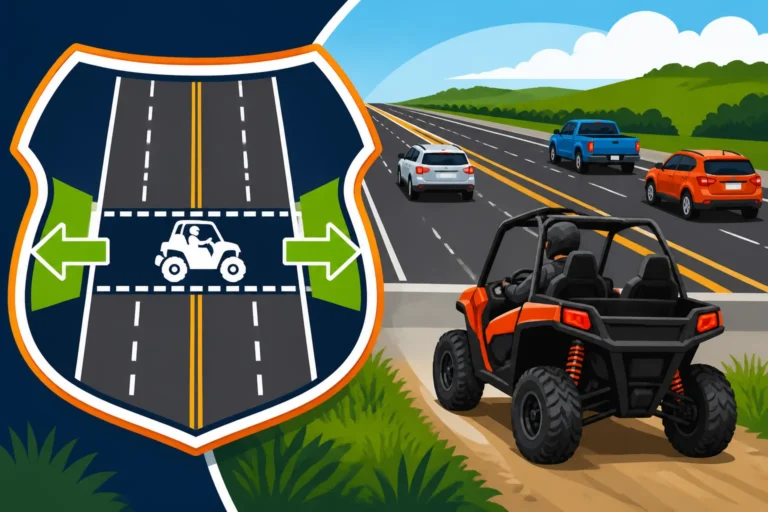
Even if you can't ride down a state highway, Tennessee law often provides for specific allowances to cross them. This is a critical provision for connecting trail systems that might be bisected by a major road. Generally, [Tennessee Rules for Crossing a Highway] dictate that OHVs may cross a state highway at a right angle (90 degrees) when safe to do so, and only when traveling from one designated OHV-accessible road or trail to another. This isn't an invitation to meander down the highway; it's a very specific, limited maneuver.
Furthermore, some areas might have designated crossing points or underpasses. The crucial element is safety and minimizing disruption to highway traffic. You must yield to all highway traffic and complete the crossing as quickly and directly as possible. It's about getting from point A to point B across the barrier, not using the barrier itself as part of your ride. Always be aware of your surroundings and make eye contact with drivers if possible before attempting a crossing.
The Importance of Published Lists
With all these nuances, how does a rider keep it straight? The answer lies in official, published lists and maps. The counties within Adventure Tourism Districts that have opened roads are required to publish lists of these designated routes. This might be on the county clerk's website, the county mayor's office, or even through local tourism boards. [Finding the Restricted Road List Your County Published] is your homework before you ever put your machine on a trailer. These lists are dynamic and can change, so what was open last year might have new restrictions this year.
Many popular riding parks and resorts also provide detailed maps that highlight legal connector roads, often showing them distinct from closed routes. Always carry a current map, whether it's a paper copy or a downloaded digital version that works offline, as cell service can be spotty in some of these remote areas. Relying on anecdotal information or simply following another rider without knowing the rules yourself can lead to trouble. These published resources are your best friends for legal and safe riding.
Essential Equipment and Rider Requirements for Road Use
Just because a road is open to OHVs doesn't mean you can just hop on your machine as it is, fresh off the trail, and cruise into town. Tennessee has specific requirements for both the vehicle and the operator when an OHV is being used on any public road, even a designated county road. These rules are in place for safety, to ensure that OHVs can interact predictably with other road users, and to prevent them from becoming hazards. Neglecting these requirements can lead to fines, even if you're on a legally designated road.
Safety Gear Mandates
When operating an OHV on a public road in Tennessee, safety gear is not optional. The state mandates specific protective equipment for operators and passengers, especially concerning helmets. [Tennessee Helmet Law for ATV Riders] and [Tennessee Helmet Law for Passengers] are particularly strict, requiring helmets for all riders under a certain age on public roads. While the exact age requirement might vary, it’s always a good idea for all occupants to wear a DOT-approved helmet when on any public road, regardless of age.
Beyond helmets, seatbelts are crucial for UTVs. If your machine is equipped with seatbelts, they must be worn. Eye protection is also highly recommended to protect against debris and wind. These mandates are designed to mitigate the risks associated with road travel, where speeds can be higher and interactions with other vehicles more frequent than on a typical trail. Always prioritize safety gear, even for short distances, as accidents can happen anywhere.
Machine Requirements
Your OHV itself needs to be "street-legalized" in certain key aspects if you plan to use it on designated public roads. This isn't about making it a fully registered street vehicle, but rather equipping it with basic safety features found on cars. [Tennessee Equipment Rules for Road Use] generally require:
- Headlights and Taillights: Operational headlights and taillights are a must, especially if you're riding around sunrise or sunset, even if it's "daylight hours only" riding.
- Brake Lights: Functioning brake lights are essential to signal deceleration to following traffic.
- Turn Signals: You'll need amber turn signals, both front and rear, to indicate your intentions for turns or lane changes (if applicable). Many riders turn to aftermarket companies like SuperATV for easy-to-install kits that provide these crucial components, ensuring compliance without complex modifications.
- Mirrors: At least one rearview mirror, typically on the driver's side, is required to provide visibility of traffic behind you.
- Horn: A working horn is necessary for signaling.
- Windshield: While not always strictly mandated for all OHVs, a windshield can greatly enhance safety and comfort, especially against debris.
- Tires: Your tires must be in good condition, suitable for road use, and not excessively aggressive if they could damage paved surfaces.
- Spark Arrester: A U.S. Forest Service approved spark arrester is also generally required to prevent fires, a standard for off-road machines.
Ensure all these components are properly installed and functioning before venturing onto any public road.
Driver Licensing and Age Restrictions
Just like driving a car, operating an OHV on a public road comes with driver licensing and age restrictions. You can't simply be old enough to ride a trail; you need to meet the requirements for operating a motor vehicle on public roads. Generally, [Tennessee Driver's License Rules for UTVs] state that an operator must possess a valid driver's license. A learner's permit typically isn't sufficient for independent operation on public roads.
There are also minimum age requirements, often aligning with the state's driving age. [Tennessee Minimum Age to Ride a Road] is usually 16 years old. This means that even if a 15-year-old is a highly skilled rider on the trails, they cannot legally operate an OHV on a public road that has been designated for OHV use. This ensures that operators have demonstrated a basic level of driving competence and understanding of traffic laws before mixing with other vehicles on public thoroughfares.
Consequences of Non-Compliance
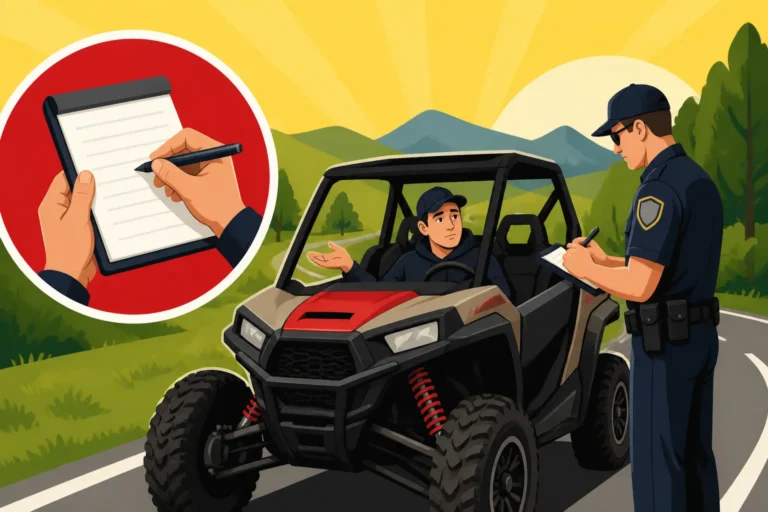
Ignoring Tennessee's OHV road use laws, whether it's riding on a restricted state highway or failing to equip your machine properly on a designated county road, can lead to serious repercussions. It's not just about getting a slap on the wrist; the penalties can be significant, impacting your wallet, your driving record, and potentially even costing you your machine. Law enforcement takes these regulations seriously, particularly when public safety is at stake.
Fines and Penalties
The most immediate consequence of illegal OHV road use is a fine. [Tennessee Fines for Illegal UTV Road Use] can range from moderate to substantial, depending on the specific violation and whether it's a first offense or a repeat. For example, riding on a clearly restricted road like US 27 or SR 63 outside of its very narrow exceptions could result in a significant monetary penalty. Beyond the initial fine, you might also face court costs and other administrative fees, quickly adding up to a hefty sum.
Some violations, especially those involving reckless operation or multiple infractions, could even escalate to a misdemeanor charge. A conviction for a Class C Misdemeanor, for example, carries potential jail time, though this is rare for a first-time, non-injury offense. However, having a criminal record, even for a minor offense, can have long-term implications. It's simply not worth the risk when official resources are available to guide you to legal riding areas.
Machine Impoundment
Perhaps one of the most feared consequences for any OHV owner is the potential for their machine to be impounded. If you're caught operating your ATV or UTV illegally on a public road, law enforcement has the authority to seize your vehicle. Getting your machine back from impound can be a nightmare. It typically involves paying substantial towing and storage fees, which accrue daily, on top of any fines or legal costs. The process can be time-consuming and frustrating, often requiring proof of ownership and payment of all outstanding charges before release.
Imagine being hundreds of miles from home, on a riding trip, and having your cherished machine impounded. It can ruin an entire vacation and leave you with a massive logistical and financial headache. This outcome is particularly common for repeat offenders or in cases where the operation poses a severe public safety risk. It's a stark reminder that these laws have teeth, and the authorities are prepared to use them to enforce compliance.
Safety Risks
Beyond the legal and financial penalties, the most crucial consequence of non-compliance is the inherent safety risk. OHVs are designed for off-road environments, not for the speeds, traffic patterns, and hard surfaces of paved public roads. Operating an OHV illegally on a state highway like SR 63 or US 27 puts you, your passengers, and other motorists at extreme risk. OHVs have a higher center of gravity, different braking characteristics, and are less visible than cars, making them prone to rollovers or collisions in traffic.
Furthermore, a lack of required safety equipment, such as helmets, proper lighting, or turn signals, dramatically increases the severity of injuries in the event of an accident. Even on a designated county road, if you don't have the appropriate equipment (like turn signals from a SuperATV kit), you become a unpredictable and dangerous obstacle to other drivers. The laws are there for a reason: to ensure everyone's safety. Adhering to them isn't just about avoiding a ticket; it's about coming home safe at the end of the day.
Here’s a quick overview of road types and their general status for OHVs in Tennessee’s Adventure Tourism Districts:
| Road Type | General Status for OHVs in Adventure Tourism Districts | Key Considerations |
|---|---|---|
| State Route 63 (SR 63) | Restricted/Closed | Generally closed, except for [Why SR 63's Two Open Weekends a Year] specifically designated by state officials. High traffic, safety concerns. Always check specific dates. |
| US 27 (Federal Highway) | Strictly Closed | Permanently closed to OHV traffic. High volume, high speeds, federal jurisdiction. Absolutely no exceptions for general OHV road use. |
| Designated County Road (Paved/Unpaved) | Generally Open (by local ordinance) | Can be opened by local county commission vote within Adventure Tourism Districts. Look for specific signage and published lists. Requires street-legal equipment and licensed operator. |
| Crossing a State Highway (e.g., SR 63) | Permitted (under strict conditions) | Allowed at a 90-degree angle, from one legal OHV path to another. Must yield to all traffic, complete quickly and safely. Not for riding on the highway. [Tennessee Rules for Crossing a Highway] apply. |
| Unincorporated Local Road (No Ordinance) | Generally Closed | Even if it's a gravel road, if it hasn't been specifically designated and opened by a local ordinance, it's considered illegal for OHV road use. Always verify official status. |
| Town Street in Huntsville | Designated (by local ordinance) | Specific local streets within towns like Huntsville may be opened by city ordinance for OHV access. [Riding Main Street in Huntsville] is an example. Does not override state/federal routes passing through town. Check local city hall or tourism info. |
This article is for general informational purposes only and does not constitute professional advice. Laws, prices and regulations vary by location and change over time. Consult a qualified professional for guidance on your specific situation.