Tennessee Rules for Crossing a Highway
There's nothing quite as frustrating as seeing a perfectly good trail on the other side of a highway, only to second-guess whether it's legal or safe to cross it with your ATV or UTV. Many riders assume all highways are forbidden territory, while others take an "ask for forgiveness later" approach. This guide is here to clear up the confusion, walking you through the specific Tennessee rules for legally and safely crossing highways, whether they're two-lane state routes or larger, multi-lane thoroughfares.
The Basics: Why Crossing a Highway is Tricky in Tennessee
Tennessee's relationship with off-highway vehicles (OHVs) on public roads has always been a bit complicated, swinging back and forth between strict prohibitions and more nuanced allowances. For years, it felt like a patchwork quilt of rules, with every county having its own idea of what was acceptable. While progress has been made to standardize some aspects, especially concerning adventure tourism districts, major highways remain a sticky point, requiring careful attention to the law.
The Core Restriction on Major Roads
At its heart, Tennessee law generally prohibits the operation of ATVs and UTVs on state-maintained highways and interstates, unless specific exceptions are met. This isn't just about riding on the highway, but often includes even trying to cross it if you're not careful. The reason is simple: these machines aren't designed for the speeds, traffic volumes, and specific safety requirements of highway travel. Think about it – a slow-moving UTV trying to merge onto a busy 65 mph highway is a recipe for disaster. The law is trying to protect both you and other drivers, even if it feels restrictive at times. It's a fundamental safety concern, and deputies take it very seriously.
For the most part, unless specifically designated otherwise, you should consider state highways and interstates off-limits for anything more than a direct, perpendicular crossing where permitted. Even on smaller county roads, there are speed and time restrictions to consider, as you'd find in our article, [Tennessee Rules for Riding a County Road]. The key takeaway here is that "street legal" in Tennessee doesn't automatically mean "highway legal."
Understanding the "Street Legal" Myth vs. Reality
Ah, the "street legal" myth. It's one of the biggest misconceptions out there, often fueled by aftermarket parts and well-meaning but misinformed fellow riders. Many folks invest in turn signals, mirrors, horns, and even windshields, thinking that these additions magically grant them full road privileges. While these modifications are absolutely essential for any road use where allowed, they do not, by themselves, make your OHV "street legal" in the same way a car or truck is, especially when it comes to highways.
Tennessee defines specific vehicle categories like [Tennessee's Low Speed Vehicle Category] and [Tennessee's Medium Speed Vehicle Category], which have distinct requirements for road use and are often limited to specific types of roads and speed limits. An ATV or UTV, even with all the bells and whistles, falls into its own OHV category and is subject to those rules, not the rules for regular street vehicles. So, while a horn from SuperATV might make your machine safer and compliant for a quick cross, it doesn't give you carte blanche to cruise down I-40. It's about meeting the letter of the law for OHV road use, which is different from being a fully street-legal automobile.
The Evolution of Tennessee's OHV Road Laws
Tennessee's approach to OHVs on roads has certainly evolved, much to the relief of riders who felt trapped by confusing local ordinances. For years, the ability to ride an ATV or UTV on any public road was largely left to individual counties and municipalities. This created a frustrating checkerboard, where you could ride freely in one county but face a fine just across the line. Imagine planning a long trail ride that involves transitioning between areas, only to find yourself in legal hot water because you misread a county line on your map.
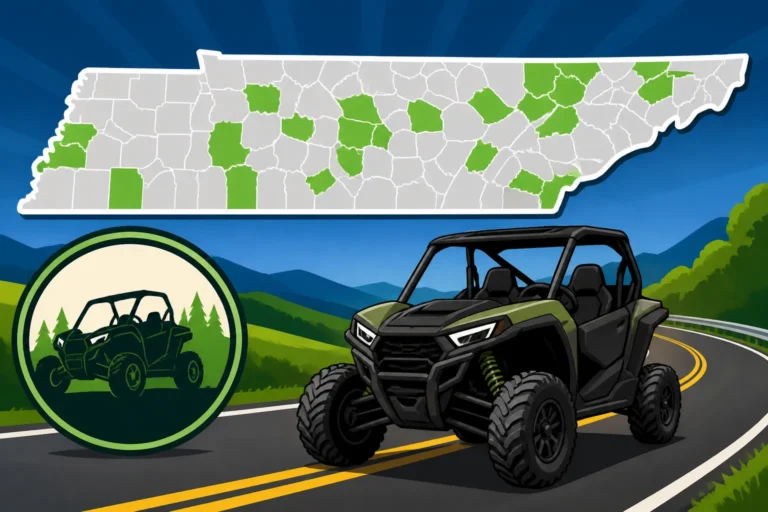
In recent years, legislative efforts, most notably House Bill 810 in 2025, have brought a more unified, statewide framework, particularly around the creation of [Tennessee's Adventure Tourism Districts]. These districts, located in counties like Scott, Anderson, and Campbell, have been empowered to designate certain roads for OHV use, opening up new opportunities for trail access and connecting riding areas. This doesn't mean a free-for-all on highways, but it does streamline the process for riders to understand where they can and cannot legally operate their machines, especially for connecting trails. It's a significant step forward, moving from a reactive "don't ask" approach to a more structured, designated system.
The Two Key Crossing Scenarios You'll Encounter
When it comes to traversing a highway, Tennessee law outlines very specific conditions. It's not about cruising down the shoulder or merging with traffic; it's about direct, purpose-driven crossings. There are two primary scenarios recognized by the law, each with its own set of guidelines designed to prioritize safety and minimize disruption to highway traffic.
Crossing a Two-Lane Highway at Ninety Degrees
This is the most common type of highway crossing you might encounter when moving between trails or properties. The law specifically addresses [Crossing a Two-Lane at Ninety Degrees in Tennessee]. Imagine you're riding a county road, and to get to another section of trail, you need to cross a state highway that runs perpendicular to your path. The key here is "ninety degrees," or as close to a right angle as safely possible. You're not meant to drive diagonally or spend any more time than absolutely necessary on the paved surface.
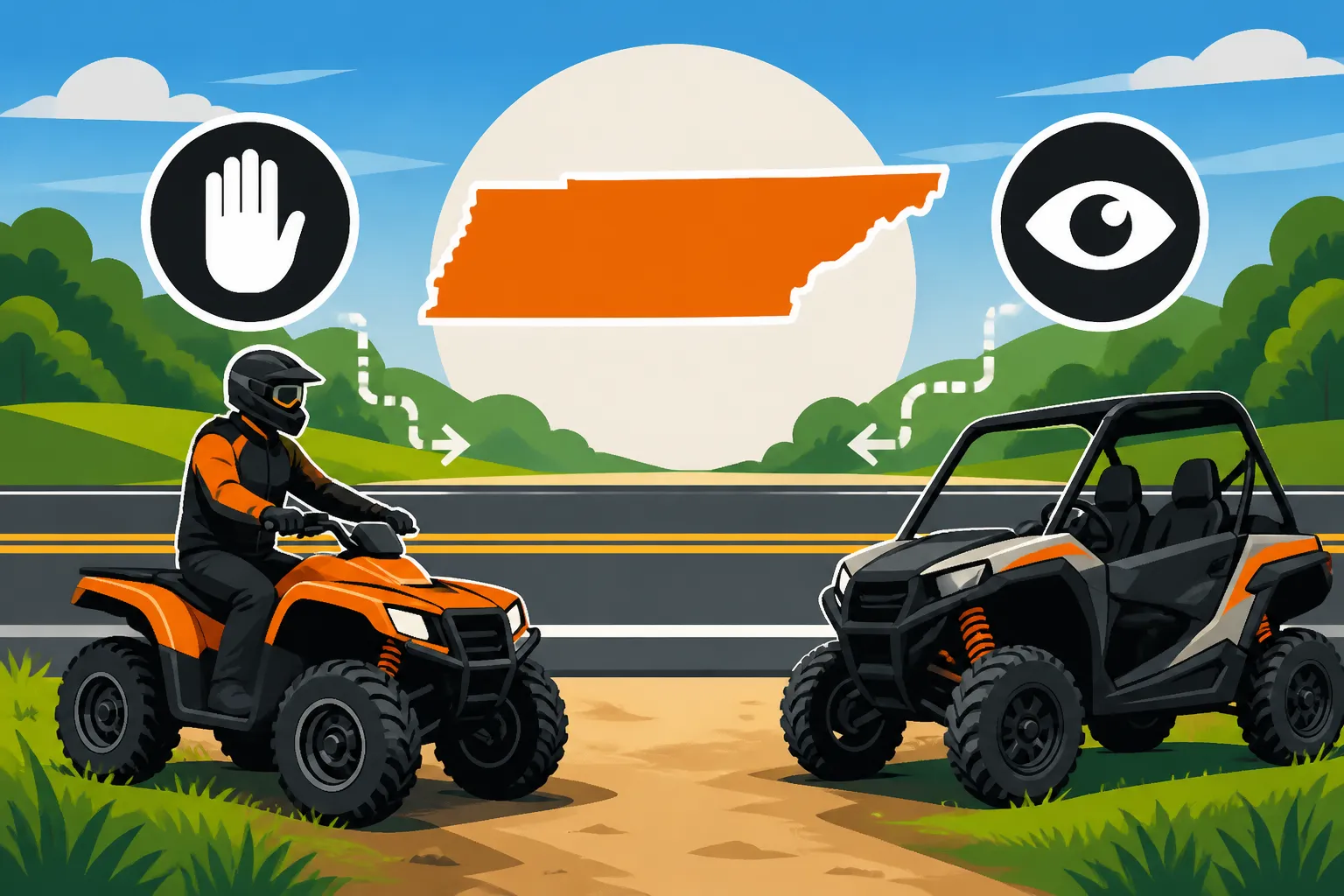
Here's how it generally works: You must stop at the edge of the highway, yield to all oncoming traffic, and then proceed directly across the road in the most efficient and straightest line possible. This isn't the time for a leisurely roll or to check your messages. Your goal is to get from one side to the other, safely and quickly, without impeding the flow of traffic any more than necessary. It's a quick dash, not a drive. Always remember that your machine, even if equipped with road-legal accessories like those from SuperATV, is still fundamentally an off-highway vehicle, and highway drivers won't expect to see you.
Crossing a Multi-Lane Highway Where TDOT Designates
Multi-lane highways present a much higher degree of complexity and risk, and as such, the rules are even stricter. You cannot simply decide to cross a four-lane highway at any point you choose. Instead, the law specifies that ATVs and UTVs may only cross a multi-lane highway "where TDOT designates." This means the Tennessee Department of Transportation has to specifically identify and mark these crossing points. These designations are typically found in areas within adventure tourism districts or where a significant trail system necessitates such a crossing. You can find more details in [Crossing a Multi-Lane Where TDOT Designates].
These designated crossing points are rare and are usually clearly signed to indicate where an OHV might legally cross. If you don't see an official TDOT designation, assume you cannot cross that multi-lane highway. Attempting to cross a multi-lane highway outside of a designated area is not only illegal but extremely dangerous. The higher speeds and multiple lanes of traffic make it incredibly difficult for an OHV to safely navigate, even for a quick dash. Always consult local maps, park information, or contact county clerk offices in adventure tourism counties to identify if such designated crossings exist in the area you plan to ride. Never assume, and always prioritize safety over convenience.
Equip Your Machine for a Safe and Legal Crossing
Even for the briefest highway crossing, your ATV or UTV needs to be properly equipped. This isn't just about avoiding a ticket; it's about making yourself visible and predictable to other drivers who aren't expecting an OHV on the asphalt. Think of it as putting on your best, brightest outfit for a brief but critical moment in the spotlight.
Essential Lighting and Visibility Requirements
Visibility is king when you're momentarily sharing a public road, even for a crossing. Tennessee law, as outlined in [Tennessee Equipment Rules for Road Use], requires specific lighting and safety equipment for any OHV operating on a public road, including when crossing a highway. This typically includes:
- Headlights: Your machine must have at least one working headlight, and for better visibility, two are always preferred. These need to be on and clearly visible, especially if conditions are anything less than bright daylight.
- Taillights: At least one working taillight is crucial to ensure you're seen from behind. Many UTVs come with these standard, but older ATVs might need an upgrade.
- Brake Lights: Functioning brake lights are non-negotiable. They signal your intentions to traffic behind you, which is critical when you might be slowing or stopping at the edge of a highway.
- Reflectors: Additional reflectors on the front, sides, and rear can greatly enhance your visibility, especially in lower light conditions or if your electrical system temporarily fails.
- Turn Signals: While not always explicitly required for crossing (as opposed to riding on a designated road), having functional turn signals is a huge advantage. They clearly communicate your intent to approach and cross, making you more predictable. Many riders add aftermarket turn signal kits, and companies like SuperATV offer comprehensive kits that include everything you need to meet these requirements.
- Rearview Mirrors: At least one functional rearview mirror is generally required. This allows you to check for approaching traffic without having to turn your whole body, which is essential when you're poised to cross a busy road.
Remember, a brightly colored machine and rider apparel also contribute significantly to your overall visibility. Think bright yellows, oranges, and reflective strips. The more visible you are, the safer your crossing will be.
The Importance of Tires and Other Road-Ready Gear
While your knobby tires are fantastic for gripping mud and rocks on the trail, they're not ideal for pavement. For any sustained road use, including crossings, it's worth considering the type of tires you're running. Extremely aggressive mud tires can handle pavement for a short distance, but they wear quickly and offer less traction on hard surfaces, especially if wet. If you regularly use designated roads or make frequent crossings, a more all-terrain or even specific road-rated tire might be a wise investment for better handling and longevity.
Beyond tires, other aspects of your machine contribute to a safe road experience:
- Horn: A working horn is a must. It’s a legal requirement and a critical safety device for alerting others to your presence if needed.
- Windshield (for UTVs): While not always mandatory for a simple crossing, a windshield protects you from debris and improves visibility at speed. Some counties might have specific rules for windshields on designated roads.
- Fenders/Mud Flaps: These help prevent throwing rocks or mud onto other vehicles, which can be a courtesy and a legal requirement in some instances.
- A Solid Suspension: Pavement is less forgiving than dirt. Ensure your suspension components are in good working order, as excessive play or worn parts can make steering and control difficult when you need precision most.
These features, many of which can be aftermarket additions, help bridge the gap between a pure off-road machine and one capable of safe, legal public road interaction.
Why Modifications Matter (and Sometimes Don't)
Making modifications to your OHV for road legality is a common practice, and rightly so. Adding proper lighting, mirrors, and a horn from a reputable manufacturer like SuperATV can transform your machine from a trail-only beast into something that can confidently and legally navigate designated public roads and make those crucial highway crossings. These modifications matter immensely for safety and compliance. They turn your machine into a more visible and predictable vehicle for other drivers.
However, it's vital to understand the limits of these modifications. As mentioned earlier, adding all the road-legal bells and whistles does not magically make your ATV or UTV a car, nor does it automatically grant you permission to drive on any highway. The fundamental classification of your vehicle as an "off-highway vehicle" remains. These modifications only matter within the context of specific OHV road use laws, such as those allowing crossings or travel on designated county roads within adventure tourism districts. They don't negate the core restrictions on general highway travel or give you the same rights as a passenger car. Always verify the specific rules for the type of road and the exact maneuver (like crossing) you intend to make, even with a fully equipped machine.
Rider Responsibilities Before and During the Cross
Simply equipping your machine isn't enough; the rider carries significant responsibilities. This includes being prepared with the right documentation, maintaining hyper-awareness, and understanding the potential consequences if rules are broken. It's about being a responsible, informed rider every time you put a tire on pavement.
Carrying the Right Paperwork and Identification
Before you even think about approaching a highway for a legal crossing, you need to ensure you have all your ducks in a row concerning documentation. Just like driving your car, you need to be prepared for the possibility of encountering law enforcement. Generally, you should carry:
- Driver's License: Anyone operating an OHV on a public road in Tennessee, even for a crossing, must possess a valid driver's license. There's a [Tennessee Minimum Age to Ride a Road], which includes having a license. This isn't just a suggestion; it's a legal requirement.
- Proof of Insurance: While off-road insurance might seem optional for some, if you're putting your machine on a public road, even for a brief crossing, you need to be insured. [Tennessee UTV Insurance Requirement] clarifies that liability insurance is mandatory for OHV road use. Carrying proof of this insurance is essential.
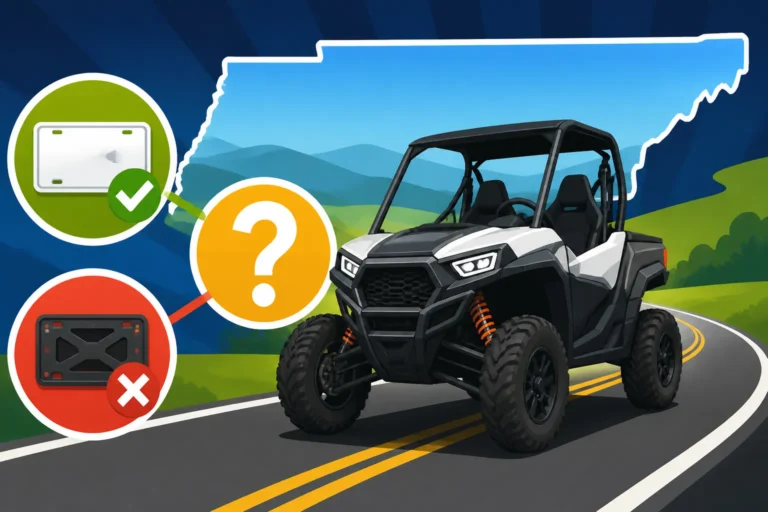
- OHV Title or Registration Proof: Although Tennessee does not register OHVs in the traditional sense, you do need to have your machine titled. You should carry proof of ownership, such as your [Titling an OHV in Tennessee] paperwork or a copy of your title. While the physical title might be at home, having access to documentation proving you're the rightful owner and that the machine is properly titled is important.
- Trail Permits (if applicable): If your crossing is part of a larger ride within an adventure tourism district or connecting to a trail system, you'll likely need the appropriate trail permits. While not directly related to the highway crossing legality itself, an officer might inquire about your overall trip plan.
Having these documents readily available can save you a lot of hassle and potential fines if you're stopped. It demonstrates you're a responsible rider who understands and respects the laws.
Situational Awareness and Safety Protocols
Crossing a highway, even legally, is inherently risky. Your machine is slower, less protected, and much less visible than highway traffic. Therefore, your situational awareness needs to be at its absolute peak. Before you even approach the highway:
- Scout Ahead: If possible, know your crossing point. Is there good visibility in both directions? Are there blind spots? Is the shoulder wide enough to stage safely?
- Stop and Look: Come to a complete stop at the edge of the highway. Do not roll slowly. Look left, then right, then left again. Twice. More if you need to. Assess the speed and distance of oncoming traffic.
- Listen: Turn down your helmet comms, if you have them, and listen for approaching vehicles, especially large trucks which can be surprisingly quiet until close.
- Communicate: If riding in a group, use hand signals to indicate your intention to stop, look, and cross. Ensure everyone in your group understands the plan.
- Execute Decisively: Once you have a clear opening, proceed quickly and directly across the highway. Do not hesitate. Accelerate smoothly and maintain your line.
- Be Predictable: Avoid sudden movements or changes in direction. Other drivers are not expecting you, so any unpredictable action increases the risk.
Remember, the goal is to spend the absolute minimum amount of time on the highway surface. This isn't the time to admire the scenery or chat with your riding buddies. This is a focused, high-stakes maneuver that requires your full attention.
Understanding the Penalties for Non-Compliance
Breaking the rules for highway crossing in Tennessee isn't just about a slap on the wrist. The penalties can be substantial and can put a serious damper on your riding day, or even your riding season. Operating an OHV illegally on a public road, including an improper highway crossing, can lead to:
- Fines: You could face a significant fine, potentially categorized as a [Tennessee's $50 Fine] or even a Class C misdemeanor, depending on the severity and specific violation. These fines can quickly add up, especially if you're also cited for missing equipment or lack of insurance.
- Impoundment: In some cases, especially for repeat offenses or egregious violations, your ATV or UTV could be impounded. Getting it back is usually a costly and time-consuming process involving towing fees, storage fees, and administrative charges.
- Points on Your License: Moving violations, even on an OHV, can potentially lead to points on your driver's license, which can affect your insurance rates for your primary vehicle.
- Accident Liability: If you're involved in an accident while illegally crossing a highway, your liability could be much greater, and your insurance might even deny coverage, leaving you personally responsible for damages and injuries.
It's clear that the consequences far outweigh the convenience of an illegal shortcut. Always err on the side of caution, verify the rules, and ensure you're fully compliant before attempting any road use, especially a highway crossing.
The Role of Local Ordinances and Adventure Tourism Districts
While the state law sets the overarching framework for OHV use, local jurisdictions and the creation of Adventure Tourism Districts play a crucial role in creating legal opportunities for riders to use specific roads, including crossing highways, that might otherwise be off-limits. This is where the local flavor really comes into play, offering a glimmer of hope for connecting those trail systems.
How Counties and Cities Can Create Opportunities
Before the statewide reforms, counties and cities were the primary gatekeepers for OHV road access. Some were very progressive, opening up many roads, while others were strictly prohibitive. Even with the new state laws, local entities still hold significant power to designate roads for OHV use within their boundaries, especially unpaved county roads. This is often done through a two-thirds vote of the local governing body, as detailed in [How a Tennessee Town Opens Its Roads].
This means that while the state restricts highways, local authorities can open up adjacent county roads or feeder roads that might lead you to a legal highway crossing point. For example, a town might open its main street to OHVs, allowing riders to access a gas station or restaurant, and from there, a permitted crossing point for a state highway. It's always crucial to check with the county clerk's office or the local sheriff's department in the specific area you plan to ride to understand their local ordinances. What's legal in Scott County might be illegal in a neighboring jurisdiction, so never assume.
What an Adventure Tourism District Means for Riders
The creation of [Tennessee's Adventure Tourism Districts] is arguably the most significant recent development for OHV riders in the state. These districts, established in counties known for their extensive trail systems (like Scott, Anderson, Campbell, and others), provide a legal framework for local governments to designate roads, including specific highway crossing points, for OHV use. This is a game-changer because it allows for the connection of vast trail networks that were previously isolated by public roads.
Within these districts, counties can establish lists of roads where OHVs are permitted, often for the purpose of accessing trailheads, connecting different sections of a park, or reaching services like fuel and food. This means that a designated highway crossing within one of these districts is much more likely to exist and be clearly marked. For instance, you might be riding the extensive trails of Windrock Park, and a designated county road, which crosses a state highway at a specific point, could connect you to another section of the trail system or to the town of Oliver Springs for supplies. Always look for official signage and consult maps published by the adventure tourism districts or the relevant county.
Navigating Designated Road Lists
So, how do you know which roads are open and where those elusive highway crossing points exist? The answer lies in the designated road lists published by counties within the adventure tourism districts. These lists are critical resources for riders.
- Where to Find Them: These lists are typically published by the county government (often the county clerk or mayor's office) and might also be available through the adventure tourism district's official website or at local trailheads and visitor centers. Some lists might be physically posted at key intersections.
- What They Contain: These lists will clearly identify which county roads are open for OHV use, the hours of operation (often [Riding Only Between Sunrise and Sunset]), and any specific restrictions. Critically, they will also indicate any state highway crossing points that have been designated by TDOT in coordination with the county. You can often find details on [Finding the Restricted Road List Your County Published].
- Staying Updated: It's important to note that these lists can change. Roads might be added or removed, and crossing points might be modified. Always check for the most current information before your ride. Don't rely on old maps or word-of-mouth.
By diligently checking these designated road lists, you can plan your route to legally and safely navigate public roads and make those crucial highway crossings, turning what was once a legal headache into a seamless part of your adventure.
Practical Tips for a Smooth Highway Crossing
Even when everything is legal and your machine is properly equipped, crossing a highway requires finesse and smart decision-making. It's not just about obeying the letter of the law, but also about exercising good judgment and prioritizing safety in a challenging environment.
Scouting Your Crossing Point Ahead of Time
One of the best pieces of advice for any highway crossing, especially one that might be new to you, is to scout it beforehand. This doesn't necessarily mean driving your truck there the day before (though that's ideal), but rather:
- Study Maps: Use detailed topographical maps, satellite imagery, and official OHV trail maps. Look for the roads you'll be on, the highway you'll cross, and the visibility at the intersection. Are there hills, sharp turns, or dense foliage that could obscure views for you or for highway traffic?
- Ask Locals: Talk to experienced local riders, park rangers, or employees at local OHV businesses. They'll know the ins and outs of the area, including the best and safest places to cross and any tricky spots to avoid.
- Observe Traffic Patterns: If you can, observe the highway traffic flow. Is it consistently busy, or are there lulls? Are vehicles typically moving at high speeds? Understanding the patterns can help you choose the best time of day to attempt a crossing.
Knowing what to expect before you arrive at the crossing point dramatically reduces stress and allows you to execute the maneuver with confidence, rather than reacting frantically.
Communication and Hand Signals
When riding in a group, effective communication is paramount, especially when approaching or executing a highway crossing. While some groups use helmet-to-helmet communicators, basic hand signals are universally understood and always reliable:
- Stop/Slow: A raised open hand signals to those behind you that you're stopping or slowing down.
- Turning Left/Right: Extend your left arm straight out for a left turn, or bend your left arm upward at the elbow for a right turn (like cyclists do).
- Clear to Proceed: A sweeping forward motion with an open hand or a thumbs-up can indicate that the lead rider has deemed it safe for the next machine to cross.
- Hazard Ahead: Pointing to the ground with your left hand can indicate a pothole or other obstacle.
Before you set out, make sure everyone in your group knows and understands these signals. The lead rider should be responsible for communicating the intent to cross, stopping the group, and signaling when it's clear. The last rider should confirm everyone has crossed safely. This coordinated effort minimizes confusion and maximizes safety during a high-stress maneuver.
What to Do if You Encounter Law Enforcement
Even if you're certain you're legal, encountering law enforcement on or near a public road can be unsettling. If a deputy or state trooper signals you to stop while you're near a highway crossing point:
- Pull Over Safely: Find a safe spot to pull over, preferably off the main flow of traffic and on a stable, level surface.
- Turn Off Your Engine: Turn off your OHV's engine. This shows respect and allows for clear communication.
- Keep Hands Visible: Keep your hands visible on the handlebars or steering wheel.
- Be Polite and Cooperative: Present your driver's license, insurance, and any relevant OHV paperwork (title, permits) promptly. Answer questions clearly and truthfully. Remember, officers are primarily concerned with safety and the law.
- Explain Your Intentions: Calmly explain that you were legally crossing the highway at a designated point or traveling on a designated county road, and that your machine is properly equipped. If you have maps showing the designated area, offer to show them.
- Don't Argue: If you receive a citation, accept it without argument. You can always address it in court if you believe it's unwarranted. Arguing roadside rarely helps your case and can escalate the situation.
Many officers in adventure tourism districts are becoming more familiar with OHV laws, but some may still be learning. Your calm, cooperative, and informed demeanor can go a long way in resolving the encounter positively.
Beyond the Cross: Other Road Use Rules to Remember
Successfully crossing a highway is a small part of the larger picture of legal OHV road use in Tennessee. Even on designated roads, there are other critical rules to keep in mind to ensure a safe and legal ride, protecting yourself and maintaining good relationships with local communities.
Speed Limits and Daylight Hours Only
One of the most important restrictions for OHVs on any public road, whether it's a county road or a designated state route section, revolves around speed and time of day.
- Speed Limits: The statewide rule generally limits OHVs to roads with a posted speed limit of [Riding a Road Posted 45 mph or Under]. You cannot legally operate your ATV or UTV on a road where the speed limit is 50 mph or higher. Furthermore, even on a 45 mph road, you must travel at a speed that is reasonable and prudent for the conditions, and often, you should travel significantly below the posted limit to ensure safety, especially given the characteristics of OHVs. You're expected to keep up with traffic as much as safely possible without exceeding the machine's capabilities or the posted limit.
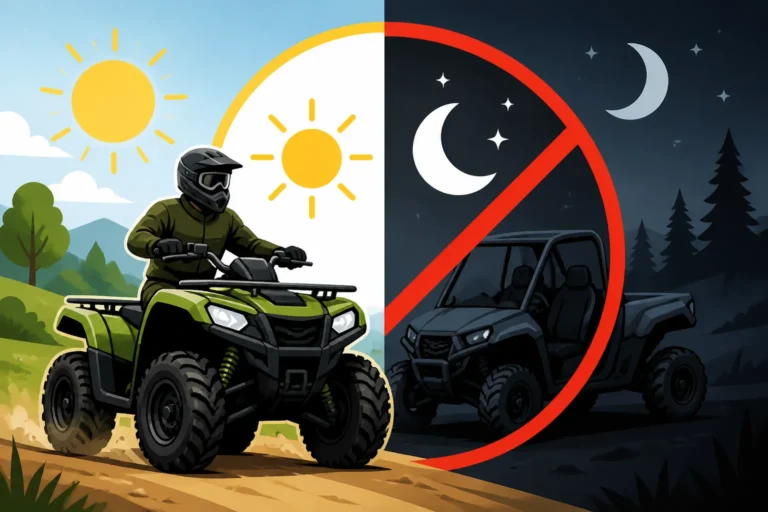
- Daylight Hours Only: For most OHV road use, the law is very specific: you can only operate your machine on public roads between [Riding Only Between Sunrise and Sunset]. This means no pre-dawn rides to the trailhead and no lingering after dusk to get back to camp. While your machine might have lights, the law prohibits nighttime operation on public roads for OHVs, a rule designed to enhance visibility and safety for all road users.
These two rules are fundamental and are often strictly enforced. They are easy to overlook if you're focused solely on the "can I ride here?" question, but they are just as crucial for a legal ride.
Helmet Laws and Minimum Age for Road Use
Tennessee takes rider safety very seriously, especially for younger riders and those on public roads. These rules apply universally whenever an OHV is on a public road, including during highway crossings.
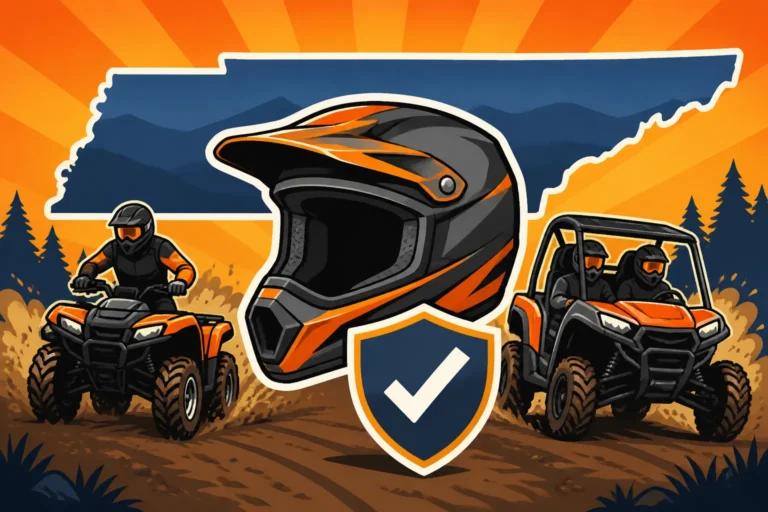
- Helmet Law: While off-road helmet rules can vary by age, [Tennessee Helmet Law for ATV Riders] mandates that any operator or passenger of an ATV or UTV must wear a helmet when operating on a public road in Tennessee. This is a non-negotiable safety requirement. This applies to everyone, regardless of age, and is strictly enforced. It's not just about what might happen if you crash; it's about protecting your head from unexpected bumps, debris, or other hazards that can occur even at low speeds.
- Minimum Age to Ride: As mentioned previously, anyone operating an OHV on a public road, including for a crossing, must hold a valid driver's license and meet the [Tennessee Minimum Age to Ride a Road]. This generally means you must be 16 years of age or older. This rule ensures that riders have demonstrated at least a basic level of driving competency and understanding of road laws. There are no exceptions for younger riders with permits or supervision when it comes to public road use.
These rules are in place to save lives and prevent serious injuries. Always ensure everyone on your machine is compliant.
Insurance and Other Important Considerations
Beyond the basics, there are a few other crucial details that can make or break your legal road experience with an OHV in Tennessee:
- Insurance: We've touched on it, but it bears repeating: [Tennessee UTV Insurance Requirement] is not optional for road use. You must have liability insurance. This protects you financially in case of an accident where you are at fault, covering damages to other vehicles or property, and medical expenses for injured parties. Don't risk riding uninsured on public roads.
- Road Etiquette: Just as you would with any vehicle, practice good road etiquette. Stay to the right, allow faster traffic to pass (if you're on a designated road where travel is allowed), and be courteous to other drivers, even those who might not appreciate your OHV on the pavement. A good attitude goes a long way in maintaining positive community relations.
- Machine Width: Be aware of the dimensions of your machine. While most ATVs and UTVs fall within reasonable widths, some highly modified or specialized machines might exceed width limits for certain roads or be harder to maneuver in tight spaces, as described in [Tennessee Rules for a Machine Over 80 Inches]. Always ensure your machine is appropriate for the road conditions.
- Designated Purposes: Remember that OHV road use, especially related to highways, is generally for a designated purpose—accessing trails, connecting properties, or reaching services. It's not for joyriding or commuting. Keep your intentions clear and your use within the spirit of the law.
By adhering to these rules and exercising good judgment, you can safely and legally integrate highway crossings and designated road use into your Tennessee OHV adventures, opening up a whole new world of riding opportunities.
Disclaimer
This article is for general informational purposes only and does not constitute professional advice. Laws, prices and regulations vary by location and change over time. Consult a qualified professional for guidance on your specific situation.