Tennessee Alcohol Rules on a WMA
A drink at camp can create a problem once the group heads onto a Tennessee Wildlife Management Area (WMA). Alcohol rules may depend on the specific area, while impaired-driving laws and trail requirements still matter. The safest plan is straightforward: check the WMA’s current rules before you go, keep alcohol separate from riding, and arrange a sober way back.
Why alcohol rules can differ between Tennessee WMAs
A WMA is not automatically a public ATV park with one set of rules. The land manager may set area-specific restrictions, and rules can differ by location, season, activity, and the kind of access allowed. Some WMAs have designated roads or trails for motorized use; others do not allow the riding you have in mind at all.
That distinction matters because a trail permit, where required, is permission to use a particular area under its rules. It is not permission to drink, carry open alcohol, or operate while impaired. Before loading, check both the riding rules and the alcohol provisions for the specific WMA. Tennessee Rules for Riding a WMA and Tennessee WMA Special Use Permit Rules explain why access requirements are tied to the area and activity.
Do not assume that a rule you heard about one WMA applies everywhere in Tennessee. A restriction might cover possession as well as drinking, or apply across the area rather than only on a trail. In another place, the written rules may focus on particular facilities or activities. The practical question is not just, “Can I ride here?” It is also, “What does this land manager allow people to bring or consume here?”
If the rules are unclear, contact the managing agency or the office responsible for the riding area before your trip. Ask directly whether alcohol may be possessed or consumed on the property, whether the answer changes at a campground or day-use area, and whether rules differ during hunting seasons or special events. Get the answer for the exact WMA you plan to visit; a general answer about Tennessee trails may not cover it.
| Situation | What to check | Safer approach |
|---|---|---|
| Alcohol in a parked vehicle | Whether the WMA restricts possession on the property and whether state open-container rules apply | Keep alcohol out of the riding vehicle and follow the area’s written rules |
| Drinking at camp or a day-use site | Whether the site allows alcohol and whether separate campground rules apply | Confirm with the site manager before bringing it |
| A passenger wants to drink during a ride | WMA rules, vehicle rules, and the risk of an open container on a moving machine | Do not carry or drink alcohol while riding |
| The operator has been drinking | Impaired-operation laws and the WMA’s own rules | Do not operate; arrange a sober driver or stay put |
| Riding is allowed only on marked routes | The WMA’s route, permit, and closure rules | Stay on designated routes and check for current closures |
The table is a conservative planning guide, not a substitute for the rules of a named area. A permitted route does not necessarily mean every type of use is allowed along it. Likewise, a campground’s rules may not match the rules for the surrounding WMA.
Riding after drinking is a separate legal and safety problem
Even if alcohol is allowed at a particular place, that does not make it safe or lawful to operate an ATV or UTV after drinking. Alcohol can impair judgment, coordination, reaction time, and balance. Those effects are especially risky on uneven ground, narrow routes, steep climbs, loose rock, mud, or trails where riders may meet other vehicles.
Tennessee’s impaired-driving rules may apply to motorized vehicles in circumstances beyond ordinary highway driving. The exact legal question can depend on where the machine is being operated and the facts of the situation. Do not treat an off-road trail, a WMA road, or private property as an automatic exception. For a more focused explanation, see Tennessee DUI Rules for ATV Riders.
A passenger should not assume that only the driver needs to think about alcohol. A passenger who is drinking can distract the operator, affect the machine’s balance, or create a problem under area rules. Open-container rules may also matter depending on the vehicle and where it is being operated. Tennessee Open Container Rules on an ATV covers that issue separately.
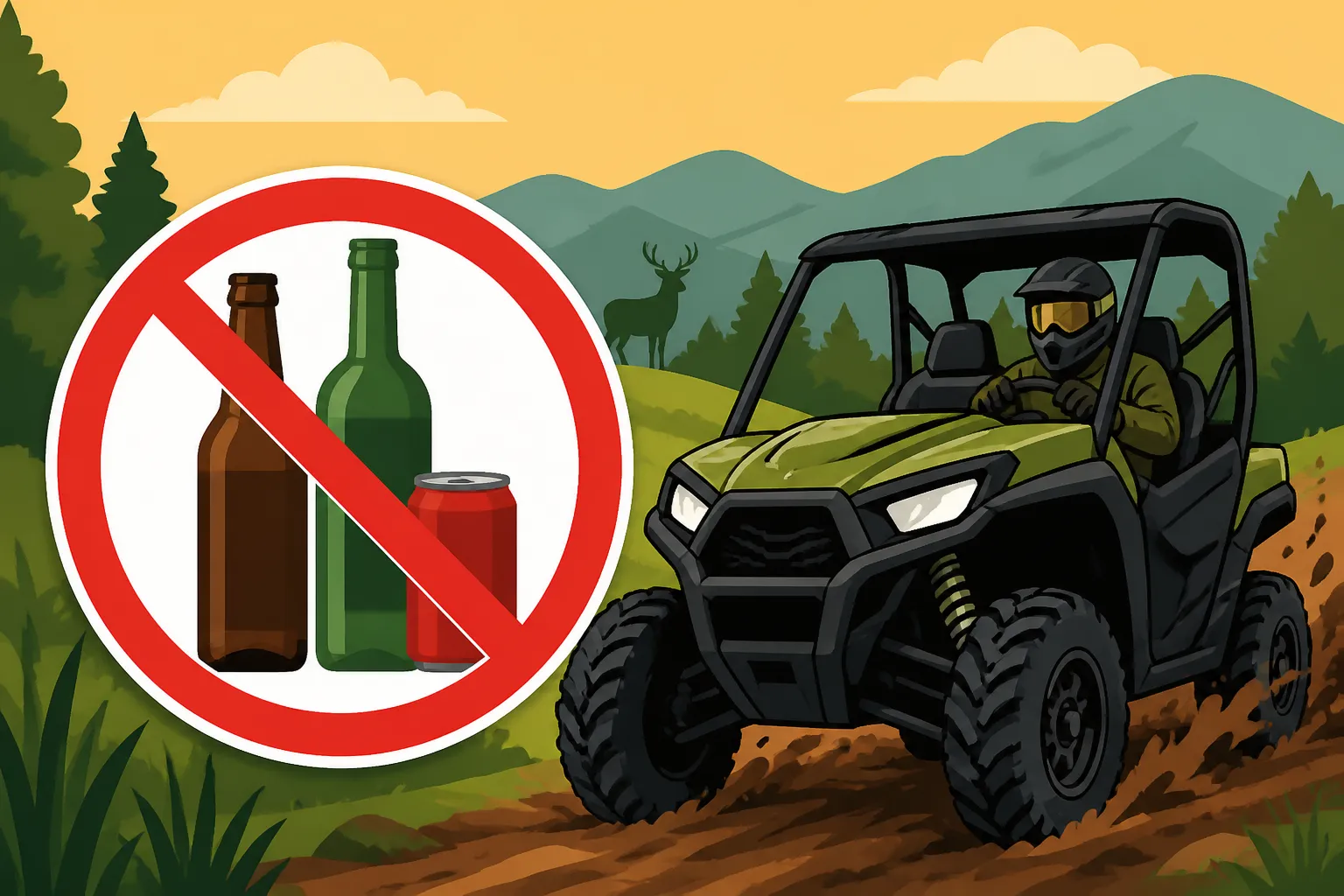
The simplest rule for a ride is to keep alcohol out of the machine and have no one operate after drinking. If people plan to drink at camp, finish riding first and leave the machine parked for the rest of the outing. Do not rely on feeling “fine” or on a short distance back to the staging area. Impairment is not always obvious to the person who has been drinking, and a short trail can still involve hazards or enforcement contact.
If a rider has been drinking, stop the trip rather than trying to manage the risk on the trail. Have a sober person take responsibility for the machine and the route, or arrange another safe way to leave. If no safe option is available, stay in a permitted, safe location and seek help as needed.
What to check before you bring alcohol to a WMA
Before a ride, confirm the rules for both the property and the machine’s route. Use the WMA’s official information or contact its managing office; do not rely solely on a friend’s recollection, an old social media post, or a general trail map. Regulations and access notices can change, and temporary restrictions may be posted separately from general rules.
Check these points before you leave:
- Confirm the exact WMA and managing agency. Nearby trail systems may be managed by different organizations and may have different rules.
- Find the current rules for alcohol. Look for restrictions on possession, consumption, open containers, and alcohol in vehicles or camping areas.
- Confirm that motorized riding is allowed. Check which routes are open to your vehicle type and whether a permit or other authorization is required. Does One Permit Cover Every North Cumberland Unit? is useful if your trip involves North Cumberland.
- Check seasonal notices and closures. Hunting seasons, weather, maintenance, or other conditions can affect access. Tennessee Trail Closures to Check First can help you build this check into trip planning.
- Decide who will stay sober. If alcohol is part of the trip, designate a sober operator before anyone drinks, and do not change that plan casually.
- Keep the machine parked after drinking. A plan to ride only a short distance can become unsafe quickly, especially on unfamiliar ground.
- Carry the required permit and identification. Follow the area’s instructions for displaying or presenting them at a gate or during a check. See Showing a Permit at a Tennessee Gate.
If the WMA’s published rules do not answer your question, ask the managing office rather than interpreting silence as permission. A clear answer before the trip is easier than sorting out a dispute at a gate or after an incident. Keep a note of the office’s guidance and check again before a later visit, particularly if the season or riding area has changed.
If alcohol becomes an issue during the ride
If someone opens a drink or appears impaired, stop the ride in a safe place. Do not let the group pressure an impaired person into driving, and do not keep moving simply to reach the trailhead faster. If the machine can be parked safely, secure it and arrange a sober operator or another safe way off the property.
Follow instructions from area staff or law enforcement. If a rider is injured, unresponsive, or in immediate danger, contact emergency services and give the location as precisely as possible. WMA roads and trails can be difficult to describe, so share a trail name, gate, unit, or map reference when available.
Avoid moving a machine through a closed route or outside a designated riding area to solve a transportation problem. Alcohol does not change route restrictions, permit conditions, or closure notices. If the route is blocked, contact the appropriate staff or emergency services for help rather than improvising a way out.
For the next trip, separate riding time from drinking time in the schedule. A sober group can still enjoy a camp meal or evening at a site where alcohol is allowed, but the area’s rules must permit it and the machines should remain parked. Check the exact WMA’s current requirements, keep alcohol out of the ride, and make the sober plan before anyone drinks.
Disclaimer
This article is for general informational purposes only and does not constitute professional advice. Laws, prices and regulations vary by location and change over time. Consult a qualified professional for guidance on your specific situation.