Renting to a Fifteen-Year-Old in Tennessee
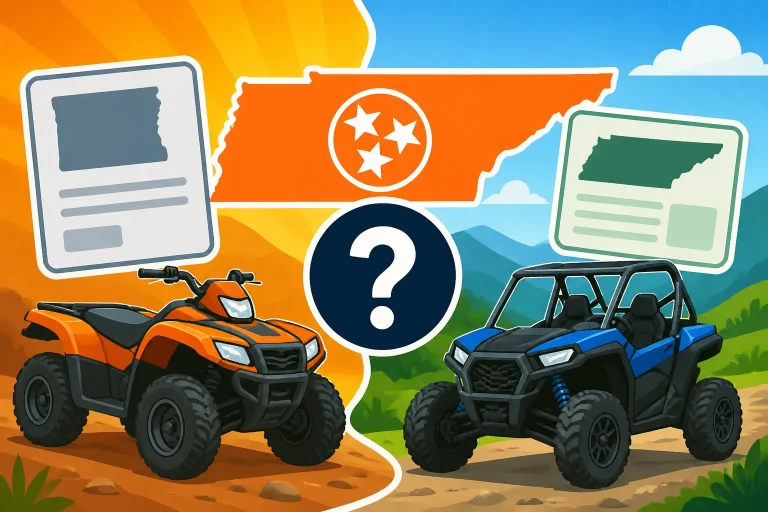
A fifteen-year-old may be able to ride along on a Tennessee ATV or UTV trip, but that does not mean they can rent or drive the machine. Rental contracts, passenger limits, trail rules, permits, and waiver requirements can all set different conditions. Confirm each one with the rental company and riding area before booking, especially if the teenager hopes to take the controls.
Separate the renter, driver, passenger, and rider
A rental can involve several different roles, and the age rule for one role does not automatically apply to the others. The adult who signs the contract may not be the only person who rides, while a passenger may be allowed even when a teenager cannot operate the vehicle.
| Role | What to confirm for a fifteen-year-old |
|---|---|
| Renter or contract signer | Whether the company will rent to a minor or requires an adult to book |
| Driver or operator | The company’s minimum driving age, license rules, and any supervision conditions |
| Passenger | Whether the machine has an approved seat and the rental company allows a passenger that age |
| Trail rider | The riding area’s age, supervision, permit, and equipment rules |
Many rental businesses set their own minimum driver age and may require the primary renter or driver to be an adult. A fifteen-year-old should not assume they can reserve a vehicle, sign a rental agreement, or drive simply because they have experience on a family-owned ATV. Rental policies may be stricter than the rules that apply to a privately owned machine. For an overview of the issues to check, see Tennessee Rental Age and License Rules.
Ask the outfitter directly whether the teenager may be a passenger, whether the adult must ride in the same vehicle, and whether the rule changes by vehicle type. A policy for a two-seat side-by-side may not match the policy for a four-seat model or an ATV. A seat count is not, by itself, permission for a child to ride there: the operator’s rules and the vehicle’s passenger design matter.
Also distinguish operating a machine on a trail from using a public road. Road-use rules can impose separate conditions, and a trail permit does not grant permission to ride on roads. If a route might include a public road, check Tennessee Driver’s License Rules for UTVs and the rules for that road before planning the trip.
Check trail rules, permits, and waivers before booking
A rental company’s approval is only one part of the decision. The place where you plan to ride can have its own rules for minors, supervision, vehicle types, permits, and safety equipment. Confirm the exact riding area rather than asking only whether “Tennessee allows” a fifteen-year-old to ride. Requirements can differ between a private off-road park, a state-managed riding area, and a route that includes public roads.
For public riding areas, look closely at rules for riders under sixteen. The conditions may address supervision or the type of machine a minor can use. Review [Tennessee Rules for Riders Under 16] and check the current rules for the specific area before relying on a general answer from a rental desk. If the trip is at a wildlife management area, verify its permit and rider requirements separately; a private park’s permission does not replace them.
Permits are another common source of confusion. A rental may include a permit, or it may require the customer to buy one separately. Do not assume a permit from one riding area will cover another. Private parks and public lands can use separate permit systems, and a visitor’s out-of-state registration is not a substitute for a site-specific riding permit. Ask who is responsible for obtaining each permit and whether it covers the fifteen-year-old as a rider or passenger. The distinctions are explained in Why a Tennessee Park Permit Does Not Travel and Rentals That Come With the Park Permit Included.
A waiver is not the same as permission to drive. The rental company may require an adult to sign the contract or waiver, and it may ask the parent or guardian to complete additional paperwork for a minor. Ask who must be present at pickup, what identification is required, and whether the minor must sign anything as well. See Which Adult Signs a Tennessee Waiver for the questions to settle before arriving.
Finally, confirm what safety equipment is required and supplied. Ask whether the rental includes a helmet for the teenager, whether a helmet must fit the rider properly, and whether the riding area has additional equipment rules. Check Tennessee Helmet Rules at a Trail Park and the specific park’s current requirements. If a helmet is not included, arrange one that fits before travel rather than assuming a spare will be available.
What to ask the rental company
Call or message the rental provider before paying a deposit. Be precise about the teenager’s age, the vehicle you want, and the place you intend to ride. A general question such as “Can a teenager come?” may produce an incomplete answer if the provider assumes you mean as a passenger rather than as the driver.
Use this checklist:
- Can a fifteen-year-old ride as a passenger? Ask about the exact vehicle, approved seating, and whether an adult must be in the same machine.
- Can a fifteen-year-old operate any rental vehicle? Get the minimum driver age and any license, supervision, or experience requirements in writing.
- Who must book and sign? Confirm whether a parent or guardian must be the renter, attend pickup, show identification, or sign a minor’s waiver.
- What does the rental include? Ask whether the machine, required safety gear, trail permit, and any passenger access are included or handled separately.
- Where may the rental be ridden? Confirm that the rental agreement permits access to the intended park or trail system, and ask whether the machine may leave the property.
- What happens if the teenager cannot ride? Check the cancellation, rescheduling, and refund terms before paying. Do not assume that a mistaken age or passenger assumption will qualify for a refund.
- What are the pickup and return requirements? Find out whether the adult must remain present, what documents are needed, and whether every rider must attend the safety briefing.
A written answer is useful because age rules can be easy to misremember, especially when several family members are calling. Keep the confirmation with the booking details and show it at check-in if staff need to verify the arrangement. Still, the rental agreement and posted riding-area rules govern the actual trip, so read them before signing.
Ask the provider to explain any mismatch between its rules and the trail area’s requirements. For example, the company might allow a teenager as a passenger while the chosen area has a separate rule for minors. Or the trail permit might be required for the adult operator but have additional conditions for other riders. The rental company should be able to identify what it knows, but confirm site-specific questions with the park or land manager.
Plan the ride around the teenager’s role
If the company says a fifteen-year-old may ride only as a passenger, plan for an adult to drive for the full trip. Choose a vehicle with an approved passenger seat and use the seat belt or other restraint system as directed. Do not carry a passenger on an ATV unless that particular machine is designed and approved for a passenger; an extra seat or a rider’s ability to hold on is not enough.
If the teenager is permitted to operate a machine, make sure that permission applies to the exact trail system and not just to the rental provider’s property or a supervised practice area. Ask about route difficulty, speed expectations, supervision, and what to do if the group becomes separated. Rental rules and public-land rules may set different conditions, so follow the more restrictive requirement. Tennessee Rules for a Rented Machine can help identify issues that are specific to using a rental.
Build the day around the young rider’s comfort and capability, not just the group’s preferred route. A beginner-friendly route, clear meeting points, and frequent checks can make a first ride more manageable. Before leaving the staging area, make sure the teenager knows how to signal a stop, where to stay in relation to the adult, and what to do if the vehicle stops or a trail is blocked. Follow the park’s marked routes and closures.
If the teen is new to off-road riding, ask whether the riding area or outfitter provides an orientation. A formal safety course may not be required in every situation, but training and a clear briefing can still be valuable. Check Tennessee ATV Safety Course Requirements for the distinction between a legal requirement and a sensible preparation step.
The simplest booking is one where the adult renter, the fifteen-year-old’s role, the machine, and the riding area are all confirmed in advance. If any part remains unclear, pause before paying and contact the provider or land manager. A quick confirmation can prevent a disappointing arrival, an unusable reservation, or a ride that does not comply with the rules.
Disclaimer
This article is for general informational purposes only and does not constitute professional advice. Laws, prices and regulations vary by location and change over time. Consult a qualified professional for guidance on your specific situation.